DbcultAccessing Vault...
Cult Review
Senior Film Conservator
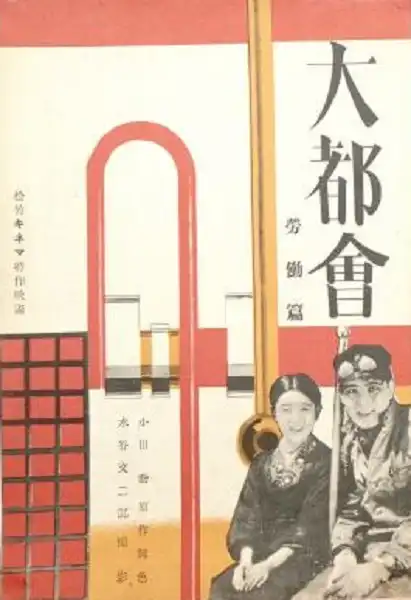
Look, if you can't stand silent films where the screen is all grainy and there's no talking, you should probably just skip Daitokai: Rôdô-hen. It's not going to win you over with fancy tricks. 🎞️
But if you actually like seeing how people lived a century ago, this is kind of a gold mine. It’s for the people who enjoy watching the background as much as the main actors.
The title basically means "The Big City: Labor Chapter." And yeah, it’s mostly about exactly that. Work. Exhaustion. Being a tiny gear in a big, uncaring town.
I watched this on a rainy Tuesday and it honestly matched my mood perfectly. It’s a bit of a downer, but in a way that feels honest rather than just manipulative.
The first thing you notice is the scale. Tokyo in 1929 looks so different, yet the stress on the characters' faces feels exactly like what you see on the subway today. 🚇
Denmei Suzuki plays the lead and he’s got this very classic, handsome face that somehow looks tired the entire time. You can tell his character is just done with the day before it even starts.
Then there’s Kinuyo Tanaka. She’s a legend for a reason. Even in this early stuff, she has a way of looking at the camera that makes you feel like you're intruding on a private moment. 💎
There is one scene in a cramped room where the lighting is just... off. It’s too dark in the corners, and you can barely see what’s happening on the floor.
But oddly, that makes it feel more real. Like the filmmakers couldn't afford enough lights, so they just filmed it anyway. It feels cramped because it probably was.
The way the "Labor" theme is handled isn't very subtle. There are lots of shots of machinery and big crowds of men moving in sync. 🛠️
It’s a bit like Webs of Steel in that way. Both movies seem obsessed with the idea that modern life is just one big factory that might crush you if you trip.
I kept thinking about the clothes. Everyone is wearing these heavy-looking caps and coats that look like they haven't been washed in a month.
The movie doesn't try to make poverty look poetic or pretty. It just looks itchy and cold.
There’s a moment where a character is eating and they just stare into space for like ten seconds too long. I don't know if the director told them to do that or if the actor was just genuinely zoned out.
Either way, it’s one of those bits that stuck with me. It captures that blank feeling you get when you’re too tired to even think about your problems. 😶
The pacing is... well, it’s a silent movie from the 20s. It moves at its own speed. Sometimes it drags when they’re showing title cards that seem to go on forever.
Other times, the editing gets surprisingly fast. There’s a sequence near the middle with some quick cuts that felt almost modern. It woke me up a bit.
I noticed a dog in the background of one street scene that looked like it was having a better time than any of the humans. Just sniffing a pile of trash while the drama happened ten feet away. 🐕
If you’ve seen something like The White Moth, you’ll notice this is way less glamorous. There are no fancy parties here. Just the street and the shop floor.
I will say, some of the acting is a bit much. The guys tend to wave their arms around when they get angry. It’s that old-school stage acting style that hasn't aged perfectly.
But when they settle down and just exist, the movie is great.
The writer, Takashi Oda, clearly had some things to say about how the system treats people. It’s not a happy-go-lucky flick.
Is it a masterpiece? I don't know. Maybe to some people. To me, it felt more like a time capsule. 📦
It reminded me of A Wild Goose Chase but with way more grit and fewer jokes.
One thing that bugged me was how some of the transitions felt abrupt. Like a scene would just end in the middle of a thought and jump to the next morning.
It might be because some of the film is lost or damaged. That happens a lot with these old Japanese silents. You just have to fill in the blanks yourself.
I actually like that though. It makes watching it feel like a bit of a puzzle.
The music on the version I saw was this constant, looping piano track that started to get on my nerves by the end. 🎹
If you watch it, maybe find a version with a better score or just put on some ambient lo-fi stuff in the background. It actually works pretty well that way.
The ending isn't really an ending. It just kind of stops.
It’s like the movie is saying, "And then they went to work the next day. And the day after that."
It’s not satisfying if you want a big climax, but it’s very satisfying if you want something that feels like real life.
Anyway, Daitokai: Rôdô-hen is worth an hour or so of your time if you’re into the history of it all.
Just don't expect a feel-good romp. It’s a movie about the grind. And the grind is eternal. 🏙️
I'm glad I watched it, even if I felt like I needed a long nap immediately afterward.

IMDb 5.2
1926
Community
Log in to comment.