DbcultAccessing Vault...
Cult Review
Senior Film Conservator
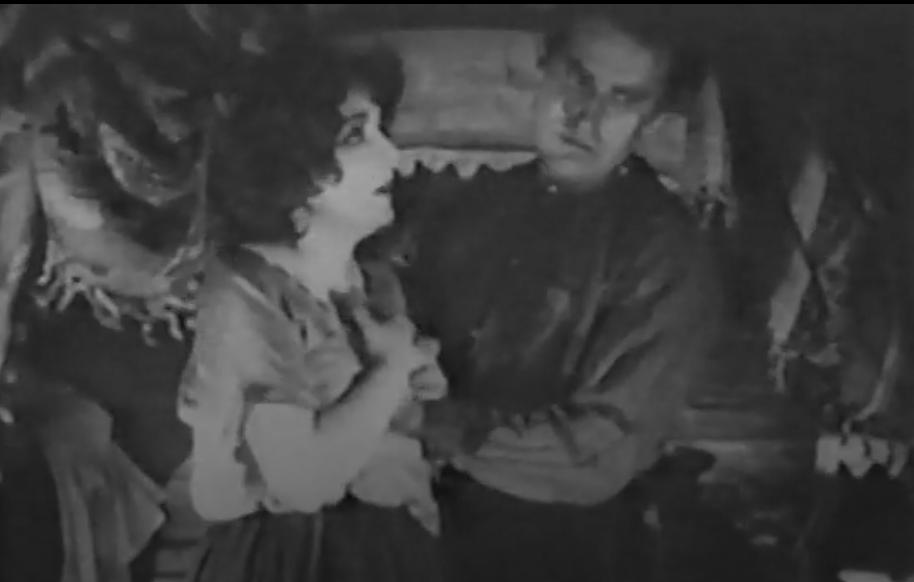
In the pantheon of Weimar cinema, certain artifacts emerge not merely as celluloid records but as visceral excretions of the era’s cultural anxieties. Dämon Zirkus, a 1923 production penned by the legendary Paula Busch and Wolfgang Geiger, stands as a singular monument to the intersection of high-stakes performance and low-frequency human malice. Unlike the sanitized spectacles of later decades, this film breathes the acrid air of the sawdust ring, a feat made possible by Busch’s own pedigree as the 'grande dame' of the German circus. The film does not merely depict a circus; it inhabits one, utilizing the nomadic architecture of tents and wagons to frame a psychological warfare that is as relentless as it is beautifully staged.
The narrative architecture of Dämon Zirkus is built upon the precarious geometry of the triangle drama. At its heart lies the favor of a female circus owner—a role that demands both maternal authority and a certain mercenariness. This central figure becomes the sun around which the performers gravitate, their orbits decaying into collisions of jealousy and sabotage. Where a film like Satan's Rhapsody leans into the supernatural and the decadent, Dämon Zirkus finds its horror in the tangible—the frayed rope, the missed catch, the unspoken slight. The 'demon' of the title is not a literal entity but the corrosive spirit of competition that infects the troupe, turning a community of artists into a pack of predators.
The visual language employed by the cinematographers under the guidance of the Busch-Geiger script is nothing short of revolutionary for the early 1920s. The camera captures the chiaroscuro of the circus at night, where the flickering torches cast long, undulating shadows against the canvas walls, creating a sense of liminality. This is a world where the boundary between the public performance and the private trauma is porous. Claire Lotto and Carl de Vogt deliver performances that transcend the histrionic tendencies of the silent era; their movements are calibrated with the precision of the acrobats they portray. There is a specific scene involving a rehearsal that mirrors the tension found in Sangre y arena, where the proximity to death is the only thing that makes the life of the performer feel authentic.
The casting of Viktor Schwannecke and Eduard von Winterstein adds a layer of gravitas to the production. These actors, stalwarts of the German stage, bring a groundedness to the more melodramatic flourishes of the plot. Their presence ensures that the film never drifts into the realm of pure kitsch. Instead, it maintains a somber, almost elegiac tone, mourning the very spectacle it presents. The film’s pacing is deliberate, allowing the viewer to soak in the textures of the costumes and the weary faces of the background artists, a level of detail that brings to mind the gritty realism of A White Wilderness.
One cannot discuss Dämon Zirkus without centering the influence of Paula Busch. Her involvement provides the film with an ethnographic quality. She understood the internal hierarchies of the circus world—the distinction between the 'aristocracy' of the riders and the 'proletariat' of the laborers. This social stratification is woven into the plot, providing a motivation for the characters' betrayals that feels earned rather than contrived. In many ways, the film serves as a precursor to the 'backstage' dramas of the sound era, yet it possesses a raw, unpolished energy that those later films lacked. It shares a certain thematic DNA with The Woman Who Walked Alone, particularly in its exploration of female agency within a male-dominated professional sphere.
The screenplay by Busch and Geiger avoids the easy resolutions common in contemporary American cinema. There is a pervasive sense of fatalism, a feeling that the characters are trapped in a cycle of performance and pain from which there is no escape. This nihilism is characteristic of the post-WWI German psyche, reflecting a world where the old structures had collapsed and only the ephemeral thrill of the 'now' remained. It is this quality that links the film to the darker explorations of identity found in A Blind Bargain, where the physical body is subjected to the whims of a higher, often cruel, authority.
While the original score for many of these screenings has been lost to time, the internal rhythm of the editing provides its own musicality. The juxtaposition of the kinetic energy of the ring with the static, oppressive atmosphere of the living wagons creates a jarring effect that heightens the drama. The use of close-ups is particularly effective; the camera lingers on the eyes of the performers, capturing the moment when the 'mask' of the entertainer slips to reveal the 'demon' of resentment beneath. This technique is used with similar efficacy in Lyubov statskogo sovetnika, where the internal psychological state is prioritized over external action.
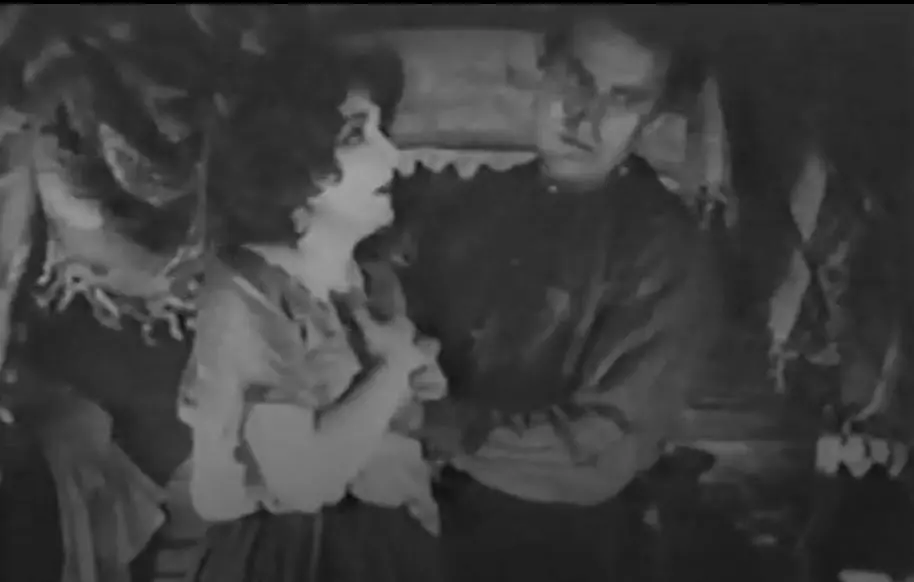
The set design—if one can call the actual Circus Busch facilities 'sets'—is monumental. The scale of the big top creates a sense of awe that is essential for the film’s impact. It reminds the viewer that the circus was the premier form of mass entertainment, a place where the impossible was made manifest. However, by pulling back the curtain, Busch and Geiger reveal the cost of that impossibility. The physical toll on the performers is rendered with a frankness that prefigures the social realism of the late 1920s. The film doesn't shy away from the dirt, the sweat, and the animal musk that defined the circus experience, much like the rugged landscapes of The Honor of the Range define its moral stakes.
To truly appreciate Dämon Zirkus, one must look at it through the lens of its contemporaries. While Zohra explored the exoticism of the 'other' through a North African lens, Busch’s film finds the exotic within the heart of Europe. The circus is a sovereign nation with its own laws and customs, a concept that is also explored in the nomadic struggles of Diane of the Green Van. Furthermore, the film’s treatment of romantic obsession as a destructive force echoes the themes of Naked Hearts, though Dämon Zirkus replaces pastoral innocence with the jaded cynicism of the professional entertainer.
Even when compared to the grander historical epics like The Unbeliever, this film holds its own through the sheer intensity of its focus. It does not need the backdrop of war or revolution to create stakes; the survival of the troupe and the integrity of the heart are sufficient. The film’s exploration of the 'performer as commodity' is a theme that resonates even today, making it a more relevant watch than many of its more famous silent peers. It shares the narrative density of The Silver King, but with a more sophisticated visual palette.
Ultimately, Dämon Zirkus is a film about the gravity of choice. Every action within the ring has a consequence, and every betrayal outside of it eventually finds its way into the spotlight. The 'demon' is the realization that one cannot separate the life from the act. When the lights go down and the crowd departs, the performers are left with the wreckage of their own ambitions. This is a haunting, beautiful, and deeply sophisticated piece of cinema that deserves a place in the conversation regarding the heights of the Weimar era.
The contributions of Maly Delschaft, Ruth Weyher, and the rest of the supporting cast cannot be overstated. They populate this world with a variety of types—the ingenue, the veteran, the schemer—each contributing to the sense of a lived-in reality. Unlike the allegorical figures in The Ants and the Grasshopper, the characters in Dämon Zirkus are messy, contradictory, and profoundly human. They are driven by a need for recognition that is as much a burden as it is a gift.
For the modern viewer, the film offers a rare glimpse into a vanished world. It is a time capsule of the European circus at its zenith, captured by those who knew it best. But more than that, it is a timeless exploration of the human condition, proving that whether in a boardroom or a circus ring, the same demons of envy and desire continue to haunt our collective stage. It is a work of high lexical diversity in its visual storytelling, a silent poem of grit and grace that remains as potent today as it was in 1923. In the final analysis, Dämon Zirkus is not just a movie about a circus; it is a movie about the circus of life, where we are all performers, and the 'demon' is always waiting for us to lose our footing.
A note on the restoration: To experience this film is to engage with the very texture of history. The scratches and grain of the surviving prints only add to the atmospheric weight of the narrative, reminding us of the fragility of the medium and the enduring power of the image.
IMDb 5.8
1934
Community
Log in to comment.