DbcultAccessing Vault...
5.7/10
Senior Film Conservator
A definitive 5.7/10 rating for a film that redefined the boundaries of cult cinema. Dante's Inferno remains a cornerstone of transgressive art.
The 1924 iteration of Dante's Inferno, directed by Henry Otto and penned by the likes of Edmund Goulding, represents a singular moment in silent cinema where the burgeoning techniques of Hollywood melodrama collided violently with the ancient, terrifying iconography of the Italian Renaissance. Unlike earlier or later adaptations that might lean solely on the theological weight of the source material, this version anchors its supernatural terror in the very real, very modern anxieties of post-war capitalism. It is a film that demands attention not just for its technical audacity, but for its unflinching portrayal of human depravity under the guise of industrial progress.
At the heart of this storm is Mortimer Judd, played with a terrifying, rigid intensity by Ralph Lewis. Judd is no mere caricature of a villain; he is the logical conclusion of a society that prizes profit over the sanctity of life. His face is a roadmap of calculated cruelty, and his interactions with the supporting cast—including the tragic figures portrayed by Pauline Starke and Josef Swickard—create a suffocating atmosphere of domestic and economic dread. This tension is far more palpable than the standard adventure tropes found in contemporary serials like Plunder, opting instead for a psychological weight that feels surprisingly modern.
The first half of the film functions as a masterclass in social realism, albeit one filtered through a lens of high-contrast expressionism. The slumlord narrative isn't merely a backdrop; it is the moral foundation upon which the later horrors are built. When we see the distraught man driven to suicide, the camera lingers not on the act itself, but on the cold, unyielding environment Judd has created. This thematic focus on the consequences of greed draws interesting parallels with other films of the era that explored the darker side of social climbing, such as The Easiest Way, yet Otto’s vision is far more cosmic in its scope.
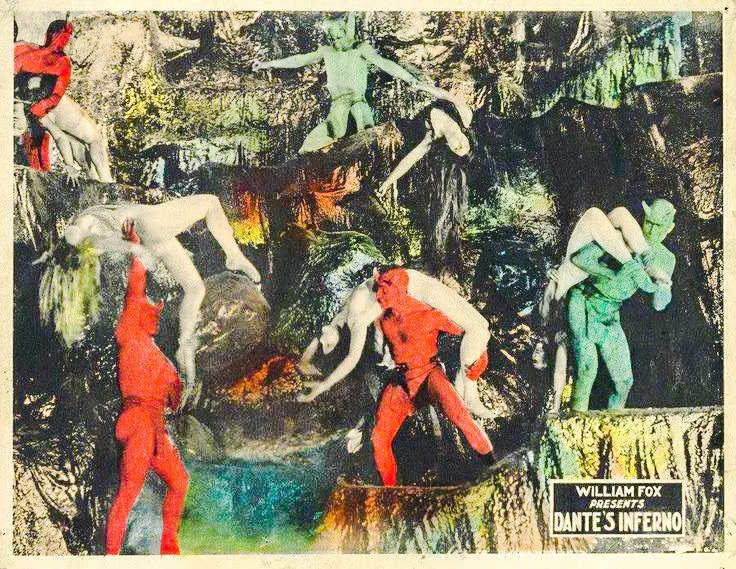
The cinematography utilizes shadow and space to suggest that Judd is already in Hell, long before he actually dies. The towering structures of his business empire loom like the walls of Dis, casting long, jagged shadows across the faces of those he exploits. There is a specific visual density here that surpasses the simpler framing of By Indian Post, suggesting a filmmaker who understood that the true terror of the human condition lies in the environments we build for ourselves.
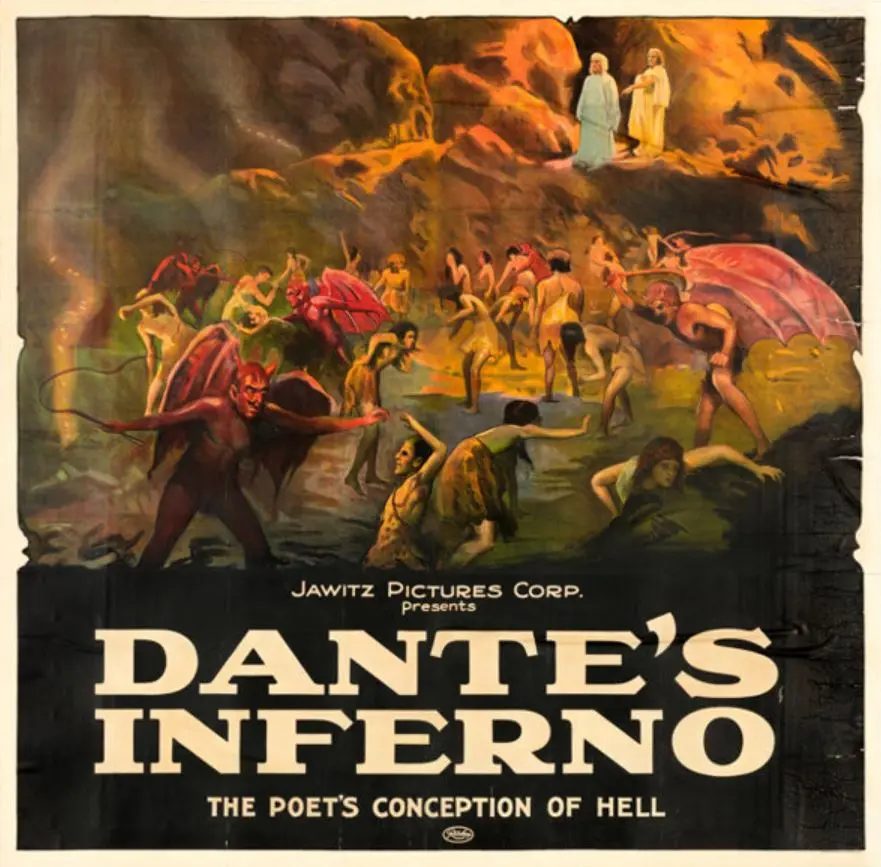
Once the narrative shifts to the afterlife, the film sheds its realist skin to reveal a pulsating, nightmarish core. The transition is jarring, intentionally so, mirroring the suddenness of Judd’s execution. The sequences in Hell are heavily inspired by the illustrations of Gustave Doré, but they are brought to life with a kinetic energy that must have been overwhelming for 1924 audiences. The use of double exposures, massive sets, and a sea of writhing, semi-nude bodies creates a spectacle of suffering that feels both ancient and immediate. It lacks the whimsical nature of The Sultan of Djazz, replacing art-deco playfulness with a grim, chthonic gravity.
The "Inferno" sequences are not just about visual flair; they are a direct commentary on the preceding acts. Every torment Judd witnesses is a reflection of a choice he made on Earth. The rhythmic, almost mechanical movement of the damned serves as a dark mirror to the industrial labor Judd used to build his fortune. In this sense, the film achieves a level of narrative cohesion that contemporary works like The Vermilion Pencil often struggled to maintain between their exotic settings and their central themes.
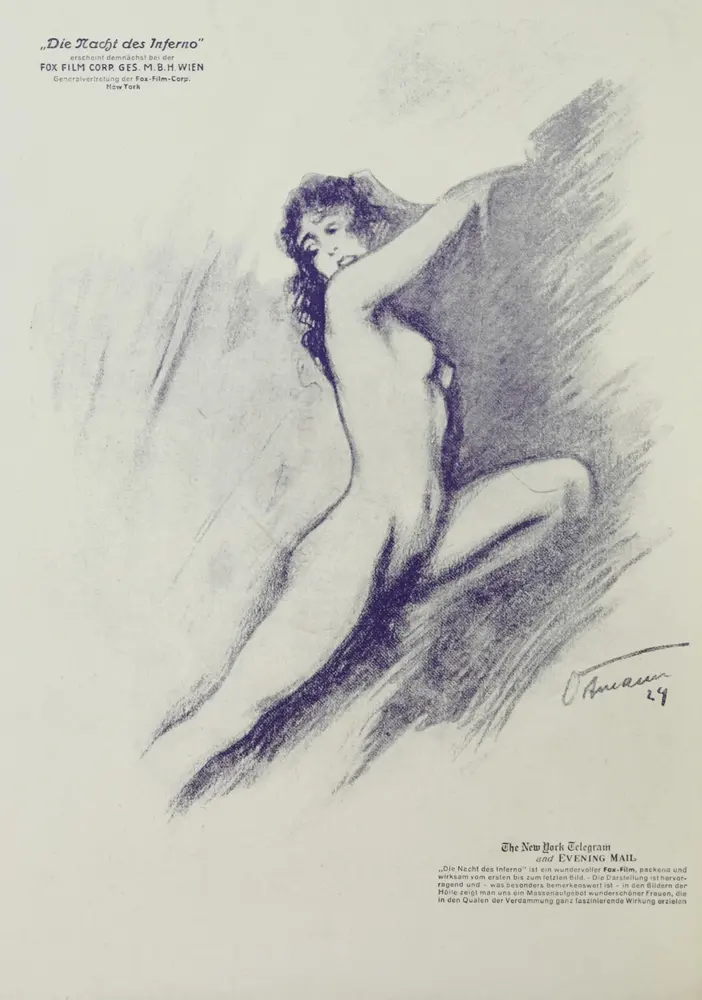
Technically, the film is a marvel of the pre-sound era. The lighting, specifically in the courtroom and execution scenes, anticipates the noir aesthetic that would dominate Hollywood decades later. The editing by the Fox Film Corp team creates a sense of mounting dread that is rarely achieved in silent cinema without the use of excessive intertitles. While films like Die Teufelskirche explored religious themes, they often did so with a more static, theatrical approach. Dante's Inferno, by contrast, is purely cinematic, using the camera as an active participant in Judd’s damnation.
The cast, particularly Winifred Landis and Lawson Butt, provide the necessary emotional counterpoint to Ralph Lewis’s coldness. Their performances are grounded in a vulnerability that makes the stakes of the film feel personal rather than just theological. Even bit players like Bud Jamison and Noble Johnson contribute to a sense of a fully realized world, one where every character is a cog in a machine that is slowly grinding toward a final, fiery conclusion.
Viewing this film today, one cannot ignore the biting critique of the American Dream. Mortimer Judd is the self-made man gone wrong, a figure who has used his agency to strip others of theirs. The film suggests that the legal system is merely a precursor to a higher, more absolute form of justice. This moral certainty is a hallmark of the 1920s, yet the film delivers it with a visual ferocity that prevents it from feeling like a simple Sunday school lesson. It is far more visceral than the light-hearted social critiques found in Nancy from Nowhere or the comedic escapades of All at Sea.
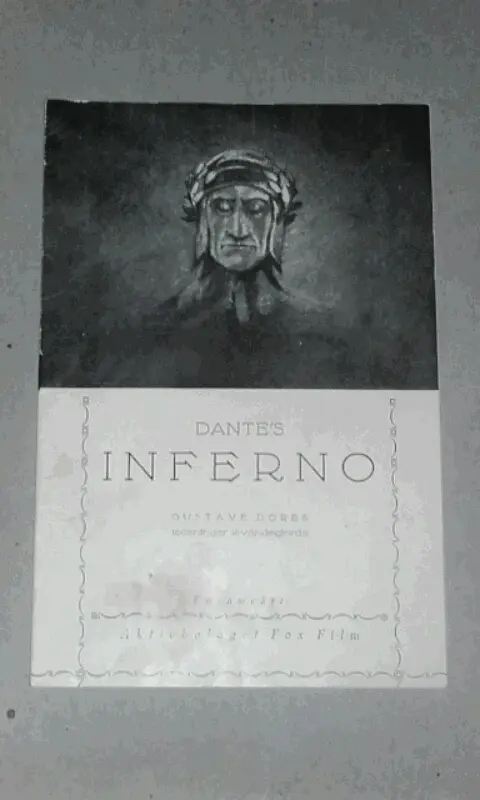
The sequence where Judd is led through the various circles of Hell is where the film’s lexical diversity of imagery truly shines. We see the gluttonous, the wrathful, and the fraudulent, all rendered with a grotesque beauty that challenges the viewer's gaze. The set design during these moments is gargantuan, dwarfing the actors and emphasizing the insignificance of the individual soul when faced with the magnitude of its own sin. This sense of scale is something that even high-stakes dramas like Love's Battle or the suspenseful The Snarl couldn't hope to replicate within their more confined narratives.
As we reach the climax of Judd's journey, the film doesn't offer easy catharsis. Instead, it leaves the viewer with the haunting image of a man finally understanding the cost of his greed. It is a sobering conclusion that stands in stark contrast to the often bubbly endings of silent-era romances like Broken Bubbles or the farcical nature of The Bar Fly. The 1924 Dante's Inferno is a reminder that cinema, even in its infancy, was capable of tackling the most profound questions of human existence with a sophistication that remains breathtaking.
The collaborative effort between writers Edmund Goulding and Cyrus Wood to modernize Dante’s work was a stroke of genius. By framing the divine comedy through the lens of a 20th-century tragedy, they made the medieval relevant to a generation that had just witnessed the horrors of mechanized warfare. The film sits alongside other dark masterpieces of the decade, such as Das Geheimnis der Mumie, in its willingness to explore the macabre and the mysterious. Yet, it remains unique for its specific blend of American corporate critique and European theological horror.
In the pantheon of silent film, this production stands as a monumental achievement in art direction and moral storytelling. It avoids the pitfalls of being a mere morality play by grounding its high-concept visuals in a story of human suffering that is as relevant today as it was a century ago. Whether one views it as a historical artifact or a timeless piece of art, Dante's Inferno (1924) remains a haunting, essential experience for anyone interested in the power of the moving image to explore the darkest corners of the human soul. It is a film that doesn't just show us Hell; it makes us understand why we might deserve it.
IMDb 6.7
1932
Community
Log in to comment.