DbcultAccessing Vault...
Cult Review
Senior Film Conservator
There are certain films that, despite the passage of decades, continue to resonate with a quiet, profound power, whispering tales of human struggle and societal constraint across the chasm of time. Das Herz der Lilian Thorland, a cinematic artifact from the tumultuous and glittering Weimar Republic, is unequivocally one such work. It isn't merely a period piece; it’s a searing, intimate portrait of a woman navigating a world both dazzlingly modern and stubbornly archaic, a world where the heart’s true desires often clash violently with the unyielding dictates of class and convention. Jane Bess, a writer of undeniable insight, penned a narrative that feels as fresh in its emotional authenticity today as it must have felt to audiences nearly a century ago, offering a glimpse into the labyrinthine complexities of love and status in an era teetering on the brink of profound change.
Lilian Thorland, portrayed with a mesmerizing blend of vulnerability and nascent strength by Evi Eva, is not just a character; she is an archetype of the individual caught in the relentless gears of social machinery. Her journey is a testament to the enduring human spirit, a relentless examination of how much one's spirit can endure before it breaks. In a society obsessed with pedigree and propriety, Lilian's heart, as the title so eloquently suggests, becomes the central battleground. It is here that her purest affections and her deepest convictions are tested, refined, and occasionally, almost shattered. The film masterfully illustrates the suffocating pressures of a world where one's worth is measured not by character or kindness, but by the antiquated metrics of lineage and the size of one's estate.
The Weimar Republic, a fascinating and often contradictory period in German history, serves as more than just a backdrop for Lilian’s story; it is an active participant in her drama. This was an era of unprecedented artistic freedom, social experimentation, and economic volatility, yet beneath the veneer of modernism, rigid social hierarchies persisted, especially within the upper echelons. Das Herz der Lilian Thorland captures this duality with an astonishing precision. We witness the lavish balls, the elegant salons, and the sophisticated facades, but also feel the icy undercurrents of judgment, the subtle snubs, and the overt machinations designed to maintain the established order. The film exposes the hypocrisy inherent in a system that celebrates outward appearances while stifling genuine human connection.
Jane Bess’s screenplay delves deep into the psychological toll of such a society. Lilian’s emotional trials are not merely plot devices; they are reflections of a broader societal malaise, a critique of the superficiality that often accompanied privilege. The narrative is replete with moments of quiet despair and desperate hope, painting a nuanced picture of a woman grappling with expectations that threaten to consume her identity. It’s a compelling study of resilience, reminiscent in its thematic weight of other era-defining dramas where individual passion collides with societal decree, perhaps echoing the tragic romanticism found in films like The World Against Him, where personal desires are similarly crushed by external forces.
The ensemble cast of Das Herz der Lilian Thorland delivers performances that transcend the limitations of silent cinema, conveying a wealth of emotion through gesture, expression, and nuanced physicality. Evi Eva, as Lilian, anchors the film with a portrayal that is both delicate and commanding. Her eyes, often pools of sorrow or sparks of defiance, communicate volumes without uttering a single word. She embodies the fragility of Lilian’s position while simultaneously hinting at an inner steel that refuses to be entirely broken. It's a performance that truly defines the film’s emotional core, making her struggles palpable and her triumphs, however small, profoundly earned.
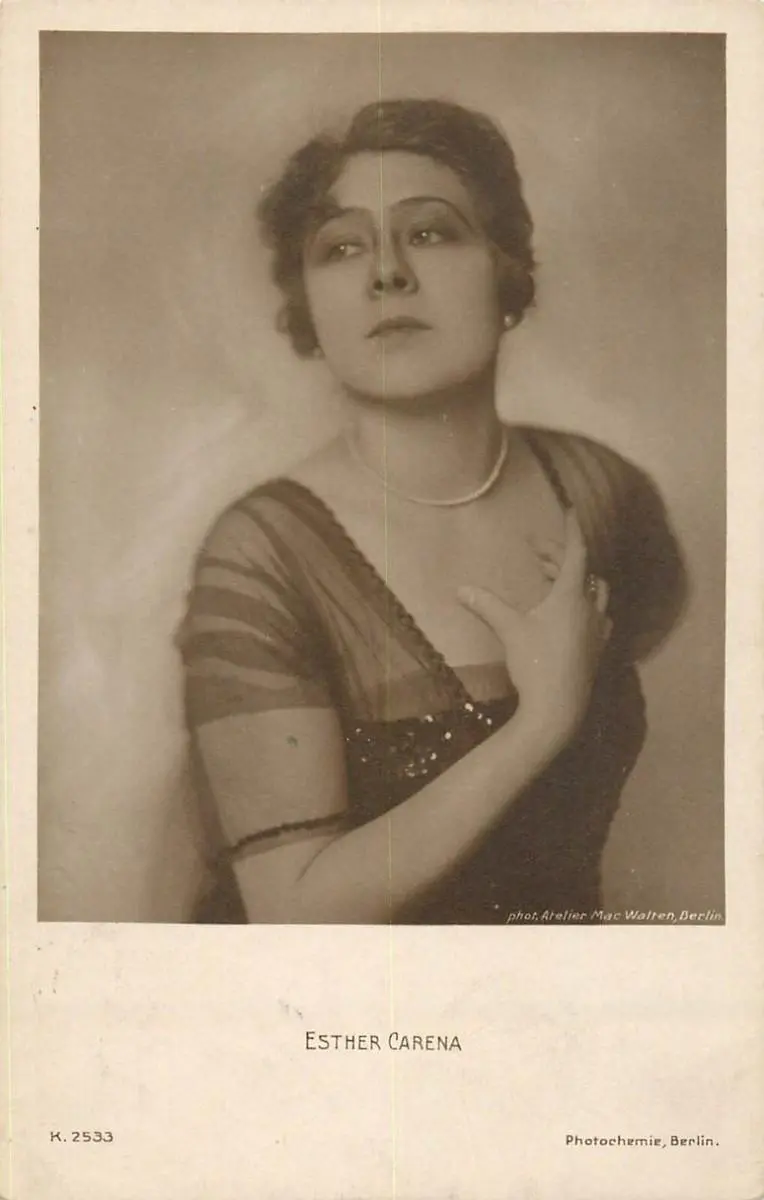
Opposite her, the male leads – Charles Lincoln, Hermann Vallentin, and Heinrich Schroth – each contribute distinct textures to Lilian’s tumultuous world. Lincoln likely embodies the romantic entanglement, his character’s presence a constant source of both solace and conflict. Vallentin and Schroth, along with Henri Peters-Arnolds, Albert Patry, and Kurt Brenkendorf, fill out the tapestry of high society, playing figures who range from sympathetic confidantes to formidable antagonists, each performance adding layers to the societal pressures Lilian faces. Dora Bergner and Esther Carena, alongside Oscar Marion, bring further depth to the supporting roles, fleshing out a world populated by individuals whose own desires and ambitions often intersect, and sometimes clash, with Lilian’s own. Even Hermann Picha and Karl Falkenberg, in their respective roles, contribute to the film’s rich character mosaic, ensuring that no figure feels purely ornamental. The interplay between these actors is crucial, creating a believable ecosystem of power dynamics and personal relationships that drive the intricate plot forward. Their collective ability to convey complex emotional states without dialogue is a testament to their craft and the directorial vision.
Jane Bess’s script for Das Herz der Lilian Thorland is a masterclass in weaving intricate emotional threads into a cohesive, compelling narrative. Her writing demonstrates a keen understanding of human psychology, particularly the subtle ways in which societal expectations can shape, distort, or even define an individual’s identity. The plot, while centered on Lilian’s romantic and social trials, expands beyond mere melodrama to offer a trenchant critique of the class system itself. Bess avoids simplistic binaries, instead presenting characters with motivations that are often ambiguous, reflecting the inherent complexities of real human beings. This nuanced approach allows the audience to empathize even with those who might initially appear as antagonists, understanding the pressures that drive their actions.
The pacing of the narrative is deliberate, allowing moments of quiet reflection to breathe before escalating into dramatic confrontations. Bess understands that the 'heart' of Lilian is not something that can be rushed; its trials require careful observation. Her ability to craft a story that feels both epic in its scope and intimate in its focus is truly remarkable. One might draw parallels to the narrative sophistication seen in other dramas that dissect the human condition under duress, perhaps even finding echoes of the emotional intensity found in a film like A Fool There Was, where moral failings and societal judgment also play pivotal roles. Bess crafts a world where every gesture, every silent exchange, carries significant weight, propelling Lilian's journey with an undeniable force.
At its core, Das Herz der Lilian Thorland is a profound meditation on the nature of love and the sacrifices it often demands. Lilian’s struggle is not just about finding happiness; it’s about defining what happiness means to her in a world that constantly tries to impose its own definitions. Her love, whether for a man or for her own sense of self-worth, becomes a beacon guiding her through the murky waters of social intrigue. The film explores the idea that true love, in its purest form, can often be a subversive act, an defiance against the established order. This theme of love as rebellion, or at least as a challenge to convention, is a timeless one, explored across various cinematic landscapes, from the passionate entanglements of Lovesick at Sea to the more overt class struggles in The Spendthrift.
The concept of the 'heart' in the title is multi-faceted. It represents Lilian’s emotional core, her capacity for affection, but also her moral compass and her resilience. The narrative meticulously peels back the layers of societal artifice to reveal the raw, beating heart beneath. It asks provocative questions: How much can one person endure for love? What are the true costs of societal acceptance? And ultimately, what defines the strength of a heart when everything around it conspires to break it? The film suggests that true strength lies not in conforming, but in maintaining one’s integrity and capacity for genuine feeling, even when it means facing ostracization or hardship. This exploration of inner fortitude against external adversity is one of the film’s most compelling and enduring legacies.
Though a silent film, the visual language of Das Herz der Lilian Thorland is remarkably articulate. The cinematography, while reflective of its era, often employs striking compositions and evocative lighting to underscore emotional states and societal dynamics. The opulent settings are rendered with a keen eye for detail, contrasting sharply with moments of Lilian’s private despair, often framed to emphasize her isolation. The costumes, too, are not merely fashion statements; they are signifiers of status, expectation, and sometimes, rebellion. The film’s silent nature forces the audience to engage more deeply with the visual cues, the actors' expressions, and the overall mise-en-scène, creating an immersive experience that transcends the absence of spoken dialogue.
The enduring legacy of Das Herz der Lilian Thorland lies in its timeless themes and its powerful humanism. It’s a reminder that while the trappings of society may change, the fundamental struggles of the human heart remain constant. The quest for love, the yearning for acceptance, and the fight for self-determination are universal experiences that resonate across generations. This film, a testament to the creative prowess of the Weimar era, deserves to be rediscovered and celebrated for its artistic merit and its profound emotional intelligence. It stands as a compelling example of how cinema, even in its nascent forms, could explore the intricate tapestry of human experience with depth and sensitivity. Its narrative, while rooted in a specific time, offers lessons that continue to echo, making it a truly remarkable piece of film history that speaks to the very core of what it means to be human.
In an age where so much of our attention is fragmented, a film like Das Herz der Lilian Thorland invites a slow, deliberate engagement, a contemplative journey into a bygone era that nevertheless feels strikingly relevant. It’s a film that leaves you pondering the true meaning of 'heart' long after the final frame, urging you to consider the unseen battles fought by those around you, and perhaps, even within yourself. Its gentle yet firm critique of societal rigidity, coupled with its celebration of an indomitable spirit, ensures its place as a significant, albeit often overlooked, masterpiece of early German cinema. It’s a film that truly has heart, in every sense of the word.
IMDb 5
1926
Community
Log in to comment.