DbcultAccessing Vault...
Cult Review
Senior Film Conservator
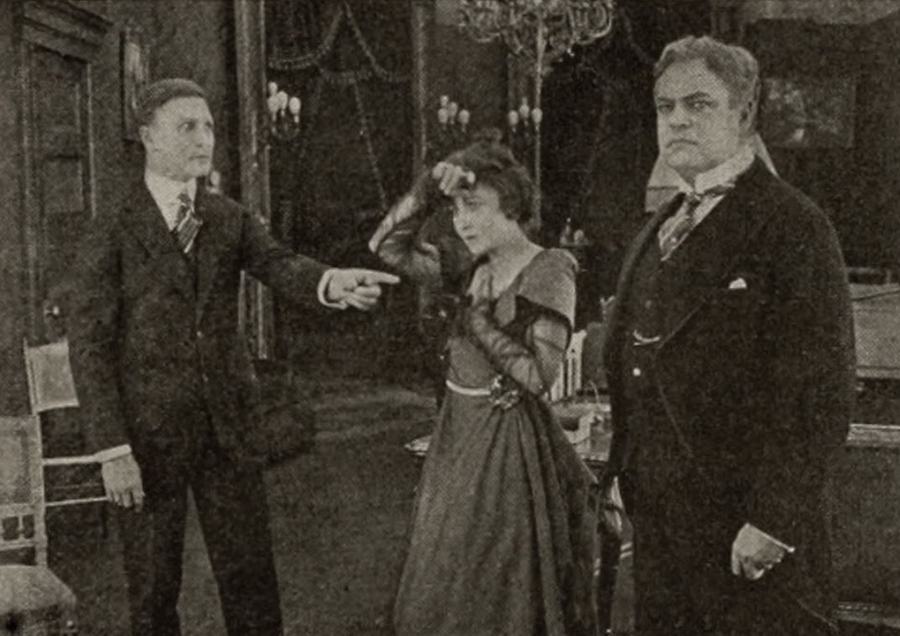
Released in the twilight of the mid-1910s, The Strength of the Weak stands as a staggering monument to the evolution of the "fallen woman" trope, a cinematic artifact that dares to navigate the treacherous waters of social ostracization and personal reclamation. At its core, the film is a psychological autopsy of a woman’s journey from a pawn in a patriarchal game to the architect of her own destiny. Mary Fuller, delivering a performance of haunting luminosity, portrays Pauline D’Arcy with a vulnerability that never descends into fragility. It is a nuanced portrayal that mirrors the grit found in The Valley of the Moon, where the harshness of reality serves as the whetstone for the protagonist's character.
The film’s initial movements are steeped in a predatory atmosphere. The character of Abbott, portrayed with a chilling, paternalistic arrogance by Edwards Davis, represents the insidious nature of power imbalances. His promise of education as a currency for Pauline’s virtue is a biting critique of the limited avenues available to women of the era. Unlike the more whimsical adventures found in Prudence, the Pirate, this narrative is grounded in a visceral, almost claustrophobic realism. The university setting, while seemingly a sanctuary, becomes a crucible where Pauline’s intellectual growth must contend with the secret shame she has been conditioned to carry.
One of the most sophisticated elements of The Strength of the Weak is its use of the novel-within-a-film. Pauline’s decision to transmute her trauma into a best-selling work of fiction is a radical act of reclamation. In an era where female voices were often relegated to the domestic sphere—as seen in the more traditional frameworks of The Country Boy—Pauline’s literary success is an assertion of her intellectual and economic independence. The anonymity of her authorship serves as a shield, but it also creates a ticking clock of suspense that rivals the tension in The Master Key.
The film brilliantly explores the irony of public consumption: the very society that would condemn Pauline’s past is the same society that hungrily devours her fictionalized account of it. This hypocrisy is personified in Tom Dare, a villain whose malice is rooted in the entitlement of the upper class. His attempt to blackmail Pauline is not merely a threat of exposure; it is an attempt to re-establish the dominance she had escaped. The confrontation at the house party is a masterclass in silent film staging, utilizing deep focus and expressive lighting to highlight the isolation of the heroine against a sea of judgmental finery.
When Pauline is finally cornered, the film pivots from melodrama to a poignant social manifesto. Her speech to the assembled guests—rendered through evocative intertitles and Fuller’s searing gaze—is a watershed moment in early feminist cinema. She does not beg for forgiveness; she demands the right to a future. This thematic courage echoes the provocative nature of Race Suicide or the scandalous undertones of Sapho. The guests' division between horror and admiration serves as a mirror to the 1916 audience, challenging them to reconsider the rigid moral binaries of the day.
Richard Adams, played by Harry Hilliard, represents the idealized "New Man"—one who values integrity over social pedigree. His intervention is not a traditional "rescue" in the sense of a damsel in distress; rather, it is a validation of Pauline’s humanity. His acceptance of her past, even after the agonizing confession, provides a stark contrast to the transactional relationships that dominate the film’s first half. This emotional complexity is far more advanced than the standard romantic fare of When Paris Loves, offering a precursor to the psychological depth seen in later European cinema like Fior di male.
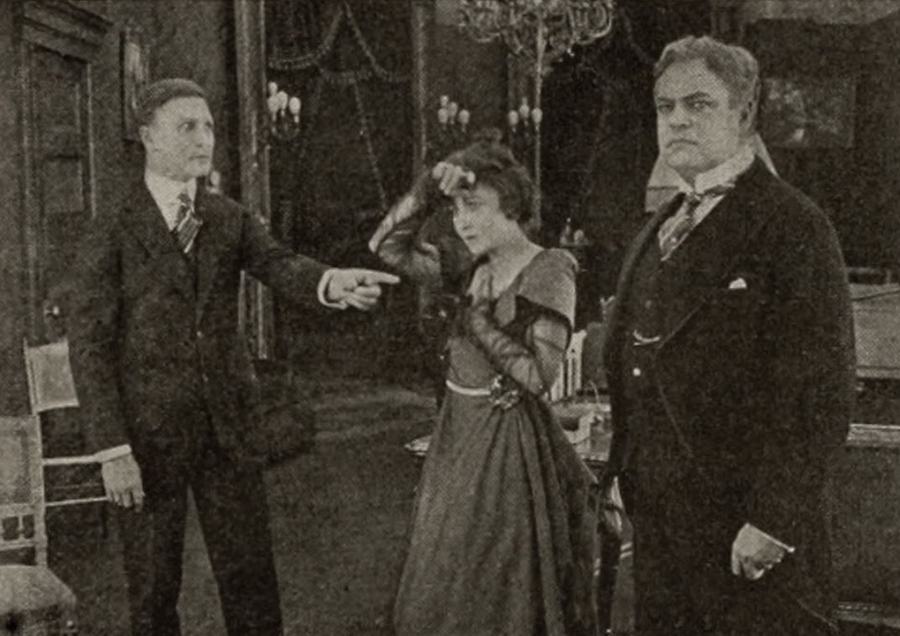
The final act of The Strength of the Weak plunges into the realm of the Gothic. The revelation that Abbott and Richard are father and son is a narrative thunderbolt that elevates the story to the level of Greek tragedy. It is a moment of pure cinematic kismet that forces all characters to confront the interconnectedness of their sins and virtues. When Pauline faces Abbott for the last time, her defiance is total. She has moved beyond the fear that defined her girlhood, standing as a sovereign entity who has already disclosed her own secrets, thereby stripping her abuser of his primary weapon: the power of the hidden truth.
Historically, the decision to alter the ending from the original play’s suicide to a "fond embrace" is a fascinating study in the demands of the medium and the optimism of early American film. While some purists might argue that the suicide would have provided a more potent indictment of social cruelty—similar to the tragic weight of Rainha Depois de Morta Inês de Castro—the cinematic version chooses a path of survival. This "happy ending" is not a cheap artifice; it is a hard-won victory. It suggests that the "strength of the weak" lies in their ability to endure and thrive despite the wreckage of the past.
Visually, the film utilizes the techniques of its era with surprising efficacy. The contrast between the pastoral innocence of Pauline’s early life and the sharp, angular shadows of the city and the university reflects her internal state. There is a texture to the film that reminds one of the atmospheric density in L'hallali or the crumbling elegance of Entre ruinas. The director understands the power of the close-up, allowing Mary Fuller’s face to communicate the complex interplay of shame, ambition, and love without the need for excessive dialogue.
The pacing of the film is deliberate, allowing the weight of each revelation to settle before the next wave of conflict arrives. This is not the frantic action of The Sky Hunters, but a character-driven slow burn. Even the domestic scenes at Mrs. Dare’s house party are infused with a sense of impending doom, as the camera captures the predatory glances of Tom Dare and the oblivious gaiety of the other guests. It is this attention to social nuance that makes the film feel remarkably modern, despite its century-old vintage.
In the broader context of 1916 cinema, The Strength of the Weak serves as a crucial bridge between the moralistic Victorian dramas and the more liberated narratives of the 1920s. It shares a certain DNA with The Perfect '36' in its focus on female identity, though it trades comedy for a searing social critique. It also echoes the domestic tensions found in Det gamle Købmandshjem, albeit with a more confrontational edge regarding gender dynamics.
To watch The Strength of the Weak today is to witness the birth of the modern heroine. Pauline D’Arcy is not a victim who happens to survive; she is a survivor who chooses to lead. Her story is a testament to the power of the written word and the resilience of the human spirit. While films like Gladiola offered floral metaphors for female virtue, this film offers a blueprint for female empowerment. It remains a vital, albeit overlooked, chapter in the history of cinema—a film that proves, quite literally, that the greatest strength is often forged in the moments of our deepest perceived weakness.
A haunting, essential viewing for anyone interested in the roots of feminist storytelling and the transformative power of early silent film.
IMDb —
1919
Community
Log in to comment.