DbcultAccessing Vault...
6.6/10
Senior Film Conservator
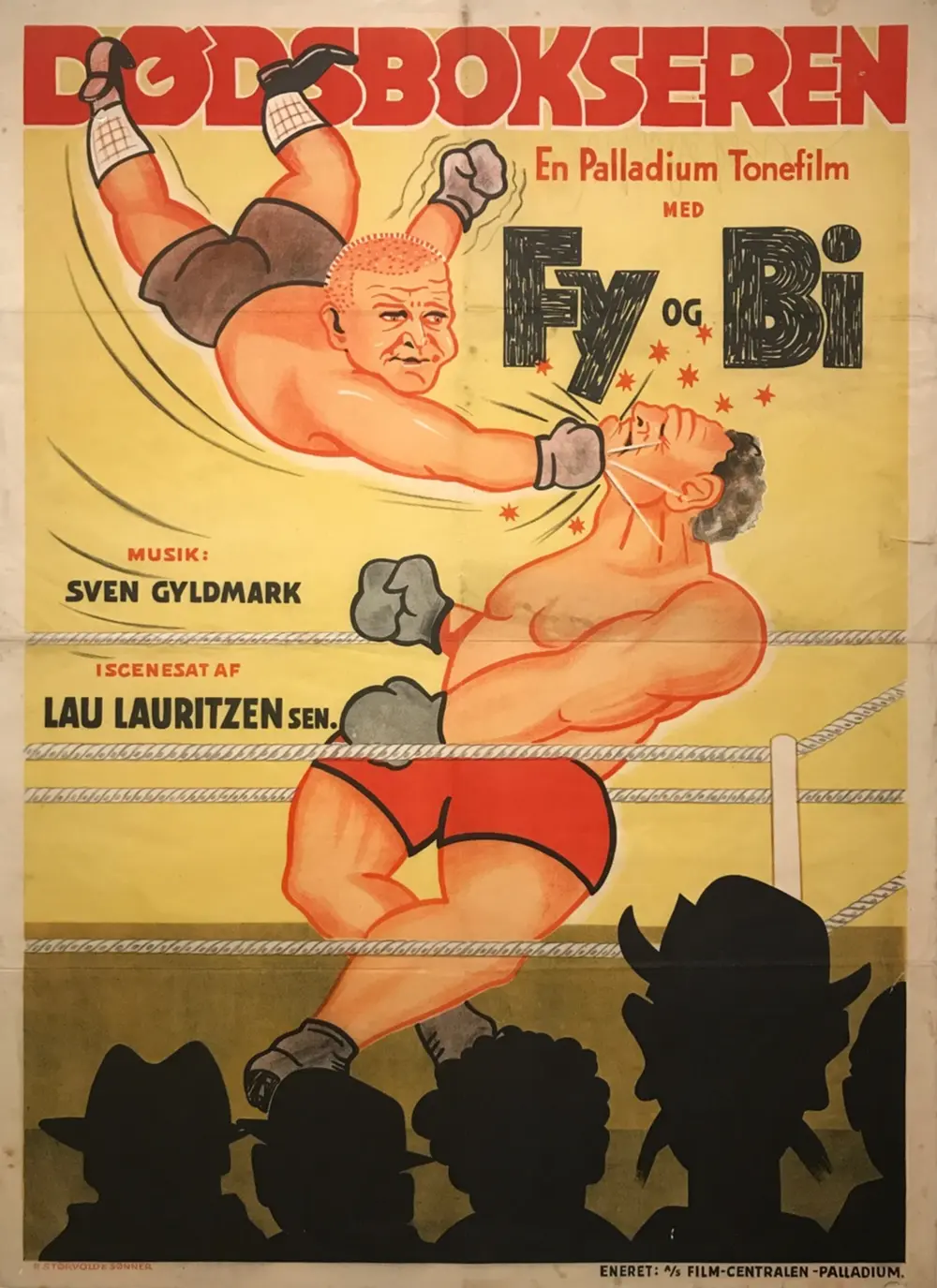
A definitive 6.6/10 rating for a film that redefined the boundaries of cult cinema. Dødsbokseren remains a cornerstone of transgressive art.
Is Dødsbokseren still a knockout today? Short answer: No, it is more of a playful jab, but it remains an essential piece of cinematic history for those who want to see the DNA of modern buddy comedies.
This film is specifically for silent cinema purists and fans of physical comedy who appreciate the 'Tall and Short' archetype. It is absolutely NOT for anyone who requires a fast-paced plot or high-definition action choreography.
1) This film works because of the undeniable chemistry between Carl Schenstrøm and Harald Madsen, whose physical contrast creates a visual punchline before a single word of dialogue is read.
2) This film fails because the middle act drags significantly, relying on repetitive gags that feel dated compared to the sharper timing of Buster Keaton or Charlie Chaplin.
3) You should watch it if you want to understand how European slapstick influenced the global comedy landscape before the talkies took over.
Dødsbokseren is a fascinating artifact. While American comedy in 1926 was leaning into the industrial scale of Golf or the high-stakes drama of The Border Legion, the Danish masters were refining the art of the duo. Carl Schenstrøm (Pat) and Harald Madsen (Patachon) were the Laurel and Hardy before Laurel and Hardy were a household name. Their presence in Dødsbokseren is a masterclass in spatial awareness.
Take, for instance, the weigh-in scene. There is a brutal simplicity to it. Pat’s skeletal frame stands in stark, almost haunting contrast to Patachon’s rotundity. The camera doesn't need to move; the comedy is built into the silhouettes. This is a recurring theme in the film. While contemporary dramas like Black Friday relied on heavy shadows and existential dread, Dødsbokseren uses flat, bright lighting to ensure every twitch of Patachon’s nose is visible.
However, the film isn't just a series of poses. The direction by Lau Lauritzen Sr. (often credited alongside A.V. Olsen’s writing) shows a clear understanding of the 'long game.' He allows the duo to milk a scene for every possible drop of humor. Sometimes, he milks it too much. There is a sequence involving the preparation for the fight that feels like it was edited with a heavy hand, or perhaps not edited enough. It lacks the surgical precision found in The Duck Hunter.
It is easy to dismiss silent comedy as mere tumbling, but Schenstrøm and Madsen bring a level of pathos to their roles that is often overlooked. Pat is not just tall; he is weary. His long limbs move with a kind of resigned exhaustion, as if he is perpetually apologetic for taking up so much vertical space. In contrast, Madsen’s Patachon is a ball of kinetic energy, a man who views the world as something to be eaten or tricked.
The supporting cast, including Lili Lani and Robert Madsen, provide the necessary 'straight' environment for the duo to disrupt. Lili Lani, in particular, offers a performance that is surprisingly grounded. Unlike the exaggerated theatricality seen in Lily of the Dust, Lani plays her role with a modern sensibility. She isn't just a prop for the men; she is a witness to their absurdity.
One unconventional observation: Dødsbokseren is secretly a film about class. The boxing ring serves as a microcosm for the struggle of the working class. Pat and Patachon are essentially vagabonds forced into a violent spectacle for the entertainment of the bourgeois. There is a moment near the end where Pat looks into the camera—not quite breaking the fourth wall, but acknowledging the audience—that feels remarkably poignant. It’s a brief flash of humanity in an otherwise silly film.
Technically, the film is a standard production for the mid-20s. The cinematography is functional, focusing on wide shots to capture the full range of physical movement. There are no innovative tracking shots here, nor the eerie atmosphere of Whispering Shadows. It is a stage-bound aesthetic that relies on the performers to create depth.
The pacing is where the film shows its age. Modern audiences, accustomed to the rapid-fire editing of today’s comedies, may find the build-ups agonizingly slow. A sequence involving a training montage goes on for nearly ten minutes with only three distinct jokes. It works. But it’s flawed. The film would have benefited from the tighter narrative structure seen in Her Honor, the Governor.
Despite this, the climactic fight is a triumph of choreography. The way the duo navigates the ropes, the referee, and their opponent is like a violent waltz. It’s not about the punches; it’s about the misses. The 'Death Boxer' of the title is a misnomer, a piece of 1920s clickbait that promises danger but delivers a soft, comedic landing.
Yes, but only if you approach it with the right mindset. You cannot watch Dødsbokseren as a standalone action film. You must watch it as a historical document. It is a bridge between the early, primitive shorts of the 1910s and the sophisticated features of the 1930s. If you enjoyed the lightheartedness of Too Much Married, you will find a similar spirit here.
It is a film that demands patience. It asks you to slow down your brain and appreciate the nuances of a shrug or a stumble. In an age of CGI and frantic cuts, there is something deeply refreshing about watching two men simply try to stand up while wearing oversized boxing gloves.
"The film is a testament to the fact that you don't need words to tell a story of friendship and failure."
Dødsbokseren is a delightful, if slightly overlong, romp through the tropes of early 20th-century sports culture. It lacks the biting social commentary of Les deux gamines or the intense drama of Tennessee's Pardner, but it makes up for it with pure, unadulterated heart. Pat and Patachon remain one of the most important duos in cinema history, and this film is a primary reason why. It isn't a masterpiece, but it is a vital piece of the puzzle. Watch it for the history; stay for the hats.
IMDb 6.8
1928
Community
Log in to comment.