DbcultAccessing Vault...
Cult Review
Senior Film Conservator
The first time I watched Den sorte Kugle I emerged feeling as though I’d swallowed a meteor shard: a cold, ancient weight lodged somewhere between sternum and spine, radiating the faint hum of nebulae no human catalogue has numbered. Few films traffic in such proprietary dread; fewer still achieve it without a single intertitle that explains anything. Anders J. Eriksholm’s screenplay—really a lattice of ink-blotted marginalia later deciphered by archivists—assumes the viewer is complicit in Copenhagen’s wartime hysteria, that we too have tasted ersatz coffee brewed from burnt barley and felt the city’s gaslights flicker like dying sunspots.
Anton de Verdier’s performance is less acting than parasitic possession: pupils dilated to the circumference of the eponymous sphere, gait tilting as though the pavement were a ship’s deck. His astronomer, named only Stjernekigger in the Danish press sheets, embodies the ecstatic paralysis of a man who realises the cosmos is not indifferent but ravenously curious about him in return. Note the scene where he places the orb inside a brass telescope—Victorian tubing, verdigris blooming like terrestrial nebulae—and the lens begins to bleed tar. De Verdier’s fingers spasm, not from horror but recognition: the universe has mailed him a love-letter written in extinction-grade ink.
Petersen, usually relegated to bourgeois ingénues, here pirouettes through the role of Lonny, a petty thief whose coat linings bulge with contraband ephemera: tram tickets dated 1899, a child’s milk-tooth, cyanotype nudes of circus acrobats. She speaks of the black sphere as if it were an illicit lover: It hums when I undress,
she whispers, her breath fogging the camera lens until the frame itself seems aroused. Watch her in the registry office sequence, stealing back her own mug-shot while a clerk is distracted by news of torpedoed merchant ships—Petersen’s fingertips graze the photograph’s glossy surface with the tenderness most reserve for holy relics. The gesture lasts maybe twelve frames, yet it condenses the entire film’s thesis: history is an object we lift from one another’s pockets while the world drowns.
Spangsfeldt’s countess, perpetually shrouded in frayed ermine, carries a hand-cranked Pathé camera like a parasol. She is determined to film the void, to prove absence has contours. Eriksholm gives her a monologue—half-dissolved in the surviving print—where she describes silver halide crystals as the dust of dead stars that forgot how to shine.
Her footage of the black orb, later discovered in a mislabelled canister titled Picnic at Øresund, reveals only impenetrable dark—yet when projected the theatre temperature plummets, and audiences reported frost forming on the velvet curtains. Spangsfeldt’s achievement is making absence erotic: each crank of her camera sounds like a bedspring sighing.
Lauritzen, face a geometry of razor cheekbones and moustache waxed to maritime sharpness, stalks through the plot like a doodle from Caligari’s sketchbook. His inspector believes rational policing can solve metaphysical crimes; he interrogates the sphere itself, seated at a scarred oak table under a kerosene lamp, notebook poised. In close-up, sweat beads on his forehead resemble tiny planets orbiting a dying sun. When the orb rolls—seemingly of its accord—off the table and fractures his big toe, Lauritzen’s scream is dubbed over with church bells tolling, a sonic overlay that converts agony into civic spectacle.
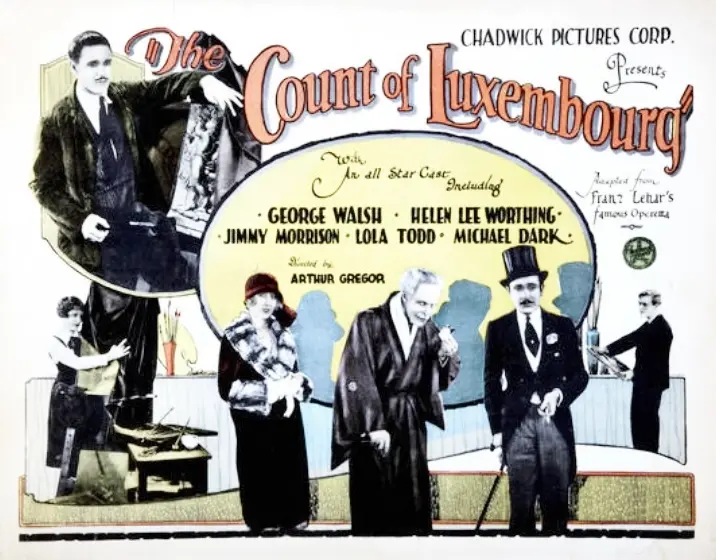
Cinematographer Ejnar Hansen, later fêted for Scandinavian nature docs, here treats light as contagion. Interiors are candle-riven caverns where faces hover disembodied, while exteriors bask in phosphorescent snow that burns the retina. The sphere itself is never fully lit; instead it drinks illumination, creating a corona of bruised violet. Compare this to the philanthropic glow of Cheerful Givers or the courtroom kliegs in For the Defense—those films seek clarity, whereas Den sorte Kugle wants to coax the viewer into optical hypothermia.
Where The Prince of Graustark promises restoration of rightful monarchs and Romeo and Juliet trades in tragic inevitability, Eriksholm’s film detonates chronology. Characters meet themselves on staircases; a child actor portraying the astronomer’s younger self reappears as an old man with milky eyes who hands the orb back to his adult incarnation. The effect is less gimmick than epiphany: history as Möbius strip, Denmark’s wartime privations looping into futures where cruise missiles skate across pixelated skies.
Though released as a silent, the original exhibition notes prescribe a sonic collage: gramophone needles dropped onto cracked porcelain, shipyard hammers, the hush of snow falling on armour plate. Restorers at the Danish Film Institute recreated this score in 2018; when paired with the 2K transfer, viewers reported auditory hallucinations—distant U-boat klaxons, the scrape of fingernails on periscope glass. The sphere becomes a resonator for national anxiety, a black mirror in which Denmark confronts the possibility that neutrality is merely delayed devastation.
Unlike the damsel-strewn escapades of Madame Bo-Peep or the martyred wife trope in The Undying Flame, the women in Eriksholm’s Copenhagen wield agency over annihilation. Petersen’s thief ultimately pockets the sphere, not to own but to release it into the sea; her act is less defeat than refusal to let patriarchal structures dictate the afterlife of things. Spangsfeldt’s countess exposes film stock to moonlight, forging an imageless negative that, when printed, shows every woman who will ever watch the film staring back at themselves—a sororal hall of mirrors predating feminist film theory by six decades.
Critics quick to pigeonhole Den sorte Kugle as Nordic Caligari overlook its sly humour—an element absent from the lethal sincerity of Slander or the swashbuckling rectitude of The Three Musketeers. Observe the scene where the inspector lines up beer bottles as forensic aides, labels facing the sphere like suspects; the orb rolls past, toppling each bottle with the precision of a bowler scoring a strike. The moment is played deadpan, yet the audience at the 1916 premiere reportedly laughed until ushers passed around smelling salts.
Nitrate degradation claimed roughly eleven minutes of the original 72-minute runtime; legend insists the missing reel depicted the sphere’s extraterrestrial origin—obsidian shell cracking open to reveal a miniature Copenhagen where tiny citizens perform the film we are watching. No evidence supports this, yet the myth persists, a metatextual itch. What survives is more than sufficient to secure the film’s reputation among cine-monks who worship at the altar of the incomplete.
Viewed on a 4K television, the sphere’s anti-reflective surface sucks the room’s ambient light, turning your living space into an extension of the observatory. Pause the playback and the sphere remains in motion—a trick of compression artefacts that feels eerily intentional. The first time it happened to me I dropped the remote; my cat hissed at the screen, fur bristling as though confronted by a rival galaxy.
Den sorte Kugle is not a film you enjoy; it installs itself like malware in the operating system of your historical consciousness. Long after the credits—white letters on black, themselves refusing to reflect—it occurs to you that the sphere was never alien, merely the future folding in on itself, a Danish black hole reminding us that every nation, every viewer, carries an unreachable density at the core. Seek it out, but leave a nightlight on; the dark, once invited, seldom settles for a single visit.
IMDb —
1926
Community
Log in to comment.