DbcultAccessing Vault...
5.4/10
Senior Film Conservator
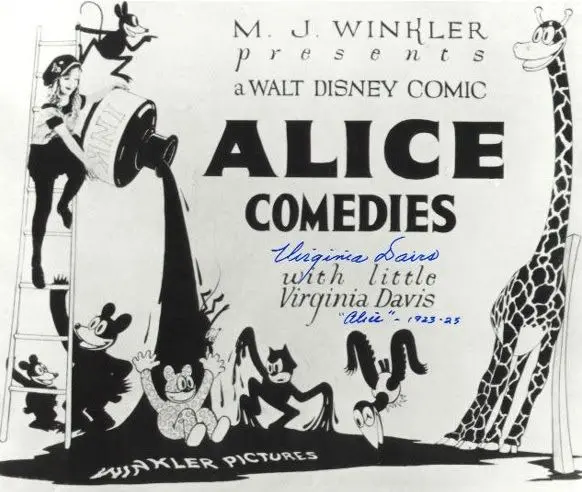
A definitive 5.4/10 rating for a film that redefined the boundaries of cult cinema. Alice at the Carnival remains a cornerstone of transgressive art.
Is Alice at the Carnival worth watching today? Short answer: yes, but primarily as a fascinating artifact of technical ambition rather than a narrative powerhouse.
This film is for animation historians, silent film completionists, and anyone who enjoys the 'uncanny valley' of early 20th-century media. It is absolutely not for those seeking a modern narrative structure or high-definition visual clarity.
1) This film works because it embraces the chaos of the carnival setting to justify its experimental, non-linear animation gags.
2) This film fails because the live-action integration often feels disconnected from the stakes of the animated world, leading to a fragmented viewing experience.
3) You should watch it if you want to see the literal blueprints of the Disney empire before the mouse took over the world.
Alice at the Carnival is worth watching if you appreciate the raw, unpolished energy of early cinema. While it lacks the emotional weight of contemporary shorts like The Last Chance, it offers a unique glimpse into the 'Alice Comedies' era. The film serves as a bridge between the vaudeville tradition and the future of character-driven animation. It is a brief, six-minute burst of creativity that rewards those who look past the grain and flicker of the aged celluloid.
By 1927, the Alice Comedies were reaching their twilight, and the technical confidence of the Disney studio was at an all-time high. Margie Gay, the third actress to play Alice, brings a different energy than her predecessors. She feels more like a participant in the madness rather than a bewildered observer.
In one specific scene, Alice and Julius the Cat approach a high-speed ride. The way Gay interacts with the empty space—space that would later be filled by the animators—is surprisingly precise. It lacks the stiffness found in earlier entries like Good Little Brownie. There is a fluidity here that suggests the actors and animators were finally speaking the same language.
The carnival setting is a stroke of genius for this medium. Carnivals are, by nature, sensory overloads. They are disjointed, loud, and visually cluttered. This mirrors the silent film experience of the time. The film doesn't need a plot because the setting provides all the motivation required: move from one attraction to the next.
The animation in Alice at the Carnival is surprisingly aggressive. Julius the Cat isn't just a sidekick; he is a force of nature. His body contorts, stretches, and breaks in ways that defy even the loose logic of the time. This 'rubber-hose' style would become a staple, but here it feels experimental and dangerous.
Contrast this with the grounded, dramatic cinematography of a film like Shame. Where other films of the 1920s were trying to mimic theater or literature, Disney was trying to create a new reality entirely. The carnival rides become abstract shapes. The characters become lines of energy.
I would argue that the 'uncanny' nature of seeing a real girl interact with a cartoon cat is more effective as surrealist art than as a children's story. It is inherently strange. It creates a psychological friction that modern, seamless CGI simply cannot replicate. It’s raw. It’s jittery. It works.
When looking at other films from this period, such as The Hick or Single-Handed Sam, we see a heavy reliance on situational comedy. Alice at the Carnival takes this a step further by removing the limitations of the physical world.
In a sequence involving a sideshow, the visual gags rely on the 'impossible.' A character might be flattened or inflated. This isn't just for laughs; it's a demonstration of power by the filmmaker. While a film like The Night Cry relied on the tension of a real-world threat, Alice at the Carnival finds its tension in the unpredictability of the frame itself.
The pacing is relentless. Unlike the slow-burn drama of The Heart of a Woman, this short demands your attention every second. If you blink, you miss a frame-perfect gag. This frantic energy is what makes it feel modern, despite its age.
Here is a hot take: Julius the Cat is a better character than early Mickey Mouse. In Alice at the Carnival, Julius displays a level of cynicism and edge that was later sanded off Disney's characters to make them more marketable. Julius is a product of the jazz age—he's a bit of a jerk, he's reckless, and he's far more interesting than the 'aw-shucks' persona Mickey would later adopt.
Furthermore, the carnival itself feels like a metaphor for the cinema of attractions. It doesn't want to tell you a story about a girl at a fair. It wants to be the fair. It wants to provide the same cheap thrills and visual shocks as a real-life roller coaster. In that sense, it is one of the most 'honest' films of its decade.
Alice at the Carnival is a manic, fascinating, and occasionally haunting piece of cinema history. It doesn't have the grace of Beauty and the Beast or the dramatic weight of Landru, der Blaubart von Paris, but it doesn't try to. It is content to be a playground for the imagination.
It works. But it's flawed. It’s a sketch of a future empire, drawn in shaky ink and recorded on silver nitrate. If you can appreciate the beauty in that fragility, you will find much to love here. For everyone else, it’s a six-minute curiosity that serves as a reminder of how far we’ve come—and perhaps, how much of that early, wild energy we’ve lost.
"A chaotic, rubber-hose fever dream that proves Walt Disney was a mad scientist long before he was a mogul."

IMDb —
1935
Community
Log in to comment.