DbcultAccessing Vault...
Cult Review
Senior Film Conservator
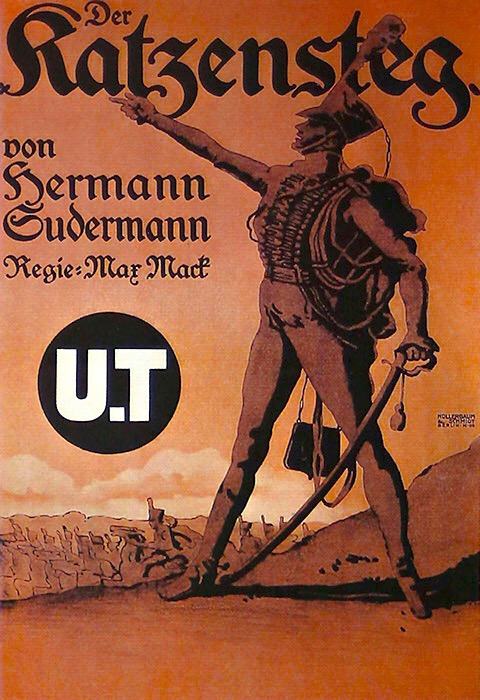
There are films that merely tell a story, and then there are those that etch themselves into the very fabric of memory, not just for their narrative prowess but for the profound emotional landscape they invite you to traverse. Max Mack's Der Katzensteg, a silent German drama from an era now distant, belongs unequivocally to the latter category. It is a cinematic experience that, despite its lack of spoken dialogue, communicates with an eloquence often missing in contemporary productions, painting a vivid portrait of human frailty, societal prejudice, and the indomitable spirit of truth. From its opening frames, the film draws you into a world steeped in the heavy atmosphere of a remote, insular village, a place where whispers carry more weight than declarations, and suspicion festers beneath a veneer of communal harmony.
The very title, "Der Katzensteg" – the Catwalk or Cat Bridge – is imbued with a symbolic weight that permeates every aspect of the film. It's not merely a physical structure but a potent metaphor for the precarious connections, the narrow paths, and the fragile divides that define the lives of its characters. This rickety wooden bridge, spanning a treacherous marshland, is the sole direct link between the isolated farmstead where the spirited Regine (Käthe Haack) resides with her ailing grandmother, and the main village. Regine, portrayed with a captivating blend of independence and vulnerability by Haack, exists on the periphery, her perceived 'otherness' making her an easy target for the villagers' veiled judgments. Her life is a testament to quiet perseverance, a daily battle against the elements and the subtle, insidious pressures of a community that views anything outside its norms with deep distrust. The film establishes this dynamic with a subtlety that speaks volumes, allowing the audience to feel the weight of Regine's isolation without a single expositional intertitle.
Into this setting arrives Boleslav (Ludwig Trautmann), a Prussian officer whose return to his ancestral, albeit decaying, manor is shadowed by a cloud of disgrace. Accused of cowardice during a pivotal Napoleonic battle, his reputation has been systematically dismantled by the influential and malevolent village elder, Herr von Muhr (Wilhelm von Muhr). Trautmann’s portrayal of Boleslav is a masterclass in silent film acting, conveying a man haunted by an unjust past, his every gesture and expression radiating a profound sense of injustice and inner turmoil. He is an outcast, much like Regine, and it is this shared marginalization that forms the crucible of their burgeoning connection. Their chance encounters on the Katzensteg become more than mere meetings; they are symbolic crossings, bridging not just physical distance but the vast social and emotional chasm that separates them from the judgmental world around them. Regine, with her unvarnished honesty, sees beyond the rumors that cling to Boleslav like marsh mist, recognizing the inherent nobility and suffering beneath his tarnished exterior. Boleslav, in turn, finds in Regine a rare sanctuary, a soul untainted by the village's pervasive gossip and prejudice. It's a romance born of shared solitude, a quiet defiance against the dictates of a rigid society, reminiscent of the societal pressures explored in films like Zaza, though with a distinctly German dramatic sensibility.
The narrative gains considerable momentum with the disappearance of a crucial document—one that could potentially exonerate Boleslav and restore his honor. This plot device, expertly crafted by writers Max Mack, Adolf Lantz, and Hermann Sudermann, serves as the catalyst for the film's escalating conflict. Herr von Muhr, brought to life by Wilhelm von Muhr with a chilling portrayal of self-righteous malice, seizes upon this development. His long-standing animosity towards Boleslav's family, rooted in a history of perceived slights and social rivalry, fuels his calculated manipulation of the villagers. He skillfully twists the narrative, presenting Boleslav's efforts to clear his name as a desperate, illicit grab for power, further cementing the officer's image as a dangerous outsider. The film masterfully depicts the insidious spread of misinformation, the way a community, once swayed by a powerful voice, can descend into collective paranoia. It’s a timeless theme, one that resonates deeply even today, highlighting the fragility of truth in the face of ingrained bias. The escalating tensions are palpable, creating a dramatic atmosphere that rivals the best thrillers of the era, perhaps even finding a spiritual cousin in the intricate deceptions of The Conspiracy, albeit with a more intimate, village-centric focus.
The performances across the board are commendable, a testament to the power of non-verbal storytelling. Käthe Haack as Regine is particularly luminous, her expressive eyes and nuanced body language conveying a depth of emotion that transcends the limitations of the silent medium. Her resolve, her quiet defiance, and her unwavering loyalty to Boleslav form the moral compass of the film. Ludwig Trautmann, as Boleslav, embodies the tragic hero with a gravitas that commands empathy. His struggle for redemption is not merely external but deeply internal, etched onto his weary countenance. Georg Lengbach, Karl Platen, and Paul Leni, among others, contribute to the rich tapestry of village life, each caricature, each concerned glance, each judgmental smirk adding layers to the oppressive atmosphere. The supporting cast, including Bruno Lopinski, Leontine Kühnberg, Victor Hartberg, and Ferdinand Bonn, collectively create a believable, if often hostile, community. Their reactions, their gossiping, their fear, are all integral to the film's success in portraying a society on the verge of breakdown.
Visually, Der Katzensteg is a triumph. The cinematography is exquisite, utilizing stark contrasts between light and shadow to heighten the dramatic tension and underscore thematic elements. The marshland, with its swirling mists and gnarled trees, becomes almost a character in itself, reflecting the bleakness and moral ambiguity of the human drama unfolding within it. The Katzensteg itself is filmed with a keen eye for its symbolic weight – at times a beacon of hope, at others a pathway to peril. The meticulous set design, capturing the rustic authenticity of the farmstead and the decaying grandeur of Boleslav's manor, further immerses the viewer in this historical period. The direction, likely influenced by Max Mack's keen understanding of visual storytelling, ensures that every frame contributes to the overarching mood and narrative progression. This visual artistry is a hallmark of the silent era, where the camera became the primary storyteller, often surpassing the capabilities of early sound films in its evocative power. One could even draw parallels to the atmospheric depth found in films like Escaped from Siberia, where the landscape itself plays a crucial role in shaping destiny, albeit in a vastly different geographical context.
The film’s pacing is deliberate, allowing the psychological tension to build organically, rather than relying on rapid-fire edits. This measured approach grants the audience ample opportunity to absorb the emotional nuances of each scene, to truly understand the motivations and fears driving the characters. It's a testament to the belief that silence can be profoundly eloquent, that a lingering shot of a character's face, or the ominous sway of the Katzensteg in the wind, can convey more than pages of dialogue. This thoughtful rhythm is a characteristic of many enduring silent dramas, offering a meditative quality that encourages deeper engagement. The story, crafted by Mack, Lantz, and Sudermann, navigates complex themes of honor, social class, and the destructive nature of rumor with remarkable clarity and emotional impact. It’s a narrative that probes the depths of human character, exploring how easily prejudice can take root and how difficult it is to uproot once it has become entrenched in the collective consciousness.
As the village's frenzy reaches a fever pitch, fueled by von Muhr's malicious propaganda, Regine, driven by an unshakeable belief in Boleslav's innocence, risks everything. Her quest for truth leads her to uncover damning evidence implicating von Muhr in the document's disappearance and the systematic slandering of Boleslav's name. This act of courage sets the stage for the film's breathtaking climax, a sequence of events that is both visually stunning and emotionally devastating. The culmination unfolds on the Katzensteg itself, as the villagers, whipped into a mob by von Muhr's hateful rhetoric, converge, intent on confronting Boleslav at his estate. The image of the enraged crowd surging across the narrow, already fragile bridge is a powerful visual metaphor for the destructive force of collective delusion. Regine, caught in the maelstrom, desperately attempts to protect Boleslav and expose von Muhr's treachery. The bridge, unable to withstand the weight of the frenzied mob and the emotional burden of the conflict it represents, dramatically gives way. This collapse is not just a physical event but a profound symbolic one, representing the shattering of trust, the breakdown of community, and the ultimate, tragic consequence of unchecked prejudice. The dramatic tension here is reminiscent of other climactic confrontations where society's darkest impulses are exposed, perhaps even echoing the raw, visceral stakes found in The Mystery of St. Martin's Bridge, though with a distinct focus on social, rather than criminal, unraveling.
The resolution, while offering a measure of justice with the eventual revelation of the exonerating document, is far from a simple happy ending. It comes at a significant personal cost, leaving an indelible mark on Regine and Boleslav, and forcing the villagers to confront the devastating consequences of their own biases and the true nature of their manipulative leader. The film avoids facile sentimentality, instead opting for a more complex, bittersweet conclusion that lingers long after the final frame. It's a powerful reminder that while truth may eventually surface, the scars left by injustice and communal animosity can be profound and lasting. This nuanced approach to resolution elevates Der Katzensteg beyond mere melodrama, cementing its place as a thoughtful and impactful drama of its time.
Considering the era of its production, Der Katzensteg stands as a remarkable achievement in German silent cinema. It showcases the technical and artistic sophistication of filmmakers working without the crutch of synchronized sound, relying instead on powerful visual language, compelling performances, and a meticulously crafted narrative. The themes explored within the film – the destructive power of rumor, the courage required to stand against the tide of popular opinion, the solace found in unexpected connections, and the enduring human quest for truth and redemption – are as relevant today as they were a century ago. It's a testament to the universal nature of these struggles that a film devoid of spoken dialogue can still communicate so profoundly across generations and cultures. The film's depiction of social stratification and the vulnerability of the marginalized could even be seen in conversation with other period pieces dealing with social commentary, such as The Idler or The Third String, though Der Katzensteg maintains a uniquely German expressionistic undercurrent.
For cinephiles and historians alike, rediscovering Der Katzensteg is a rewarding experience. It offers not just a glimpse into the filmmaking techniques of a bygone era but also a mirror reflecting timeless human dilemmas. The contributions of its writers, Max Mack, Adolf Lantz, and Hermann Sudermann, are evident in the taut structure and emotional depth of the story, ensuring that the visual spectacle is underpinned by a robust narrative framework. The cast, with Käthe Haack and Ludwig Trautmann at its fore, delivers performances that are both nuanced and powerful, proving that the absence of audible dialogue does not equate to a lack of emotional resonance. Indeed, the silent film era often demanded a heightened sense of theatricality and expressive physicality from its actors, a demand that this ensemble meets with remarkable skill.
In conclusion, Der Katzensteg is more than just a historical artifact; it is a vibrant, compelling piece of cinema that continues to speak to the human condition with remarkable clarity and emotional force. It reminds us of the power of visual storytelling, the enduring resonance of a well-crafted drama, and the timeless struggle between truth and prejudice. If you have the opportunity to experience this cinematic gem, do not hesitate. It's a journey across a fragile bridge, into the heart of a community, and ultimately, into the depths of the human soul. A truly exceptional film that deserves its place among the celebrated works of the silent era, standing tall alongside other compelling historical dramas and romantic tales that explore the human spirit under duress, such as the poignant narratives found in Loves and Adventures in the Life of Shakespeare or the intricate character studies within When We Were Twenty-One, though Der Katzensteg possesses a unique, somber beauty distinctly its own.
IMDb 6.2
1931
Community
Log in to comment.