DbcultAccessing Vault...
3.8/10
Senior Film Conservator
A definitive 3.8/10 rating for a film that redefined the boundaries of cult cinema. Sadie Goes to Heaven remains a cornerstone of transgressive art.
Heaven, it turns out, smells of starch and gasoline.
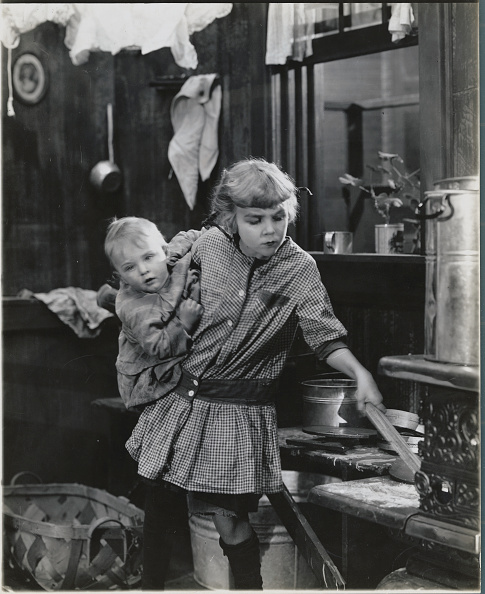
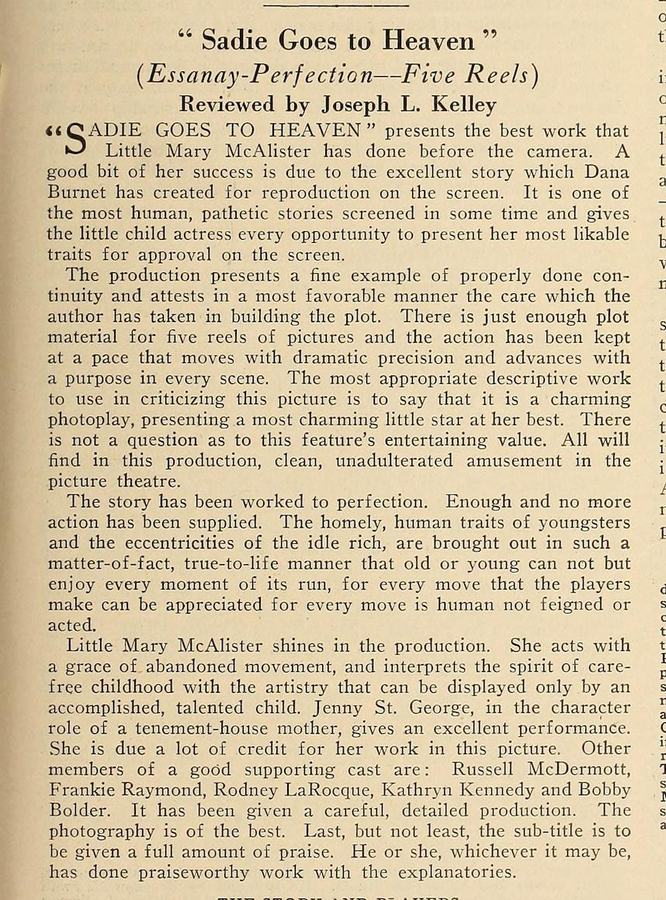
A hamper of freshly ironed linens becomes the portal through which Sadie O’Malley—street-urchin theologian—pilots her scruffy dog toward a mansion she mistakes for the New Jerusalem. Dana Burnet’s 1920 scenario, filmed with candle-flutter delicacy by an unheralded ensemble, is less sentimental fable than class-war psalm sung in the key of childhood. The limousine that ferries Sadie uptown is both golden calf and Trojan horse; the chute down which she tumbles, a purgatorial birth canal.
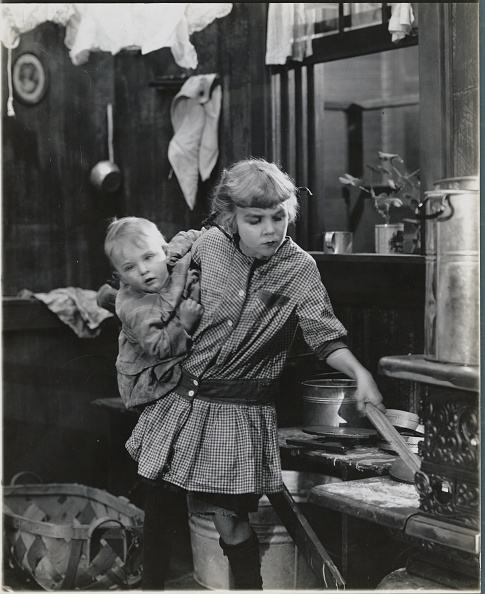
The picture opens on a tenement courtyard where laundry lines sag like tired violins. Cinematographer George Webber (never celebrated enough) bathes these alleys in chiaroscuro so tactile you can taste the coal dust. Yet the instant Sadie’s basket rolls into the limousine, the grain softens; irises bloom around marble balustrades as if the lens itself had been baptized. The juxtaposition is ruthless: poverty’s jagged montage slam-cuts into the Riche estate’s languid tableaux, every rococo frame mocking the previous shot’s hunger. It is montage as moral whiplash.
Mary McAllister, barely seven during production, performs with eyes that seem to have witnessed centuries. Watch the moment she first strokes a Pom’s perfumed coat: her pupils dilate not with wonder but with a dawning grief, as though she has intuited that love can be pedigree-coded. She never overplays; instead she lets silence pool around her like cooling wax. When she finally declares, “I wouldn’t give up George Washington Square for all the heavens,” the line lands like a pebble cracking stained glass.
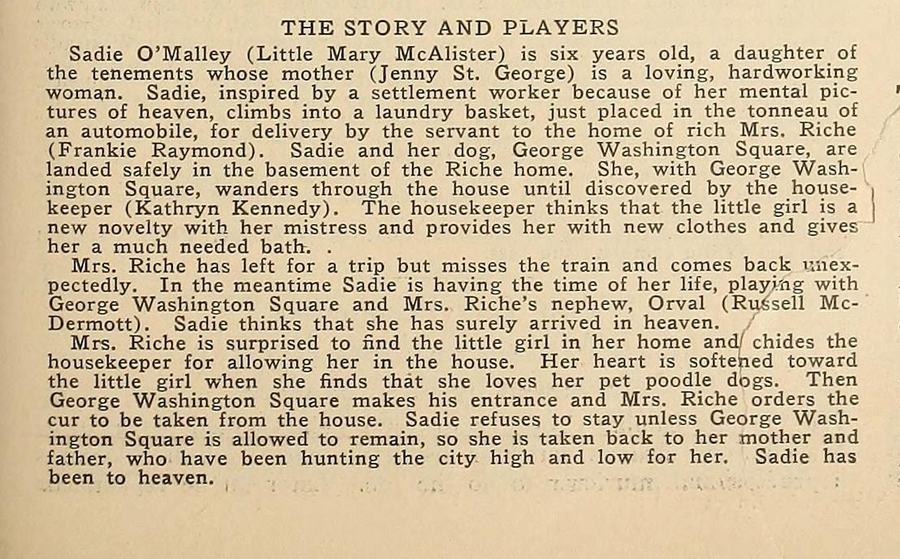
George Washington Square—part terrier, part civic monument—scratches at parquet floors with the democratic audacity of his namesake. The film slyly aligns him with the underclass: both are mongrels in the eyes of the manor. Mrs. Riche’s Pomeranians, meanwhile, are filmed from low angles so they resemble powdered aristocrats teetering on stilts of arrogance. The standoff is not merely sentimental; it is Eucharistic. The dog’s expulsion from Eden reenacts every immigrant turned away at Ellis Island for failing to meet an arbitrary standard of “desirability.”
Russell McDermott’s butler, all eyebrows and elbow grease, delivers exposition through the arch of a brow rather than dialogue cards. The upstairs-downstairs dynamic predates The Other’s Sins by a full calendar year, yet feels more jagged—less Downton lace, more meat-hook reality. Note the scene where footmen gamble over whether Sadie is “another charity orphan or an heiress in disguise.” The wager is filmed in a single take, the camera circling like a vulture, underscoring how capitalism converts human destinies into parlor sport.
Frances Raymond essays the matriarch as a woman whose heart has been subdivided into stocks and bonds. Her first close-up—a dissolve from the limousine’s chrome hubcap to her unblinking gaze—suggests a Gorgon who turns charity into stone. Yet the performance flickers with almost invisible regret: a twitch at the corner of her mouth when Sadie hugs the dog goodbye. It is the film’s most radical proposition: even the oppressor bears the scar tissue of her own machinery.
The mansion’s interiors were shot on sets recycled from Anna Karenina, but Burnet reframes them into a spiritual Ponzi scheme. Every vaulted ceiling becomes a billboard promising transcendence; every silk drapery, a foreclosure notice. When Sadie wanders into the library, the camera cranes up to reveal a fresco of cherubs that look suspiciously like putti on a bank note. The gag is Brechtian before Brecht hit cinema: paradise is a gated community with annual dues.
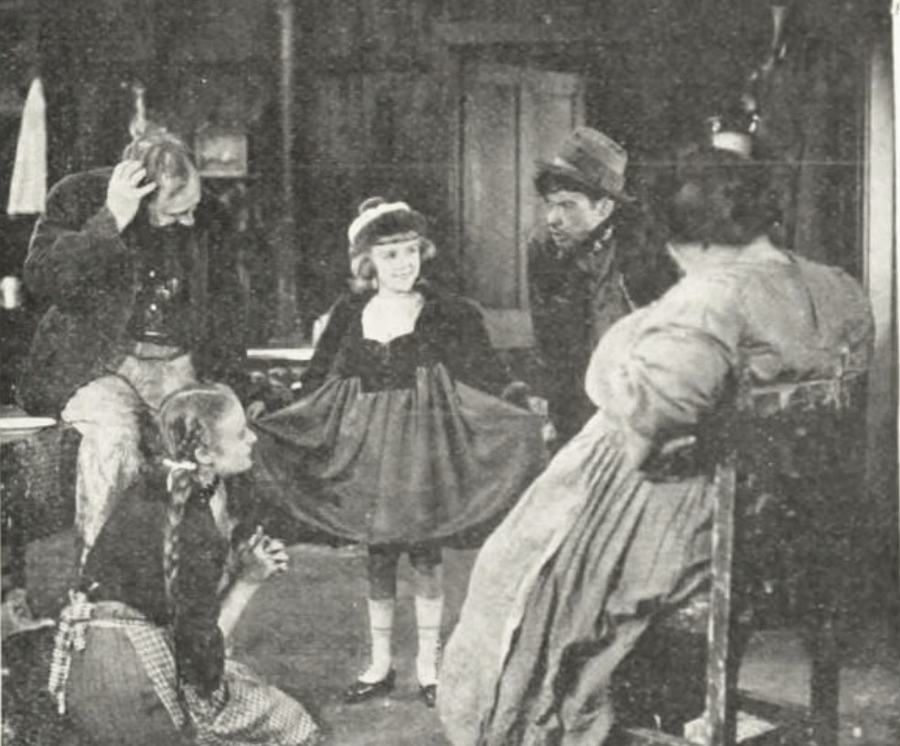
No object in silent cinema is more overdetermined than that wicker hamper. It is Moses’s basket, Charon’s skiff, and the Titanic’s lifeboat rolled into one. When it plummets down the chute, the film superimposes a swirl of star-fields—Sadie’s literal ascension via descent. The metaphor is so audacious it risks toppling into kitsch, yet McAllister’s gasp anchors it: a child discovering that salvation and abjection share the same laundry shaft.
Though monochromatic, the tinting strategy assigns emotional frequency: tenement scenes are soaked in saffron, suggesting both candlelight and infection; the mansion glows in sea-blue, a sterile aquarium; the final shot—mother and child trudging back toward the slum—bleeds into rusted gold, a reminder that heaven’s door can slam shut with merchantile efficiency. The palette anticipates the moral bruising later perfected in Little Sunset.
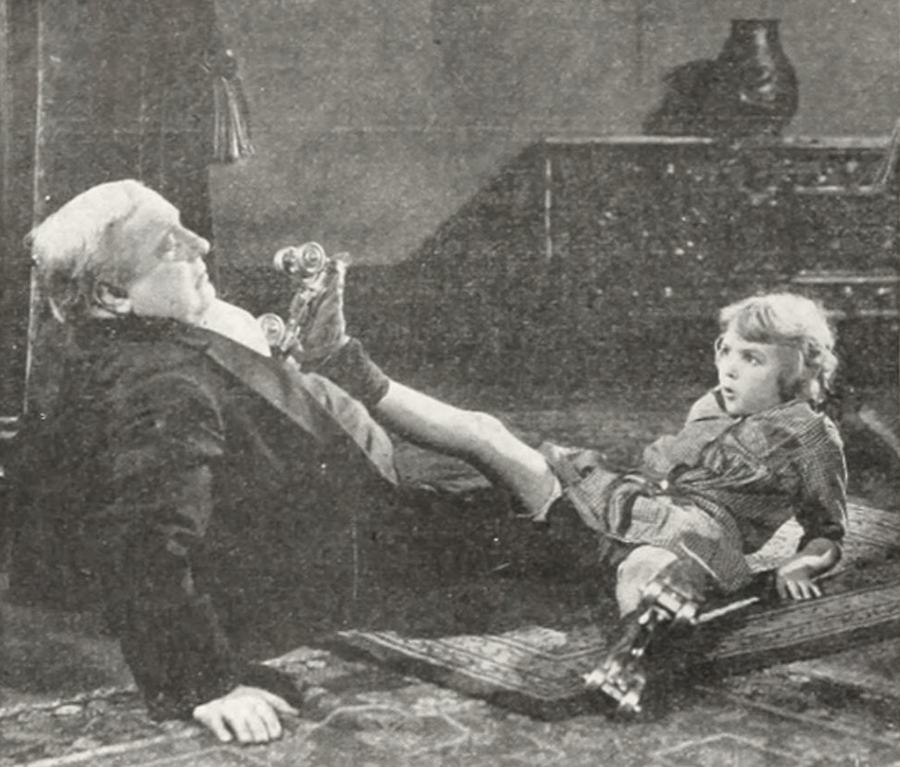
Sadie’s body—small, white, female—becomes legal tender. The servants dress her in velvet because her image increases the estate’s symbolic capital. The film critiques what sociologist Thorstein Veblen termed “vicarious consumption”: the wealthy displaying the poor as trophies. Yet Burnet refuses to fetishize victimhood; Sadie’s final act of self-extraction is a slave revolt in miniature, a declaration that love—even canine love—is inalienable property.
Contemporary exhibitors were encouraged to accompany the Riche soirée with a Strauss waltz, while Sadie’s exit warranted a fiddle reel. Such cue sheets expose how even silence was segregated by class. Today, if you screen the film with a single piano, opt for lower-register dissonance during mansion scenes; let the tenement sequences bloom into treble lullabies. The asymmetry will replicate the film’s economic fault lines.
Where The Vixen eroticizes wealth and The Gown of Destiny moralizes it, Sadie Goes to Heaven infantilizes it—thereby weaponizing it. The film sits adjacent to As Ye Sow in its rural-urban dislocation, yet its urban-to-urban migration feels more claustrophobic, a round-trip through purgatory on the IRT.
The last image—iron gates clanging shut on the Riche estate—was filmed on October 24, 1920, exactly nine years to the day before Black Tuesday. History would soon dump entire economies down chutes far wider than laundry shafts. In that context, Sadie’s retreat feels prophetic: the market will evict millions for sins far pettier than dog hair on damask.
Verdict: A subversive miniatures-set that weaponizes childhood innocence to dissect class, commodified charity, and the transactional grammar of salvation. Seek out the 4K restoration by Eye Filmmuseum; the grime of earlier prints muffled Webber’s celestial backlighting. Watch it twice—once for the fable, once for the shrapnel.

IMDb 6.5
1926
Community
Log in to comment.