DbcultAccessing Vault...
7.2/10
Senior Film Conservator
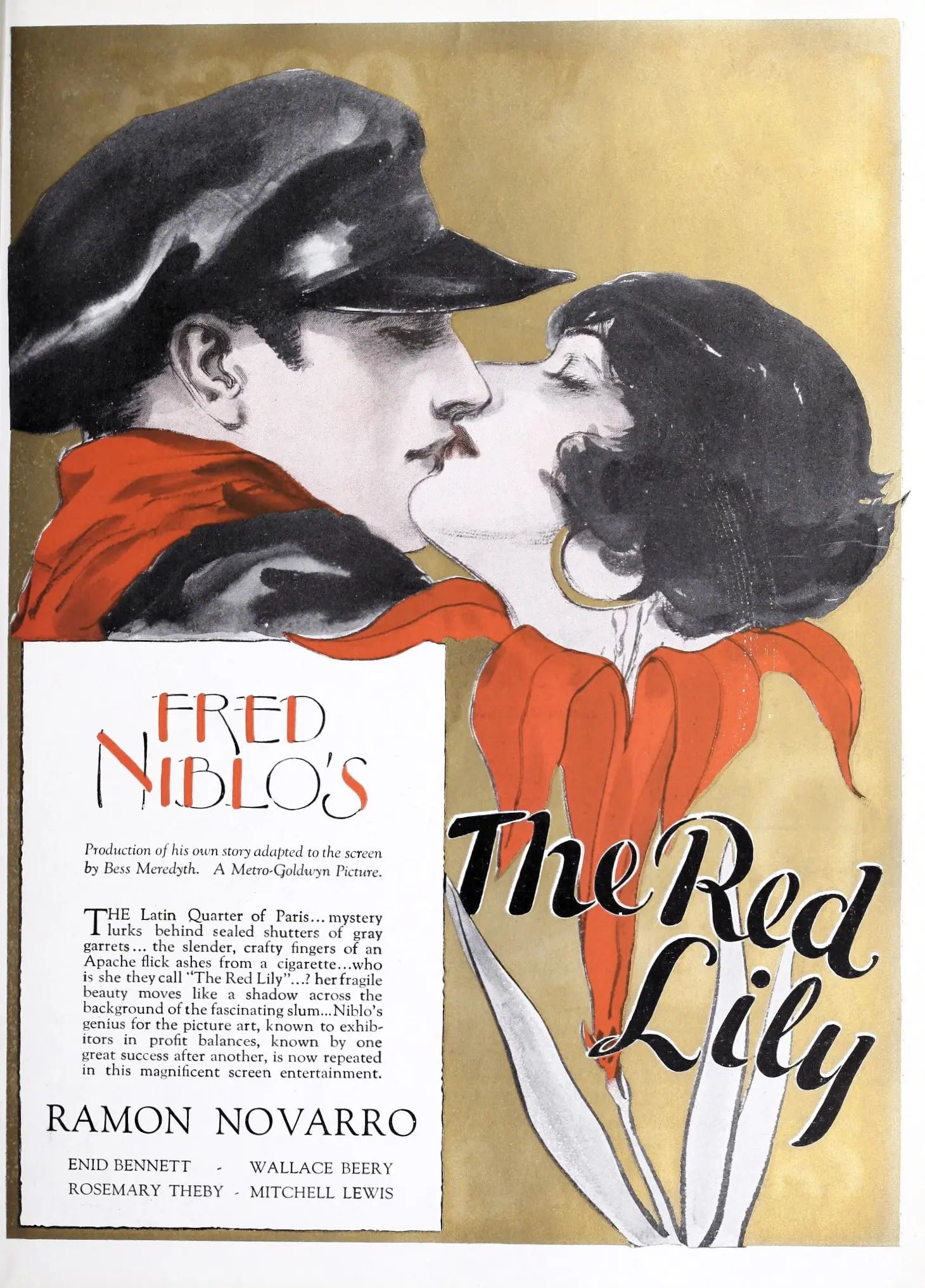
A definitive 7.2/10 rating for a film that redefined the boundaries of cult cinema. The Red Lily remains a cornerstone of transgressive art.
The year 1924 represented a peculiar zenith for silent cinema, a moment when the grammar of visual storytelling had reached a sophisticated maturity just before the seismic intrusion of synchronized sound. Within this fertile landscape, Fred Niblo—a director often celebrated for his swashbuckling spectacles—delivered The Red Lily, a film that eschews the grandiosity of his previous ventures for a visceral, almost tactile immersion into the sociology of despair and the persistence of love. It is a work of profound chiaroscuro, both literally in its cinematography and metaphorically in its exploration of the human condition. Unlike the adventurous escapism found in Queen of the Sea, Niblo here pivots toward a gritty realism that anticipates the noir sensibilities of later decades.
The narrative architecture of The Red Lily is built upon the stark juxtaposition between the bucolic idealism of the French countryside and the predatory atmosphere of the Parisian metropolis. When Jean (Ramon Novarro) and Marise (Enid Bennett) arrive at the Gare du Nord, the camera captures the overwhelming scale of the city, rendering our protagonists as infinitesimal specks in a chaotic vortex. This isn't the Paris of postcards; it is a Dickensian meat grinder. The screenplay, penned with a sharp eye for social inequity by Bess Meredyth, ensures that their separation isn't merely a plot device but an inevitability of their economic vulnerability. While films like A Yankee Princess might lean into the whimsical, Niblo’s Paris is a character in its own right—damp, claustrophobic, and unforgiving.
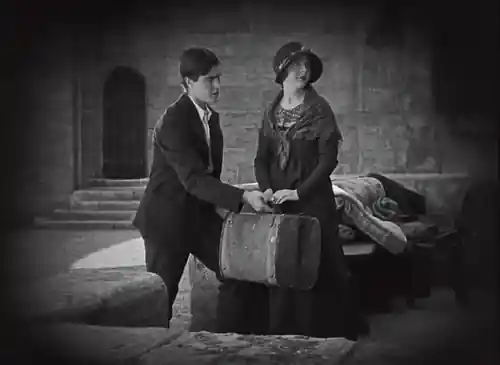
Ramon Novarro, frequently cast as the archetypal 'Latin Lover,' delivers a performance here that is startling in its physical and emotional degradation. We witness Jean’s transformation from a wide-eyed youth into a hollowed-out thief with a nuance that defies the often-broad gestures of the silent era. His descent is not a sudden plunge but a slow erosion of morality, necessitated by the primal urge to survive. There is a sequence in a rain-slicked alleyway that rivals the atmospheric tension found in Shattered, where Novarro’s face becomes a canvas of conflicting impulses—shame, hunger, and a flickering, desperate hope. It is a masterclass in internalize acting, proving that Novarro possessed a range far beyond the decorative roles he was frequently assigned.
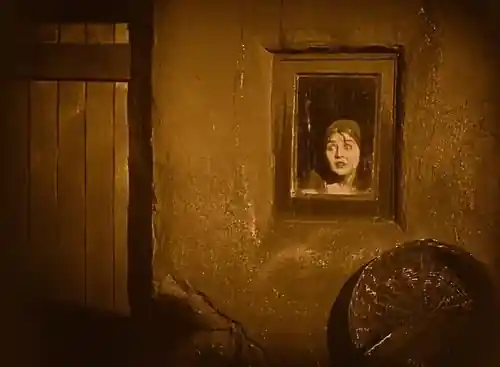
Enid Bennett’s portrayal of Marise is equally compelling, though it occupies a more tragic register. She represents the 'Red Lily' of the title—a flower blooming in the muck. Her trajectory from a laundress to a woman of the streets is handled with a surprising amount of empathy and restraint for 1924. Niblo avoids the moralizing tone that plagued many contemporary dramas, such as If Women Only Knew. Instead, he focuses on the systemic forces that strip Marise of her agency. Bennett’s eyes convey a haunting weariness; she becomes a ghost haunting her own life, searching for a ghost of the man she once knew. The chemistry between her and Novarro, though they spend much of the film apart, is established so potently in the first act that their eventual, tragic reunion carries an immense emotional weight.
Providing the necessary friction to this tragic romance is Wallace Beery as Boleta, a character who embodies the seductive rot of the underworld. Beery, with his hulking physicality and deceptive joviality, serves as the catalyst for Jean’s moral corruption. He is the serpent in this urban Eden, offering a way out of penury that leads directly to perdition. The dynamic between Beery and Novarro creates a tension that mirrors the darker themes found in Drifting. Boleta isn't a cartoonish villain; he is a pragmatist who has long since abandoned his soul, and he views Jean’s lingering conscience as a weakness to be exploited or purged.
Visually, The Red Lily is a triumph of silent-era lighting and set design. The cinematography utilizes deep shadows to create a sense of impending doom, reflecting the psychological states of the characters. The recurring motif of the lily—initially a symbol of purity in the village—becomes increasingly distorted as the film progresses. By the time we reach the climax, the flower is a relic of a forgotten life, a painful reminder of what has been lost. This level of visual cohesion is reminiscent of the meticulous craftsmanship seen in Maulwürfe, where the environment is inextricably linked to the narrative's thematic core. The pacing, too, is deliberate, allowing the audience to feel the agonizing passage of time as Jean and Marise drift further apart.

Furthermore, the supporting cast, including George Nichols and Dick Sutherland, provides a rich tapestry of peripheral lives that flesh out the film's world. Each character, no matter how minor, feels lived-in, contributing to the sense of a broader social reality. This ensemble approach prevents the film from feeling like a mere star vehicle, grounding the melodrama in a recognizable humanity. It shares a certain gravity with The Unbeliever, particularly in its refusal to offer easy answers to complex moral dilemmas.
Bess Meredyth’s writing deserves significant credit for the film’s enduring power. In an era where many scripts relied on histrionic intertitles, Meredyth opts for a more poetic and sparse approach. The dialogue (as presented in titles) is secondary to the visual storytelling, serving to punctuate the emotional beats rather than explain them. The narrative structure, which follows the parallel descents of Jean and Marise, is expertly handled, maintaining a sense of momentum even as the characters are stuck in the stasis of their own misery. This structural sophistication is far more advanced than the linear progression seen in films like The Trigger Trail or The Fakers.
There is also a subtle subversion of gender roles at play. While Jean turns to overt criminality, a traditionally masculine outlet for desperation, Marise’s survival is inextricably linked to her body and her perceived value in a patriarchal society. Niblo and Meredyth highlight the double standard of morality; Jean can be redeemed through a singular act of bravery or sacrifice, but Marise’s 'fall' is treated with a heavier, more permanent social weight. This thematic depth elevates The Red Lily above the standard fare of 1920s romance, aligning it more closely with the social critiques found in A senki fia or the gritty explorations of Two Kinds of Love.
In the broader context of Fred Niblo’s filmography, The Red Lily stands as a testament to his versatility. While he could choreograph the grand battles of Ben-Hur, he also possessed the sensitivity to capture the quiet breaking of a heart in a Parisian garret. The film remains a vital piece of cinema history, not just for its performances but for its uncompromising depiction of the cyclical nature of poverty and the resilience of the human spirit. It lacks the escapist allure of Don Juan Manuel, but it offers something far more substantial: a mirror to the darker corners of our own history.

To watch The Red Lily today is to be reminded that the anxieties of the 1920s—urbanization, economic instability, and the loss of traditional values—are not so different from our own. The film’s final act, which I will not spoil, offers a resolution that is both earned and hauntingly beautiful. It suggests that while we may be permanently altered by our traumas, the capacity for connection remains our only true salvation. It is a cinematic experience that lingers long after the final frame, much like the evocative atmosphere of 'Nfama! or the brooding intensity of Venganza de bestia. For any serious student of silent film, or indeed any lover of profound human drama, Niblo’s masterpiece is essential viewing.
Ultimately, The Red Lily is a film about the cost of survival. It asks what we are willing to sacrifice to stay alive in a world that seems determined to crush us, and whether the essence of who we were can ever truly be recovered. It is a somber, beautiful, and deeply moving work that proves the silent era was capable of articulating the most complex of human emotions with nothing more than light, shadow, and the incredible expressive power of the human face. It stands alongside Dangerous Paths as a pinnacle of the era's dramatic potential, a red lily blooming perpetually in the garden of cinematic history.
IMDb 5.5
1923
Community
Log in to comment.