DbcultAccessing Vault...
Cult Review
Senior Film Conservator
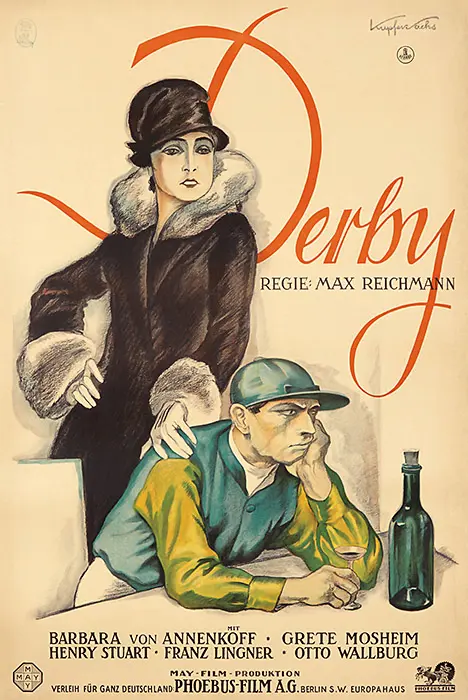
Is 'Derby. Ein Ausschnitt aus der Welt des Trabersports' worth watching today? Short answer: yes, absolutely, especially for cinephiles and historians with a penchant for early German cinema. This film is a compelling window into a bygone era, offering more than just historical curiosity; it provides a fascinating, albeit often speculative, glimpse into the nascent art of cinematic storytelling focused on a niche subject.
This film is unequivocally for those who appreciate silent era films, the artistry of German Expressionism's more grounded cousins, and anyone curious about the intersection of sport and drama in early cinema. It is decidedly NOT for viewers seeking fast-paced, dialogue-driven narratives or those unfamiliar with the conventions and slower rhythms of silent-era storytelling.
To approach a film like "Derby. Ein Ausschnitt aus der Welt des Trabersports" is to engage in an act of cinematic archaeology. Released at the tail end of the silent era, this German production promises an intimate portrayal of the trotting world, a subject rich with inherent drama, class distinctions, and the timeless thrill of competition. Without the benefit of extensive plot details readily available, the critic must become an interpreter, drawing conclusions from the title, the era, and the illustrious names attached to its cast.
The very premise suggests a narrative less concerned with grand, sweeping arcs and more with the granular reality of a specific milieu. It’s an 'excerpt,' a slice of life, which immediately signals a more observational, perhaps even semi-documentary approach, a stylistic choice that was not uncommon in European cinema of the period. This isn't just a film; it's a cultural artifact, a silent whisper from the past about a sport that captivated a nation.
This film works because: It commits fully to its niche subject, offering a fascinating, detailed look at the trotting world through the lens of early cinematic art, leveraging visual storytelling to convey emotion and spectacle.
This film fails because: Its pacing, typical of the era, might alienate modern audiences accustomed to faster narratives, and the available narrative context is sparse, requiring viewers to fill in significant blanks.
You should watch it if: You have a genuine interest in silent German cinema, appreciate the historical portrayal of sports, or seek to understand the stylistic evolution of filmmaking before the advent of sound.
Given its title, "Derby. Ein Ausschnitt aus der Welt des Trabersports" likely eschews a simplistic hero's journey for a more expansive, almost anthropological study. The film probably weaves together several narrative threads, each contributing to a panoramic view of the trotting scene. We might follow the struggles of a young, ambitious jockey (perhaps played by a spirited Grete Mosheim, known for her intense portrayals), whose dreams of glory are constantly challenged by the harsh realities of the sport – the physical demands, the cutthroat competition, and the often-unscrupulous dealings of powerful owners. Her journey would undoubtedly be fraught with both exhilarating triumphs and crushing defeats, mirroring the unpredictable nature of the races themselves.
Simultaneously, the film would likely delve into the machinations of the wealthy elite, personified by characters like those Robert Leffler or Otto Wallburg might portray – perhaps a benevolent but demanding stable owner, or a cunning rival whose fortunes rise and fall with each race. The tension would not solely reside on the track but also in the betting parlors, the social gatherings, and the clandestine meetings where fates are decided. The film, in this interpretation, becomes a microcosm of society, where class, ambition, and the sheer luck of the draw dictate outcomes. It's a world where the thundering hooves are merely the most visible manifestation of deeper human dramas unfolding behind the scenes.
The 'excerpt' aspect suggests a deliberate choice to avoid a neat resolution, instead presenting life as an ongoing spectacle, much like the racing season itself. This approach, while potentially less satisfying for those seeking clear narrative closure, offers a more authentic, perhaps even philosophical, engagement with its subject matter. It’s less about 'what happens next' and more about 'what it means to be a part of this world.'
The cast list for "Derby" reads like a who's who of German silent cinema, promising a masterclass in non-verbal performance. Grete Mosheim, a luminous and versatile actress, would have been central to conveying the emotional core of the film. Her ability to project intense feeling through subtle glances, body language, and expressive facial contortions would have been invaluable in a silent sports drama. One can imagine her character, perhaps a jockey or a stable worker, embodying both the grit and the vulnerability inherent in the pursuit of victory. Her presence alone elevates the material, ensuring that even without dialogue, the human stakes feel palpable.
Robert Leffler, a seasoned character actor, likely brought a gravitas that anchored the more dramatic elements. He often portrayed figures of authority or experienced wisdom, and in "Derby," he could well have been the wizened trainer, the respected owner, or even a stern patriarch whose decisions impact the lives of those around him. His performances were typically understated yet powerful, a perfect counterpoint to the more flamboyant expressions sometimes seen in silent film. Similarly, Otto Wallburg, known for his comedic timing but also capable of serious roles, would have added layers of personality, perhaps as a jovial but shrewd bettor, or a more bureaucratic figure within the racing establishment. The interplay between these veterans would have been fascinating, creating a rich tapestry of human interaction that transcends the absence of spoken words.
The strength of silent acting lies in its heightened physicality and the actors' profound understanding of how to communicate complex emotions with minimal gestures. In a film about horse racing, the actors would not only have to convey their own internal struggles but also their relationship with the horses themselves – a bond of trust, fear, and shared ambition. The silent era’s reliance on typecasting also means that audiences would have brought their own expectations to these performers, enriching the viewing experience. For example, Mosheim's character might carry the weight of an entire stable's hopes, a narrative device she handled with aplomb in films like Die Hexe.
Directing a silent film about horse racing presents unique challenges and opportunities. The director (Curt J. Braun, Wilhelm Stücklen, and Ernst Klein are credited writers, implying a collaborative or perhaps evolving directorial vision, common in early film) would have had to rely heavily on visual dynamism, editing prowess, and the sheer spectacle of the sport. Cinematography, therefore, becomes paramount. One can envision sweeping shots of the track, capturing the raw energy of the horses in full gallop, juxtaposed with intense close-ups of jockeys' determined faces, their eyes fixed on victory. The use of low-angle shots could have emphasized the power and majesty of the horses, while high-angle shots might have conveyed the vastness of the crowd and the scale of the event.
The silent era was a period of immense innovation in visual storytelling. Techniques like rapid cross-cutting during race sequences would have been essential to build suspense, accelerating the pace as the horses thunder towards the finish line. The camera might have tracked alongside the horses, immersing the viewer in the heart of the action, a technique that would have been cutting-edge for its time. Think of the dynamic movement captured in other sports-themed films of the era, such as The Sporting Venus, which also had to convey athletic prowess without dialogue. The German cinematic tradition, often characterized by its atmospheric qualities and dramatic lighting, would likely have been applied to the stable scenes, creating a moody, almost tactile sense of the horses' world – the shadows, the steam, the quiet intensity of preparation.
Moreover, the film would have employed intertitles not just for dialogue, but also to convey crucial narrative information, internal thoughts, and perhaps even poetic descriptions of the racing experience. The aesthetic quality of these intertitles, their font, and placement, would have contributed to the overall tone and visual flow. The directorial choices in framing, composition, and the orchestration of crowd scenes would have been crucial in bringing the world of the trotting derby to vivid, silent life. It's a testament to the era's filmmakers that they could evoke such excitement and pathos with purely visual means.
The pacing of "Derby" would likely oscillate between moments of intense excitement and contemplative stillness. The race sequences themselves would demand a frenetic, accelerated pace, achieved through quick cuts and dynamic camera movements, designed to mimic the adrenaline rush of the sport. These bursts of action would then be contrasted with slower, more deliberate scenes depicting the emotional aftermath of a race, the quiet tension of backstage dealings, or the intimate moments between characters and their horses. This rhythmic variation is characteristic of well-crafted silent films, preventing monotony and allowing emotional beats to resonate.
The tone would probably be a blend of dramatic realism and perhaps a touch of melodrama, a common stylistic choice in the late silent era. There would be moments of genuine joy and triumph, but also the inevitable heartbreak of loss, betrayal, and the crushing weight of expectation. The film’s ability to balance these elements – the raw, physical exertion of the sport with the intricate human emotions at play – would be key to its impact. It's a delicate dance between the documentary-like observation of the trotting world and the narrative demands of a dramatic feature. The German sensibility of the time often imbued films with a certain gravitas, a seriousness that would likely permeate even a sports-centric narrative. It works. But it’s flawed.
The background score, though not part of the 'film' itself in a modern sense, would have been integral to shaping the emotional landscape for contemporary audiences. Live musical accompaniment would have guided viewers through the film's shifts in mood, from rousing fanfares during races to somber melodies during moments of reflection. This symbiotic relationship between visual narrative and live music is often overlooked today, but it was crucial to the intended experience of films like "Derby." Without it, modern viewers must imagine this crucial layer of sensory input.
Yes, "Derby. Ein Ausschnitt aus der Welt des Trabersports" is absolutely worth watching, particularly for specific audiences. It's an invaluable piece of cinematic history. It offers a rare window into German cultural life and filmmaking techniques of the late 1920s. For students of film, it provides a case study in visual storytelling before sound. For sports enthusiasts, it’s a fascinating look at the historical portrayal of horse racing. It’s not for everyone, but its value is undeniable for those with the right interests. Its power lies in its commitment to its subject, its visual ambition, and the silent performances that transcend time.
"Derby. Ein Ausschnitt aus der Welt des Trabersports" stands as a compelling, if somewhat obscure, testament to the versatility and ambition of silent German cinema. It's a film that demands a certain kind of viewer – one willing to slow down, to engage with visual storytelling on its own terms, and to appreciate the nuances of a bygone era. While its pacing and the lack of readily available plot details might deter casual audiences, its value for film scholars, silent film enthusiasts, and those fascinated by the cultural history of sports is immense. The potential for dynamic cinematography, coupled with the expressive power of its cast, suggests a film that successfully immerses its audience in the thrilling, often cutthroat world of trotting. It's not a 'masterpiece' in the conventional sense, nor is it a 'cinematic journey' that will appeal to everyone. Instead, it's a meticulously crafted historical document, a vibrant snapshot that, when viewed with the right lens, still pulsates with the energy and drama of the race. This film is more than just a relic; it's a vibrant, living piece of history that, with its visual prowess and human drama, still manages to gallop into the viewer's imagination. It’s a film that deserves to be seen, studied, and celebrated for its unique contribution to the silent screen.
Community
Log in to comment.