DbcultAccessing Vault...
Cult Review
Senior Film Conservator
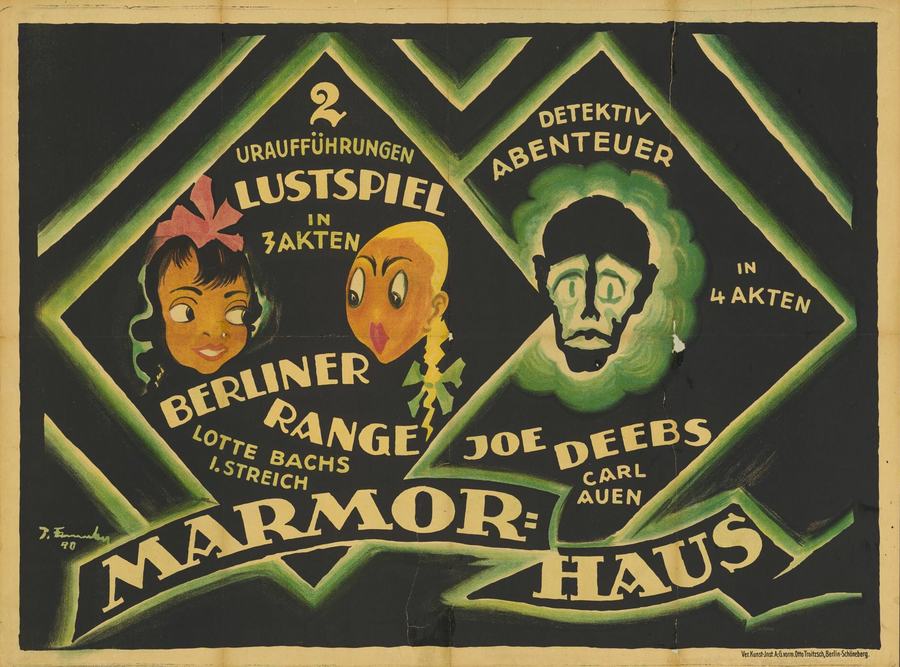
In the pantheon of early silent cinema, few figures capture the volatile transition from imperial rigidity to the chaotic freedom of the Weimar Republic as vividly as the protagonist of Die Berliner Range. 1. Streich: Lotte als Schulschreck. This 1919 gem, directed with a rhythmic understanding of physical comedy, serves as a seminal exploration of the 'Berliner Range'—the quintessential cheeky Berlin girl whose spirit could not be dampened by the austerity of post-war Germany.
To discuss this film without placing Hilde Woerner at the absolute epicenter of the analysis would be an exercise in futility. Woerner does not merely play Lotte; she inhabits her with an effervescence that feels strikingly modern even a century later. Her performance is a masterclass in silent-era physicality, utilizing high-velocity gestures and a facial vocabulary that oscillates between feigned innocence and diabolical glee. Unlike the more reserved heroines found in contemporary dramas like The Blindness of Virtue, where morality is a heavy shroud, Lotte wears her mischief as a badge of honor.
The film functions as a series of 'Streiche' or pranks, a structural choice that mirrors the serialized nature of the popular literature of the time. Ernst Georgy, the writer, understood that the audience’s appetite was shifting toward relatable, urban-centric humor. Lotte is the 'Schulschreck'—the terror of the school—not out of malice, but out of a fundamental refusal to be bored. Her interactions with Harald Paulsen and the rest of the cast create a friction that is both hilarious and deeply revealing of the class dynamics of the era. While films like The Summer Girl focused on the pastoral and the lighthearted romance of the elite, Die Berliner Range stays rooted in the cobblestones and cramped classrooms of the metropolis.
Visually, the film employs a straightforward but effective aesthetic. The cinematography captures the cluttered, claustrophobic interiors of the German school system, providing a perfect foil for Lotte’s expansive energy. When she disrupts a lesson or orchestrates a domestic catastrophe, the camera lingers on the reactions of the authority figures—the sagging mustaches, the bug-eyed indignation, the collapsing dignity of the patriarchy. This is where the film finds its teeth. It is a proto-feminist text that uses laughter to erode the pillars of a society that was already crumbling in the wake of the Great War.
One cannot help but compare the tonal audacity of this work to The Revolt. However, where other films might take a somber approach to social upheaval, Lotte’s rebellion is celebratory. She is a precursor to the 'New Woman' of the 1920s, a figure who would eventually find more dramatic expression in the works of Pabst or Murnau, but here, she is pure, unadulterated joy. The use of intertitles is particularly clever, capturing the specific cadence of the Berlin dialect, which adds a layer of regional authenticity that was crucial for its local audience.
"Lotte is not merely a character; she is a manifestation of a city's refusal to be broken. In her laughter, we hear the first echoes of the Weimar Golden Age."
The screenplay by Ernst Georgy is deceptively simple. By focusing on the 'Streich' (the prank), the film taps into a primal narrative satisfaction. We watch the setup, the execution, and the inevitable fallout. Yet, beneath the slapstick lies a sophisticated critique of the German educational ethos. The teachers are depicted as relics of a bygone age, obsessed with rote memorization and discipline, while Lotte represents the lived experience of the street. This dichotomy was a common theme in European cinema of the time, seen in various forms in films like Il discepolo, though rarely with such infectious humor.
The supporting cast, including Kläre Grieger and Maria Lux, provide excellent foils for Woerner’s antics. They represent the 'proper' girls, the ones who follow the rules and consequently disappear into the background. Lotte’s dominance of the frame is a visual metaphor for her social dominance. She refuses to be a background character in her own life. This self-actualization is a far cry from the victimhood seen in Should a Baby Die? or the moral quandaries of Her Unmarried Life. Lotte is the architect of her own chaos, and she revels in it.
As the first installment of a series, Lotte als Schulschreck set a high bar for the 'Range' subgenre. It influenced a decade of German comedies and helped establish Berlin as a character in its own right—gritty, fast-talking, and relentlessly resilient. The film’s pacing is remarkably brisk; there is a rhythmic quality to the editing that anticipates the 'City Symphonies' of the late 20s. It lacks the melodrama of The Sneak or the stagey artifice of Toby's Bow, opting instead for a raw, almost documentary-like energy in its exterior shots.
In the broader context of 1919 cinema, this film stands as a defiant middle finger to the tragedies of the era. While the nation was grappling with hyperinflation and political unrest, Lotte was busy putting ink in the teacher's coffee or leading a chase through the hallways. It provided a necessary catharsis. It’s a fascinating contrast to the exoticism of Arshin mal-alan or the operatic flair of The Firefly. Die Berliner Range is unpretentious, local, and fiercely proud of its identity.
The direction (often attributed to the collective efforts of the production house but guided by Georgy’s script) shows a keen eye for spatial comedy. The way Lotte moves through the school—utilizing doorways, windows, and stairwells—creates a sense of three-dimensional space that many silent films lacked. There is a choreographed quality to the chaos. When a prank goes off, the reaction shots are timed with the precision of a ticking clock. This level of technical proficiency ensures that the humor translates across the decades, even if some of the specific cultural references have faded into the mists of history.
Furthermore, the costume design deserves a brief mention. Lotte’s attire—a mix of practical schoolgirl wear and slightly disheveled accents—perfectly mirrors her personality. She is a girl who is constantly in motion, and her clothes reflect a life lived at full tilt. This is a sharp contrast to the meticulously groomed characters in Fan Fan or the rugged utilitarianism of Overalls. Lotte’s look is the look of the street, elevated to the level of cinematic icon.
To watch Die Berliner Range. 1. Streich: Lotte als Schulschreck today is to witness the birth of a specific kind of cinematic joy. It is a film that refuses to be bogged down by the weight of its time, choosing instead to dance through the wreckage of the old world. Hilde Woerner’s Lotte remains one of the most infectious characters of the silent era, a reminder that rebellion doesn't always need a manifesto—sometimes, all it needs is a well-placed prank and a defiant grin.
For those exploring the roots of German comedy or the evolution of the female protagonist, this film is an essential text. It lacks the cynicism of later Weimar works, possessing instead a luminous, almost desperate optimism. It is a loud, brash, and beautiful shout from the streets of old Berlin, echoing into the modern age with undiminished vigor. It is, quite simply, a riot in the best sense of the word.
Review by the Cinema Sage. Originally published as part of the Weimar Retrospective Series.
Community
Log in to comment.