DbcultAccessing Vault...
Cult Review
Senior Film Conservator
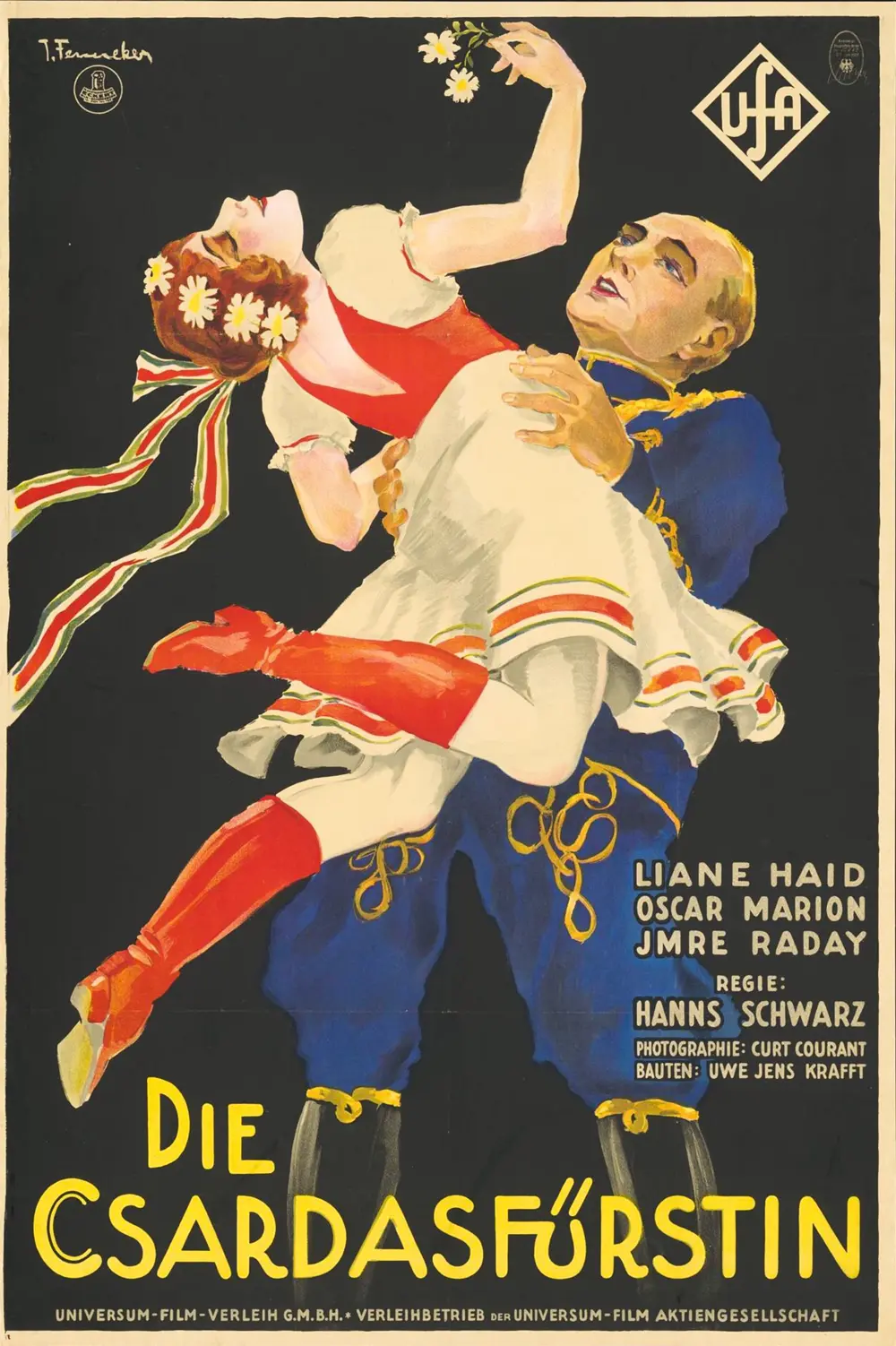
Is Die Czardasfürstin worth watching today? Short answer: Yes, but only if you are willing to engage with the visual rhythm of a story that was originally designed to be heard rather than seen.
This film is for the cinephile who finds beauty in the architecture of silent-era social satire and the scholar of Weimar-era aesthetics; it is absolutely not for the casual viewer who requires the auditory payoff of a traditional musical or the fast-paced editing of modern romantic comedies.
1) This film works because: Liane Haid delivers a performance of such immense physical charisma that she manages to translate the 'missing' music into a series of rhythmic, evocative movements that tell the story better than dialogue ever could.
2) This film fails because: The narrative structure remains deeply beholden to its operetta roots, leading to a series of coincidences and 'convenient' misunderstandings that feel flimsy without the emotional swell of a live orchestra to mask them.
3) You should watch it if: You have an interest in how early European cinema attempted to adapt high-culture stage hits for the masses, or if you want to see a masterclass in 1920s set design and costume work.
On paper, the idea of a silent version of Emmerich Kálmán’s most famous operetta sounds like an exercise in futility. How do you capture the essence of a work defined by its soaring melodies and rhythmic czardas without a single note of synchronized sound? The 1927 version of Die Czardasfürstin answers this by leaning into the visual language of the era.
Directors Wilhelm Thiele and Ladislao Vajda do not try to replicate the music; instead, they replicate the feeling of the music. The camera moves with a certain lyricism, and the editing in the cabaret scenes has a staccato energy that mimics the beat of a dance. It is a fascinating experiment in sensory substitution.
Consider the opening sequence in the Orpheum. We don't hear Sylva’s song, but we see the way the smoke curls around her, the way the audience leans in as one collective body, and the way the light catches the sequins on her gown. We understand she is a star not because of her voice, but because of the visual gravity she exerts on the room. It is effective. It is bold. But it is undeniably a different beast than its stage predecessor.
Liane Haid was a titan of the silent era, and here she proves why. Her Sylva Varescu is not a tragic victim of classism, but a shrewd operator. Haid uses her eyes to communicate a complex internal monologue that often contradicts the intertitles. While her character might be saying she is heartbroken, her posture suggests she is already calculating her next move.
In one specific scene, where she negotiates with her three aristocratic admirers, Haid plays them against each other with the precision of a chess grandmaster. She isn't just a performer; she is a woman aware of her own market value. This performance is far more nuanced than what we see in similar 'stage-girl' films like The Chorus Girl's Romance or the more melodramatic The Splendid Sinner.
The supporting cast, including Ferenc Vendrey and Imre Ráday, provide a solid, if somewhat archetypal, backdrop. They represent the 'old world'—stiff, formal, and perpetually confused by Sylva’s refusal to play by their rules. The chemistry between Haid and Ráday is palpable, even if the plot forces them into increasingly absurd situations to keep the tension alive.
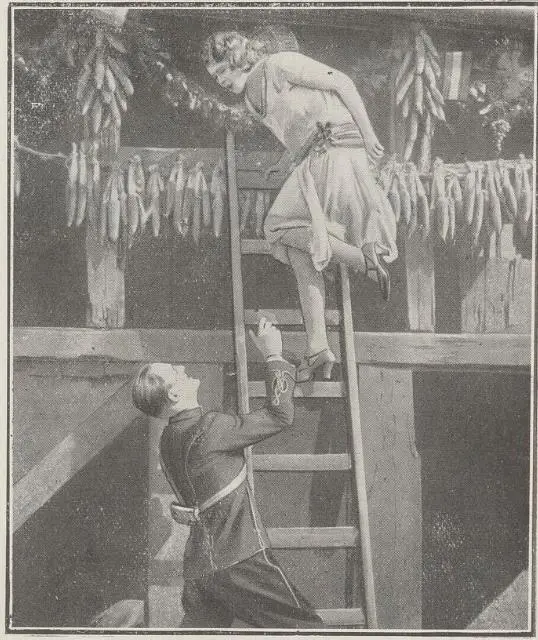
The cinematography in Die Czardasfürstin is where the film truly shines. There is a stark contrast between the 'lower' world of the cabaret and the 'upper' world of the aristocratic salons. The cabaret is filmed with deep shadows, soft focus, and a sense of cluttered, lived-in energy. It feels modern, even by 1927 standards.
Conversely, the aristocratic settings are filmed with flat, harsh lighting and rigid symmetries. Every frame in the palaces feels like a cage. This visual storytelling does a lot of the heavy lifting that the script occasionally neglects. You feel the claustrophobia of the elite, and you understand why Sylva is so desperate to escape to America.
This thematic exploration of wealth and its limitations puts the film in conversation with other silent era explorations of high society, such as Extravagance or Glass Houses. However, Die Czardasfürstin has a specifically European cynicism that its American counterparts often lack. There is no sense that the 'good' aristocrat will save the day; rather, the system itself is the antagonist.
Does Die Czardasfürstin hold up for a modern audience? Yes, if you view it as a historical artifact of a world in transition. The film captures the exact moment when the old European empires were fading into the background, replaced by the glitz of the jazz age and the promise of the New World. It is a document of social change wrapped in the guise of a romantic comedy.
The film succeeds as a visual experience even if it falters as a narrative. The pacing in the second act drags slightly, as the 'three admirers' plot begins to feel repetitive. However, the sheer craft on display—from the costume design to the expressive lighting—makes it a rewarding watch for those who appreciate the technical evolution of cinema. It is a far more sophisticated effort than something like Wine, Women, and Song, which handles similar themes with much less grace.
Here is a debatable take: Die Czardasfürstin is not actually a romance. It is a heist movie. Sylva Varescu is the thief, and the 'treasure' she is stealing is her own social autonomy. Every interaction with her admirers is a tactical maneuver designed to secure her future, whether that be in Vienna or New York.
She uses the 'love' of these men as a shield against the very society they represent. It is a cold, brilliant, and entirely necessary strategy. When you view the film through this lens, the ending—which many critics find saccharine—becomes a masterstroke of irony. She hasn't been 'won' by a man; she has successfully negotiated a contract for her survival. It is brutally simple. It works.
Pros:
- Exceptional set design that creates a tangible sense of place.
- A strong, proactive female lead who avoids the 'damsel' trope.
- High production values that rival the best of My Official Wife.
Cons:
- The absence of the original music is a hurdle for those familiar with the operetta.
- Some of the secondary characters are indistinguishable from one another.
- The 'American Tour' subplot is resolved a bit too neatly.
Die Czardasfürstin (1927) is a fascinating, if occasionally frustrating, piece of silent cinema. It survives not because of its plot—which was already a cliché by 1927—but because of its atmosphere. It is a film that captures the ghost of a melody and the death throes of an empire. While it may not have the emotional weight of something like The Moment Before, it possesses a visual flair that is impossible to ignore.
If you can get past the operetta logic, you will find a film that is surprisingly modern in its cynicism and breathtaking in its execution. It is a testament to the power of the silent image to convey what words and even music sometimes cannot. It is flawed. It is beautiful. It is essential for the serious collector of silent-era gems.
IMDb 5.5
1932
Community
Log in to comment.