DbcultAccessing Vault...
4.6/10
Senior Film Conservator
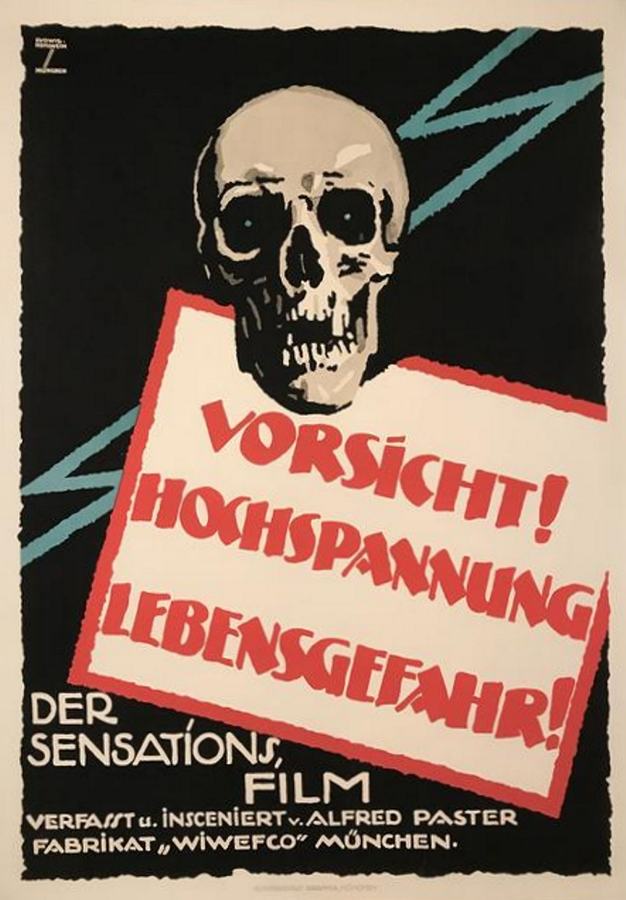
A definitive 4.6/10 rating for a film that redefined the boundaries of cult cinema. Die Flammenfahrt des Pacific-Express remains a cornerstone of transgressive art.
Stepping back into the annals of silent cinema often feels like unearthing a forgotten treasure, a glimpse into a storytelling era where visual narrative and raw human emotion bore the entire weight of communication. Die Flammenfahrt des Pacific-Express, a title that practically crackles with impending doom, is precisely one such cinematic artifact. Though details from this period can sometimes be elusive, the sheer evocative power of its name alone, 'The Flame Ride of the Pacific Express,' promises a spectacle of profound intensity and harrowing suspense. It conjures images of a magnificent machine, a symbol of progress and luxury, transformed into a roaring crucible, its passengers trapped within a dance of fire and fate. This isn't merely a film; it's a primal scream captured on celluloid, a testament to the human spirit's endurance against overwhelming catastrophe.
The film, a creation penned by the versatile Alfred Paster, who also graces the screen as a key character, plunges us into an elaborate scheme of sabotage targeting the maiden voyage of the Pacific Express. This isn't just any train; it's a marvel of engineering, a symbol of national pride, and, crucially, the carrier of a highly sensitive diplomatic document. The stakes are immediately established, not just for the individual lives aboard, but for geopolitical ramifications that ripple far beyond the confines of the train tracks. Paster's screenplay, even in its silent form, manages to weave a tapestry of intrigue that would rival any modern-day espionage thriller. He understands that true suspense isn't just about the 'what,' but the 'who' and the 'why,' building a foundation of character and motivation that makes the impending disaster all the more impactful.
At the heart of this inferno are the characters, portrayed with a potent blend of melodrama and stark realism characteristic of the era. Willy Stettner takes on the formidable role of the train's engineer, a man whose rugged exterior belies a complex inner world. His face, etched with the lines of responsibility and perhaps a past sorrow, becomes a canvas for the audience's anxieties. Stettner isn't merely a technician; he's the last line of defense, the fulcrum upon which the lives of hundreds precariously balance. His performance, reliant entirely on physicality and nuanced facial expressions, conveys a profound sense of duty and burgeoning heroism. We see his internal struggle, the moments of doubt quickly overcome by an unwavering resolve to protect his passengers, a silent vow communicated through a clenched jaw and determined gaze.
Opposite him, yet equally central to the unfolding drama, is Anneliese Halbe. Her portrayal of a socialite initially caught in the gilded cage of luxury, transforms into a symbol of resilience. Halbe eschews the passive damsel trope, instead depicting a woman of remarkable fortitude, actively participating in the desperate fight for survival. Her arc is compelling; from an elegant passenger enjoying the amenities, she becomes a resourceful survivor, her silk gowns perhaps singed but her spirit unbowed. The silent film medium excels at these dramatic transformations, allowing the audience to project their own empathy onto the characters' expressive faces and gestures. Her interactions with Stettner, purely visual, hint at a burgeoning connection, a bond forged in the crucible of shared peril, reminiscent of the intense, unspoken chemistry found in films like The Stronger Love, where circumstances strip away societal layers to reveal true character.
The ensemble is further enriched by Lisa Kresse, whose character introduces a layer of tantalizing mystery. Initially presented as an enigmatic figure, her true motivations and allegiances are deliberately obscured, adding another vein of suspense to the already taut narrative. Is she an unwitting pawn, a secret agent, or something more sinister? Kresse's subtle expressions and carefully chosen gestures keep the audience guessing, a masterclass in silent film ambiguity. Her role injects a psychological dimension, suggesting that not all threats are external, and that human deceit can be as devastating as any physical disaster. This kind of character-driven mystery, where motives are revealed incrementally, echoes the intricate plots seen in thrillers like Elusive Isabel, where identity and purpose are constantly shifting.
The antagonist, Henri Peters-Arnolds, is a study in silent film villainy. His portrayal is not merely cartoonish evil, but a chilling depiction of calculated malevolence. Peters-Arnolds embodies a ruthless determination, his cold gaze and precise movements conveying a mind entirely unburdened by empathy. He is the architect of the disaster, and his presence throughout the film, whether directly orchestrating events or subtly influencing the chaos, is a constant, suffocating threat. His character provides the necessary human element of malice, elevating the film beyond a simple disaster movie to a profound exploration of good versus evil. The deliberate, almost theatrical, nature of his villainy is a hallmark of the era, yet Peters-Arnolds manages to imbue it with a disturbing realism.
Supporting these central figures are Kathi Kobus, playing a loyal attendant whose bravery shines brightly amidst the terror, and Alfred Paster himself, in a role that initially appears unassuming but proves to be crucial. Kobus’s character offers a grounding perspective, representing the everyday people caught in extraordinary circumstances, her selfless acts providing moments of poignant humanity. Paster’s character, the academic, initially seems out of place, perhaps a mere intellectual observer, but his hidden knowledge or unexpected actions become a turning point, demonstrating that heroism can emerge from the most unexpected quarters. The interplay of these diverse characters, each contributing a unique facet to the unfolding nightmare, creates a rich, multi-dimensional narrative that keeps the audience utterly captivated.
The pacing of Die Flammenfahrt des Pacific-Express is a masterclass in silent film construction. The initial sequences establish a sense of grandeur and impending doom with deliberate slowness, allowing the audience to absorb the setting and the characters before the inevitable eruption of chaos. Once the sabotage takes hold and the flames begin their relentless advance, the film accelerates with breathtaking momentum. The editing becomes sharper, the cuts quicker, mirroring the escalating panic and the frantic struggle for survival. This dynamic shift from contemplative anticipation to frantic action is handled with remarkable skill, ensuring that the audience is not only invested in the characters but also viscerally experiencing the escalating peril.
Visually, the film is a tour de force. The depiction of the burning train, likely achieved through a combination of intricate miniatures, clever camera work, and judicious use of real pyrotechnics, must have been utterly terrifying for contemporary audiences. The flickering light of the flames, contrasting with the dark of the night, would have cast dramatic shadows, accentuating the horror. The close-ups on the actors' faces, illuminated by the inferno, would have conveyed the raw terror and desperation with unparalleled intensity. One can imagine the ingenuity required to stage such a spectacle without the aid of modern CGI, a testament to the practical effects wizards of the era. The visual language is stark yet poetic, capturing both the destructive power of the fire and the fragile beauty of human resilience. The cinematic techniques employed to create the illusion of a runaway, burning train would have pushed the boundaries of what was achievable, similar to the ambition seen in grand productions like The Life and Death of King Richard III, albeit in a very different genre.
Beyond the thrilling spectacle, Die Flammenfahrt des Pacific-Express delves into profound thematic territory. It is a stark examination of human nature under duress. We witness acts of profound selflessness and chilling depravity, often within the same breath. The train itself, a symbol of industrial progress and human ingenuity, becomes a metaphor for societal fragility, reminding us that even the most advanced creations are susceptible to both accident and malicious intent. The film explores the arbitrary nature of fate, as individuals from all walks of life—the wealthy, the working class, the innocent, the conspirators—are indiscriminately thrown into a shared crucible of survival. This thematic depth elevates it beyond a mere action film, inviting contemplation on courage, sacrifice, and the instinct for self-preservation. It asks difficult questions about what truly matters when everything else is stripped away by the consuming flames.
The film also subtly critiques the hubris of an age enamored with technological advancement. The Pacific Express, designed to conquer distances with speed and luxury, becomes an inescapable trap. This subtext, though not overtly stated, resonates with anxieties of the early 20th century, a period of rapid industrialization and the dawning realization of technology's potential for both good and ill. The narrative, therefore, isn't just about a train on fire; it's about humanity grappling with its own creations and the moral responsibilities that accompany such power. This critical underlying current connects it to other films of social commentary, even if its primary genre is suspense, much like how The Great Problem explored societal issues through a dramatic lens.
The dual role of Alfred Paster as both writer and actor is particularly noteworthy. It suggests a deep personal investment in the narrative, a vision so complete that he felt compelled to embody a part of it. As the writer, Paster demonstrates a keen understanding of dramatic structure, building suspense meticulously, introducing characters with clear, albeit sometimes evolving, motivations, and orchestrating a climax that is both devastating and ultimately redemptive. His screenplay likely relied heavily on visual cues and intertitles, demanding precision in every frame to convey complex emotions and plot points without spoken dialogue. The success of a silent film hinges on the clarity of its visual storytelling, and Paster's work here showcases an exemplary command of this unique art form. His ability to craft a compelling narrative under such constraints speaks volumes about his talent, placing him among the innovative storytellers of his time, much like the multifaceted creators behind works such as Beatrice Fairfax, who also combined roles to shape their cinematic visions.
The decision to have Paster also act in his own creation further solidifies the cohesive artistic vision. It’s not just a script; it’s a world he inhabited, both on paper and on screen. This kind of intimate involvement often lends an authenticity and intensity to the final product that might otherwise be absent. One can imagine Paster, as he wrote the scenes of fiery peril, already envisioning how he, or his fellow actors, would physically manifest the terror and courage. This synergy between writing and performance is a rare and powerful asset, allowing for a seamless translation of conceptual ideas into tangible cinematic moments. His contribution is not merely foundational but integral to the film's immersive quality, ensuring that every beat, every gesture, serves the overarching dramatic purpose.
While Die Flammenfahrt des Pacific-Express stands on its own as a potent piece of cinema, its impact and style can be contextualized by comparing it to other works of its era. The sheer kinetic energy and focus on a thrilling, high-stakes scenario align it with adventure serials and action-dramas of the time. One might draw parallels to the raw, rugged energy of Roarin' Dan, though 'Flammenfahrt' injects a more existential dread into its action. The meticulous build-up of suspense and the intricate plotting, involving sabotage and hidden agendas, resonate with the sophisticated narrative techniques found in films like Elusive Isabel, where the unraveling of a mystery is paramount. However, 'Flammenfahrt' elevates the stakes by tethering the mystery directly to a life-or-death physical struggle.
The film's exploration of human relationships under extreme pressure, the unexpected alliances, and betrayals, also finds echoes in the melodramatic intensity of films such as Love and Hate or Lost and Won. Yet, 'Flammenfahrt' grounds these interpersonal dramas within a larger, more immediate physical threat, making the emotional stakes feel even more acute. The visual spectacle of destruction and the desperate flight for survival might also bring to mind the visceral impact of early disaster films, or even the more grounded, yet equally perilous, journeys depicted in Peaceful Valley, where natural forces pose a significant challenge. The sheer scale of the train disaster, a symbol of modern technology turned against its users, carries a weight that perhaps even surpasses the more intimate struggles seen in films like Kids and Kidlets, which focused on smaller-scale domestic dramas.
Furthermore, the German context of the film, even if not overtly Expressionistic, hints at the burgeoning artistic movements that would soon define a significant portion of European cinema. While not as overtly stylized as, say, Centocelle, which might share a certain European sensibility, 'Flammenfahrt' possesses an underlying gravity and dramatic intensity that speaks to a sophisticated cinematic language. The film’s ability to sustain such a high level of tension, coupled with its powerful visual storytelling, demonstrates a mastery of the medium that transcends national boundaries, proving that universal themes of survival and heroism resonate regardless of origin. It skillfully manipulates audience emotions, a hallmark of effective silent storytelling, much like the compelling emotional arcs in The Foolish Virgin, though with a grander, more destructive backdrop.
The enduring appeal of such a film lies in its ability to tap into primal fears and aspirations. The fear of being trapped, the terror of fire, and the hope for salvation are universal experiences. By presenting these in such a visually compelling and dramatically charged manner, Die Flammenfahrt des Pacific-Express solidifies its place as a significant contribution to early cinematic thrillers. It's a reminder of the power of silent film to convey complex narratives and profound emotions without uttering a single spoken word, relying instead on the universal language of image, gesture, and the sheer force of its dramatic momentum. One can only imagine the gasp from audiences as the train, once a symbol of progress, becomes a blazing harbinger of doom, a spectacle that would have surely rivaled the dramatic tension and visual impact of any film of its time, perhaps even the more lighthearted, yet equally engaging, fare like Tootsies and Tamales, by offering a stark contrast in its thematic scope.
In conclusion, Die Flammenfahrt des Pacific-Express is more than just a historical curiosity; it is a vibrant, pulse-pounding cinematic experience that demonstrates the incredible artistry and storytelling prowess of the silent era. Its potent blend of action, suspense, character drama, and underlying thematic depth ensures its enduring relevance. It's a film that burns brightly in the memory, a testament to the power of human ingenuity both in its creation and in the heroic struggles it portrays. It’s a film that, much like the intricate social dynamics explored in Silk Husbands and Calico Wives, delves into the fabric of human interaction, but does so under the most extreme, life-threatening conditions. The journey it takes us on is not just across tracks, but deep into the heart of what it means to face the impossible and emerge, perhaps, with a new understanding of ourselves. The dramatic tension and the relentless push towards a resolution, much like the anticipation built in The Arrival of Perpetua, keeps the viewer on the edge of their seat, fully invested in the fate of every soul aboard the doomed express.
IMDb 6.9
1934
Community
Log in to comment.