DbcultAccessing Vault...
Cult Review
Senior Film Conservator
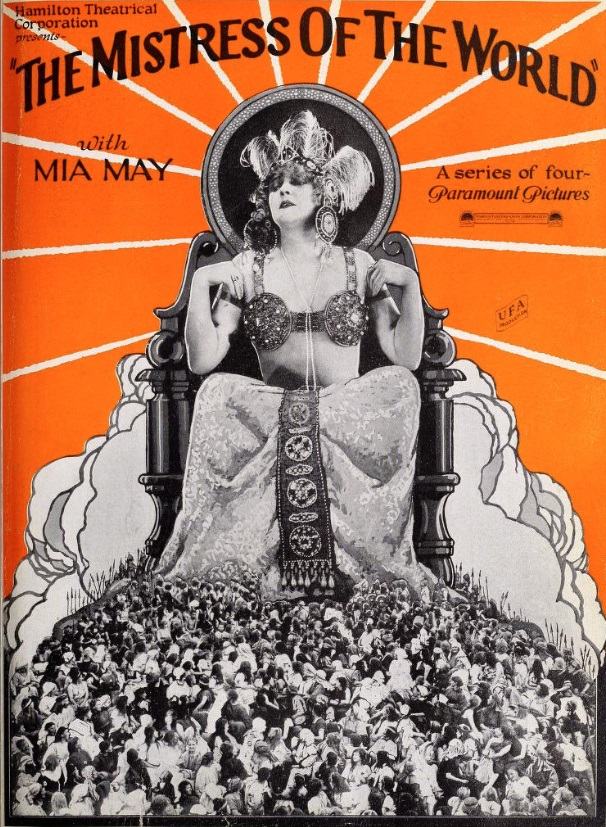
Oh, to be transported back to an era when cinema was not merely an escape but a grand, unfolding spectacle, a serialized odyssey that captivated audiences with its sheer audacity and ambition! Such is the enduring allure of Die Herrin der Welt 3. Teil - Der Rabbi von Kuan-Fu, the third electrifying chapter in Joe May’s monumental eight-part epic. Released in 1919, amidst the tumultuous aftermath of the Great War, this film, much like its predecessors and successors, offered a thrilling antidote to the anxieties of the age, a dizzying whirl of global intrigue, ancient mysticism, and unyielding human will. It’s a testament to the vision of its creators—May himself, alongside Richard Hutter, W. Böllinghoff, and Karl Figdor—that even a century later, its narrative pulse remains surprisingly vibrant, a complex tapestry woven with threads of adventure, spiritual quest, and geopolitical machination.
Mia May, as the indomitable Maud, the titular 'Mistress of the World,' continues to command the screen with a gravitas that belies the inherent melodrama of the serial format. Her portrayal is a fascinating study in early cinematic heroism, a woman of fierce intellect and unwavering resolve, navigating a world teetering on the brink of profound change. In this particular installment, her quest for the mythical 'Diamond of the Dragon's Eye' takes a decidedly esoteric turn, shifting from the more conventional espionage of previous chapters to a spiritual odyssey. The Diamond, far from being a mere bauble, is revealed to be a conduit to ancient knowledge, a key to unlocking secrets that could reshape humanity's understanding of its own destiny. May imbues Maud with a steely grace, a quiet determination that anchors the more fantastical elements of the plot. She isn't merely reacting to events; she is driving them, a force of nature against a backdrop of global conspiracy.
The introduction of Michael Bohnen as the venerable Rabbi of Kuan-Fu is a masterstroke in character development. Bohnen, known for his formidable stage presence, brings a profound sense of gravitas and mystique to the role. His Rabbi is not merely an exposition device but a fully realized spiritual guide, a figure of immense wisdom and quiet authority. The scenes set within the ancient monastery of Kuan-Fu are imbued with an almost palpable sense of reverence and antiquity, a stark contrast to the bustling European locales or treacherous jungle settings of other serials like The Half-Breed. The Rabbi’s wisdom challenges Maud’s more pragmatic, Western-centric approach, forcing her to confront not just external adversaries but also her own preconceptions and limitations. Bohnen’s performance, largely conveyed through subtle gestures and piercing gazes, speaks volumes, creating a character who feels both ancient and eternally relevant.
And then there’s Henry Sze as Dr. Sin, the recurring antagonist whose malevolent presence casts a long shadow over Maud's endeavors. Sze crafts a villain who is both cunning and charismatic, a truly formidable adversary. Dr. Sin is not just a mustache-twirling caricature; he embodies a dangerous blend of intellectual prowess and moral depravity, a man driven by an insatiable hunger for power. His organization, 'The Serpent's Coil,' serves as a constant, shadowy threat, a global network of spies and saboteurs whose reach seems limitless. The cat-and-mouse game between Maud and Dr. Sin is elevated in this installment, becoming less about mere survival and more about a clash of ideologies—Maud's pursuit of enlightened knowledge versus Sin's desire for absolute control. Sze’s nuanced portrayal ensures that Dr. Sin is never entirely predictable, always lurking in the periphery, ready to strike with calculated precision.
What truly sets Die Herrin der Welt 3. Teil apart is its audacious visual ambition. Joe May, a director of considerable skill, orchestrates sequences that are both grand in scale and intimate in their emotional resonance. The production design for Kuan-Fu is particularly noteworthy; it evokes a sense of authentic ancient mystique, eschewing cheap exoticism for a more thoughtful, atmospheric portrayal. The cinematography, though limited by the technology of the era, manages to capture the expansive landscapes and claustrophobic interiors with equal effectiveness. There are moments of breathtaking beauty, particularly in the depiction of the monastery's architecture and the surrounding natural environment, which feels almost ethereal. The meticulous attention to detail, from the intricate costumes to the elaborate set pieces, speaks to a commitment to immersive storytelling that was rare for its time, perhaps only rivaled by the lavish productions of D.W. Griffith in films like The Dawn of Freedom or the grand historical spectacles of Italian cinema, such as Veritas vincit.
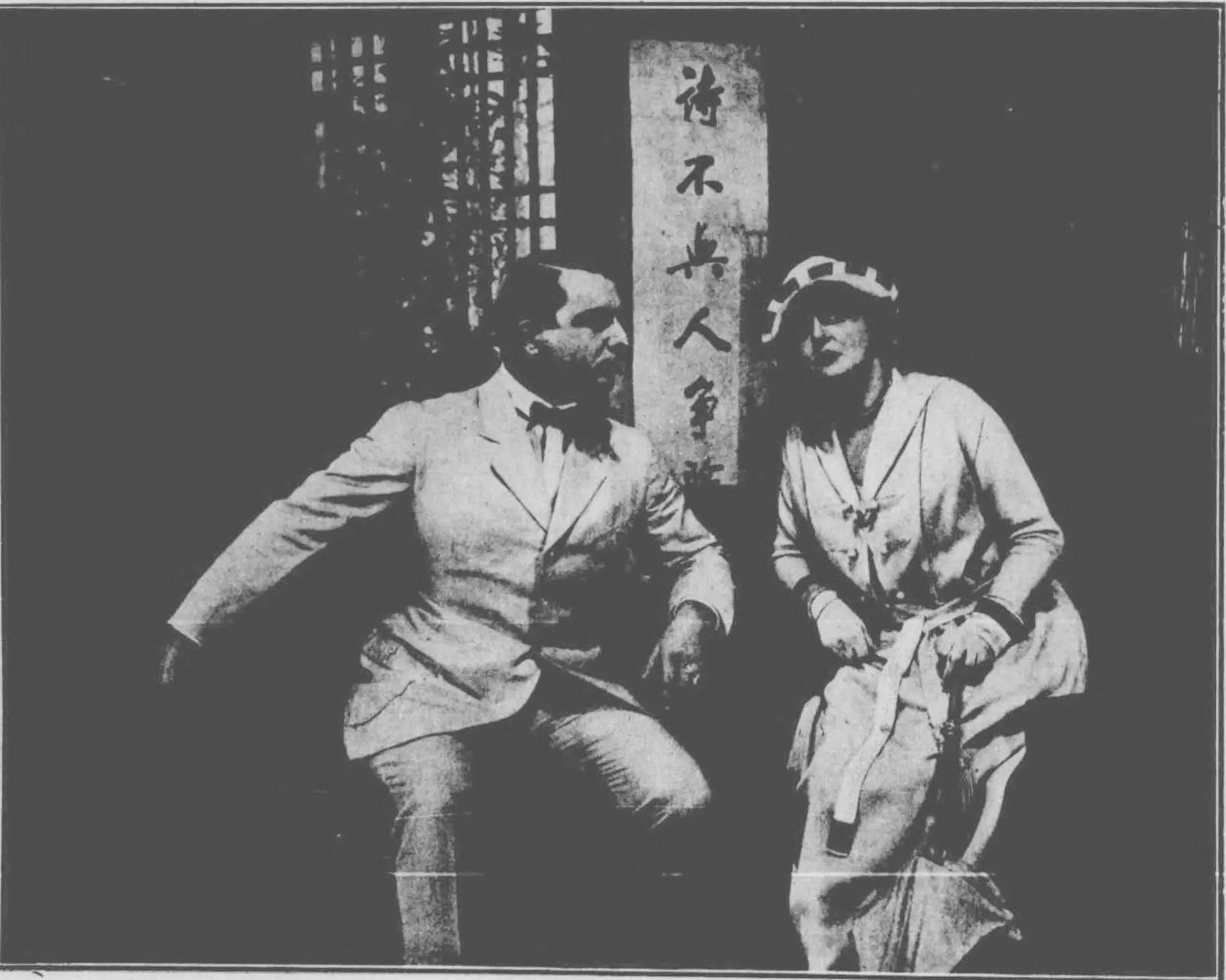
Thematically, this installment delves deeply into the clash between ancient wisdom and modern ambition, a recurring motif in many adventure serials, yet here explored with a surprising degree of sophistication. The Diamond of the Dragon's Eye becomes a potent symbol, representing the power that comes with knowledge, and the responsibility that accompanies it. The film subtly questions whether humanity is truly ready for such profound revelations, especially when figures like Dr. Sin seek to weaponize them for personal gain. The spiritual journey Maud undertakes in Kuan-Fu is not merely a plot device; it's an internal transformation, a deepening of her character that adds layers of complexity to her heroic persona. This thematic depth elevates the film beyond mere escapism, inviting audiences to ponder larger questions about power, ethics, and destiny.
The pacing of the film is relentless, a hallmark of the serial format, yet it never feels rushed. Each scene serves a purpose, propelling the narrative forward with an almost irresistible momentum. The action sequences, while perhaps less explosive than modern blockbusters, are remarkably well-staged, relying on clever choreography and effective editing to build suspense. The tension is palpable during Maud's daring escapes and confrontations, showcasing a keen understanding of cinematic rhythm. There's a particular sequence involving a perilous ascent within the monastery that is genuinely thrilling, a masterclass in silent film suspense, perhaps echoing the daring feats seen in works like The Gypsy Trail, but with a more profound sense of spiritual consequence.
The collaborative writing effort by May, Hutter, Böllinghoff, and Figdor is evident in the intricate plotting and well-developed characters. They manage to maintain continuity across multiple films while introducing fresh challenges and expanding the narrative universe in compelling ways. The dialogue, conveyed through intertitles, is concise and impactful, serving to advance the plot and reveal character motivations without unnecessary exposition. This economy of language is a crucial element of silent film storytelling, and here it is utilized to great effect, allowing the visuals and performances to carry the bulk of the emotional weight. The narrative structure, while episodic, builds towards a larger overarching arc, demonstrating a sophisticated understanding of serialized storytelling that would influence countless adventure sagas for decades to come.
Comparing Die Herrin der Welt 3. Teil to other films of its era, one can appreciate its distinctive blend of pulp adventure and grand spectacle. While it shares the globe-trotting escapism of films like The Challenge of Chance, its spiritual undertones and the depth of its villainy set it apart. It possesses a certain gravitas that elevates it beyond mere popcorn entertainment, hinting at the burgeoning artistic ambitions of German cinema in the Weimar era, which would soon give rise to Expressionism. The film's influence can be seen in later adventure serials and even in the character archetypes that continue to populate our screens today. Maud, as a strong female protagonist, was revolutionary for her time, paving the way for future heroines in an industry often dominated by male narratives, much like the independent spirit showcased in The College Widow or The Heiress at Coffee Dan's.
The performances across the board are uniformly strong, a testament to the directorial skill of Joe May in guiding his actors through the nuances of silent film acting. Mia May’s expressive face and commanding physicality convey a wide range of emotions, from fierce determination to moments of vulnerable introspection. Michael Bohnen’s Rabbi is a picture of serene power, his eyes holding the weight of centuries of wisdom. Henry Sze, as Dr. Sin, exudes a chilling menace, his every calculated move a threat. Even the supporting cast, though perhaps less prominent, contributes effectively to the immersive world-building, adding texture and believability to the unfolding drama. Their silent gestures and reactions are crucial in conveying the story's emotional beats, a skill often underestimated in the art of early cinema, but essential to its success, akin to the dramatic tension built in Sacred Silence.
In its entirety, Die Herrin der Welt 3. Teil - Der Rabbi von Kuan-Fu stands as a vibrant, compelling piece of early German cinema. It’s a film that demands to be seen not just as a historical artifact, but as a living, breathing narrative, capable of thrilling and engaging contemporary audiences. Its blend of high adventure, spiritual quest, and geopolitical intrigue, all wrapped in a visually stunning package, makes it a truly remarkable achievement. It’s a testament to the power of serialized storytelling, demonstrating how a compelling narrative, well-crafted characters, and ambitious direction can transcend the limitations of its medium and era. For those seeking to understand the foundations of cinematic spectacle and the evolution of the adventure genre, this film offers a rich, rewarding experience, proving that even a century later, the 'Mistress of the World' still holds sway over our imaginations. It’s a crucial stepping stone in the development of global cinema, an epic adventure that continues to resonate with themes that are as relevant today as they were in 1919.
Community
Log in to comment.