DbcultAccessing Vault...
Cult Review
Senior Film Conservator
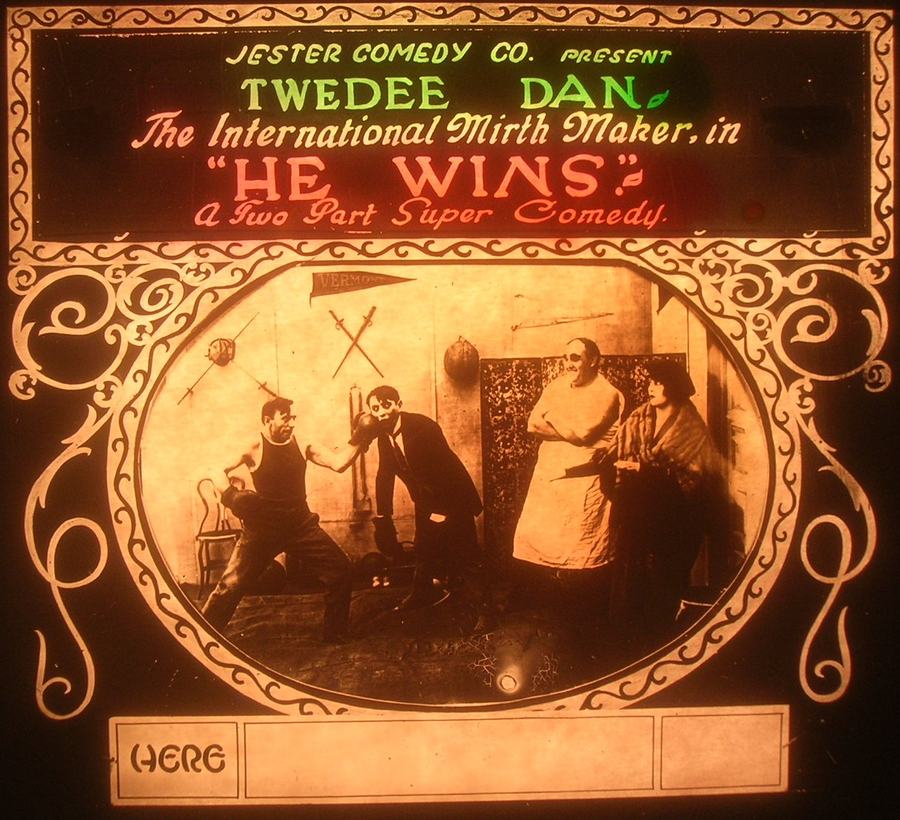
To witness Marcel Perez in 'He Wins' (1918) is to observe the very DNA of cinematic comedy being spliced and reassembled in real-time. This isn't merely a relic of a bygone era; it is a vibrant, breathing document of physical endurance and visual wit that challenges the modern viewer to reconsider the origins of the 'everyman' hero.
Marcel Perez, an artist frequently overshadowed by the towering triumvirate of Chaplin, Keaton, and Lloyd, possesses a distinct comedic vernacular that is both more frantic and perhaps more grounded in the European 'comique' tradition. In 'He Wins', he operates at the zenith of his American career. The film serves as a quintessential example of the 'Tweedledum' or 'Robinet' persona evolving into something uniquely suited for the American screen—a character who is simultaneously a victim of circumstance and a victor through sheer, unadulterated persistence. Unlike the moral gravity found in contemporary dramas like The Broken Law, Perez’s work here is unburdened by didacticism, opting instead for a pure exploration of motion.
The narrative structure of 'He Wins' is deceptively simple, yet its execution is a complex weave of timing and spatial awareness. Perez understands that comedy is a function of the frame. Every chase sequence, every narrow escape from a rival, and every flirtatious encounter with Nilde Baracchi is staged with a precision that belies the apparent chaos. The camera, while largely static in the tradition of the time, is used as a proscenium where the depth of field becomes a tool for comedic suspense. We see the threat approaching from the background long before the protagonist does, creating a delicious tension that only resolves when Perez miraculously—and often accidentally—evades disaster.
Comparing this to the more character-driven narratives of the period, such as All Kinds of a Girl, one notices that Perez prioritizes the 'gag' as a fundamental unit of storytelling. However, these gags are not isolated incidents; they are rhythmic beats in a larger symphony of movement. The way Perez uses his entire body—his rubbery limbs, his expressive eyes, and his frantic gait—suggests a performer who is completely in tune with the mechanical nature of the film medium. He is a cog in a machine that he himself has designed, a writer-director-actor who understands that the audience's joy stems from seeing the underdog triumph over the rigid structures of society.
Nilde Baracchi’s contribution to 'He Wins' cannot be overstated. Often relegated to the role of the 'prize' in silent shorts, Baracchi brings a level of poise and comedic timing that elevates the material. Her chemistry with Perez is palpable, rooted in years of collaboration. She isn't just a passive observer of his antics; she is the gravitational center around which his chaotic energy orbits. While films like Poppy might explore the feminine experience through a more sentimental lens, Baracchi in 'He Wins' represents a modern, urban vitality. She is the sophisticated counterpart to Perez’s frantic suitor, providing a necessary contrast that makes his ultimate victory feel earned rather than merely scripted.
In the context of 1918, a year defined by global upheaval and the waning days of the Great War, the escapism provided by 'He Wins' must have been profound. Yet, looking back, we see more than just a distraction. We see a reflection of the era's anxieties—the fear of the machine, the anonymity of the city, and the struggle for personal agency. When Perez battles a rival or navigates a crowded street, he is embodying the collective struggle of a generation trying to find its footing in a rapidly changing world. This thematic depth is what separates a master like Perez from the forgotten hacks of the silent era.
To fully appreciate the technical merits of 'He Wins', one must look at how it stands against its contemporaries. While Du skal ære or Die Sünde might delve into the shadows of the human psyche with expressionistic flair, Perez works in the bright, unforgiving light of the sun. His world is one of surfaces and collisions. There is no room for the brooding atmosphere of Farkas; instead, we have the exhilarating clarity of a well-timed fall. The editing in 'He Wins' is remarkably modern, utilizing quick cuts to emphasize the speed of the action, a technique that would later become a staple of the genre but was still being refined in the late 1910s.
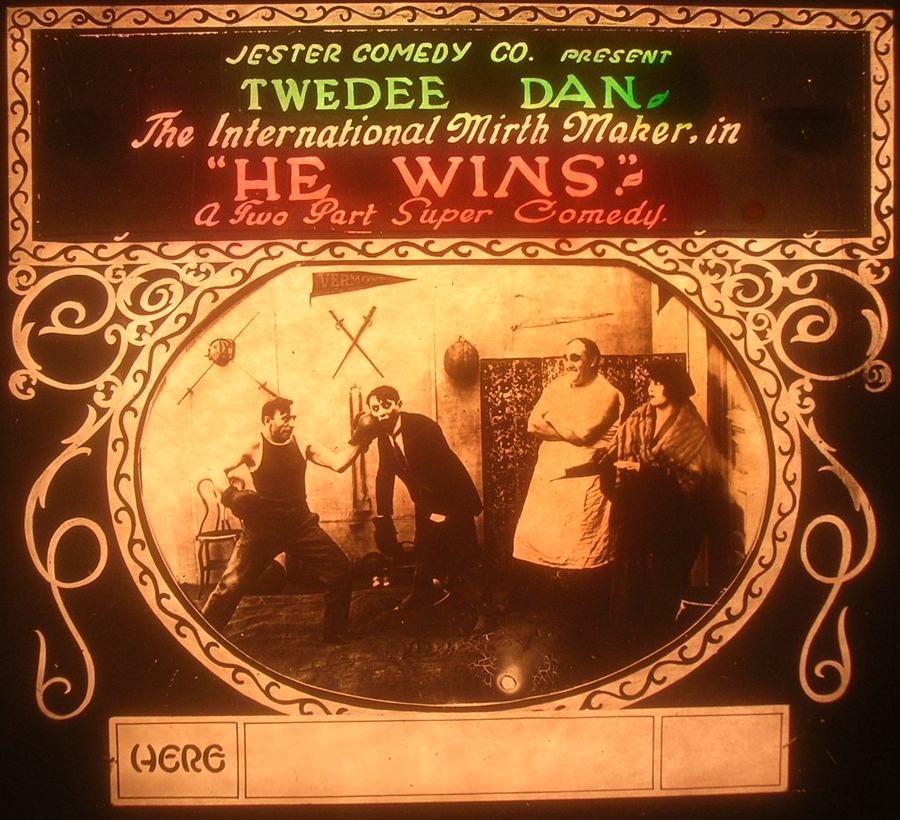
Consider the scene where Perez must navigate a series of escalating domestic disasters. The choreography is so tight it rivals the work of the great dancers of the era. Each movement is calculated to maximize the visual impact. This is not the melodrama of In Treason's Grasp or the social commentary of The Poor Rich Cleaners. This is cinema in its purest form: images in motion, designed to elicit a visceral, immediate response from the viewer. It is the 'cinema of attractions' evolving into a sophisticated narrative form.
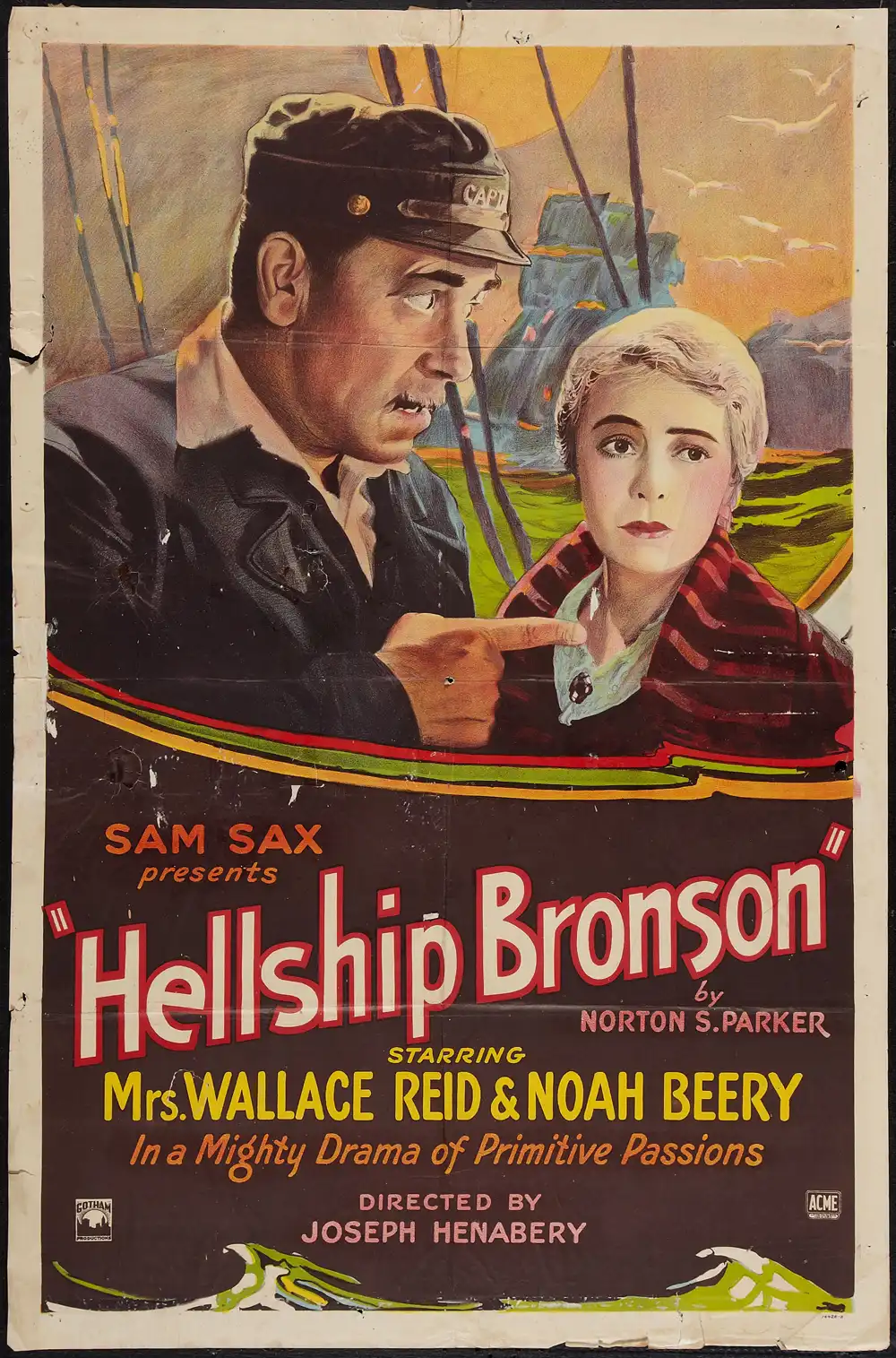
The survival of 'He Wins' is a minor miracle in itself. So much of the silent era's output, including works like Troen, der frelser or Hitting the Trail, has faced the ravages of nitrate decay. That we can still watch Perez’s frantic gymnastics today is a testament to the enduring appeal of his comedy. When we compare the grit of The Jungle or the technological wonder of Via Wireless to the simple joys of 'He Wins', we see the full spectrum of early cinema's ambitions. Perez wasn't trying to change the world; he was trying to make it move faster, to make it funnier, and to prove that, despite all odds, the little guy can still come out on top.
The film also serves as a fascinating geographical document. The location shooting provides a window into the urban sprawl of the late 1910s, capturing a world on the brink of modernity. The dirt roads, the early automobiles, and the period costumes give the film a texture that studio-bound productions like God's Country and the Woman often lack. There is a documentary-like quality to the backgrounds of Perez’s films that adds a layer of historical interest to the comedic proceedings. We aren't just watching a story; we are watching a time and place that no longer exists.
What makes 'He Wins' resonate over a century later? It is the universal nature of the struggle. Whether it's the romantic longing found in The Girl with the Champagne Eyes or the pastoral yearning of A Vermont Romance, the human desire for connection and success is a constant. Perez taps into this by making himself the ultimate underdog. He is not particularly strong, handsome, or wealthy, but he is tireless. His 'wins' are not handed to him; they are snatched from the jaws of defeat through ingenuity and an refusal to accept the status quo.
In the final analysis, 'He Wins' is a triumph of independent filmmaking. Marcel Perez, as the writer and star, maintained a level of creative control that was rare for the time. This allowed for a singular vision—a comedy that is as idiosyncratic as it is hilarious. The film avoids the pitfalls of repetitive slapstick by constantly raising the stakes. Just when you think the protagonist has reached his limit, Perez introduces a new complication, a new rival, or a new physical challenge that requires an even more outrageous solution.
'He Wins' is an essential viewing for anyone serious about the history of film comedy. It is a bridge between the primitive 'chase' films of the early 1900s and the sophisticated feature-length comedies of the 1920s. Marcel Perez remains one of the most inventive minds of the silent screen, and this film is his manifesto. It is a celebration of the human body in motion, a testament to the power of visual storytelling, and, above all, a reminder that in the grand, chaotic comedy of life, persistence is the ultimate virtue. With Nilde Baracchi by his side and a world of obstacles in his way, Perez proves that the greatest victories are those won with a smile and a perfectly timed somersault.
© 1918/2024 - A Deep Dive into the Perez Archives
IMDb —
1914
Community
Log in to comment.