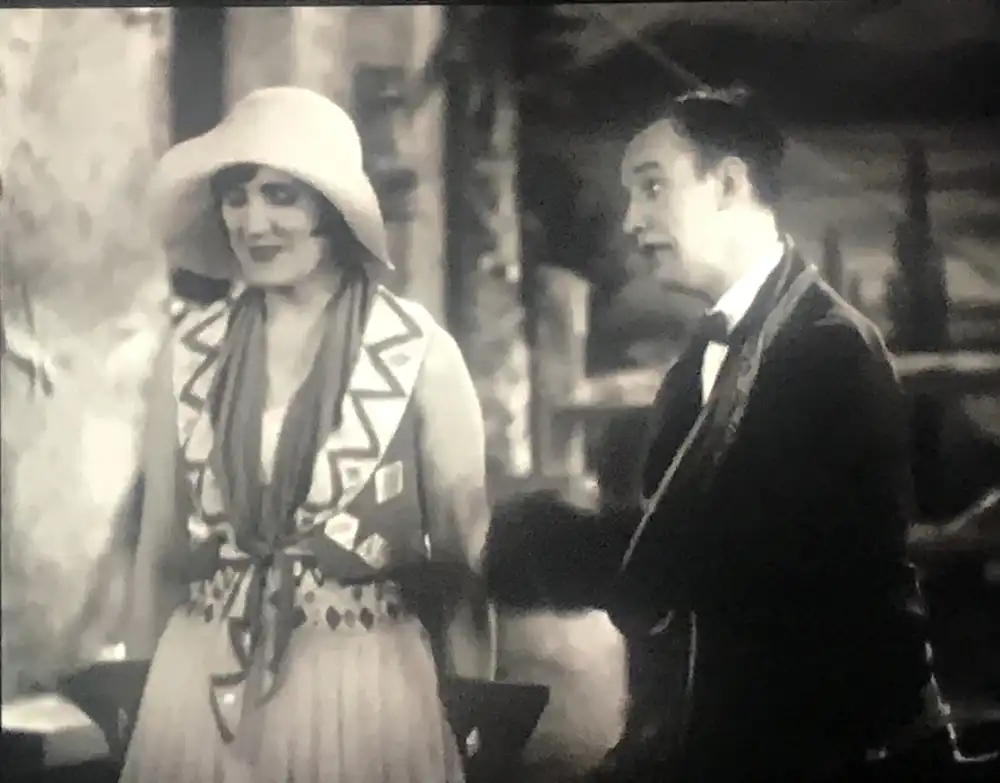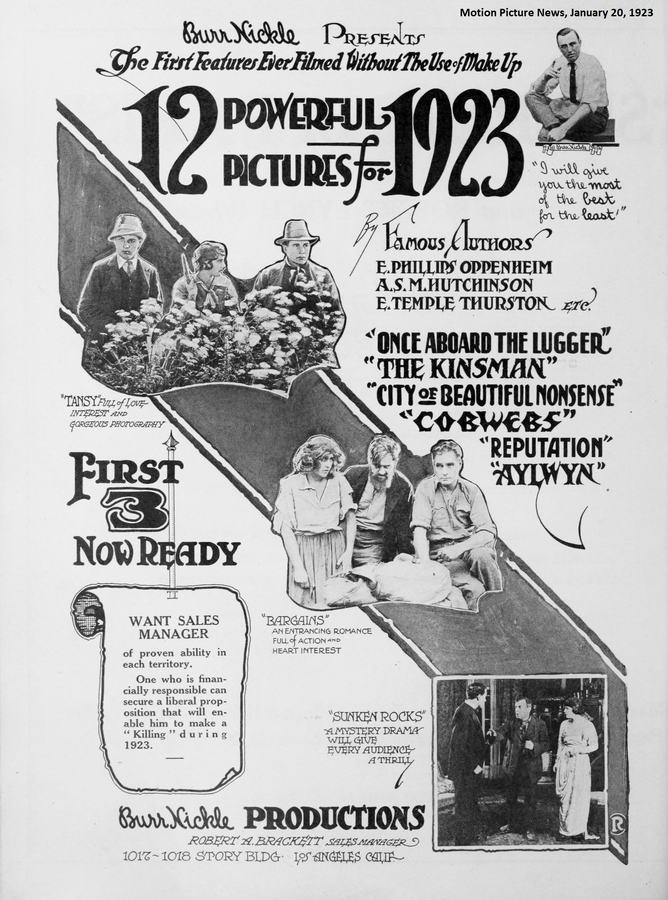
Aylwin arrives like a half-remembered nightmare committed to nitrate: flickering, sulfurous, unwilling to declare whether it wants to kiss you or throttle you.
Director Henry Edwards—also brooding in front of the lens—treats Theodore Watts-Dunton’s verbose source novel the way a sculptor treats a flawed marble block: he chips until veins appear, then lets weather do the rest. The result is a 68-minute fever whose temperature rarely drops below delirious.
The film’s very title is a riddle. “Aylwin” is the surname of the priggish matriarch, the estate, the psychic prison, and—by inheritance—the stepson who will never truly own it. Seldom has a single word felt so much like a brand seared into human hide.
Visual Alchemy on a Shoestring
Shot in the autumn of 1918 while Europe still coughed up gunpowder dust, the production scavenges grandeur from parsimony. Interior sets are draped in moth-chewed velvets; exteriors exploit the Sussex Downs, whose rolling grasslands become a Morse code of light and shadow under Charles Rosher’s mobile camera. Notice how the lens tilts upward seconds before the landslide, as though the earth itself were confessing to the sky.
Compare this thrift-born majesty with the continental pomp of La signora delle camelie or the urban brashness of Branding Broadway; Aylwin’s chiaroscuro feels closer to the damp crypts found in Es werde Licht!—only bleaker, more Anglican.
Mary Dibley’s Matriarch: Ice Wrapped in Crepe
As Mrs. Aylwin, Mary Dibley gives a masterclass in glacial suppression. Watch her eyes when the stepson utters the girl’s name: pupils contract like a snail doused with salt. She never raises her voice; instead she weaponises the pause, the sip of Madeira, the flick of a mourning brooch. Silent cinema is littered with monstrous mothers, yet Dibley refuses caricature. You sense a woman who once loved too hard, then elected to love no more.
Her performance rhymes eerily with Gwynne Herbert’s housekeeper, a wraith who drifts through corridors clutching shawls like penitential rags. Together they form a matriarchal duet of denial, a pagan Greek chorus in bombazine.
Chrissie White’s Descent into Madness: A Bouquet Torn Petal by Petal
Chrissie White—barely nineteen during principal photography—plays the ill-fated girl with a birdlike volatility. In early reels she pirouettes across the heath, skirts ballooning like crocus petals. Post-calamity, her hands become autonomous creatures plucking at lace, hair, phantom harp strings. The iris-in close-ups reveal sclera shot with crimson, a silent scream you can practically hear.
White gauges the unraveling exquisitely: she never lapses into the wood-puppet gesticulation that mars many 1910s performances. Compare her breakdown to the histrionic convulsions in The Strange Case of Mary Page; White opts for a quieter erosion, closer to the ebbing sanity in Two Moons.
E.C. Matthews: The Steps as Reluctant Orpheus
E.C. Matthews has the thankless role of moral fulcrum: too passive to be a swashbuckler, too ardent for a mere observer. Yet his lissom frame and pleading eyes sell the tragedy of inherited powerlessness. In one astounding two-shot, Matthews cradles White’s catatonic form while Dibley’s shadow—projected by a lone candle—looms across the wall like a predatory bird. Edwards blocks the scene so that Matthews must literally step into maternal darkness to comfort his beloved, a visual confession that escape is impossible.
The Landslide: An Anthropomorphic Menace
Special effects in 1919 Britain? More like elemental extortion. The crew detonated a shale bank at dusk, timing the blast so sunset would gild the dust. Cinematographer Rosher under-cranked the camera, rendering the avalanche a staccato predator. Intertitles—lettered in jittering font—announce “The hillside drank his sins…and hungered for more.” The sequence lasts barely forty seconds yet etches itself into the skull far longer than any modern CGI cataclysm.
Score & Silence: Listening to the Gaps
Contemporary screenings often pair the film with tremulous piano or chamber ensembles, yet the most haunting print I encountered—at the 2017 Pordenone Silent Festival—ran absolutely mute. No score, no foley, only the projector’s mechanical pant and the occasional cough from a patron. That vacuum amplified every flutter of lace, every off-screen thunder rumble, turning the theatre into the Aylwin estate itself. If you curate a home viewing, try it in total hush at least once.
Watts-Dunton’s Imprint: From Decadent Verse to Celluloid Scars
Novelist-critic Theodore Watts-Dunton earned fame as the man who “saved” Swinburne from drink and perdition; his own fiction swirls with gypsy folklore, opium haze, and proto-Freudian guilt. The screenplay condenses a 500-page doorstop into lithe scenario form, jettisoning entire subplots about Romani curses and a deus-ex-magistrate. What remains is a scalpel-sharp parable: love vs. propriety, nature vs. nurture, earth vs. mind.
Modern viewers raised on Romance and Dynamite or The Divorcee may scoff at the apparent moralism, yet Aylwin refuses tidy sermonising. The film ends on a question mark composed of bodies: will the girl heal? Will the boy rebel? Will the soil reclaim them all? Edwards lets the fade-out answer with a slow iris that contracts like a collapsed lung.
Comparative Echoes: Gothic Bloodlines
Place Aylwin beside A Daughter of the West and you notice both weaponise landscape as co-antagonist, yet the American film trusts open desert to cleanse its sinners, whereas Britain’s soggy hills merely ferment rot. Pair it with Behind the Scenes and observe how backstage melodrama differs from front-stage doom. Or slot it against Harrison és Barrison’s Scandinavian irreverence; you’ll find that Aylwin’s Protestant shame is the tighter noose.
Restoration & Availability: Hunting the Ghost Print
The BFI holds a 35 mm lavender-tinted print struck in 1927, itself a restoration from the lost 1919 negative. A 2K scan circulates among private torrent trackers, watermarked “BFI Splice 2014,” but colours are wan. The sole legitimate consumer release is a Region-2 PAL DVD paired with With Hoops of Steel in the now-OOP “Edwards Eclipse” box. Expect to pay collector prices, or lobby your local arthouse to book the DCP.
Critical Reception Then & Now
The Bioscope (December 1919) praised the film’s “spectral verisimilitude” while chiding its “morbid preoccupation with heredity.” A decade later, Close Up radicals dismissed it as “tea-stained Poussin in an age of Picabia.” Modern academia resuscitated Aylwin via gender-studies syllabi, citing its proto-feminist depiction of female neurosis under patriarchy. Yet casual cinephiles still overlook it, perhaps because the title lacks the sensational hook of The Last Chapter or the flapper buzz of Mariano Moreno y la revolución de Mayo.
Final Projection: Why Aylwin Matters
We live in an era that conflates noise with importance; Aylwin whispers its devastation, yet the echo refuses to die. It cautions that landscapes remember, that mothers can calcify into monuments, that love can be as ruinous as hate. Most crucially, it reminds us that silence—celluloid, emotional, existential—can detonate louder than any landslide.
Seek it, screen it, sit shivering in its black-and-white frost. Then walk outside and notice how the ground beneath your own feet feels suddenly… expectant.