DbcultAccessing Vault...
Cult Review
Senior Film Conservator
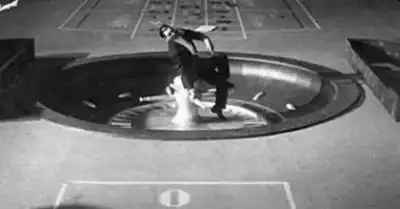
No, Die rollende Kugel is not a film for everyone today, and frankly, it's not even a particularly good silent film by the standards of its own era. It's a curious artifact, best reserved for those with a deep, almost academic, interest in the mechanics of early German thrillers, or for viewers who crave the challenge of parsing out intent from often clumsy execution.
This 1927 German production, directed by Rolf E. Vanloo, attempts to weave a tale of suspense and criminal intrigue around the titular 'Rolling Ball' – a jewel thief with a peculiar calling card. What emerges, however, is a narrative often bogged down by its own ambition, struggling to maintain pace or genuine tension. One could argue this is the silent era equivalent of a direct-to-video thriller, less about artistic merit and more about simply filling screen time.
This film works because of its occasional, fleeting glimpses into the visual potential of Weimar-era German cinema. There are moments, often involving the cityscapes or the shadowed interiors of opulent homes, where Vanloo's camera finds a compelling angle, hinting at the Expressionist mastery found in works like The Man with the Limp or even Grandma's Child, though never fully realizing it. Harry Liedtke, as Inspector Krantz, also brings a certain weary charisma that occasionally cuts through the film's general stiffness, preventing his character from becoming a mere caricature.
This film fails because its central premise, the enigmatic 'Rolling Ball' criminal, never truly feels threatening or even particularly clever. The mystery, such as it is, unfolds with a predictability that saps any potential suspense. The pacing is often glacial, with scenes extending far beyond their dramatic necessity, and many of the supporting performances lean so heavily into silent-era overacting that they border on parody. Edda Croy, while striking, is given little to do beyond looking distressed or alluring, her character existing more as a plot device than a person.
You should watch it if you are a dedicated silent film historian, particularly those interested in the broader landscape of German cinema beyond its undisputed classics. It offers a point of comparison, a baseline against which the true innovators stand out. For casual viewers seeking thrills or emotional engagement, this film will likely feel primitive and dramatically inert.
The most glaring issue with Die rollende Kugel is its struggle with rhythm. A thriller, even a silent one, demands a certain urgency, a build-up of tension that pulls the audience forward. Here, scenes often linger for what feels like an eternity, long after their narrative purpose has been exhausted. We see Inspector Krantz staring at a clue, then staring again, then perhaps staring a third time, each moment devoid of new information or rising stakes. This isn't contemplative; it's just slow. The editing, when it does introduce a cut, often feels less like a deliberate choice to accelerate the action and more like a reluctant concession to the audience's attention span.
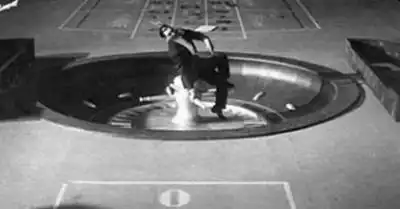
The film's reliance on exaggerated facial expressions, while typical for the era, actively works against any genuine sense of suspense or character depth, making the villains feel more like pantomime than genuine threats. When Lena, the cabaret singer, is first introduced, her dramatic gestures and wide-eyed stares signal 'innocent victim' with such blunt force that any nuance is lost. There's no room for subtlety, no space for the audience to infer or deduce; everything is spelled out in broad, often clumsy strokes.
Vanloo’s direction attempts to conjure a shadowy world of crime, but the visual language rarely rises above functional. While there are a few impressive shots of the city's skyline, particularly at night, they are often disconnected from the immediate action, serving more as decorative backdrops than integrated elements of the narrative. The 'rolling ball' motif itself, rather than being a clever symbolic device, often feels like an undercooked gimmick, failing to truly integrate into the narrative's emotional core or thematic concerns. It’s a cool idea, presented flatly.
Harry Liedtke, a known quantity in German silent cinema, does his best with the material. His Inspector Krantz is world-weary, his eyes conveying a sense of quiet resignation to the endless parade of crime. There's a moment when he discovers a new clue, and his subtle shift in posture, a slight tightening of his jaw, speaks more than any overblown gesture from his co-stars. It’s a performance that occasionally hints at the interiority that would become standard in later eras, but the film's overall broadness often swallows these finer points.
The rest of the cast struggles to leave a lasting impression. Edda Croy as Lena is beautiful, yes, but her performance oscillates between wide-eyed innocence and theatrical distress without much depth in between. Her character is largely reactive, a pawn in the larger game, and Croy’s portrayal doesn't elevate her beyond that. The villains, particularly Herr Vogel, are painted with such broad strokes of nefariousness that they lack any real menace. Their sneers and menacing glares are simply not enough to generate genuine fear or even mild apprehension.
This isn’t a film that relies on strong character development or psychological insight. It's a plot-driven vehicle, or at least it tries to be. But when the plot itself is so thinly stretched and predictably executed, the limitations of the performances become even more apparent. It's often a slog.
Die rollende Kugel exists as a footnote in the vast history of German silent cinema. It's not the kind of film that demands rediscovery or re-evaluation as a lost classic. Instead, it serves as a reminder that not every film from a celebrated era is itself a masterpiece, or even particularly good. Its value lies almost entirely in its existence as an example, a data point for those charting the evolution of a medium. For the general viewer, the film offers little beyond the novelty of its age. Seek out the real gems of the era first; this one can wait, probably indefinitely.
IMDb 7.1
1936
Community
Log in to comment.