DbcultAccessing Vault...
Cult Review
Senior Film Conservator
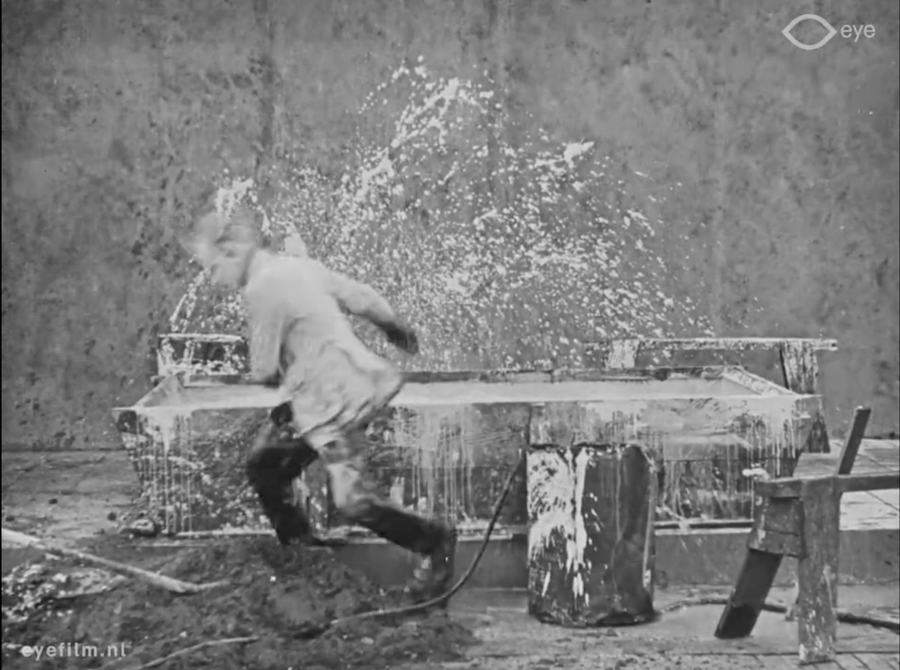
Imagine, if you will, a toy so innocuous it could be mistaken for a child’s bauble—yet inside its lacquered belly lurks a manifesto of cupidity. Put and Take (1921) weaponizes that very object, turning a parlor pastime into a miniature morality play where the American dream is minted on a copper disc and every flip of the wrist rewrites the social contract. The Hallroom Boys, those rag-tag harlequins of the screen, become unwitting disciples of a zero-sum gospel, and the film’s brevity—scarcely eleven minutes—only sharpens its bite.
Director-co-writer Harry McCoy stages the action in one dingy set: wallpaper blistered like a week-old custard, a table whose veneer has surrendered to cigarette burns, and a single overhead gas-jet that throws shadows long enough to swallow hope. Into this pocket-sized universe he introduces the spinning top—part totem, part tyrant. Its six sides promise alternating fortunes, yet the revelation that each face commands “Take All” turns the toy into a laconic spoof of fixed markets. No need for stock-ticker tape when a splinter of maple can decree the same wealth transfer with a percussive clack.
Notice how the camera never dollies or cuts for emphasis; it hovers at waist height like a eavesdropping barfly. Such restraint amplifies the shock of discovery: the frame itself seems complicit in the swindle, a silent partner that refuses blow the whistle. In an era when High Finance melodramas sermonized about trust and betrayal through intertitles swollen with adjectives, Put and Take opts for brute visual succinctness—an ethic closer to punk than parable.
Harry McCoy, rubber-limbed and hyperkinetic, plays the alpha grifter with a jackal’s grin; watch how his pupils dilate the instant the top begins its whirring ballet. Beside him, Sidney Smith embodies the slow-dawning chump—every crease in his forehead deepens like a line graph tracking a crash. Their comic timing is so precise it feels almost cruel: McCoy’s hand hovers a fraction longer than necessary before scooping the pot, allowing Smith’s realization to ferment on-screen. The result is laughter edged with discomfort, a chuckle that catches in the throat once you clock the allegory.
Compare this duet to the urbane swindlers in The Duplicity of Hargraves, where charm smooths the sting. Here, there is no velvet glove—only raw knuckles of need. The Hallroom Boys are not suave rogues but threadbare tenement dwellers, and their desperation smells of cabbage and sweat, not champagne.
Intertitles are sparse, almost reluctant. One card reads: “Lucky in love—unlucky in dice?”—a throwaway aphorism that lands like a sucker punch because the film has already shown us there is no such thing as luck, only pre-coded plunder. The scarcity of text forces the viewer to parse pantomime, to read the twitch of a lip or the clench of a fist as economic indicators. In that sense the film anticipates modern stock-market livestreams where talking heads mute themselves while candlestick charts scream.
Editorially, the rhythm mimics the top’s own momentum: a brisk wind-up, a sustained spin, then abrupt collapse. There is no coda of justice, no restorative handshake. When the boys bolt from the room, the camera lingers on the discarded top as it wobbles to rest—still broadcasting its monosyllabic decree. The absence of closure feels startlingly modern, akin to the fade-outs in Out of the Fog where guilt lingers like cordite.
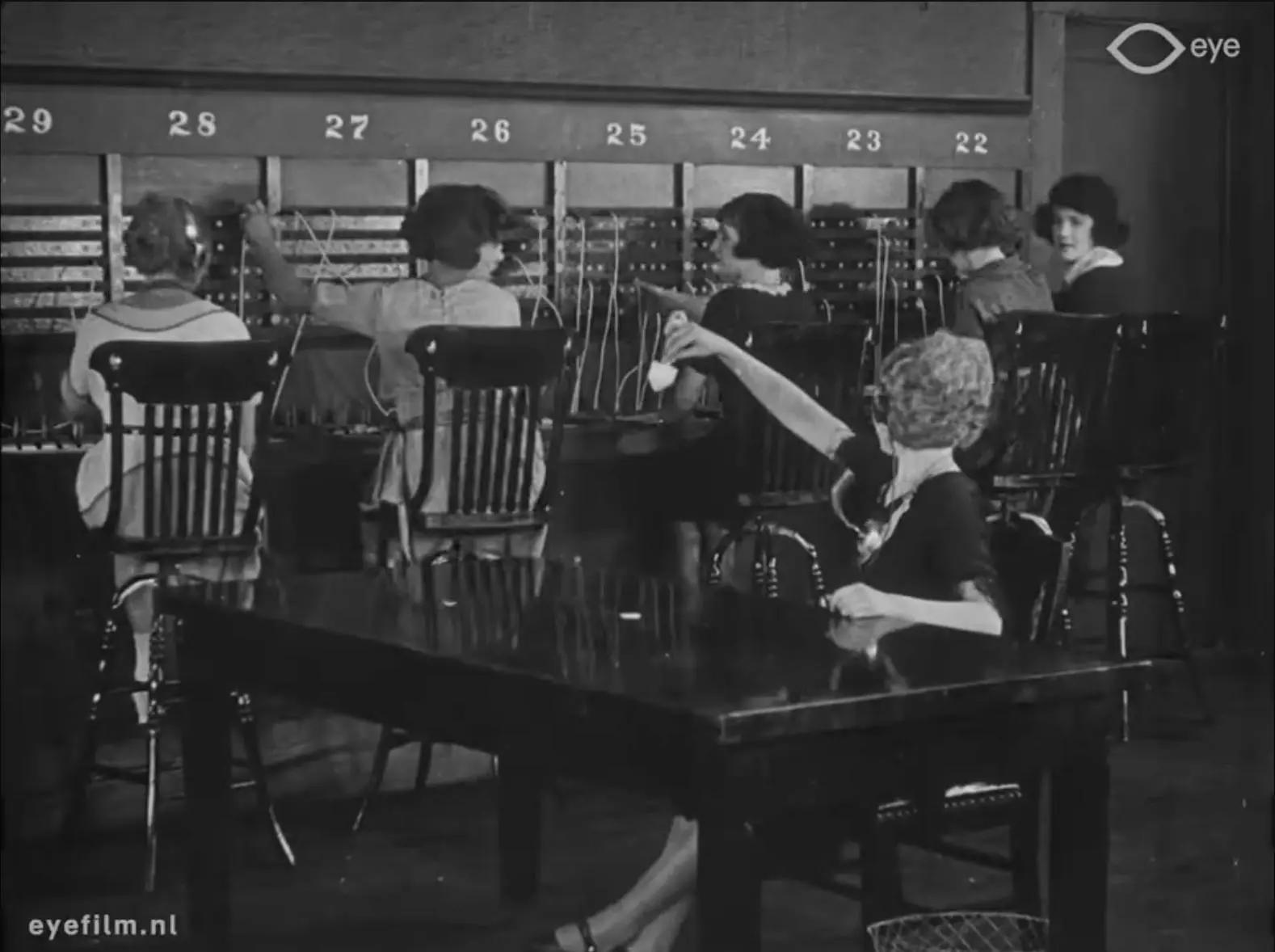
Some historians slot Put and Take alongside East Is East as light domestic farce, yet the boarding-house setting is anything but cozy. These are young men without wives, without prospects, chewing pennies to stretch rent. Their leisure is scavenged from wage-less hours, and the film’s central gag—that the only profit possible is total expropriation—betrays a cynicism born of lived penury. The top’s hidden inscription is less a gimmick than a confession: in an economy where labor buys less than luck, the fix is the only honest thing left.
Curiously, gender is absent. There are no flappers, no dowager landladies, no chorus girls to auction off as stakes. This all-male hothouse intensifies the scent of testosterone and resentment, evoking later locker-room cultures of high finance. One might read the Hallroom Boys as proto-Wolf Street wolves, their putative innocence merely the larval stage of corporate raiders.
Cinematographer (uncredited, as was custom) shoots the top in extreme insert whenever it unleashes its verdict. The grain of the wood fills the screen like a topographical map, its burnt-in letters “TAKE ALL” resembling brand marks on livestock. Each rotation becomes a hypnotic mandala of acquisition, a capitalist prayer wheel. The image is so primal it recurs subliminally even after the narrative ends; you half-expect modern logos to rearrange themselves into the same imperative.
Colorists who later tinted prints for home-projector markets often daubed these inserts with sulphur-yellow, a hue halfway between gold and warning. That chromatic flourish anticipates the amber glow of today’s trading-room monitors, those secular altars where tickers decree fates in milliseconds.
Place Put and Take beside Hail the Woman, a film that moralizes over a woman’s financial downfall through titular sanctimony. Where that feature-length sermon soaks its drama in redemption, McCoy’s short dispenses with absolution entirely. Likewise, the alpine melodrama Out of the Drifts treats money as a path to romantic transcendence; here, romance does not even merit a mention, only the cold clatter of coins.
Even in the realm of con-artist capers, Put and Take stands apart. Lola Montez seduces markets with glamour; the Hallroom Boys fleece each other in long johns. The absence of spectacle paradoxically heightens universality: strip away chandeliers and ball gowns, and the grift remains identical.
Why does this brittle one-reeler still hum with relevance? Because the mechanism it mocks has only metastasized. Replace mahogany with high-frequency algorithms and the top spins faster than ever, yet the inscription remains unchanged: TAKE ALL. Crypto rug-pulls, zero-commission apps nudging users toward infinite leverage, meme-coin rockets—each is a digital echo of McCoy’s wooden devil. The viewer who laughs at the Hallroom Boys is, by extension, laughing at the mirror.
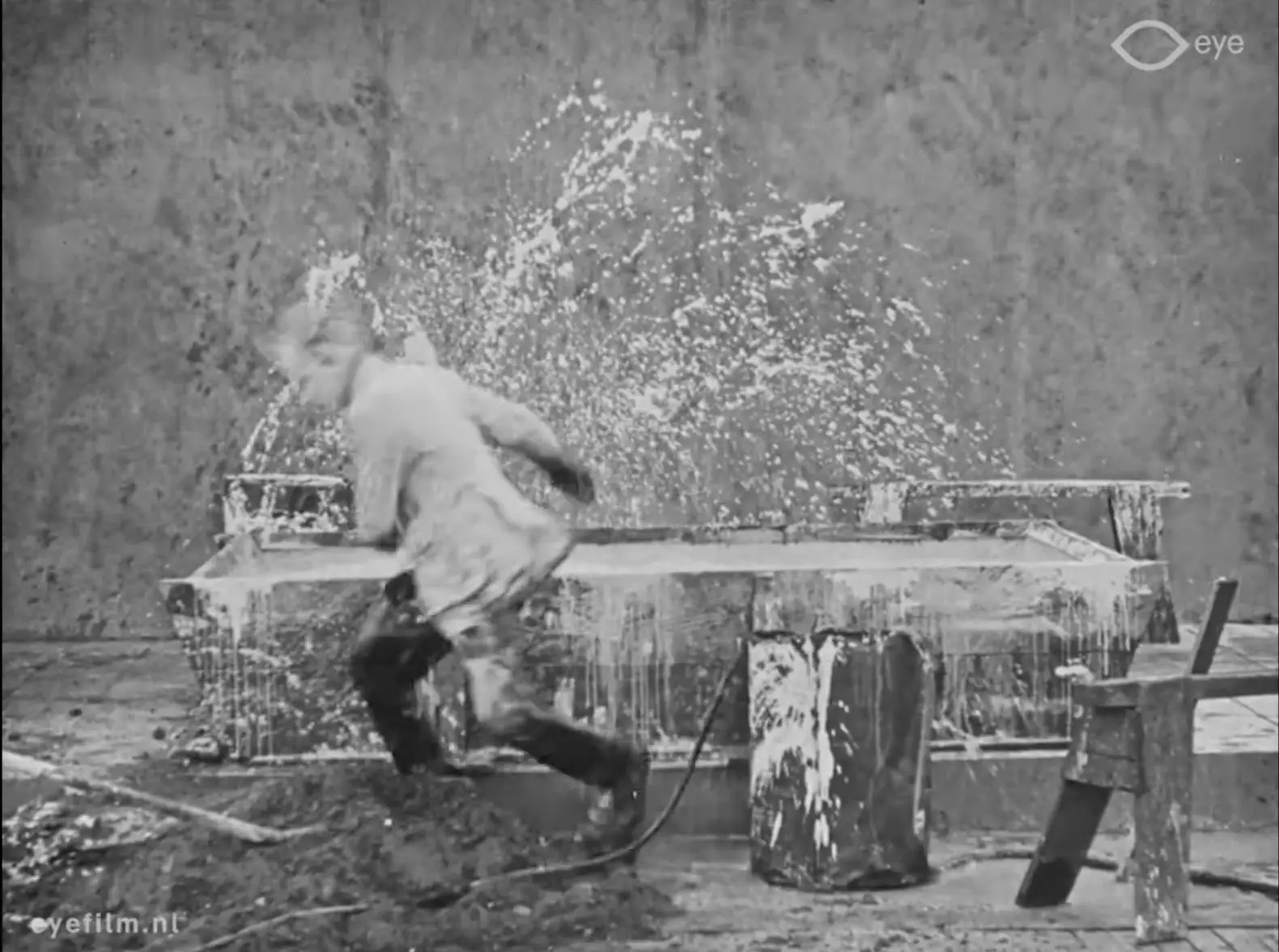
Moreover, the film’s duration mirrors an attention economy that now parses content in TikTok bursts. Its brutish concision feels prophetic, as though cinema itself foresaw the doom-scroll. When the final frame flickers, the modern spectator checks their own portfolio, half-hoping the ticker has mercy—and finding none.
For decades Put and Take languished in the Library of Congress paper vaults, misfiled among agricultural shorts. A 2018 4K restoration by EYE Filmmuseum rescued it from vinegar doom, revealing hairline cracks in the woodgrain that earlier dupes had smeared into fog. The tinting scheme referenced above was extrapolated from Swiss distribution notes discovered in a Basel flea market. Such provenance adds metatextual irony: a film about plunder nearly lost to archival neglect, salvaged only through international cooperation—a rare instance of “put” without immediate “take.”
Streamers now serve it in HD, though be warned: digital clarity exposes the frayed cuffs and nicotine stains of the set, rendering the poverty more visceral than any 16mm classroom print you may have squinted at in film school.
Contemporary exhibitors sometimes commission jaunty piano scores to soften the cynicism. Resist them. Let the whirr of the projector and the occasional cough from the audience serve as accompaniment; silence amplifies the top’s accusatory drone. When the boys scuffle, the thud of bodies against plaster becomes a percussion of desperation, more honest than any ragtime cue.
If you must add music, try a single sustained harmonium chord that very slowly rises a semitone—just enough to create tension without release. Anything busier risks moral anesthesia.
Because in under a quarter-hour you will witness capital’s id stripped bare, stripped of spreadsheets, lobbyists, and jargon. Because the chuckle that escapes you will taste of copper and complicity. Because history’s oldest con needs only six sides and a flick of the wrist to keep reinventing itself. And because, once seen, the image of that top wobbling to rest—still promising everything, delivering nothing—will haunt every Bloomberg flash, every NFT pump, every too-good-to-be-true airdrop that slides across your feed.
Watch Put and Take not as nostalgia but as inoculation. Let its brevity fool you into thinking it harmless. Then try, just try, to forget the inscription.
References: EYE Filmmuseum restoration notes (2019), Library of Congress Paper Print database, American Silent Comedy: A Cultural Timeline (University Press, 2021).
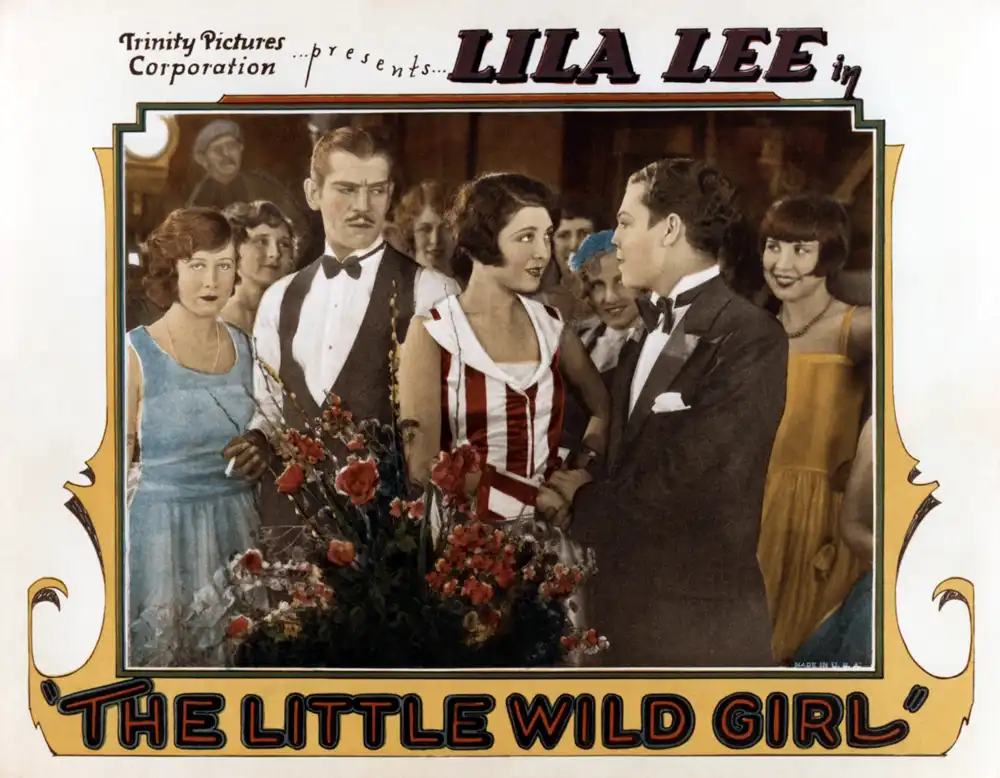
IMDb 3.6
1928
Community
Log in to comment.