DbcultAccessing Vault...
5.6/10
Senior Film Conservator
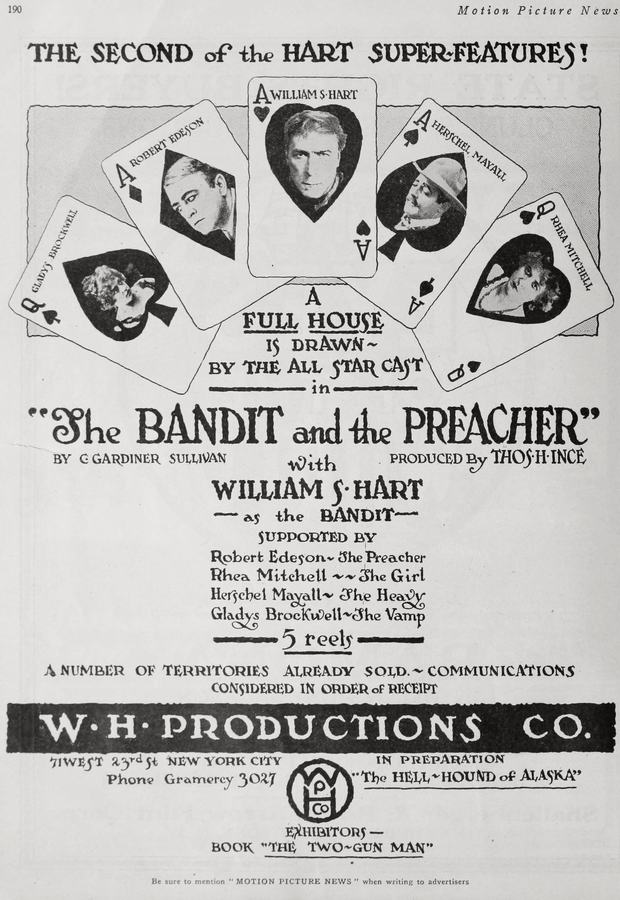
A definitive 5.6/10 rating for a film that redefined the boundaries of cult cinema. On the Night Stage remains a cornerstone of transgressive art.
The nickelodeon curtain lifts on a chiaroscuro of moral whiplash: a hold-up bathed in cobalt moonshine, then the tawdry incandescence of Big Donkey Gulch’s watering hole where sawdust drinks spilled whiskey like a Eucharist gone septic. Director Reginald Barker—hand-picked by Thomas H. Ince to shepherd C. Gardner Sullivan’s sin-soaked parable—lets each tableau breathe until the tension creaks like saddle leather. Intertitles arrive sparse, almost bashful, allowing William S. Hart’s granite profile to preach volumes: eyes that have measured the drop of a noose now measuring the width of a prayer book.
Hart, Hollywood’s first lonesome antihero, essays Creed with the stoic volatility that later branded his name onto Western myth. Watch him in extreme long-shot, a lone rider juxtaposed against a sky so wide it seems to yawn with indifference; the frame swallows him whole, then slices to intimate close-up where pupils tremble like compass needles finally finding magnetic north. It’s the same dialectic—expansive exterior vs. claustrophobic interior—that Victor Sjöström will weaponize in Blodets röst, yet here it serves redemption, not damnation.
Opposite Hart, Clara Williams’ Lola radiates the brittle glamour of a woman who has pawned her last illusion. In the saloon she’s all business—hips like parentheses bracketing every male fantasy—but once the pastor’s gaze lands on her, Williams modulates into something achingly tentative, as if touching silk for the first time and terrified of snagging it. She never overplays the conversion; instead her silences grow quieter, the pupils dilate, the corset seems to breathe without her. The performance feels proto-feminist: agency wrested not through gunfire but through spiritual election, a narrative pivot that predates the flapper’s roar by nearly a decade.
Cinematographer Charles J. Stumar (future lensman of Four Feathers) sculpts candlelit interiors with arc lights diffused by cheesecloth, yielding halation that saints would envy. Night exteriors were shot day-for-night, blue filters and under-exposure conspiring to birth a cobalt purgatory where horses exhale silver plumes. Notice how the climactic card-sharp showdown is blocked: Barker crams bodies into middle-distance, cluttering the mise-en-scène like a Baroque canvas, then clears a diagonal corridor so Creed’s silhouette can slice through negative space—an operatic flourish that rivals the geometric brutality of The Boss.
Sullivan’s screenplay, lean as jerky yet chewy with allegory, toys with the deus ex machina trope only to scuttle it. The preacher doesn’t save the bandit; the bandit saves the preacher’s wife, and in so doing salvages himself—a narrative Möbius strip that keeps the moral ledger oscillating. Compare this to the fatalism of The Failure or the determinist carnality of The Criminal Path; here grace is transactional, a commodity you barter with your worst self.
The tinting schema deserves its own aria. Emerald gambler’s den suggests rot under verdant opportunity; amber hymn-sing glows with hearth-hope; crimson saloon pulses like a myocardial infarction of sin. These chromatic chords, hand-applied by the Denver Post-Print Corp, anticipate the symbolic palette of El signo de la tribu and even the hand-painted sirens of Neptune’s Daughter.
Yet for all its visual bravura, On the Night Stage never succumbs to pictorialism; the drama stays raw, sinewy, smelling of horse liniment and cheap gin. In one unflinching insert, Hart’s tremor knocks over a shot glass; it rolls, spilling nocturnal glints, before shattering—an augury of lives that can’t be glued. The moment lasts maybe sixteen frames, but it reverberates louder than any sermon.
Supporting cast orbit like wayward planets: Charles K. French’s pastor carries the reedy conviction of a man who’s read the Book but never rode shotgun with death; Robert Edeson as Blackie Slade exudes oleaginous charm—watch how he thumbs a coin across his knuckles, the metallic whisper promising sin at compound interest. Comic relief arrives via Shorty Hamilton’s inept deputy, a proto-Walter Brennan whose pratfalls deflate the film’s moral balloon just enough to keep it from popping into pure Sunday-school pamphlet.
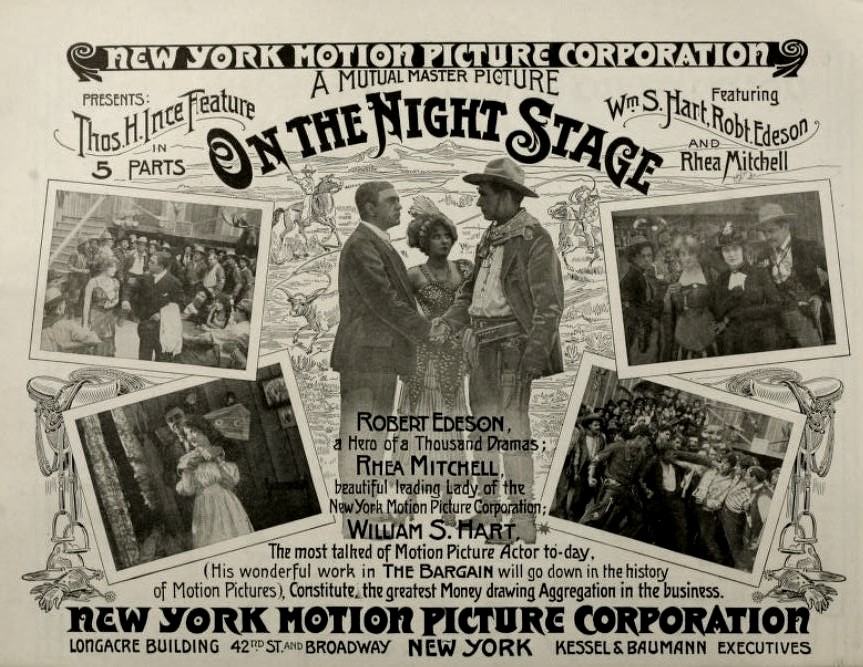
The score—originally played live by a three-piece pit of banjo, fiddle, and warped upright—survives only in cue sheets. Contemporary accounts describe a motif that mutates from honky-tonk rag to modal hymn, mirroring Lola’s metamorphosis. Modern festival screenings often commission new orchestrations, but I’ve heard a 2017 Montana revival where the sole accompanist used a detuned pump organ; the resultant wheeze evoked perdition’s calliofa, elevating the experience to secular rapture.
What lingers, though, is Hart’s final walk into the prairie night, back turned to camera, town lights receding until they resemble fallen constellations. It’s a reverse The Golden West—here the wanderer departs civilization restored, not reborn wild. The curtain falls not on a kiss but on a horizon, suggesting redemption is not an event but a longitude you keep walking.
Restoration-wise, the 2021 4K scan from a 35mm nitrate print held in the Museo del Cine hoard reveals cigarette burns once masked by mildew; you can now read WANTED posters listing crimes in microscopic serif. The Library of Congress paired it with a scholarly commentary that contextualizes its release between Griffith’s Birth and Walsh’s Regeneration, positioning the film as hinge in the evolutionary door from Victorian melodrama to psychological Western.
In the current streaming wasteland of algorithmic pap, On the Night Stage feels like a tumbler of bourbon slid across oak: harsh, smoky, yet warm enough to thaw the cynic’s frost. It preaches without pontificating, seduces without sentimentalizing, and when the last gun-smoke drifts off-screen, what remains is the radical notion that virtue—like vice—can be chosen, moment by trembling moment, under the vast indifferent sky.
Verdict: mandatory viewing for anyone who thinks silent cinema can’t bite. Let its shadows crawl under your skin; they illuminate more than most talkies ever dare.
IMDb 4.2
1916
Community
Log in to comment.