DbcultAccessing Vault...
Cult Review
Senior Film Conservator
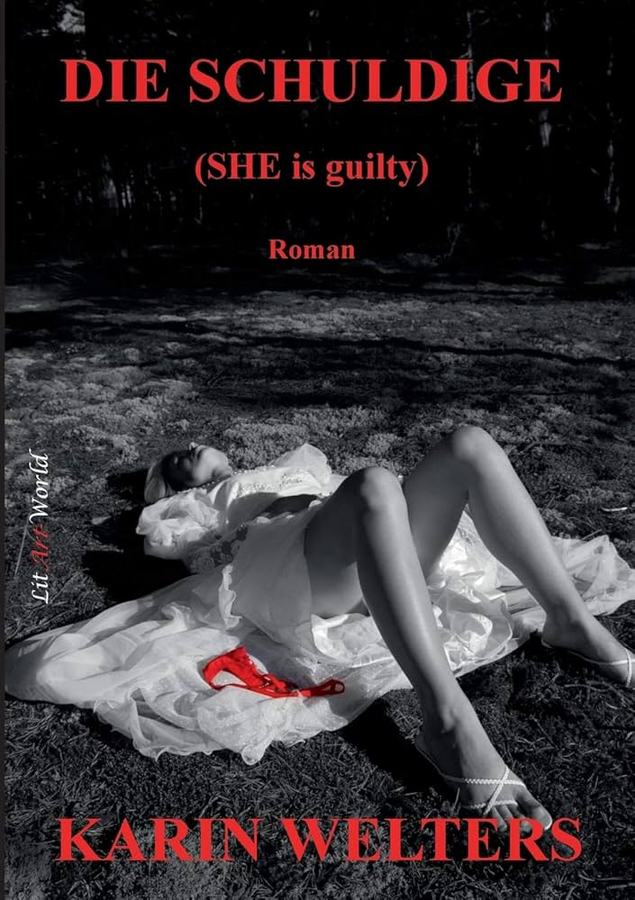
Richard Voß’s Die Schuldige is a cinematic exercise in psychological austerity, where every frame hums with the tension of unspoken truths. The film opens with a disorienting close-up of Theodor Loos’s protagonist, his face a mosaic of cracks as he stares into a mirror that reflects not his image but a void. This is no mere narrative device; it’s an invitation to dwell in the murky liminality of guilt, where the line between victim and villain dissolves like chalk in rain. Loos’s performance is a masterclass in understatement—his eyes betray what his stoic posture conceals, a duality that Voß exploits to maximum effect.
The narrative unfolds in a provincial German town, its cobblestone streets and fog-veiled alleys serving as a metaphor for the characters’ entrapment. Hans Halder’s antagonist, a man whose charm is undercut by a chilling volatility, becomes the fulcrum of the story’s moral quandaries. In a gripping sequence, Halder confronts Loos’s character in a dimly lit tavern, their dialogue a game of psychological chess. The scene, shot in a single take with a 360-degree rotating camera, mirrors the inescapability of their shared history—a technique reminiscent of the claustrophobic tension in Had og Kærlighed el. I Storbyens Skygge, yet Voß’s approach is more introspective, focusing on the internal rather than external chaos.
Voß’s script is a labyrinth of subtext, where dialogue is often replaced by glances and pauses. A standout moment occurs during a courtroom scene, where the judge’s gavel becomes a metronome of dread. Maria Zelenka’s portrayal of a defense witness is particularly noteworthy—her trembling hands and fractured speech patterns amplify the audience’s anxiety without ever veering into melodrama. This restraint is a hallmark of the film’s aesthetic, a choice that contrasts sharply with the flamboyant excesses of Plain Jane, yet achieves a similarly unsettling impact.
The film’s score, composed of dissonant strings and faint piano motifs, lingers like a ghost in the background. It swells during moments of climax but never overwhelms, allowing the visuals to take center stage. One sequence, where Loos’s character wanders through a field of skeletal trees, is accompanied by a single sustained note that seems to echo from the void. This minimalist approach to music underscores the film’s existential themes—there are no easy resolutions, only the silence between heartbeats.
While Die Schuldige is undeniably a work of artistry, it is not without its cracks. The pacing, deliberate to a fault, may test the patience of viewers craving narrative propulsion. The subplot involving Ernst Stahl-Nachbaur’s character—a subplot that veers into melodrama—feels like an anachronism in an otherwise austere framework. Yet, even this detour is executed with such sincerity that it becomes a study in contrasts, a reminder of the film’s commitment to humanizing its grotesquerie.
Comparisons to True Heart Susie are inevitable, given both films’ exploration of societal judgment. However, Voß’s work is far more cerebral, less concerned with romantic entanglements and more with the philosophical weight of culpability. The ending, which reframes the entire narrative through a series of flashbacks, is a risky gambit that pays off. It’s a moment that demands rewatching, each viewing revealing new layers of meaning—a testament to Voß’s narrative ingenuity.
Cinematographer Eugen Klöpfer’s work is a silent protagonist in itself. The use of deep focus in a pivotal train station scene captures the chaos of a crowd while isolating Loos’s character at the center, a visual metaphor for his alienation. The film’s color palette—drab grays and earthy browns—shifts subtly as the protagonist’s mental state deteriorates, a technique that would later influence the stark visuals of Alone with the Devil.
Ilka Grüning’s editing is equally praiseworthy. The film’s abrupt transitions between past and present are disorienting yet purposeful, mirroring the protagonist’s fractured psyche. One particularly jarring cut, from a mundane breakfast scene to a violent confrontation, is a masterstroke of emotional manipulation. It’s a moment that lingers, a question mark without an answer.
Die Schuldige is not a film for the faint of heart. Its unflinching examination of guilt and its consequences demands intellectual engagement and emotional fortitude. Yet, for those willing to endure its bleak beauty, the film offers a reward in the form of profound catharsis. It is a work that challenges as much as it entertains, a rare blend of form and content that cements Richard Voß as a visionary in the realm of psychological cinema.
For further exploration, consider Day Dreams, which similarly grapples with the fragility of the human mind, or Convict 13, a more action-driven but thematically parallel exploration of redemption. Both films, while distinct in execution, share Die Schuldige’s preoccupation with the moral ambiguities of human behavior.
IMDb —
1919
Community
Log in to comment.