DbcultAccessing Vault...
Cult Review
Senior Film Conservator
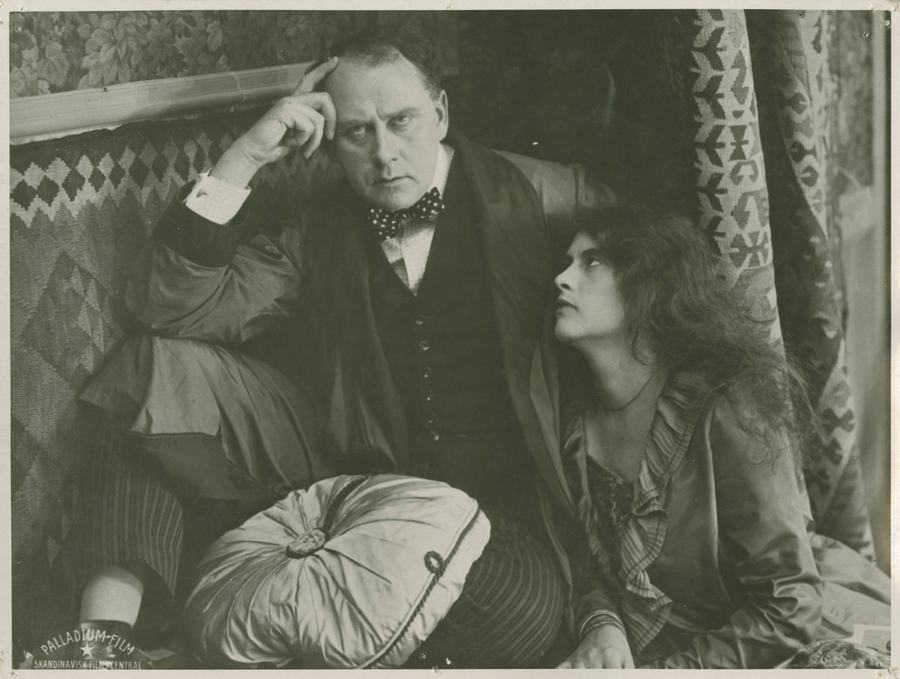
In the burgeoning landscape of 1911 cinema, Kärlek och hypnotism emerges not merely as a relic of the silent era, but as a sophisticated critique of the intersection between creative pedagogy and cynical materialism. The film, set against the backdrop of Professor Bradford’s painting school, utilizes the medium’s inherent visuality to dissect the performative nature of the upper-middle class. Unlike the more straightforward dramatic beats found in The Streets of Illusion, this Swedish production leans into the grotesque absurdity of social climbing.
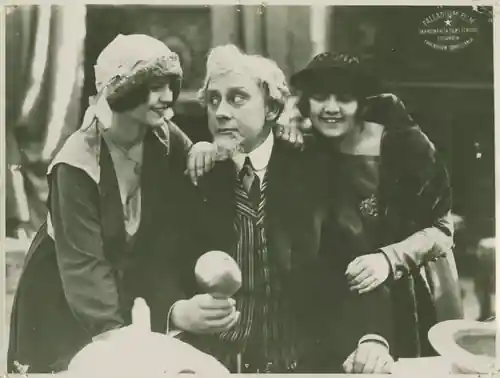
Professor Bradford, portrayed with a frantic, almost predatory energy by Axel Hultman, represents the dying gasp of an aristocracy that has substituted genuine talent for the curation of wealth. His school is a facade; his students are not disciples of the arts but pawns in a larger financial game. The arrival of Mr. Skönberg (Carl Alstrup) introduces a comedic dissonance that vibrates throughout the film. Skönberg is the quintessential 'empty vessel,' a man whose brushstrokes are as clumsy as his social graces, yet his pockets are lined with the gold that Bradford so desperately craves to maintain his crumbling facade.
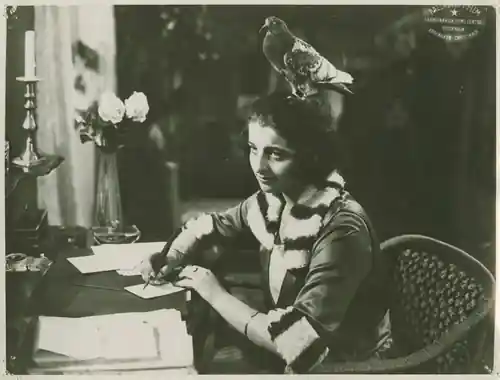
The thematic core of the film hinges on the dual meaning of 'hypnotism.' While the plot employs it as a literal mechanism of control, the subtext suggests a much more pervasive societal trance. Alice, played with a delicate, simmering resentment by Kiss Gregers, is the focal point of this manipulation. She is expected to fall under the spell of her father’s will, a trope often explored in contemporary works like The House of Toys, where domesticity is framed as a gilded cage.
In Kärlek och hypnotism, the hypnotic element functions as a dark mirror to the 'love' promised in the title. Is Alice truly falling for the bumbling Skönberg, or is she being systematically broken by the psychological pressures of her environment? The film’s director uses the limited technology of the time to create a sense of claustrophobia. The interior shots of the academy feel cluttered with half-finished canvases and heavy drapery, mirroring the suffocating weight of Bradford’s expectations. This visual density is reminiscent of the atmospheric tension found in Lea, though here it serves a more satiric purpose.
Carl Alstrup’s performance as Skönberg is a revelation in physical comedy. He manages to convey a profound lack of self-awareness through nothing more than a misplaced elbow or a bewildered squint. His interaction with the canvas is particularly telling; he approaches art not as a vocation but as a hobby to be purchased. This contrasts sharply with the more earnest portrayals of social duty seen in Brother Officers. Skönberg is a man who knows the price of everything and the value of nothing, and Alstrup leans into this void with a performance that is both pathetic and hilarious.
Axel Hultman’s Bradford is the perfect foil. Where Skönberg is soft and pliable, Bradford is all sharp angles and nervous ticks. He is a man perpetually on the edge of ruin, viewing his daughter’s hand in marriage as the ultimate transaction. The chemistry between Hultman and Alstrup creates a fascinating dynamic—a predator and his prey, though it is often unclear who is which. This predatory social dance is a theme that resonates through other films of the era, such as Man of the Hour, which similarly examines the corrupting influence of power and status.
Technically, Kärlek och hypnotism utilizes the language of silent cinema to emphasize the internal states of its characters. The use of close-ups, though primitive by modern standards, effectively captures the flickering doubt in Alice’s eyes. The film avoids the sprawling outdoor vistas common in A Lass of the Lumberlands, choosing instead to focus on the intimate, often uncomfortable spaces where human deals are brokered. This focus on interiority anticipates the psychological depth of later European cinema.
The pacing of the film is surprisingly brisk for a 1911 production. It moves from the slapstick of the painting classroom to the tense negotiations of the Bradford parlor with a fluidity that keeps the viewer engaged. The narrative structure, while linear, is punctuated by moments of dream-like intensity, particularly during the sequences involving hypnotism. These scenes use lighting and shadow to create a sense of otherworldly influence, a technique that would be further refined in expressionist masterpieces years later. For a comparison of early cinematic movement and rhythm, one might look toward On with the Dance, which shares a similar interest in the choreography of human interaction.
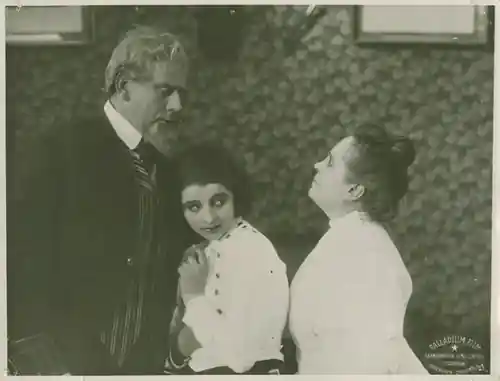
At its heart, the film is an indictment of the marriage market. Alice is not a person to her father; she is a blue-chip stock to be traded when the market is high. This commodification of the feminine is a recurring motif in silent-era dramas, but Kärlek och hypnotism handles it with a cynical wit that feels remarkably modern. It lacks the sentimentality of Little Lady Eileen or the moralistic overtones of The Little Minister. Instead, it presents a world where everyone is complicit in their own entrapment.
Even the secondary characters, played by stalwarts like Lauritz Olsen and Oscar Stribolt, add layers to this social critique. They represent the 'audience' within the film—the society that watches, judges, and ultimately validates the Professor’s schemes. Their presence ensures that the stakes are not just personal, but public. This communal aspect of social disgrace is also a key feature in Caste, where the rigid boundaries of class dictate every romantic impulse.
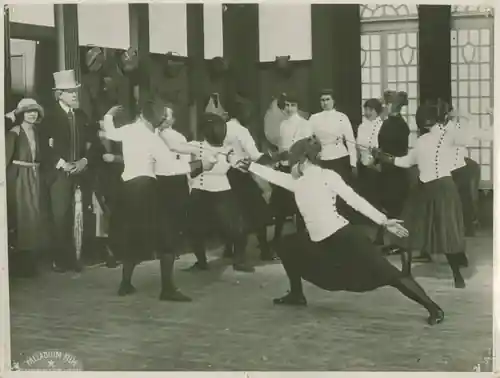
Reflecting on the film over a century later, one is struck by its cynical clarity. While other films of 1911 were preoccupied with historical epics or moral fables, Kärlek och hypnotism was busy looking at the rot within the academy. It shares a certain DNA with Silnyi chelovek (The Strong Man), particularly in its exploration of the ego and its destructive potential. The film doesn't offer easy answers or a particularly happy ending; it offers a reflection of a society that has lost its way in the pursuit of status.
The comparison to Mr. Barnes of New York is particularly apt when discussing the 'outsider' figure who disrupts local social orders, though Skönberg is far less capable than Barnes. Where Barnes brings a sort of chaotic competence, Skönberg brings only a chaotic incompetence that Bradford attempts to mold into a viable son-in-law. This tension between the reality of a person and the role they are forced to play is the engine that drives the film forward.
Furthermore, the film’s treatment of 'art' as a secondary concern to 'commerce' echoes the themes found in Blanchette, where education and talent are often at odds with the harsh realities of economic survival. In the world of Kärlek och hypnotism, the only true art is the art of the deal. The hypnotism is merely the final, desperate tool in a toolbox filled with manipulation and deceit. It is a fascinating, if somewhat bleak, look at the human condition through the lens of early 20th-century farce.
To watch Kärlek och hypnotism today is to witness the birth of social satire in cinema. It avoids the melodramatic pitfalls of many of its contemporaries, opting instead for a dry, observational humor that remains effective. The film understands that the most terrifying form of hypnotism isn't performed by a magician on a stage, but by a parent at a dinner table or a teacher in a classroom. It is the hypnotism of 'should' and 'must' that truly controls us.
As we navigate the various narratives of early film, from the adventurous spirit of Just Peggy to the pacifist leanings of Down with Weapons, Kärlek och hypnotism stands out for its sharp focus on the domestic sphere. It reminds us that the greatest dramas are often found in the smallest rooms, and that the most dangerous illusions are the ones we create for ourselves. The performances are robust, the direction is purposeful, and the message is as relevant now as it was in 1911: beware the man who offers you a brush but tells you exactly what to paint.
IMDb 6.3
1934
Community
Log in to comment.