DbcultAccessing Vault...
Cult Review
Senior Film Conservator
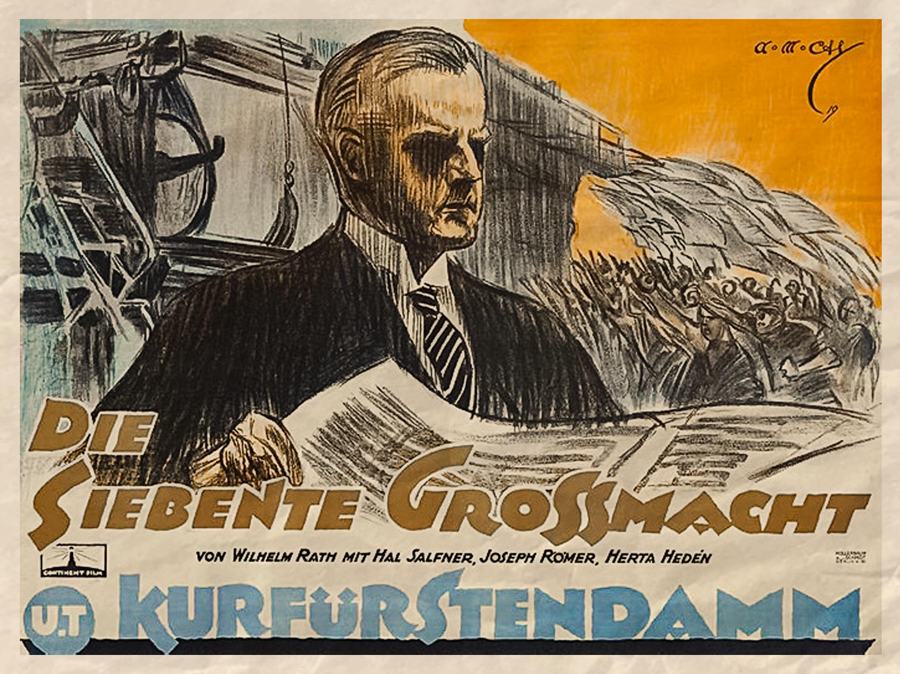
The cinematic landscape of the early 20th century was a fertile ground for exploring the anxieties and aspirations of a world in flux. Amidst the burgeoning industrial might and the shifting geopolitical chessboard, a particular brand of narrative emerged, one that grappled with unseen forces, clandestine influences, and the quiet machinations that often dictated the grander narratives of nations. It is within this rich tapestry that 'Die siebente Großmacht' (The Seventh Great Power) unfurls its intricate drama, a film that, even in its silent grandeur, speaks volumes about the enduring allure and peril of unchecked authority. This feature, penned by the insightful Willy Rath, delves into a realm where the lines between philanthropy and manipulation blur, where the very fabric of society is subtly rewoven by an enigmatic hand.
From its opening frames, a palpable sense of intrigue permeates the atmosphere. The film introduces us to a world ostensibly governed by established institutions, yet beneath this veneer, a different kind of power operates – one that is neither elected nor overtly acknowledged, yet arguably more potent than any state apparatus. This 'seventh great power' manifests not as a military force or a political party, but as a vast, interconnected network orchestrated by the magnanimous, yet inscrutable, Herr Klinger. Ludwig Rex, a titan of the silent screen, embodies Klinger with a chilling composure, his portrayal eschewing overt villainy for something far more unsettling: a benevolent despotism cloaked in the guise of progress. Rex’s performance is a masterclass in subtle menace, his eyes conveying a depth of strategic foresight and an unwavering conviction in his own moral righteousness that makes his character both captivating and terrifying. He doesn't need to shout; his very presence suggests an unshakeable control over his surroundings.
The film's genius lies in its nuanced exploration of how power can be wielded without recourse to traditional instruments of state. Klinger's empire isn't built on conquest but on economic leverage, strategic investments, and an unparalleled understanding of human psychology. He funds hospitals, establishes research institutes, and champions social reforms, all while meticulously weaving a web of dependency and obligation. This approach contrasts sharply with the more overt displays of power seen in contemporary films like The Honor System, which often depicted institutional authority and its struggles with individual morality in a more direct, confrontational manner. Here, the struggle is far more insidious, a battle of wills and ideologies fought in the shadows of boardrooms and whispered conversations.
Arnold Czempin, playing the tenacious journalist tasked with uncovering Klinger’s true agenda, provides a compelling counterpoint to Rex's calculated calm. Czempin imbues his character with an earnest idealism, a burning desire to expose injustice that drives the narrative forward. His journey from initial admiration to growing suspicion, and eventually to a desperate quest for truth, forms the emotional core of the film. The subtle shifts in his facial expressions, the increasing tension in his posture, communicate a man grappling with a profound ethical dilemma. He represents the voice of public conscience, the individual challenging the seemingly insurmountable force of concentrated influence. The tension between Klinger's omnipotence and the journalist's unwavering resolve creates a dramatic friction that keeps audiences on the edge of their seats, even without spoken dialogue.
Willy Rath's screenplay, despite the limitations of the silent medium, constructs a remarkably complex plot. It avoids simplistic good-versus-evil dichotomies, instead presenting Klinger not as a mustache-twirling villain, but as a man convinced of his own rectitude, believing his methods, however unorthodox, are for the greater good. This moral ambiguity elevates 'Die siebente Großmacht' beyond a mere thriller, positioning it as a thoughtful commentary on the ethics of power and the seductive allure of authoritarian solutions to societal problems. Rath's narrative craftsmanship ensures that every revelation feels earned, every twist impactful, mirroring the intricate storytelling found in other compelling dramas of the era, such as Urteil des Arztes, which also delved into complex moral judgments.
The supporting cast further enriches this intricate world. Bruno Decarli, Loo Holl, and Ida Perry, among others, contribute to the film's rich tapestry of characters, each playing their part in the elaborate dance of power and deception. Decarli, in particular, often conveys a sense of quiet desperation or complicity, adding layers to the moral landscape. The ensemble's performances are uniformly strong, a testament to the directorial guidance that allowed these actors to convey such depth of emotion and motivation through gesture and expression alone. One can almost feel the weight of their choices, the internal conflicts playing out on their faces, a hallmark of excellent silent film acting.
Visually, the film employs a stark, almost expressionistic style that heightens the sense of foreboding and control. The cinematography often utilizes deep shadows and dramatic lighting to emphasize Klinger's pervasive influence, making him appear almost omnipresent. Shots of bustling cityscapes juxtaposed with the quiet, opulent interiors where Klinger conducts his business effectively illustrate the dichotomy between public spectacle and private machination. This visual storytelling is crucial in a silent film, and 'Die siebente Großmacht' excels at it, using composition and light to convey mood and meaning without a single spoken word. The careful framing of faces, the deliberate movements, all contribute to a visual language that is both precise and evocative.
The pacing of the film is deliberate, building tension through slow reveals and escalating stakes rather than relying on rapid-fire action. This methodical approach allows the audience to fully absorb the implications of Klinger's actions and the journalist's discoveries. It’s a testament to the filmmakers' confidence in their narrative and their audience's engagement. While some contemporary films like Beatrice Fairfax Episode 1: The Missing Watchman might have opted for more overt episodic thrills, 'Die siebente Großmacht' maintains a consistent, brooding atmosphere, drawing viewers into its complex world of hidden influence.
The themes explored in 'Die siebente Großmacht' are remarkably prescient. In an era grappling with the rise of powerful industrialists, the consolidation of wealth, and the nascent stages of global finance, the idea of an unseen hand guiding societal destinies would have resonated deeply with contemporary audiences. It taps into universal anxieties about control, accountability, and the potential for benevolent intentions to morph into authoritarian overreach. The film's examination of journalism's role as a check on power feels particularly relevant, highlighting the essential function of an independent press in scrutinizing those who operate beyond traditional democratic oversight. This resonance is what elevates certain silent films beyond mere historical artifacts, making them enduring works of art that continue to speak to modern concerns, much like the timeless human drama explored in I my kak liudi.
The ultimate confrontation between Klinger and the journalist is not a simple victory or defeat but a profound philosophical debate, played out through intense gazes and dramatic intertitles. It forces the audience to ponder whether order imposed by a singular, powerful vision is preferable to the messy, often inefficient, but ultimately more democratic process of self-governance. The film doesn't offer easy answers, instead leaving viewers to wrestle with the implications of Klinger's worldview and the sacrifices required to maintain true autonomy.
While 'Die siebente Großmacht' may not be as widely known today as some of its more celebrated silent film counterparts, its artistic merit and thematic depth are undeniable. It stands as a powerful example of early cinema's capacity for complex storytelling and profound social commentary. The performances, especially from Ludwig Rex and Arnold Czempin, are exemplary, demonstrating the profound emotional range achievable without spoken dialogue. The film's exploration of power dynamics, media scrutiny, and the seductive nature of control remains as relevant now as it was a century ago. It serves as a stark reminder that the 'seventh great power' can take many forms, constantly challenging the vigilance of those who believe in transparency and democratic accountability.
For enthusiasts of early cinema, particularly those drawn to German silent films, 'Die siebente Großmacht' is an essential viewing experience. It offers a window into the intellectual and cultural currents of its time, while simultaneously providing a narrative that transcends its historical context. Its quiet intensity, its meticulously crafted characters, and its thought-provoking themes ensure its place as a significant, if perhaps understated, achievement in the annals of film history. It's a film that invites introspection, sparking conversations about the nature of influence and the enduring struggle for true societal sovereignty. Much like the complex human relationships explored in Hearts of Love, 'Die siebente Großmacht' delves deep into the motivations and consequences of human actions, albeit on a grander, more political scale.
The film's exploration of the moral gray areas that define powerful figures is particularly compelling. Klinger is not a caricature; he is a fully realized individual whose actions, while potentially devastating to democratic ideals, stem from a perceived duty to elevate society. This complexity is what makes the narrative so engaging and enduring. It forces the audience to confront uncomfortable truths about the allure of order and the potential for even the most well-intentioned individuals to become instruments of oppression. The intricate balance between the forces of order and the spirit of individual freedom is a perennial theme, and 'Die siebente Großmacht' tackles it with remarkable sophistication for its era.
In a world that increasingly grapples with the influence of tech giants, global corporations, and powerful, often unelected, entities, the narrative of 'Die siebente Großmacht' feels startlingly contemporary. It serves as a cautionary tale, reminding us that vigilance is key to preserving democratic principles against forces that seek to reshape the world according to their own singular vision. The film's quiet power lies in its ability to provoke thought long after the final intertitle fades, cementing its status not just as a historical artifact, but as a timeless piece of art that speaks to the very core of human governance and ambition. Its intricate plotting and deep character studies make it a worthy companion to other investigative dramas of the era, such as The Mystery of St. Martin's Bridge, though 'Die siebente Großmacht' arguably delves into broader, more philosophical questions of societal control.
The contributions of actors like Heinz Salfner, Joseph Römer, and Fritz Alten, even in smaller roles, are instrumental in building this credible world. Each character, however brief their appearance, adds a brushstroke to the larger canvas, reinforcing the pervasive reach of Klinger's influence or highlighting the societal structures he subtly manipulates. Hermann Picha and Lucy Kieselhausen, alongside Jacques Dorsky and Herta Heden, further round out the cast, creating a rich tapestry of individuals caught within the machinations of the 'seventh power.' Willy Kaiser-Heyl, with his distinct presence, also leaves a memorable impression, contributing to the overall gravitas of the film's ensemble. Their collective efforts ensure that the world of 'Die siebente Großmacht' feels populated and lived-in, making the central conflict all the more impactful.
Ultimately, 'Die siebente Großmacht' is more than just a historical curiosity; it is a profound cinematic statement. It challenges viewers to look beyond the surface, to question the sources of power, and to consider the ethical implications of unchecked influence. Willy Rath's narrative, brought to life by a superb cast and evocative direction, crafts a compelling drama that resonates with contemporary concerns about globalism, corporate power, and the ever-present tension between individual liberty and collective order. It’s a film that quietly asserts its own formidable power, leaving a lasting impression on those who venture into its intricate world of silent intrigue.

IMDb 6.7
1932
Community
Log in to comment.