DbcultAccessing Vault...
Cult Review
Senior Film Conservator
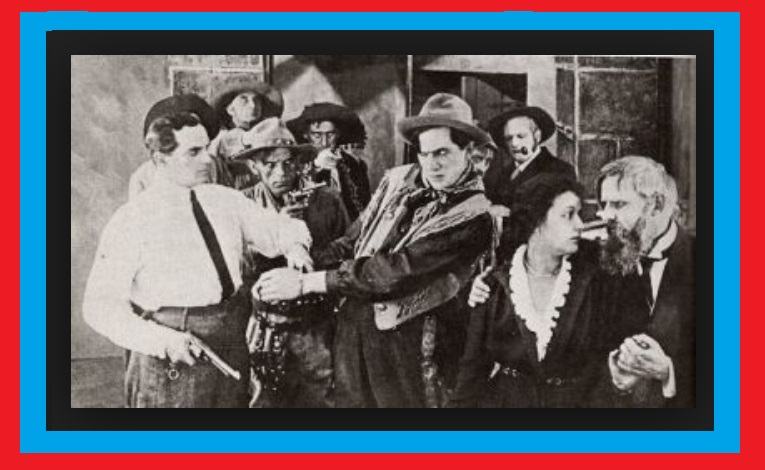
In the feverish landscape of early 1920s German cinema, few artifacts capture the intersection of social anxiety and pulp sensationalism quite like Die Sklavenhalter von Kansas-City. This is not merely a relic of a bygone era; it is a visceral document of the Weimar Republic's fascination with the 'American mythos'—a mythos constructed from equal parts admiration and existential dread. Before he became the definitive count of darkness, Bela Lugosi (then appearing as Arisztid Olt or under his own name in transition) brought a continental sophistication to roles that demanded a specific brand of menacing elegance. Here, the 'Kansas City' depicted is less a geographical reality and more a psychological terrain, a sprawl of vice where the architecture itself seems to conspire against the innocent.
The film operates within the 'Mädchenhandel' (white slavery) subgenre, a staple of early 20th-century exploitation cinema that allowed filmmakers to explore prurient themes under the guise of moral warning. However, Jane Bess’s screenplay elevates the material. Instead of the didactic tone found in many contemporary American works like The Girl of My Dreams, this production leans into a proto-noir aesthetic. The shadows in the Kansas City dens are not merely lack of light; they are tangible entities that swallow the characters whole. The cinematography, though restricted by the technical limitations of 1920, manages to evoke a sense of claustrophobia that rivals the grander scale of D.W. Griffith’s The Fall of Babylon.
Grete Weixler delivers a performance of trembling vulnerability that avoids the histrionics common to the period. Her descent into the underworld of the 'slaveholders' is paced with a rhythmic tension that mirrors the industrial heartbeat of the burgeoning metropolis. Unlike the pastoral innocence found in The Glory of Youth, Weixler’s environment is one of cold stone and iron bars. The film’s preoccupation with the mechanics of the syndicate—the ledgers, the secret passages, the transactional nature of human life—paints a picture of capitalism gone cancerous, a theme that resonates far more deeply than the standard melodrama of the era.
It is impossible to discuss Die Sklavenhalter von Kansas-City without dissecting Lugosi’s presence. Even in this early stage of his career, Lugosi possessed a singular ability to dominate the frame through stillness. While Ludwig Rex provides a more traditional antagonistic force, Lugosi represents the intellectual backbone of the criminal enterprise. His eyes, even through the grain of century-old celluloid, project a calculating intelligence. There is a sequence involving a clandestine auction that serves as the film’s centerpiece; here, Lugosi’s understated gestures provide a chilling contrast to the frantic desperation of the captives. It is a performance that foreshadows the magnetic villainy of his later Hollywood career, yet it remains distinctly tethered to the expressionistic roots of European cinema.
The film’s pacing is a fascinating anomaly. While many silent features of the time, such as Chimmie Fadden Out West, relied on rapid-fire action and slapstick pacing, director Fritz Falkenberg (who also appears in the cast) opts for a slow-burn atmospheric buildup. This approach aligns the film more closely with the psychological depth of Felix O'Day, focusing on the internal toll of captivity rather than just the external spectacle. The use of tinting—deep ambers for the interiors of the vice dens and cold blues for the night exteriors—creates a binary world of heat and isolation.
When placed alongside Das Gefängnis auf dem Meeresgrund, another film of the period that dealt with themes of incarceration and the unreachable horizon, Die Sklavenhalter feels more grounded in a terrifyingly plausible reality. While the former utilizes a fantastical setting, the latter finds its horror in the mundane reality of the city. The screenplay by Jane Bess is particularly adept at showing how the 'system' protects its own. The law is not an ally to the protagonist; it is an indifferent bystander or, worse, a silent partner to the traffickers. This cynical worldview is a hallmark of the best Weimar cinema, reflecting a society still reeling from the trauma of the Great War and economic collapse.
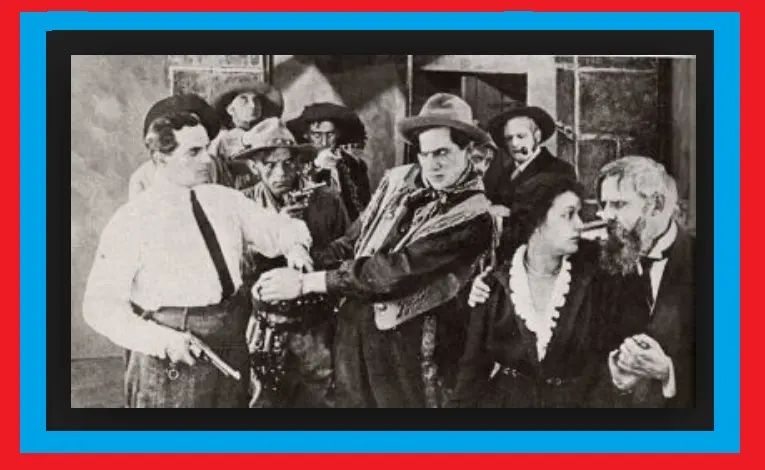
The film also invites comparison to Ewiger Strom in its depiction of the inexorable flow of fate. In Die Sklavenhalter, the characters are caught in a current of urban depravity that feels just as naturalistic and unstoppable as a rising river. There is a scene where Weixler’s character attempts an escape through a labyrinthine warehouse that serves as a metaphor for the entire narrative: every door opened leads to another corridor of uncertainty. This sense of perpetual motion, much like the thematic core of Perpetual Motion, suggests that the cycle of exploitation is self-sustaining.
The lighting design deserves special mention. Utilizing a chiaroscuro effect that would later define the film noir genre, the production designers created a Kansas City that feels like a fever dream. The use of vertical lines—staircases, bars, tall windows—emphasizes the protagonist's entrapment. It is a far cry from the open, breezy aesthetics of Mistress Nell or the comedic lightness of A Pair of Pink Pajamas. Here, every visual element is curated to evoke a sense of weight. Even the costumes, particularly the heavy furs worn by the traffickers, serve to symbolize their predatory status, contrasting sharply with the tattered, thin garments of the victims.
The editorial rhythm of the film is surprisingly modern. Falkenberg utilizes cross-cutting to build suspense during the final act, alternating between the rescue attempt and the escalating danger within the syndicate's headquarters. This technique, while pioneered by others, is used here with a surgical precision that heightens the emotional stakes. It lacks the raw, unedited feel of something like the Nelson-Wolgast Fight, opting instead for a highly constructed, theatrical tension that rewards the attentive viewer.
To view Die Sklavenhalter von Kansas-City today is to gaze into a mirror of 1920s anxieties. The fear of the 'Other,' the terror of the modern city, and the fragility of female autonomy are all laid bare. The film doesn't offer easy catharsis. While the ending provides a semblance of justice, the pervasive atmosphere of the film suggests that the 'slaveholders' are a multi-headed hydra; cut off one, and two more emerge in another city, another port, another shadow. This nihilistic undertone is what separates it from more conventional fare like Hitchin' Posts or the straightforward morality of With Neatness and Dispatch.
The collaboration between Jane Bess and the cast results in a work that is both a product of its time and a precursor to the psychological thrillers of the 1940s. The film’s exploration of the 'Dead Line'—that point of no return for the soul—is handled with more nuance than the literal interpretations found in The Dead Line. It understands that the true tragedy is not just the physical captivity, but the systematic stripping away of identity.
In the final analysis, Die Sklavenhalter von Kansas-City stands as a testament to the power of silent cinema to communicate complex social critiques through visual metaphor. It is a grim, beautiful, and deeply unsettling work that benefits from the presence of a burgeoning star in Bela Lugosi and a director who understood the evocative power of the frame. While it may be categorized by some as mere 'sensationalism,' its artistic execution and thematic depth place it firmly within the canon of essential Weimar cinema. It is a film that demands to be seen not just as a historical curiosity, but as a vibrant, breathing piece of art that continues to haunt the viewer long after the final intertitle has faded. Like The Fowl Bird, it captures a specific kind of predatory grace that is as fascinating as it is repulsive. For any serious student of the silent era or fan of Lugosi's early work, this film is an indispensable chapter in the history of the moving image.
IMDb —
1920
Community
Log in to comment.