DbcultAccessing Vault...
Cult Review
Senior Film Conservator
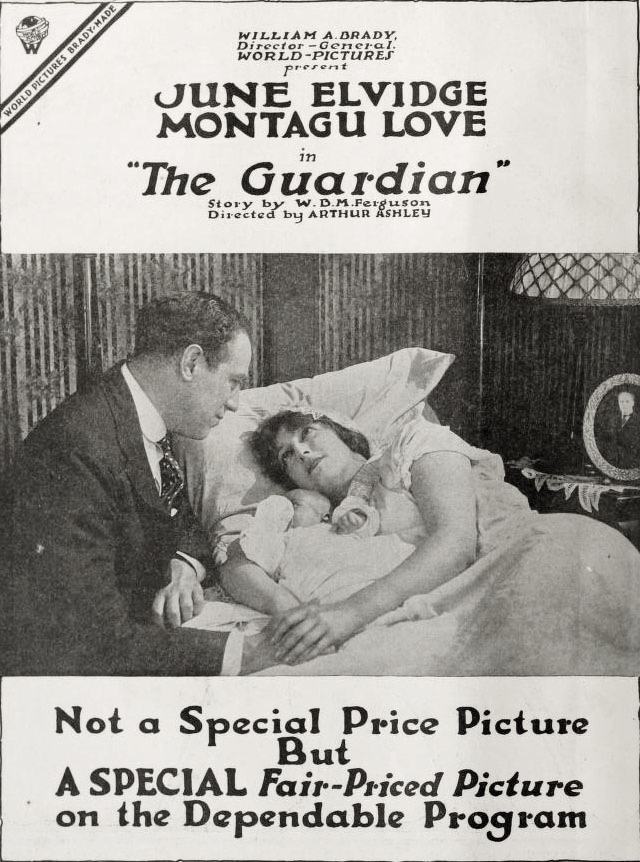
Imagine, if you will, a silent reel unfurling like a roll of parchment dipped in liquid night—each frame a charcoal etching of lust, penitence, and civic hypocrisy. The Guardian (1917) never bellows; it insinuates, sliding beneath the epidermis of polite Edwardian society to probe the gangrenous tissue beneath. Director Arthur Ashley, doubling as the haunted Rokeby, orchestrates a morality play that feels startlingly modern: reputation as tradable currency, female desire shackled by paternal dread, and redemption sold at a volatile stock exchange.
Set design belies the wartime penny-pinching of Peerless Productions. Note how the bank’s interior—stark Corinthian columns, brass teller cages—contrasts with the waterfront warehouse where climactic gunpowder ignites. Cinematographer William Black tilts the camera during Harvey’s first confrontation with Rokeby; the horizon skews 15 degrees, transforming opulence into a fun-house where ethics slide off the frame. Intertitles, eschewing the purple prose of Who's Your Neighbor?, adopt the chill brevity of ledger entries: “You owe a debt no vault can liquidate.”
June Elvidge’s Marie oscillates between porcelain fragility and incandescent hunger. Watch her pupils dilate when Harvey slips a garnet bracelet around her wrist—an illicit coronation. Conversely, Ashley’s Rokeby never begs sympathy; every close-up reveals crow’s-feet etched by self-loathing, not hardship. Montagu Love’s Harvey prefigures the gentleman-rotter archetype later perfected by The Siren’s George Relph, yet Love injects a tincture of working-class resentment—his vowels sharpen when ridiculing Rokeby’s “white marble life.”
Harvey does not merely blackmail; he curates disgrace, framing it behind museum glass for public consumption.
William Blair Morton Ferguson’s screenplay—adapted from a now-lost novella—refuses linear penitence. Rokeby’s criminal past surfaces in Act I, yet societal condemnation arrives post-intermission, upending the classic rise-fall-restoration arc. Marie’s agency, too, zigzags: from rebellious ingénue, to pawn, ultimately to redeemer who literally drags Rokeby from the wharf’s fog. Compare this to the straightforward salvation narrative in The Road to the Dawn; The Guardian prefers cul-de-sacs where absolution and retribution share the same lodging.
Though originally accompanied by improvised house pianists, the 2018 Milestone restoration commissioned a score heavy on tremolo strings and xylophone heartbeats. Syncopated woodblocks mimic ticker-tape machines during the bank-run sequence, while a solo cello underpins Marie’s entrapment in the granary—a 7-minute set piece devoid of intertitles, relying purely on visual grammar later echoed in Sperduti nel buio.
Ferguson’s script weaponizes guardianship laws that rendered women legal minors. Marie’s fortune reverts to Rokeby’s trusteeship; thus her rebellion against the guardian is also a strike against the patriarchal super-structure. Yet the film denies simplistic #girlboss catharsis: her liberation pivots on a man’s pardon and eventual marriage. Still, 1917 audiences reportedly gasped when Marie spits “I refuse to be your ledger entry”—a line that feels plucked from a 1970s consciousness-raising pamphlet.
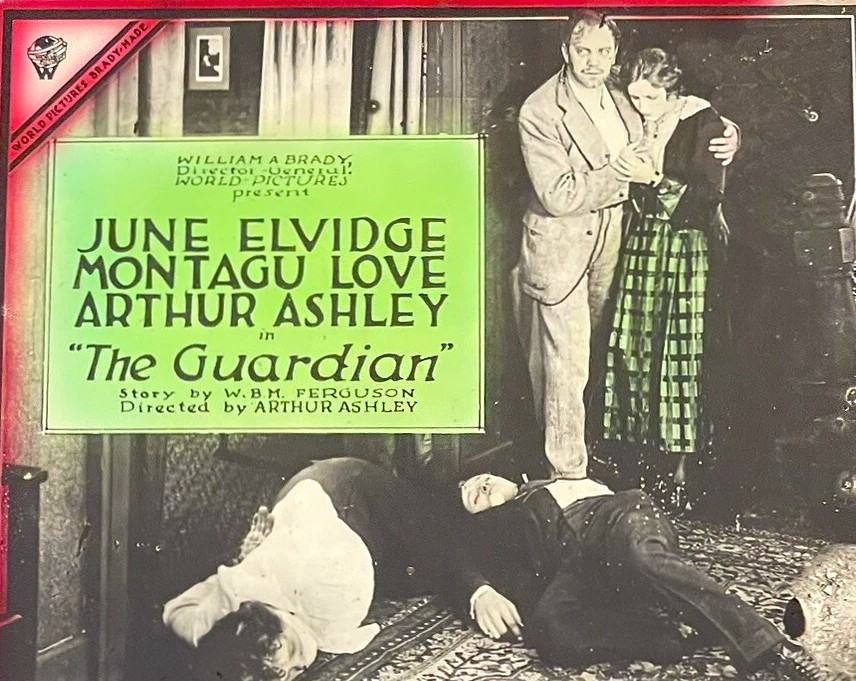
In the annals of silent-era redemptions, The Guardian nestles between the sentimental graft of Glory and the nihilistic abyss of Broken Threads. Its DNA even slithers into Hitchcock’s Blackmail (1929): the manipulation of sexual scandal to expose class anxiety. Cinephiles who lapped up the recent 4K David Copperfield reissue will recognize Peerless’s preference for chiaroscuro over clutter.
Swap telegram for Twitter, bank president for crypto-exchange CEO, and the plot could headline next year’s Cannes. The film anticipates cancel culture, the precariousness of curated respectability, and the voyeuristic glee with which society disassembles idols. In an age where past tweets excavate fossilized bigotry, Rokeby’s plight feels less period curio than cautionary algorithm.
The 2018 restoration scanned a decomposing 35mm nitrate negative at 4K; tinting tables reference the original rose madder for interiors and steel blue for exteriors. Grain structure remains voluptuous—no ghastly DNR wax. Currently streaming on Kanopy in US/Canada and BFI Player in the UK. Physical media hounds should snatch the out-of-print Edition-Films Blu-ray before scalpers jack prices past the stratosphere.
Act III rushes toward matrimony with whiplash haste; Marie’s psychological whiplash from terror to betrothal could have used an extra reel. Minor continuity gaffe: Rokeby’s waistcoat loses a button after the dockside shoot-out, only for it to reappear intact in the final boardroom scene. Nit-picking? Perhaps—but such stitches unravel immersion when the narrative stakes hinge on sartorial respectability.
Is The Guardian a buried masterpiece? No—its DNA is too frayed by censorial snips and budgetary anemia. Yet it is an indispensable hinge between Victorian moral pageantry and the storm-swept noir that would erupt in the Forties. Watch it for the luminous dread in Ashley’s eyes, for Elvidge’s flicker of insurgent desire, for the way low-budget shadows sometimes eclipse the grandiose spotlights of The Dancing Girl. Then, when the credits roll and the modern score decays into silence, ask yourself: if your past were auctioned to the highest bidder, could you muster half the grace of James Rokeby?
If this review sent you spiraling into silent-era rabbit holes, peruse my takes on The Tenth Case and What Happened to Mary for further chronicles of tarnished virtue and celluloid salvation.
IMDb —
1919
Community
Log in to comment.