DbcultAccessing Vault...
6.7/10
Senior Film Conservator
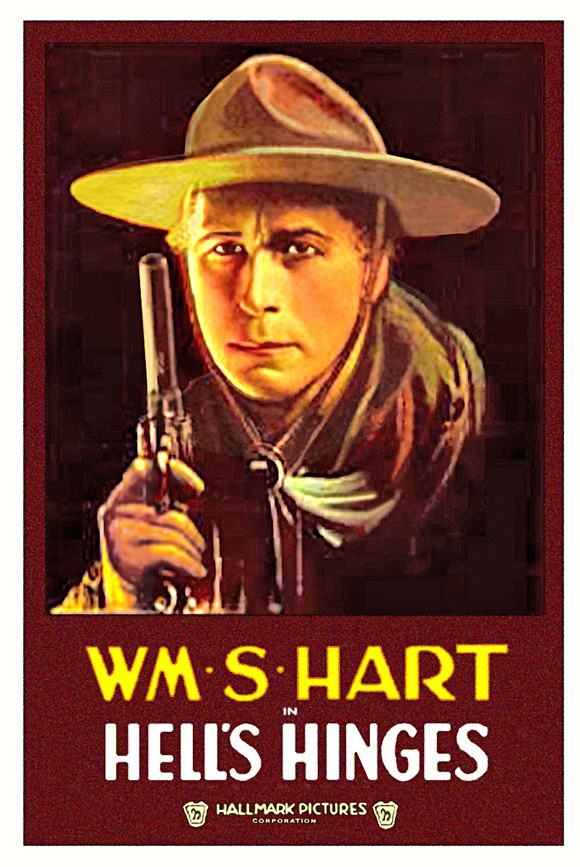
A definitive 6.7/10 rating for a film that redefined the boundaries of cult cinema. Hell's Hinges remains a cornerstone of transgressive art.
Hell’s Hinges is less a nickelodeon western than a charcoal lithograph of the American psyche, scrawled across the screen with the fury of a preacher who has just read Nietzsche and taken a shot of bourbon. Released in the crucible year of 1916—while Europe hemorrhaged in trenches and D. W. Griffith’s Birth still reeked of controversy—this 64-minute phantasm from producer Thomas H. Ince and star William S. Hart detonates the simplistic morality of earlier oaters. Instead of white-hatted virtue, we get sooty anti-myth: a town so morally septic that even the shadows need absolution.
Forget the pastel horizons of Betty in Search of a Thrill; August’s Hell’s Hinges is ochre and umber, a chiaroscuro diorama where every sunbeam looks guilty. The camera lingers on splintered boardwalks, on whiskey glasses sweating venomous rings, on Clara Williams’s upturned face haloed by a kerosene lamp that seems embarrassed to glow. When Blaze strides through swinging doors, the lens tilts slightly—an imperceptible moral earthquake—so ceilings loom like gallows. In the apocalyptic finale, double-exposures superimpose leaping flames over praying silhouettes; the celluloid itself appears to combust in contrition.
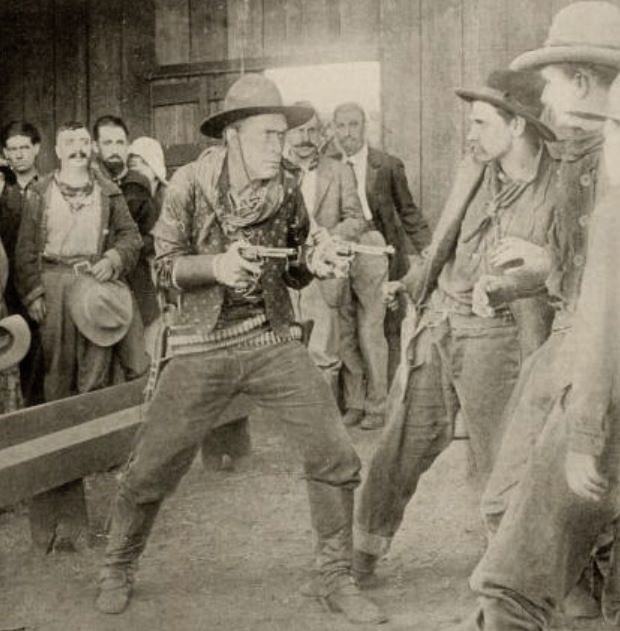
Hart’s screen persona always balanced gaunt gravitas with coiled menace; here he weaponizes both. Watch his cheekbones flicker when Faith sings “Shall We Gather at the River”—a spasm of muscle memory, as if childhood Sunday school surfaces like a drowning man gasping for air. His conversion is neither sudden nor saccharine; it germinates in micro-gestures: a holster strap tightened slower, a whiskey shot slid away untasted. Compare this nuance to the mustache-twirling caricatures in The Infant at Snakeville; Hart knows redemption without penance is just public relations.
Sullivan’s intertitles read like pulp scripture—succinct yet sulfurous. “Hell’s Hinges was a town where men checked their souls at the city limits.” That line alone, superimposed over a shot of a cemetery overrun by tumbleweeds, prefigures the nihilist poetry of Der letzte Tag. He juxtaposes eroticism and evangelism: Glaum’s dancehall queen trails feathers and perdition, yet her final close-up—watching the church burn—registers something perilously close to remorse. Sullivan refuses binary morality; even Silk Miller, in a deleted-shot discovered in a 1970s Montana barn, mutters a half-hearted apology to his dead mother while reloading.

By the time Blaze applies the torch to the liquor-soaked saloon, flame has become narrative protagonist. August undercranks the camera; flames lick forward in jerky, predatory spasms. The conflagration consumes not just timber but time—building frames curl like calendar pages. Critics often liken this sequence to the burning of Atlanta, yet the better ancestor is the furnace in Father John; or, The Ragpicker of Paris, where redemption and annihilation share the same ember. Hart walks through the inferno, six-gun surrendered, coat ablaze yet unscathed—an American purgatorio shot through with Pentecostal sparks.
Surviving cue sheets recommend “The Holy City” for the church-revival scenes and “Hell on the Rhine” for the shoot-out. Modern restorations—most notably the 2012 Mont Alto Motion Picture Orchestra score—layer syncopated ragtime under the villain’s stride, then pivot to Bachian fugue when Faith kneels in contrition. The clash of secular and sacred melodies externalizes the film’s philosophical fissure better than any spoken dialogue could.
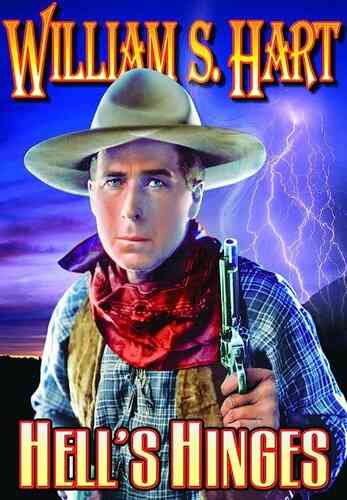
Jean Hersholt’s whiskey priest is less hypocrite than casualty, his eyes watery with self-disgust long before rotgut claims him. Jack Standing’s minister collapses from pulpit to poker table in a single dissolve—an indelible metaphor for Social-Gospel failure. And Louise Glaum, dubbed “the vamp of the desert” by Photoplay, slinks across the sawdust with serpentine sorrow; her final glare at the burning town feels eerily predictive of the femme-fatale archetype that would bloom in 1940s noir.
Clara Williams’s Faith is no mere porcelain saint. She brandishes a Bible with the same confidence Blaze wields a .45, and her climactic slap across Silk’s cheek lands harder than most western punches. Yet the film’s spatial politics relegate her to the church’s threshold—she can preach but never step into the street. Contrast with Et Syndens Barn, where the heroine navigates male terrain freely; Hell’s Hinges prefers its women sanctified or sexualized, never syncretic.
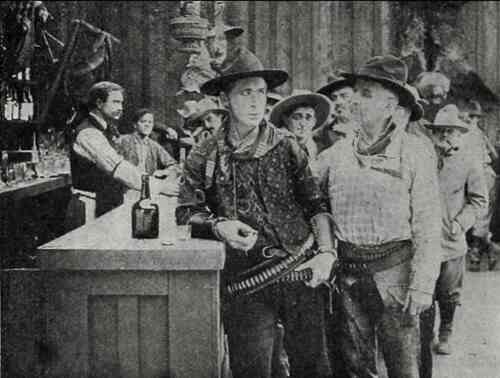
Regional censor boards excised the mock-communion scene, calling it “a parody of the Eucharist punishable by eternal damnation.” In India, British projectionists were ordered to snip the fire sequence lest it incite anticolonial arson. Ironically, these deletions only amplified the film’s mystique; bootleg prints circulated like samizdat scripture. When New York’s Board of Licenses demanded an alternate ending where Blaze dies in the blaze, Ince refused, claiming “redemption without resurrection is just bad bookkeeping.”
Studios pitched updates starring everyone from John Wayne to Michael Fassbender; each collapsed in development hell. The reason? Modern scripts insist on therapy-speak introspection, defanging the primal clash of spirit and spine. Hart’s Blaze never analyzes his trauma; he enacts it, bullet by bullet. The closest spiritual cousin is perhaps The Romance of Elaine, where serialized peril eclipses psychological profiling; yet even that serial lacks the esoteric heft of Sullivan’s moral crucible.
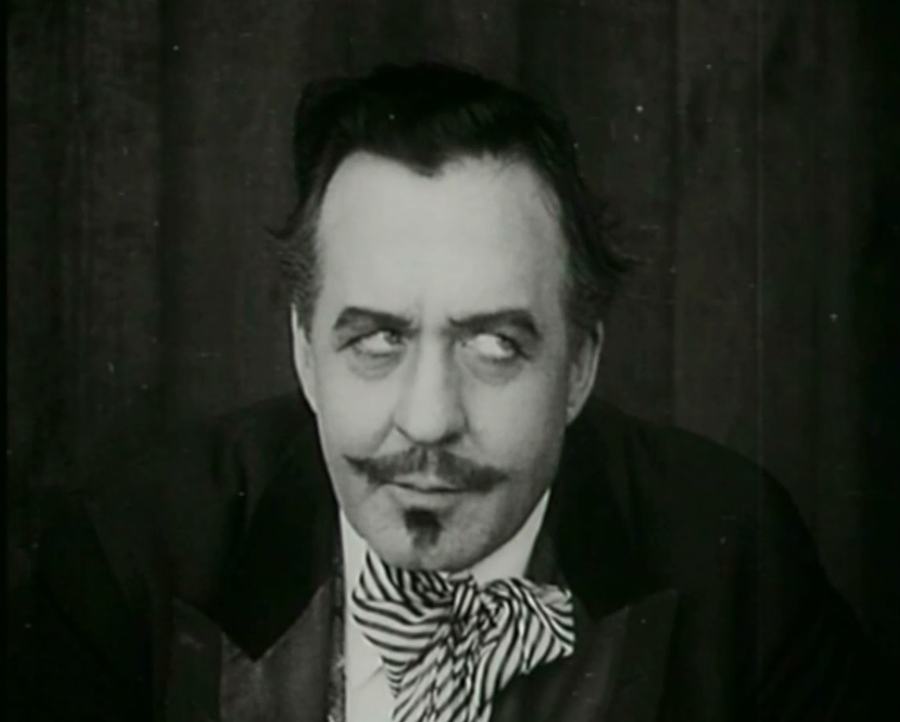
The 4K restoration on Kino’s “William S. Hart Collection” Blu-ray offers grayscale gradations that outclass the pallid Alpha DVD. Pair with a rye whiskey whose bite mimics desert dust; dim lamps to a candle-flicker 2700K. Silence cellphones—this is 1916, after all—but keep a finger poised on the pause button; you’ll want to savor August’s deep-focus tableaux where Fritz the Horse glances sideways at human folly, ears twitching like equine commentary tracks.
Hell’s Hinges endures because it fuses sweat, scripture, and sulfur into a single, scorched negative. It is both artifact and oracle, prophesying every antihero who would later stagger through No Country or Deadwood. Yet none wield guilt with such laconic majesty as Hart, whose weather-beaten face—caught between penitent and predator—remains the genre’s most haunting communion of darkness and light. For cinephiles, preachers, and gunslingers alike, this 106-year-old sermon still erupts off the screen like a coal-seam fire: impossible to extinguish, searing to behold.
IMDb —
1921
Community
Log in to comment.