DbcultAccessing Vault...
6.4/10
Senior Film Conservator
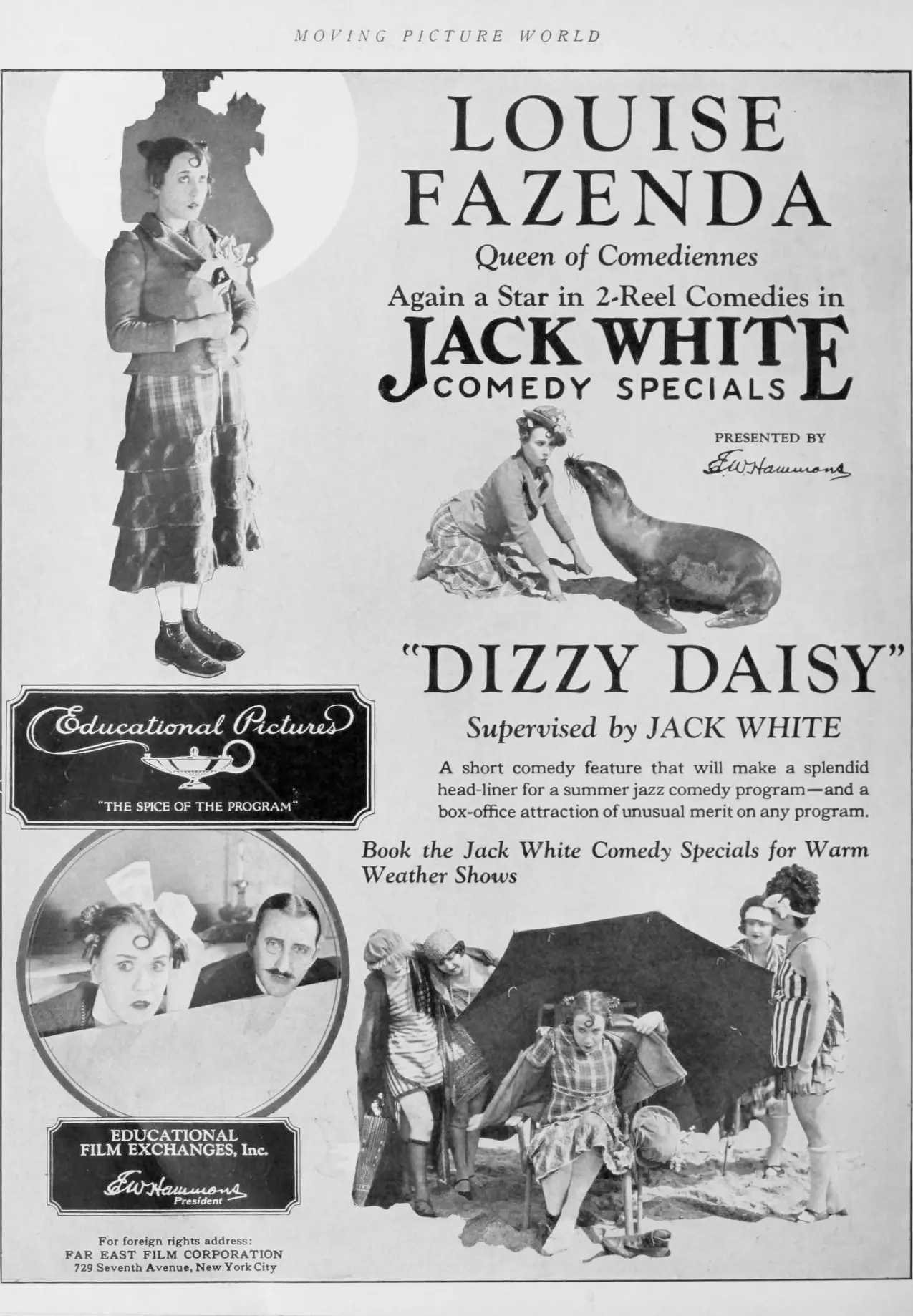
A definitive 6.4/10 rating for a film that redefined the boundaries of cult cinema. Dizzy Daisy remains a cornerstone of transgressive art.
To delve into the annals of 1924 cinema is to encounter a medium in its most vibrant, albeit chaotic, adolescence. Dizzy Daisy, a short that encapsulates the frantic energy of the era, serves as a quintessential vehicle for the incomparable Louise Fazenda. Unlike the more somber explorations of morality found in The Guilty Man, this film leans heavily into the visceral, physical language of slapstick. The premise is deceptively simple: Louise, a maid hired for what appears to be a swanky society affair, finds herself the accidental protagonist in a criminal underworld conspiracy. It is a masterclass in the subversion of domestic expectations, where the mop and apron are traded for the frantic clutching of stolen jewels.
The film’s brilliance lies not in its narrative complexity, but in its rhythmic execution. Much like the tension-building mechanisms in The Mysterious Stranger, Dizzy Daisy begins with a slow burn of social awkwardness. Fazenda’s performance is a marvel of facial contortion and ocular gymnastics. She occupies the screen with an elasticity that few of her contemporaries could match. When she realizes that the 'society' she is serving is actually a den of thieves, the film shifts gears with a jarring, delightful velocity.
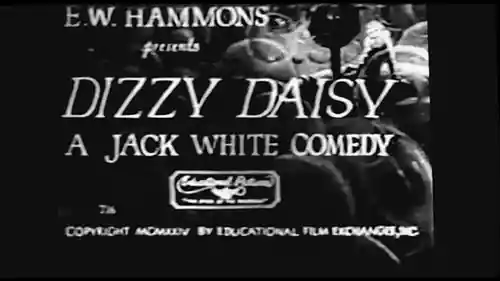
The ensemble cast provides a robust framework for Fazenda’s antics. Jack Lloyd and Otto Fries bring a grounded, albeit exaggerated, menace to the roles of the jewel robbers. Their interactions with Fazenda create a delicious friction—the stoic criminal intent clashing with her inadvertent, clumsy heroism. We also see Dick Sutherland, whose imposing physical presence often served as the perfect foil for smaller, more agile comedians. In many ways, the casting echoes the diverse archetypes seen in Mr. Dolan of New York, where character physicality often dictated the narrative's comedic trajectory.
One cannot overlook the contributions of Virginia Vance and Bobby Burns. While their roles are subsidiary to the central chase, they populate the world of Dizzy Daisy with a sense of lived-in absurdity. The 'society party' sequence is particularly noteworthy for its background gags, a hallmark of the era's production style. The writers and director (though the credits for this specific short are often debated in archival circles) clearly understood the importance of a 'busy' frame, ensuring that the viewer’s eye is always rewarded, even during the transitionary moments.
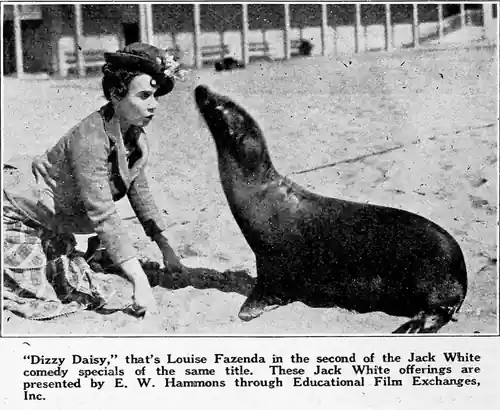
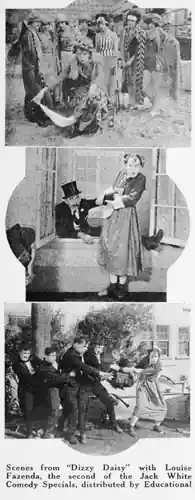
The second half of the film is where the true cinematic innovation occurs. The 'big slapstick chase' along the highway and beach is a marvel of early 20th-century stunt coordination. In an age before CGI or sophisticated safety rigs, the sheer physicality of Fazenda and her pursuers is breathtaking. The camera work, likely handled with a hand-cranked Bell & Howell, captures the kinetic energy of the vehicles with a raw, unvarnished quality that modern films often fail to replicate. This sequence shares a thematic DNA with the high-energy pacing of Hot Dog, yet it feels more grounded in its environmental hazards.
The transition from the paved highway to the undulating dunes of the beach serves as more than just a change of scenery; it alters the physics of the comedy. The sand becomes an active participant in the slapstick, causing slips, falls, and bogged-down vehicles that heighten the stakes. It is here that Fazenda’s character truly shines. Her desperation to hold onto the 'swag' is played for laughs, but there is an underlying tenacity to her performance that makes her incredibly sympathetic. Unlike the more ethereal or tragic figures in Forget Me Not, Louise is a creature of pure survival instinct.
When we compare Dizzy Daisy to other works of the period, such as Congestion, we see a distinct focus on the individual versus the environment. While Congestion might deal with broader social pressures, Dizzy Daisy is a hyper-focused character study wrapped in the trappings of a heist movie. The film lacks the heavy-handed symbolism of Mystic Faces or the experimental narrative structure of Il film rivelatore, but it gains immense power from its clarity of purpose. It aims to entertain through movement, and in that, it succeeds brilliantly.
Furthermore, the film’s portrayal of the 'tough jewel robbers' provides an interesting contrast to the more nuanced antagonists in The Phantom. In Dizzy Daisy, the villains are broad caricatures of greed, allowing the audience to fully invest in Louise’s escape without the burden of moral ambiguity. This is pure, unadulterated escapism, much like the thrill-seeking narratives found in Where the North Begins.
Louise Fazenda was a pioneer of the 'funny woman' archetype, often sacrificing her vanity for the sake of a gag. In Dizzy Daisy, she is at the height of her powers. Her ability to pivot from a wide-eyed innocent to a frantic fugitive is seamless. This film, though a short, carries the same weight of comedic importance as the feature-length works of Chaplin or Keaton. It possesses a certain 'mid-western' charm, perhaps reminiscent of the regional sensibilities explored in The Belle of Kenosha, yet it remains universally accessible.
The technical execution of the film, from the lighting of the 'swank' interior to the high-contrast exterior shots on the beach, demonstrates the growing sophistication of the 1920s film industry. While it may not have the epic scale of Hearts of the World, its intimacy is its strength. We are right there with Louise, feeling every jolt of the car and every grain of sand. The editing rhythm, particularly during the climax, is surprisingly modern, utilizing quick cuts to emphasize the mounting chaos.
Dizzy Daisy is a testament to the enduring power of physical comedy. It doesn't require dialogue to convey its wit or its tension. It is a film of pure motion, a relic of a time when cinema was discovering its own unique language. For fans of silent comedy, it is an essential watch—a vibrant, dusty, jewel-encrusted romp that reminds us why Louise Fazenda was once the queen of the screen. It is a 'good riddance' to the mundane, as seen in Good Riddance, and a joyous embrace of the spectacular. Even when compared to the more grounded Solid Concrete or the atmospheric La montée vers l'Acropole, Dizzy Daisy stands out as a beacon of pure, unbridled fun.
IMDb —
1920
Community
Log in to comment.