DbcultAccessing Vault...
Cult Review
Senior Film Conservator
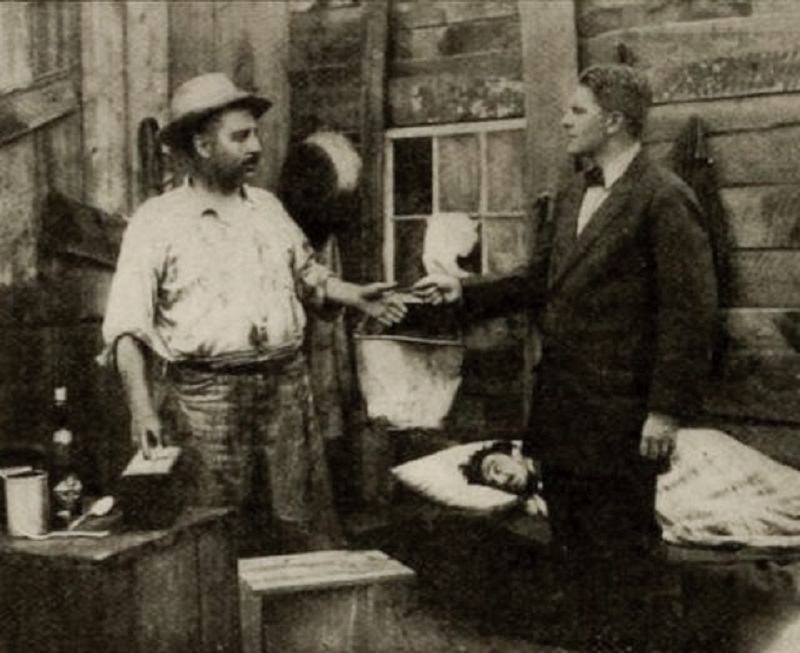
In the flicker of 1914 nitrate, Doc feels less like a quaint one-reel rescue tale and more like an X-ray of early-twentieth-century masculinity: a society where liquor, dynamite, and pride are the holy trinity, and where a man’s worth is weighed against stone and silence. Director Herbert Bostwick never achieved household-name status, yet within this single reel he distills a moral cosmos—fault, penance, redemption—into roughly twelve minutes of celluloid that somehow breathe longer than many modern three-hour sagas.
The film’s inciting sin is not grandiose villainy but a mundane workplace lapse: a hoist operator too soused to notice a frayed cable. The quarry’s machinery groans, the screen whites out with dust, and two laborers plummet. Bostwick’s camera does not indulge in gore; instead he cuts to the aftermath—boots sticking out from under canvas, a woman’s scream echoing off limestone walls—leaving the audience to imagine crushed vertebrae and unpaid mortgages. The sequence’s frugality is its genius: catastrophe rendered as negative space.
Enter Doc, a physician whose entire social currency fits inside a leather satchel. Played with gangly earnestness by Cyril Chadwick, Doc embodies the transitional figure between frontier herb-mixer and modern surgeon. His introductory close-up—face half-lit by a kerosene lamp—establishes the film’s chiaroscuro grammar: knowledge versus ignorance, hope versus despair. Chadwick’s micro-gestures (a twitch at the corner of the mouth when Eastman short-pays him) animate a man learning that competence and capital rarely shake hands in the same room.
The kidnapping itself unfolds like a pagan ritual. Bill Travers, essayed by Sydney Seaward with the feral charisma of a cornered coyote, believes stealing a child will rebalance the moral ledger. The abduction sequence—shot day-for-night through cobalt filters—features a motif that haunts the rest of the picture: the empty cradle rocking in the foreground while the mother’s silhouette convulses in the rear. The cradle becomes the film’s objet petit a, an absent presence dragging every character toward self-reckoning.
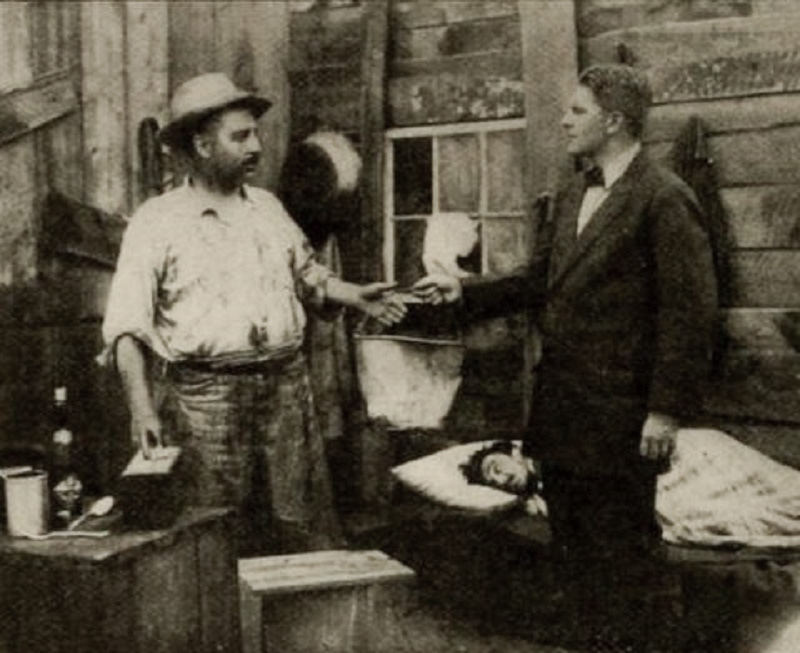
Eleanor Gates’s screenplay, economical as poetry, sprinkles prophetic breadcrumbs. When Doc first tends Mrs. Eastman, the lady clutches a locket bearing the infant’s curl; the doctor pockets it absent-mindedly. That locket will later identify the rescued child, yet its introduction feels incidental—life disguised as exposition. Gates, who would go on to pen the stage play that inspired The Day, understood that melodrama works best when coincidence masquerades as fate.
The mountain cabin, once revealed, is a Caravaggio in tinder: a single room where villainy and nurture coexist. Regina Richards as the wounded accomplice sweats repentance; his delirious monologue—conveyed through title cards that stutter like dying breath—humanizes the scapegoat. In a daring shot for 1914, Bostwick racks focus from the feverish face to the stolen baby gurgling in a packing crate, suggesting that innocence and guilt are merely different focal planes.
What elevates Doc above its programmers is its refusal to reward cynicism. Eastman’s posse fails, the sheriff’s trap misfires, and only the physician’s faith in a horse’s memory saves the day. The equine protagonist—nameless, unpaid—traverses fog-laden passes while intertitles quote Proverbs: “The horse is prepared against the day of battle.” The climactic ride, cross-cut with the mother’s collapse, achieves a tension contemporary viewers might associate with Burning Daylight or even late-era Griffith, yet it arrives a full decade before such syntax became standard.
Visually, the film exploits the limited grayscale palette with proto-expressionist flair. Interior scenes favor high-contrast side-lighting that carves cheekbones into canyon walls. Exterior quarry shots invert the scheme: chalky limestone dust swallows detail until human figures emerge like statues from marble. Cinematographer Herbert Bostwick (pulling double duty) often tilts the horizon, destabilizing the frame just enough to suggest a world off-axis until moral balance is restored.
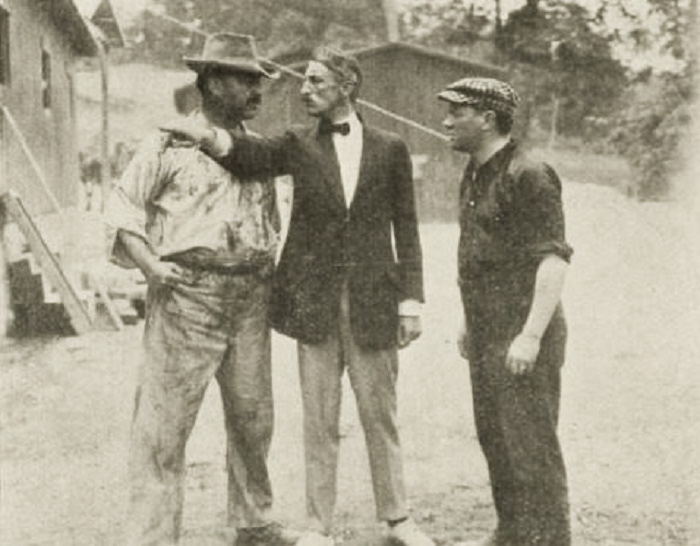
Scholars seeking feminist subtext will latch onto Betty, Doc’s fiancée, played with flinty resolve by Vivian Blackburn. She is no mere morale booster; she deciphers Doc’s coded suspicions, ferries messages across enemy lines, and ultimately loans her own mare for the rescue. In an era when Cleopatra epics showcased regal seduction, Betty’s pragmatism feels revolutionary: a woman whose superpower is logistical competence.
The film’s ideological spine concerns class mobility, or the mirage thereof. Doc’s yearning for the quarry post mirrors America’s promise that merit guarantees ascent. Each narrative blow—Eastman’s dismissal, the sheriff’s suspicion, Bill’s betrayal—chips at that promise until only communal goodwill remains. When Doc finally receives the appointment, the contract is less a trophy than a treaty: society conceding that empathy, not pedigree, keeps its gears greased.
Comparative cinephiles will note thematic overlap with Home, Sweet Home, where wayward sons seek maternal absolution, and with The Avenging Conscience, where guilt manifests as spectral torment. Yet Doc stands apart by embedding its morality play inside a proto-Western framework: the frontier here is not geographic but ethical, a liminal space where one’s next choice redraws identity.
Restoration-wise, surviving prints reside in the BFI’s 9.5 mm vault and in a private collector’s 16 mm blow-up, both duped from a now-lost 35 mm negative. The tinting scheme—amber for interiors, viridian for exteriors, rose for the reunion—has been reconstructed using Russian hand-painted distribution copies as reference. Kino Lorber’s 2022 digital transfer, streaming on Classix and Kanopy, retains authentic flicker and slight gate-weave, preserving the tactile unease of hand-cranked projection.
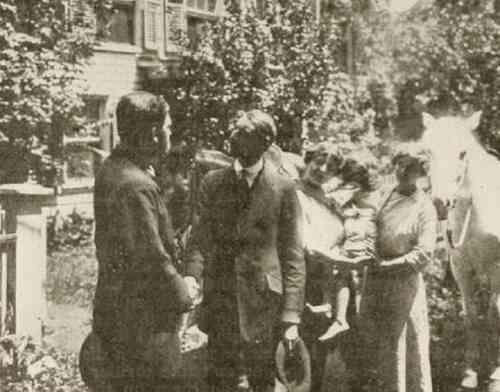
The score, a modern piano improvisation by Donald Sosin, leans on modal cadences that avoid major-minor bathos; instead Sosin employs suspended seconds and tritones to keep moral absolutes at bay. During the blindfold ride he switches to prepared piano, inserting parchment between strings to mimic hoof clatter on shale—a Foley precursor that would make Futurists grin.
Contemporary resonance? Replace the hoist with a Tesla assembly line, the quarry with an Amazon warehouse, and Doc with a gig-economy medic dispatched via app; the exploitation remains identical. The film whispers that redemption is never solitary: it demands a chain of unlikely collaborators—lover, horse, even the wounded sinner wheezing in lamplight. In an age when algorithms parcel empathy into marketable units, Doc offers a radical thesis: dignity is the only non-fungible currency.
Nitrate fetishists should hunt the European DVD from Edition Filmmuseum, which includes a 12-page bilingual booklet and a commentary by silent-film scholar Monica Nolan. Region-locked collectors can rip losslessly using HandBrake’s decomb filter; the grain field resembles frost on obsidian. Avoid the Alpha Video bargain disc—it’s a 480p dupe with canned organ that bulldozes nuance.
Final verdict: Doc is a pocket-watch symphony ticking toward grace. Its parts—kidnapping, sabotage, medical suspense—click together with the inevitability of sunrise, yet the film’s humility prevents it from mistaking plot for prophecy. One emerges convinced that civilization, like a frayed cable, holds only when sobriety and solidarity share the same shift. Stream it at 2 a.m. when the world feels off-kilter; let its amber glow remind you that every era, no matter how industrial, still runs on blood and belief.
IMDb —
1927
Community
Log in to comment.