DbcultAccessing Vault...
Cult Review
Senior Film Conservator
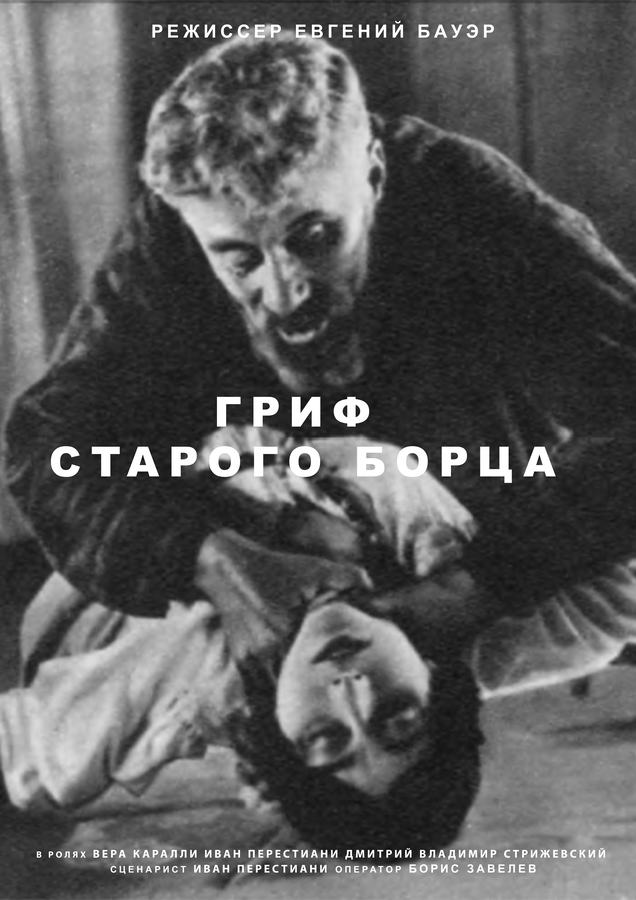
Stepping into the world of Grif starogo bortsa, or 'The Old Wrestler's Mark,' is akin to unearthing a forgotten relic from the nascent days of cinema, a period where storytelling relied solely on the raw power of visual narrative and the expressive capabilities of its performers. This 1917 Russian silent film, a masterful creation from the multifaceted Ivane Perestiani, invites viewers into a realm where physical prowess meets profound psychological depth, all set against a backdrop steeped in an almost Gothic sense of mystery. Perestiani, not merely the film’s writer but also its star, delivers a performance that transcends the limitations of the medium, embodying the titular Carlo de Milano with a gravitas that is both compelling and deeply affecting. His portrayal of a man whose extraordinary strength defines his public persona, yet whose private life is about to be irrevocably altered by a seemingly innocuous purchase, is nothing short of captivating. The film doesn't just present a plot; it unfurls a tapestry of human experience, exploring themes of legacy, the weight of the past, and the hidden currents beneath the surface of everyday existence.
The narrative’s genesis, simple yet potent, revolves around Carlo de Milano, a wrestler whose legendary might has etched his name into the annals of sporting lore. His decision, alongside his adopted son, to retreat from the clamor of the ring to the bucolic serenity of an old house with a vineyard, initially appears to be a quest for tranquility. However, this idyllic vision quickly gives way to an undercurrent of disquietude, primarily due to a particular feature of their new abode: a deep, cavernous basement, accessible only by a staircase so decrepit, so utterly rotten, that it seems to whisper tales of bygone eras and forgotten secrets. This architectural detail is far more than mere set dressing; it serves as a powerful symbol, a literal and metaphorical descent into the unknown, a passage to the film’s very core. It is here, in the shadows beneath the seemingly peaceful vineyard, that the true essence of the story begins to manifest, promising revelations that will challenge Carlo’s newfound peace and test the bonds he holds dear.
Perestiani’s depiction of Carlo de Milano is a study in contrasts. On one hand, we witness the residual power of a man accustomed to dominating physical arenas, whose very presence commands respect. Yet, beneath this veneer of strength, there's an undeniable yearning for a different kind of life, one rooted in domesticity and the quiet rhythms of the earth. The vineyard, a symbol of growth and nurture, stands in stark opposition to the dark, decaying basement, a symbol of stagnation and decay. This duality is central to the film’s dramatic tension. As Carlo and his son settle into their new lives, the presence of that ominous staircase looms large, a silent harbinger of the narrative's true trajectory. It’s a brilliant piece of visual foreshadowing, typical of the sophisticated visual language developing in early cinema. The audience is made to feel the weight of this impending discovery long before anything explicit occurs, a testament to Perestiani’s skill as both a writer and director. He understood that in silent film, atmosphere and suggestion often spoke louder than any intertitle.
The supporting cast, including Vladimir Strizhevsky and Vera Karalli, contribute significantly to the film’s rich tapestry. Strizhevsky, likely as the adopted son, provides a youthful counterpoint to Carlo’s seasoned wisdom, perhaps representing the future looking back at the past. Karalli, renowned for her balletic grace and dramatic flair, undoubtedly brings a nuanced performance, adding layers of emotional complexity to the unfolding drama. In silent cinema, where gestures and facial expressions carry the entire burden of communication, the caliber of the actors is paramount. Perestiani, as a director, clearly understood how to extract powerful, emotive performances, ensuring that the audience remained invested in the characters' fates despite the absence of spoken dialogue. This emphasis on performance is something we can also appreciate in films like The Kiss of Hate, where the intensity of the actors’ expressions drives the entire narrative forward, or even the subtle nuances found in Nelly Raintseva, where character psychology is paramount.
The old house itself becomes a character in Grif starogo bortsa. It's not merely a setting but an active participant in the unfolding drama, its ancient stones and creaking timbers harboring secrets. The basement, with its 'rotten staircase,' is the epicenter of this architectural foreboding. It evokes a sense of dread and curiosity simultaneously, drawing the characters—and by extension, the audience—towards its depths. This trope of a mysterious dwelling with hidden dangers is a classic, one that resonates deeply within cinematic history. One might draw parallels to the pervasive sense of unease created by the setting in The House of Glass, where the very structure seems to hold sinister intentions, or even the more psychological claustrophobia found in A London Flat Mystery, though Perestiani's film grounds its mystery in a more tangible, physical space. The decay of the staircase is not just a detail; it's a profound statement about the passage of time, the erosion of memory, and the fragility of what we perceive as stable. It suggests that what lies below has been undisturbed, perhaps intentionally concealed, for a very long time, accumulating a potent narrative charge.
Perestiani's direction is marked by a keen understanding of visual rhythm and dramatic pacing. He allows moments of quiet contemplation to breathe, building a palpable sense of anticipation before plunging into the more intense sequences. The camera work, for its time, demonstrates a sophistication that elevates the storytelling beyond simple documentation. It frames the actors in ways that emphasize their emotional states, and it navigates the spaces of the old house with a deliberate, almost investigative gaze. The use of light and shadow, a cornerstone of early cinematic expression, is particularly effective in enhancing the mysterious aura of the basement. Shadows stretch and distort, transforming mundane objects into ominous shapes, playing on primal fears. This deliberate manipulation of visual elements is crucial for a silent film to maintain its grip on the audience, much like the meticulously crafted visual suspense in The Turn of a Card, which relies heavily on atmosphere and composition to convey its dramatic stakes.
The film's exploration of strength is multifaceted. Carlo de Milano's physical prowess is undeniable, yet the true strength depicted lies in his resilience, his capacity for love, and his eventual confrontation with the hidden truths of his new home. This thematic depth elevates Grif starogo bortsa beyond a mere genre piece, positioning it as a thoughtful meditation on the human condition. It's a testament to the power of narrative to explore universal themes through specific, compelling circumstances. The 'mark' in the title, 'Grif,' can be interpreted in various ways – a literal sign, a metaphorical imprint of the past, or even the indelible character of the old wrestler himself. This ambiguity allows for a richer, more engaging viewing experience, inviting personal interpretation and deeper contemplation. The film doesn't spoon-feed its audience; rather, it provides a framework within which to explore complex ideas, a characteristic shared by other contemplative silent films such as Christus, which, despite its religious subject, often delves into the profound emotional states of its characters.
The screenplay, penned by Perestiani himself, is remarkably tight and focused. Despite the absence of spoken dialogue, the story progresses with an undeniable momentum, each scene contributing meaningfully to the overall arc. The plot, while centered on the mystery of the house, never loses sight of its characters, ensuring that their emotional journeys remain at the forefront. This balance between plot-driven suspense and character-driven drama is a hallmark of sophisticated storytelling, even in its nascent cinematic form. The gradual unveiling of whatever secrets the basement holds is handled with a delicate touch, building tension incrementally rather than resorting to cheap thrills. It's a masterclass in the art of the slow burn, a technique that, when executed with precision, can be far more impactful than sudden shocks. This measured approach to revelation can be observed in other silent dramas, where the psychological impact of events is given precedence, such as in The Wager, which builds its dramatic tension through unfolding consequences rather than abrupt turns.
Beyond its immediate narrative appeal, Grif starogo bortsa offers valuable insights into the burgeoning Russian film industry of the early 20th century. It showcases the talent of its filmmakers and actors, demonstrating their ability to create compelling and artistically significant works that could stand alongside productions from other cinematic hubs. The film's enduring quality speaks to its timeless themes and the universal appeal of a well-told story. For enthusiasts of silent cinema, it's a vital piece of the puzzle, revealing the diverse creative landscapes that existed beyond Hollywood and Western Europe. It reminds us that cinematic innovation and artistic expression were flourishing in various corners of the globe, each contributing unique perspectives and stylistic approaches to the nascent art form. The film, therefore, is not merely entertainment but a historical document, a window into a pivotal era of cultural production. Its preservation and continued appreciation are crucial for a comprehensive understanding of early film history, much like the efforts to preserve and study films such as The Making of Maddalena or Das Recht aufs Dasein, which offer similar glimpses into the diverse narratives and cinematic techniques of their respective periods.
The emotional resonance of the film is profound. Despite the stylistic conventions of the silent era, the performances convey a remarkable depth of feeling. The joy of a new beginning, the apprehension of the unknown, the shock of discovery, and the eventual resolution—all are communicated with an eloquence that transcends the need for spoken words. This is where the true artistry of silent film lies: in its ability to tap into universal emotions through purely visual means. The dynamic between Carlo and his adopted son, for instance, is explored with a tenderness and complexity that highlights the emotional stakes involved in their joint venture. This relationship serves as an anchor, grounding the more mysterious elements of the plot in a deeply human context. It's a narrative strategy that ensures the audience cares not just about 'what' is found in the basement, but 'how' it affects these characters. This human element is often what makes silent films so enduring, as seen in the heartfelt portrayals in The Heart of Humanity or the charming character interactions in The Marriage of Kitty.
In terms of cinematic craft, Grif starogo bortsa stands as a testament to the ingenuity of early filmmakers. The editing, for instance, maintains a brisk pace without feeling rushed, guiding the viewer's eye and attention precisely where it needs to be. The intertitles, sparse but impactful, provide crucial exposition without overwhelming the visual narrative, acting as poetic bridges rather than intrusive interruptions. The set design, particularly of the old house and its ominous basement, is meticulously detailed, contributing significantly to the film’s atmosphere. One can almost feel the dampness of the subterranean space, the dust of ages clinging to its walls. This attention to detail in production design is paramount in creating believable worlds in silent cinema, a trait shared with films that immerse their audience through intricate settings, such as Jungeldrottningens smycke, where the exotic backdrop plays a crucial role.
The film’s legacy is also tied to its exploration of societal anxieties and aspirations of the period. While seemingly a personal story, the themes of legacy, property, and hidden histories often reflect broader cultural concerns. The idea of secrets buried beneath the surface, waiting to be unearthed, can be seen as a metaphor for societal introspection or the reckoning with a nation's past. This layer of implicit commentary adds another dimension to the viewing experience, allowing the film to resonate on multiple levels. It’s a subtle yet powerful aspect of its artistry, demonstrating how even seemingly straightforward narratives can carry profound cultural weight. This capacity for deeper meaning is what separates truly great films from mere entertainment, a quality that can be appreciated in other works that transcend their immediate plot, such as In the Bishop's Carriage, which subtly critiques social norms, or the more overtly satirical tones of Humdrum Brown.
Ultimately, Grif starogo bortsa is more than just a historical curiosity; it is a vibrant, compelling piece of cinematic art that continues to engage and intrigue. Ivane Perestiani’s vision, brought to life through his multifaceted talents and the strong performances of his cast, creates a world that is both familiar in its human emotions and mysterious in its unfolding drama. The central image of the rotten staircase, leading to an unknown depth, remains a powerful symbol of the film’s enduring allure—a pathway to understanding the intricate dance between strength and vulnerability, between the public persona and the private truth, and between the present and the inescapable echoes of the past. It’s a film that demands to be seen, studied, and appreciated for its contribution to the rich tapestry of early global cinema, leaving an indelible 'mark' on anyone fortunate enough to experience its silent, powerful narrative. Its nuanced approach to storytelling and character development sets it apart, solidifying its place as a significant achievement from a pivotal era in film history, alongside other compelling narratives like The Shop Girl, which also captures the essence of its time with remarkable clarity.
IMDb 6.9
1915
Community
Log in to comment.