DbcultAccessing Vault...
Cult Review
Senior Film Conservator
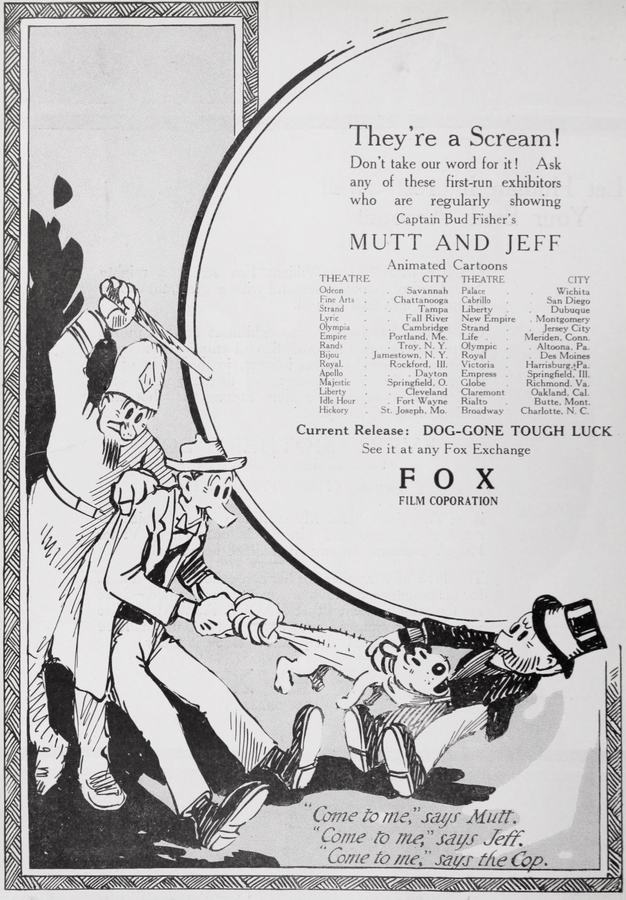
In the annals of early cinema, where narratives often grappled with the grand dramas of human existence, there occasionally emerges a gem that reminds us of the profound, often comedic, impact of our four-legged companions. Such is the case with Dog-Gone Tough Luck, a film that, despite its somewhat modest origins, carves out a surprisingly enduring niche. Penned and starring the multifaceted Bud Fisher, this picture is far more than a simple animal-centric comedy; it's a testament to the serendipitous nature of fate, the resilience of the human spirit, and, of course, the charmingly unpredictable chaos wrought by a spirited terrier named Lucky.
The film introduces us to Bartholomew 'Barty' Bumble, a character brought to life with a nuanced blend of earnestness and slapstick by Fisher himself. Barty is an inventor, a dreamer, and, for all intents and purposes, a walking magnet for misfortune. His latest brainchild, an automatic pickle de-seeder, is as absurd as it is brilliant, a contraption that perfectly encapsulates the film's whimsical tone. Yet, it is Barty's unwavering optimism, even in the face of repeated setbacks, that forms the emotional core of the narrative. His bond with Lucky, a scruffy terrier whose name is an ironic counterpoint to the string of calamities he often precipitates, provides a heartwarming anchor amidst the escalating pandemonium.
Lucky is, without exaggeration, the beating heart of Dog-Gone Tough Luck. His actions, though driven by simple canine instincts – a chase after a squirrel, an ill-timed chew on a piece of paper, an enthusiastic bark at an inopportune moment – consistently derail the nefarious plans of Silas Greed. Greed, the archetypal industrialist villain, is a wonderfully broad antagonist, his villainy painted with strokes of theatrical exaggeration that suit the film's comedic sensibility. The genius of Fisher's writing lies in crafting a plot where the hero's triumphs are entirely accidental, born from a dog's unwitting interference rather than deliberate strategy. This imbues the film with a unique charm, elevating it beyond mere farce into a poignant commentary on how the smallest, most unassuming creatures can dramatically alter the course of human events.
Consider the scene where Lucky, mistaking crucial blueprints for a new chew toy, inadvertently shreds them, only for the torn pieces to later reveal a hidden clause that exposes Greed's duplicity. This kind of narrative contrivance, while potentially clunky in a more serious drama, works beautifully within the film's established comedic framework. It’s a masterclass in situational irony, a hallmark of Fisher’s comedic sensibility. The film’s pacing, a crucial element in silent or early sound cinema, is expertly managed, building from lighthearted domestic mishaps to a crescendo of public humiliation for the villain, all orchestrated by a dog who simply wants to play.
Dog-Gone Tough Luck, much like its contemporaries, relies heavily on visual storytelling and physical comedy. The expressive performances, particularly from Fisher himself, convey a wealth of emotion without the need for extensive dialogue or intertitles. The camera work, while perhaps not groundbreaking for its era, is functional and effective, always keeping the audience engaged with Lucky’s antics and Barty’s reactions. The film’s ability to elicit genuine laughter and heartfelt sympathy speaks volumes about its timeless appeal. It's a stark contrast to the more somber or melodramatic tones found in films like The Torture of Silence, demonstrating the breadth of emotional registers early cinema was capable of exploring. While 'Torture' delves into psychological distress, 'Dog-Gone Tough Luck' finds its strength in lighthearted, externalized conflict.
The film also showcases an early understanding of character archetypes that resonate even today. Barty, the struggling but good-hearted inventor, and Greed, the avaricious industrialist, are figures that have populated countless stories across various mediums. Lucky, the innocent catalyst, adds a layer of unpredictable charm, demonstrating that heroism isn't always about grand gestures but often about accidental consequences. This simplicity in character design allows the audience to quickly grasp the stakes and invest in the outcome, a fundamental principle of effective storytelling that Fisher clearly understood.
Bud Fisher’s involvement as both writer and lead actor is pivotal to the film’s success. His understanding of the comedic timing necessary for both the script and its execution is evident in every frame. As Barty, he embodies the perfect blend of earnestness and physical awkwardness, making his character instantly lovable and relatable. His interactions with Lucky feel genuine, a testament to his ability to connect with his animal co-star. This dual role is reminiscent of the multi-hyphenate talents of the era, individuals who often wore many hats to bring their visions to the screen. It's a hands-on approach that imbues the film with a singular, cohesive vision, a quality that can sometimes be lost in productions with too many cooks in the kitchen. His performance, in particular, carries a certain understated pathos that prevents the film from descending into pure silliness, grounding the absurdities in a recognizable human experience.
Fisher’s writing, while seemingly straightforward, is remarkably clever in its construction of escalating comedic scenarios. Each mishap builds upon the last, leading to a satisfyingly chaotic climax. The film's narrative structure, though linear, is punctuated by moments of pure, unadulterated slapstick that provide both visual gags and crucial plot developments. This careful balance between plot progression and comedic set-pieces is a testament to Fisher's skill as a storyteller. It's a narrative craftsmanship that, in its own way, is as intricate as the dramatic arcs seen in films like David Copperfield, albeit with a vastly different tone and purpose. While 'David Copperfield' explores the long, winding path of personal growth and societal struggle, 'Dog-Gone Tough Luck' finds its meaning in the immediate, often humorous, consequences of chance.
At its heart, Dog-Gone Tough Luck is a film about serendipity. It explores the idea that even in the toughest of times, fortune can unexpectedly turn, often through the most improbable means. Barty's journey from a ridiculed inventor to a celebrated success is not a result of his own cunning or brilliance, but rather the unwitting intervention of his loyal, if mischievous, canine companion. This theme of unexpected triumph against adversity resonates deeply, offering a comforting message that even when life throws its worst, there's always a chance for things to turn around. It’s a narrative thread that can be seen, albeit in a much more dramatic context, in films like The Quest, where protagonists embark on arduous journeys, often encountering unforeseen challenges and finding strength in unexpected places. While 'The Quest' presents a literal journey, 'Dog-Gone Tough Luck' offers a metaphorical quest for success, guided by fate.
Furthermore, the film subtly touches upon the theme of resilience. Barty, despite his continuous failures, never gives up on his dreams. His enduring spirit, fueled by his passion for invention and his affection for Lucky, is truly admirable. This resilience is a universal human quality, one that allows us to persevere through life’s inevitable challenges. The film, through its comedic lens, celebrates this unwavering determination, making Barty a surprisingly aspirational figure. It is a sentiment that contrasts sharply with the often-grim portrayals of struggle in films like The Sons of Satan, which might explore the darker aspects of human endurance under malevolent forces. 'Dog-Gone Tough Luck' offers a lighter, more hopeful perspective on facing life's trials.
The enduring appeal of Dog-Gone Tough Luck lies in its ability to combine genuine humor with a heartwarming story. It’s a film that doesn't take itself too seriously, yet delivers a powerful message about hope, perseverance, and the unexpected sources of joy in our lives. The charming performance of Lucky, the terrier, undoubtedly contributed to a burgeoning appreciation for animal actors in cinema, paving the way for countless future canine stars. The film highlights the unique bond between humans and their pets, a relationship that transcends language and logic, often leading to moments of profound connection and comedic absurdity.
While it might not possess the dramatic gravitas of a film like Urteil des Arztes (The Doctor's Verdict), which likely explored complex ethical dilemmas, 'Dog-Gone Tough Luck' offers a different kind of cinematic richness: the joy of pure, unadulterated entertainment. It stands as a delightful example of early comedic filmmaking, a testament to the power of simple narratives executed with charm and wit. Its influence, though perhaps not overtly acknowledged in film history texts, can be felt in the countless animal-centric comedies that followed, demonstrating a timeless formula for captivating audiences with the antics of our furry friends. It’s a film that, much like a loyal dog, sticks with you long after the credits roll, leaving a warm, fuzzy feeling and a smile on your face.
In conclusion, Dog-Gone Tough Luck is a delightful cinematic confection, a testament to Bud Fisher’s multifaceted talents and an enduring example of how humor and heart can elevate a simple story into something truly memorable. It's a must-watch for anyone interested in the evolution of comedy in film, or simply for those in need of a good, old-fashioned laugh courtesy of a very lucky, very tough, and utterly charming terrier. Its enduring charm and lighthearted spirit make it a timeless piece of entertainment, proving that sometimes, all you need is a dog and a little bit of tough luck to find your way to triumph.
IMDb 5.3
1931
Community
Log in to comment.