DbcultAccessing Vault...
Cult Review
Senior Film Conservator
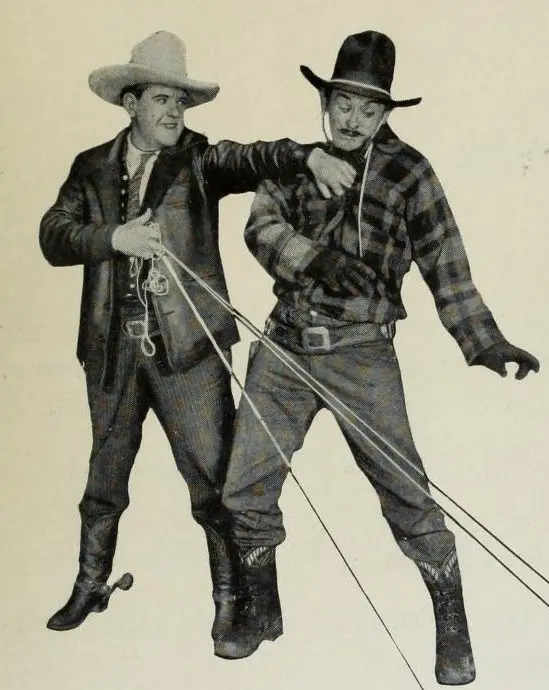
Short answer: Yes, but only if you are willing to trade modern polish for the raw, kinetic energy of 1920s B-Westerns. This film is for the genre historian and the silent film completist who appreciates the evolution of the 'masked hero' trope; it is certainly not for the casual viewer who finds the lack of dialogue a barrier to engagement.
Don Desperado stands as a fascinating bridge between the early frontier myth-making and the more cynical, grit-laden Westerns that would follow decades later. It isn't a film that asks for your sympathy; it demands your attention through sheer physical movement and the rugged charisma of its lead. If you can look past the flickering frames, there is a surprisingly modern skeleton beneath the surface.
1) This film works because: The location shooting and stunt work feel remarkably dangerous and authentic, providing a visceral experience that studio-bound films of the era lacked.
2) This film fails because: The secondary characters are often reduced to tropes, leaving Eugenia Gilbert and the supporting cast with very little to do beyond reacting to Maloney’s stoicism.
3) You should watch it if: You want to see the DNA of the vigilante genre before it was codified by comic books and high-budget Hollywood spectacles.
Leo D. Maloney was never the 'dandy' of the Western world. Unlike some of his peers who looked like they stepped out of a catalog, Maloney always looked like he had just finished a twelve-hour shift in the sun. In Don Desperado, this physical presence is his greatest asset. He doesn't need title cards to explain his motivation; his weary eyes and the way he handles a horse tell the story of a man who has seen too much.
His direction is equally pragmatic. There are no unnecessary flourishes here. When compared to a film like The Jay Bird, which leans more into the lighthearted tropes of the era, Don Desperado feels heavy. The camera stays low, often catching the dust kicked up by the horses, creating a sense of immersion that was rare for 1927. It is a movie of dirt and sweat.
Maloney doesn't just play the hero; he inhabits the landscape as if he were part of the geology itself.
The script by Ford Beebe is a masterclass in efficiency. Beebe, who would go on to become a staple of the serial and B-movie world, understands that in a silent Western, the action is the dialogue. The plot of Don Desperado is lean. There is a clear antagonist in Frederick Dana, a clear goal, and a clear obstacle. This simplicity allows the film to move at a breakneck pace that puts many modern blockbusters to shame.
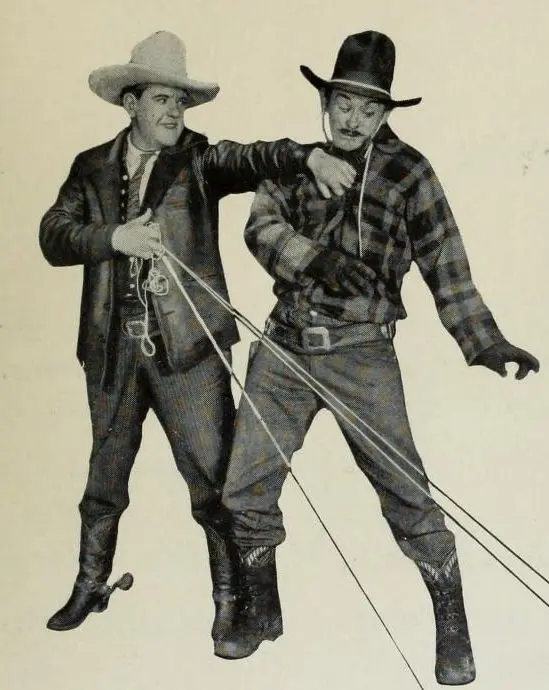
Consider the pacing in Mile-a-Minute Romeo. While that film focuses on the thrill of the chase, Don Desperado focuses on the tension of the confrontation. The scenes where Maloney is 'undercover' as the Desperado are played with a surprising amount of suspense. It’s not just about who pulls the trigger first; it’s about the psychological weight of the mask.
The lighting in Don Desperado is brutal. In an era where many productions were moving toward the controlled environments of the 'dark studio,' Maloney and his crew stayed outdoors. The high-contrast sunlight of the American West creates deep, ink-black shadows that perfectly mirror the film's moral ambiguity. This isn't the soft-focus world of Young Mrs. Winthrop; this is a world where the sun punishes the characters.
One specific scene involving a chase through a narrow canyon stands out. The way the camera captures the verticality of the rock walls makes the protagonist feel trapped, even when he's on the move. It’s a sophisticated use of environment that elevates the film above the standard 'horse opera' fare of the late 20s. The film is as subtle as a kick in the teeth, and that is its greatest strength.
For the modern viewer, the question of 'worth' usually comes down to entertainment value versus historical importance. Don Desperado manages to satisfy both. It is entertaining because the stunts are real—there are no wires, no CGI, just men and horses doing dangerous things in the dirt. It is historically important because it shows the transition of the Western hero from a moral paragon to a complicated vigilante. It works. But it’s flawed.
Leo D. Maloney’s performance is a fascinating study in restraint. In 1927, many actors were still using the broad, theatrical gestures of the stage. Maloney, however, understands the power of the close-up. He uses his face as a landscape of its own. When he is on screen with Charles Bartlett or Bud Osborne, the difference in styles is palpable. Maloney is grounded; the others are performing.
As a director, Maloney shows a surprising amount of restraint. He doesn't over-edit the action. He lets the camera linger on the movement of the horses, allowing the audience to feel the speed and the danger. This is a stark contrast to the more frantic editing seen in films like The Man from Hell's River. Maloney trusts his audience to follow the action without being spoon-fed every beat.
The role of Eugenia Gilbert is, unfortunately, the film's weakest link. While she was a capable performer in the silent era, the script gives her almost nothing to do but wait for the resolution. This is a common flaw in the genre, but it is particularly noticeable here because the rest of the film feels so modern in its pacing. One can't help but wonder what a more balanced script could have achieved.
Don Desperado is a rough-hewn artifact that deserves more than to be forgotten in a vault. It represents a moment in time when the Western was finding its teeth. While it lacks the emotional depth of the later John Ford masterpieces, it possesses a raw vitality that is often missing from the more polished eras of Hollywood. It is a film of action, of consequence, and of the harsh reality of the frontier. It isn't pretty, but it is honest. For those who love the smell of leather and the sight of a horizon that never ends, this is essential viewing. It is a testament to Maloney’s vision as both an actor and a director—a vision that was as rugged as the land he filmed.
IMDb —
1931
Community
Log in to comment.