DbcultAccessing Vault...
6.1/10
Senior Film Conservator
A definitive 6.1/10 rating for a film that redefined the boundaries of cult cinema. East Is East remains a cornerstone of transgressive art.
The cinematic landscape of the early 20th century, often characterized by its nascent narrative forms and evolving technical prowess, occasionally yielded a gem that, even through the haze of time, speaks with a clear and resonant voice. Such is the case with East Is East, a film that, despite its vintage, offers a surprisingly sophisticated exploration of class, identity, and the indelible pull of one's origins. It’s a compelling human drama, rich in character and thematic depth, that transcends its era to deliver a timeless message about authenticity.
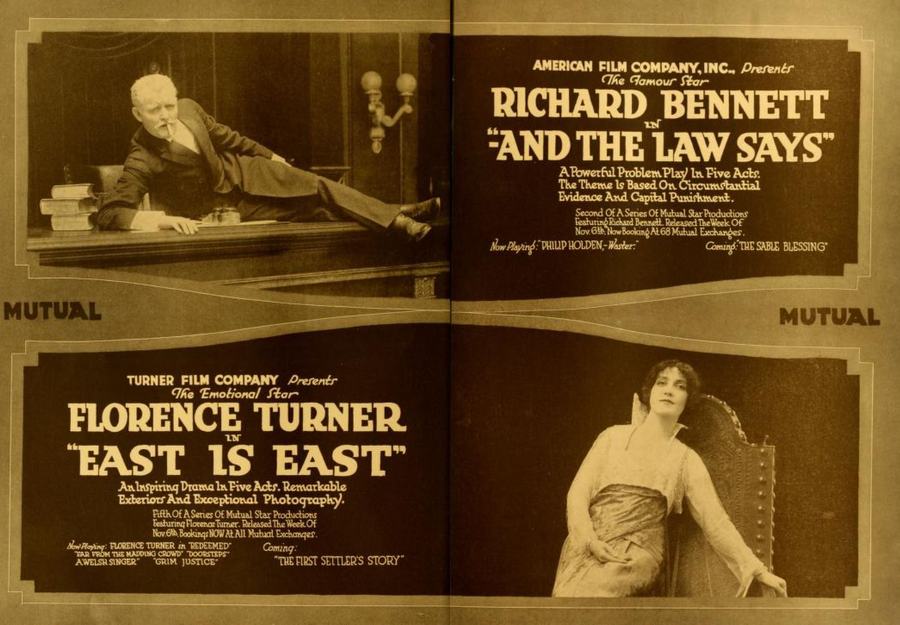
From the very outset, the film immerses us in the grimy, bustling world of East London, a setting rendered with an almost tactile authenticity. Here, we are introduced to Alexandra Vickers, or 'Viccy,' a character whose very essence is a study in contrasts. She is a woman forged in the crucible of hardship, an orphan whose parents' early demise left her to navigate the unforgiving currents of life largely unaided. Yet, despite the privations, Viccy emerges not as a victim, but as a force of nature—rough-tongued, yes, and quick to temper, but also possessed of a boundless generosity that far outstrips her meager means. She is a survivor, a pragmatist, and crucially, a character imbued with a profound sense of self, even before the grand machinations of plot begin to unfold. Her existence with the Smith family and their nephew, Albert Grummett, paints a vivid picture of communal resilience, a shared struggle against the backdrop of industrial London.
The narrative truly ignites with the family's seasonal migration to the hop fields, a pastoral interlude that, paradoxically, sets the stage for Viccy's dramatic shift in fortune. The imagery of the hop fields themselves is evocative; the sticky, aromatic plants, destined for the national beverage, serve as a metaphor for the humble, yet essential, fabric of working-class life. It is here, amidst the honest sweat and simple camaraderie, that the hand of fate reaches across the Atlantic. A wealthy American contractor, a hitherto unknown relative, departs this mortal coil, bequeathing his considerable fortune to his brother's only daughter: Victoria Alexandra Vickers. This sudden, seismic shift in circumstances is handled with a deftness that avoids melodrama, instead focusing on the profound implications for Viccy's identity.
The transition from the earthy reality of the hop fields to the refined, if somewhat sterile, world of high society is abrupt and illuminating. Viccy is plucked from her familiar environment and placed under the 'care' of Mrs. Carrington, a figure who embodies the societal expectations of her class. Mrs. Carrington's mission is clear: to 'polish' Viccy, to sand away the rough edges of her East End upbringing, and to mold her into a suitable heiress. This segment of the film is particularly fascinating, offering a subtle critique of social engineering and the superficiality of outward appearances. Viccy's inherent spirit, however, proves remarkably resilient. While she might adopt the mannerisms and attire of her new station, her core authenticity remains largely untainted, a testament to the strength of her character.
Meanwhile, the film wisely maintains a parallel narrative thread, following Albert Grummett. With a generous sum of five hundred pounds, a parting gift from Viccy, Grummett embarks on his own entrepreneurial journey. His rise to prosperity is not predicated on inherited wealth or social artifice, but on sheer grit, acumen, and hard work. This juxtaposition is critical to the film's overarching message. Grummett represents the genuine, self-made success, a stark contrast to the inherited fortune that has befallen Viccy. His trajectory provides a powerful counterpoint, highlighting different pathways to affluence and, more importantly, different definitions of fulfillment.
The romantic entanglement that ensues forms the dramatic crux of the latter half of the film. Mrs. Carrington's son, a character whose superficial charm barely conceals a cynical pragmatism, proposes marriage to Viccy. His motivations are transparently mercenary; he needs her money to settle his debts. Viccy, perhaps initially swayed by the allure of a 'respectable' match or the pressure of her new social milieu, accepts. This decision, however, is not a surrender of her spirit, but rather a temporary detour, a necessary exploration of the hollow promises offered by a life dictated by financial convenience. It’s a moment that could easily descend into cliché, but the writers—Philip Hubbard, Henry Edwards, and Gwendolyn Logan—imbue it with a certain psychological realism for the period, showcasing the societal pressures placed upon women of means.
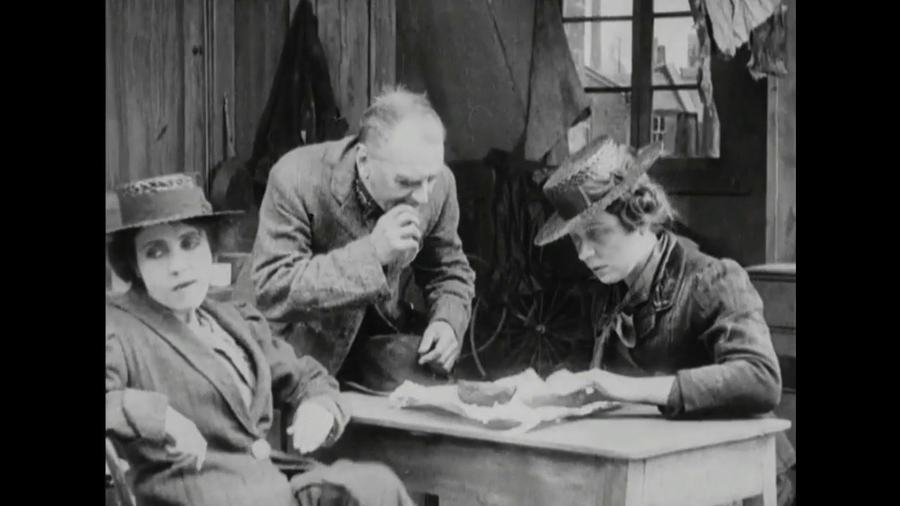
The eventual reunion between Viccy and Grummett is handled with a graceful inevitability. Upon encountering Grummett again, thriving in his self-made prosperity, Viccy is confronted with a stark contrast between his genuine affection and the transactional nature of her engagement to Carrington. The realization that Carrington desires only her fortune, not her heart, is a moment of profound clarity. It underscores the film's central thesis: that true value lies not in acquired wealth or superficial refinement, but in authentic connection and an unvarnished sense of self. Her decision to return to Grummett, and by extension, to her roots, is not a retreat from progress, but a conscious embrace of genuine happiness over societal expectations. This echoes sentiments found in other period dramas exploring the constraints of societal expectations on personal choice, such as The Fatal Night or even the deeper psychological struggles in Vingarne, though the latter delves into far more complex artistic and romantic entanglements.
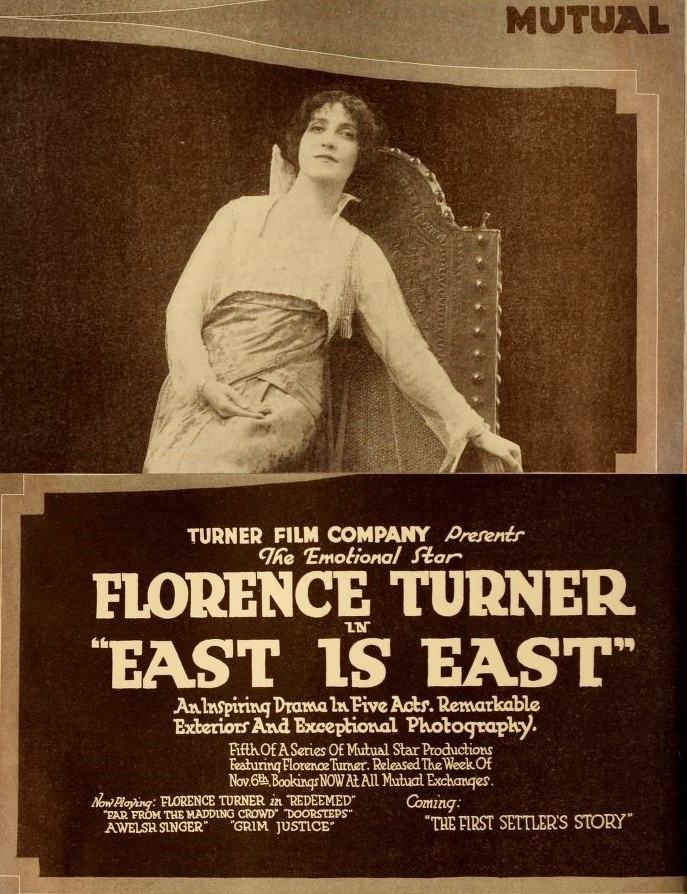
The performances, even in this silent era, are vital in conveying the emotional nuances of the story. Florence Turner, as Viccy, must have possessed a captivating screen presence to carry the weight of such a transformative role. Her ability to convey both the 'rough-tongued' resilience and the burgeoning awareness of her new world, without the benefit of dialogue, speaks volumes to her skill. Henry Edwards, who also contributed to the screenplay, likely brought a nuanced understanding to his portrayal, perhaps even as Grummett or Carrington's son, imbuing his character with a believable arc. W.G. Saunders and Ruth Mackay, presumably as Mr. and Mrs. Smith, would have provided the grounding, salt-of-the-earth presence that anchors Viccy's initial world. And Edith Evans, a name synonymous with theatrical gravitas, would have undoubtedly lent Mrs. Carrington an air of stern, formidable propriety, a perfect foil to Viccy's unbridled spirit. The ensemble cast, under the direction, successfully navigates the dramatic shifts, ensuring that each character's motivations, however subtle, are clear to the audience.
Visually, the film likely relied on strong contrasts to delineate the two worlds Viccy inhabits. The stark realism of the East London tenements and the natural beauty of the hop fields would have provided a powerful backdrop to the opulent, yet perhaps cold, interiors of Mrs. Carrington's domain. The cinematography, even in its early form, would have been crucial in conveying these shifts in atmosphere and emotional tone. The symbolic weight of 'East' versus 'West' (or, rather, the 'polished' world) is not just a geographical distinction but a philosophical one, representing authenticity against artifice, heart against calculation. This thematic resonance is a hallmark of strong storytelling, allowing the film to transcend its simple plot and offer deeper insights into the human condition. It’s a classic exploration of the 'fish out of water' trope, but one handled with a specific cultural and class-based lens that feels uniquely British.
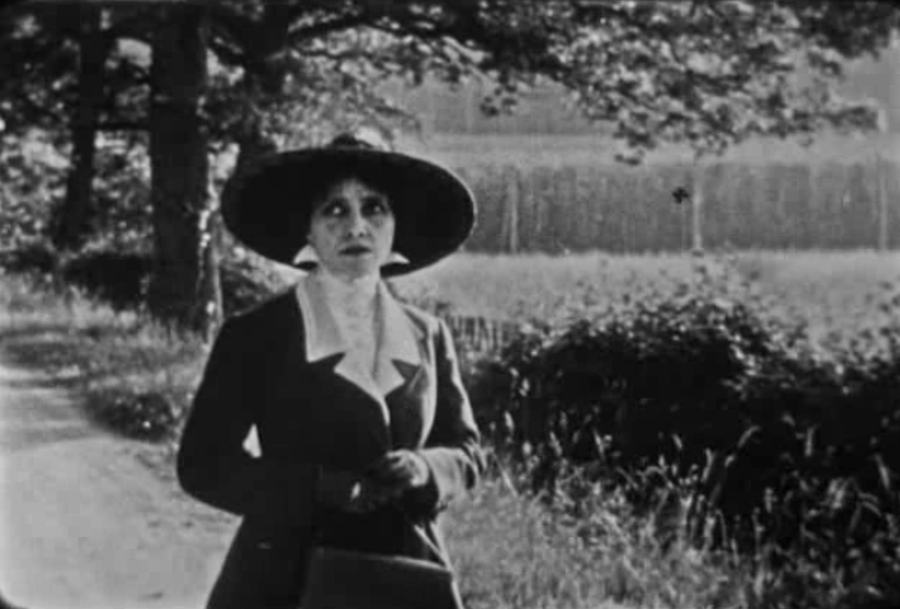
The writers, Philip Hubbard, Henry Edwards, and Gwendolyn Logan, deserve commendation for crafting a narrative that, while adhering to certain conventions of the era, still manages to feel fresh and insightful. Their decision to allow Viccy to return to her original 'East' is not a regression but a triumph. It’s a powerful statement about self-knowledge and the rejection of a life that, though outwardly grand, lacks genuine emotional sustenance. This narrative choice elevates East Is East beyond a mere rags-to-riches-and-back story. It becomes a testament to the enduring power of true connection and the often-underestimated value of one's roots. In an age where social mobility was often aspirational, this film dares to suggest that true happiness might lie not in ascending the social ladder, but in finding one's authentic place, regardless of its rung.
Comparing East Is East to other films of its time reveals its particular strengths. While films like The Might of Gold or The Golden Chance might have explored the allure and dangers of wealth, East Is East distinguishes itself by focusing on the *choice* to reject a certain kind of wealth for a more fulfilling life. It’s not simply about surviving poverty or achieving riches, but about defining what 'richness' truly means. The film subtly critiques the notion that happiness is inherently tied to social standing or material possessions, a message that remains remarkably potent even today. Its exploration of personal integrity in the face of external pressures could also be loosely aligned with the moral dilemmas in films such as According to Law or The Criminal Path, which often dealt with characters navigating ethical quandaries within strict societal frameworks.
The resolution, where 'East returns to East,' is not a sentimental retreat but a profound act of self-affirmation. Viccy's journey is one of discovery—not just of a fortune, but of her own unshakeable values. She learns that the superficial glitter of high society cannot compensate for the genuine warmth of human connection and the quiet dignity of a life lived authentically. Her return to Grummett, a man whose success is earned and whose affection is true, signifies a victory of substance over show, of heart over ledger. This is the film's enduring legacy: a gentle yet firm reminder that while circumstances may change, the essence of who we are, and where our true happiness lies, often remains rooted in the very ground from which we sprang. The final frames, one imagines, would have left audiences with a sense of poetic justice, a comforting affirmation that sometimes, the most rewarding journey is the one that brings us back home, to ourselves, and to the people who truly matter.
In an era that predates the widespread acceptance of complex psychological dramas, East Is East manages to deliver a surprisingly nuanced character study. Viccy is not merely a pawn of fate, but an active participant in her destiny, making choices that define her on her own terms. This agency, particularly for a female character in a film of this period, is noteworthy. It suggests a progressive understanding of human will and the power of individual choice over societal dictates. The film avoids a simplistic 'happily ever after' in the traditional sense of endless wealth, instead opting for a happiness rooted in personal fulfillment and genuine partnership. This makes it a compelling watch, even for contemporary audiences interested in the evolution of cinematic storytelling and the enduring themes that bind human experience across generations.
The enduring appeal of East Is East lies in its ability to articulate a universal truth: that true belonging and contentment are not found in the acquisition of external markers of success, but in the steadfast embrace of one's own identity and the cultivation of meaningful relationships. It's a quiet rebellion against the superficiality of social climbing, a celebration of the authentic self, and a testament to the idea that some bonds, like the pull of 'East,' are simply too strong to break. A truly remarkable cinematic artifact, deserving of its place in the annals of early British film, offering introspection and warmth in equal measure.
IMDb 6.2
1933
Community
Log in to comment.