DbcultAccessing Vault...
Cult Review
Senior Film Conservator
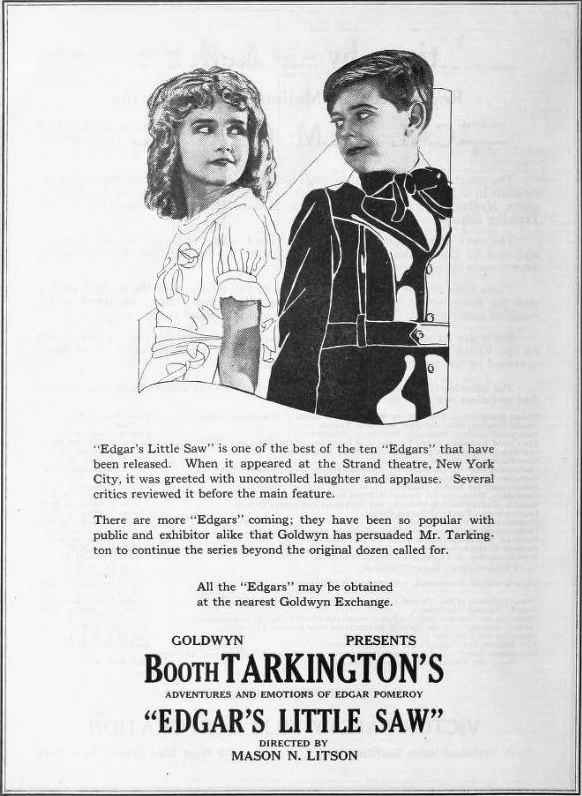
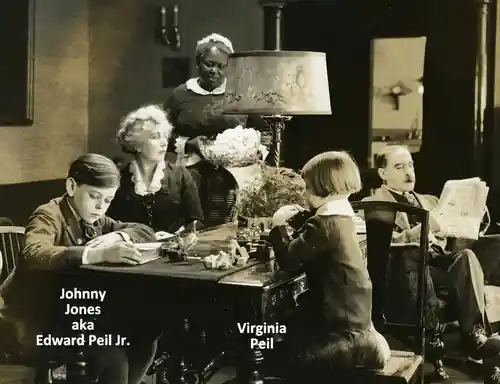
If Christmas movies are snow-globes, then Edgar’s Little Saw is the cracked bauble leaking glitter and sawdust all over the mantel. Shot in the gauzy twilight of silent-era slapstick, this 1923 one-reeler weaponizes innocence: a gift-boxed saw becomes the thin wedge separating fraternity from fratricide, order from anarchic farce. Director Edward Peil Jr.—pulling double duty as the authoritarian father—compresses Tarkington’s Midwestern vignette into seventeen minutes that feel like a fever dream related by a sugar-addled child.
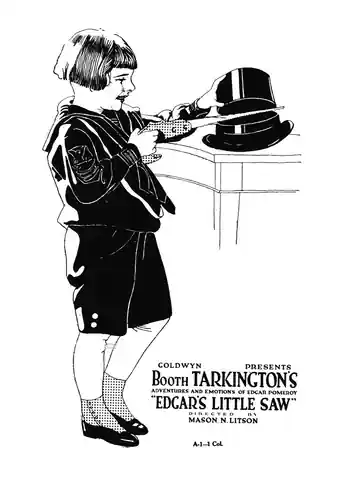
The film opens on a parlour tableau worthy of a Victorian morality play, only to detonate it with Charlie’s cherubic grin. Notice how cinematographer John W. Brown frames the tool chest: low angle, key-light kissing the brass, an erotic gleam that foreshadows every subsequent laceration. When the blade first bites wood, the intertitle—“Charlie practices surgery on the Queen Anne leg”—arrives with a buzz-saw stutter, a visual onomatopoeia that predates Keaton’s mechanical symphonies.
Sibling scapegoating is as old as Cain, yet Tarkington’s suburban transplant grafts biblical envy onto the fresh consumer anxiety of post-war America. Edgar’s sin isn’t malice but negligence: he leaves the weapon lying around like a soldier abandoning a loaded Springfield. The parental tribunal—wide lapels, stern side-partings—condemns on circumstantial evidence, a parody of the Spanish Inquisition melodramas cluttering screens that year.
Peil blocks the trial scene like a tableau vivant: Edgar center-frame, shoulders caved, while shadows of pocket-door panes stripe him like cell bars. The silhouette language here anticipates German expressionism, though the film’s tonal DNA is pure Americana—think Jones mischief marinated in small-town piety.
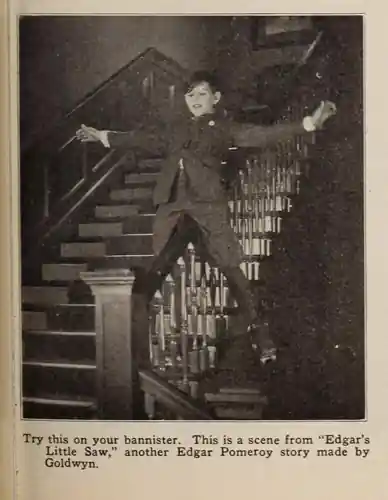
The saw itself functions as a floating signifier: for adults it’s a harmless prop, for Charlie it’s Excalibur yanked from the stone of nursery anarchy. Watch how Arthur H. Little—all cheeks and curls—tests the teeth against his thumb before the first cut; the gesture is sensual, vaguely unsettling, a pre-Code whisper of violence mainstream cinema wouldn’t allow once the Hays Office clamped down a few years later.
Each fresh amputation escalates the surrealism. A mahogany end-table collapses like a wounded soldier; top hats bisect into surrealist sandwiches; the cat— cinema’s perennial panic barometer—survives a close shave that reads today like a dry-run for Weimar cruelty. Yet Peil keeps the carnage bloodless; the comedy stays airborne on puffs of sawdust and flapping feathers, a mise-en-scène of harmless horror.
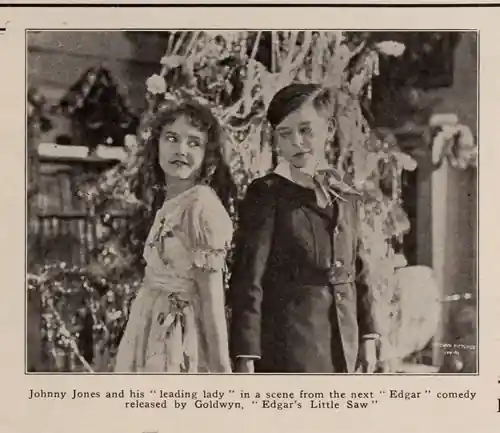
Notice the gender split under the tree: Edgar gets productive hardware, his sweetheart Lucille Ricksen receives a porcelain doll whose eyes click open like cash-register drawers. The film slyly critiques the era’s commodified femininity; the doll survives intact while Edgar’s masculine implements wreak havoc—a micro-lesson in patriarchal blowback. Even the reparative climax hinges on female empathy: the sweetheart’s invitation letter, sealed with wax lips, becomes the talisman that coaxes Charlie’s confession.
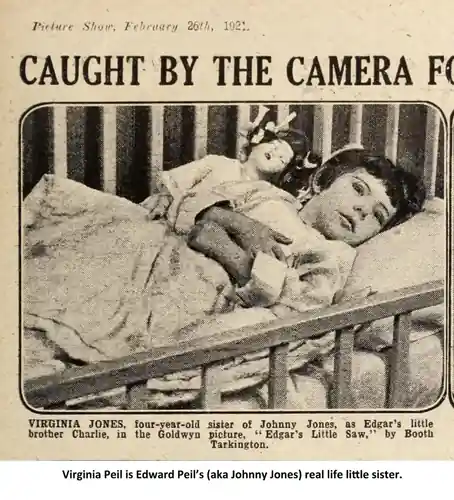
Ricksen, barely twelve during filming, plays the miniature lady with preternatural poise; her close-up—three-quarter profile, eyes brimming—could be spliced into Mary Pickford’s repertoire without jarring contrast. She’s the moral counterweight to Charlie’s id, a beacon of flaxen-haired forgiveness glowing against Peil’s chiaroscuro parlours.
Seventeen minutes. Ninety-three cuts. The tempo rivals a Mack Sennett two-reeler yet retains the causal rigor of Tarkington’s prose. Editors interleave wide shots—where furniture topples like dominoes—with insert close-ups of saw-teeth gnawing through walnut grain, a montage that stitches cause to effect in a way slapstick seldom attempts. The result is a kinetic equation: anticipation + violation = laughter.
Physical gags recycle vaudeville DNA: the slow topple of a Victorian whatnot, the pause that allows the audience to savor impending disaster, then the cathartic crash. Yet Peil layers a psychological veneer; when Edgar’s party clothes are confiscated, the camera lingers on his stockinged feet sliding across polished oak, a visual metaphor for social deflation that rivals the marital humiliations of later domestic dramas.
Surviving prints lack composer credits, so modern screenings often pair the film with jaunty piano rags. Resist the temptation. Project it dry, and you’ll hear the ghost-track of family dysfunction: the scrape of blade on wood becomes a metronome of anxiety; parental footsteps echo like distant artillery. The absence of score exposes the film’s debt to wartime propaganda shorts—every resource rationed for maximum affective punch.
For decades Edgar’s Little Saw circulated only in 9-mm backyard abridgements, spliced by hobbyists who snipped the cat sequence for being “too rough.” A 2018 MoMA restoration from a 35-mm nitrate positive returned the missing footage, reinstating the feline’s near-miss and, with it, the film’s moral equilibrium. The 2-K scan reveals textures previously smothered in emulsion decay: the herringbone of Father’s waistcoat, the translucent fuzz on Charlie’s angora sweater. Grain swarms like winter static, a reminder that early cinema is itself a fragile construct, forever threatened by the same entropy Charlie unleashes indoors.
It ends on a grace note: Charlie, voice of nascent conscience, offers Edgar his own tin soldiers as recompense. The saw—now stripped of mythic menace—lies neutered atop the toy chest, a relic of holiday pandemonium. Fade to black, but the aftertaste lingers: every gift is a potential weapon, every child a latent revolutionary. In that sense, Peil’s trifle belongs to the same moral cosmos as Keaton’s feud epics or tragicomedies of predestination.
Seventeen minutes, yet it carves a canyon between innocence and experience—proof that the most Lilliputian saw can slice straight to the bone of American self-mythology. Watch it once for the slapstick, again for the shiver, and perhaps a third time to ponder how easily blame travels uphill, while forgiveness must toil against gravity.
Verdict: A gleefully sadistic stocking-stuffer that deserves annual rotation beside It’s a Wonderful Life—if only to remind us how thin the tinsel curtain between comedy and trauma.
IMDb 6
1936
Community
Log in to comment.