DbcultAccessing Vault...
5.8/10
Senior Film Conservator
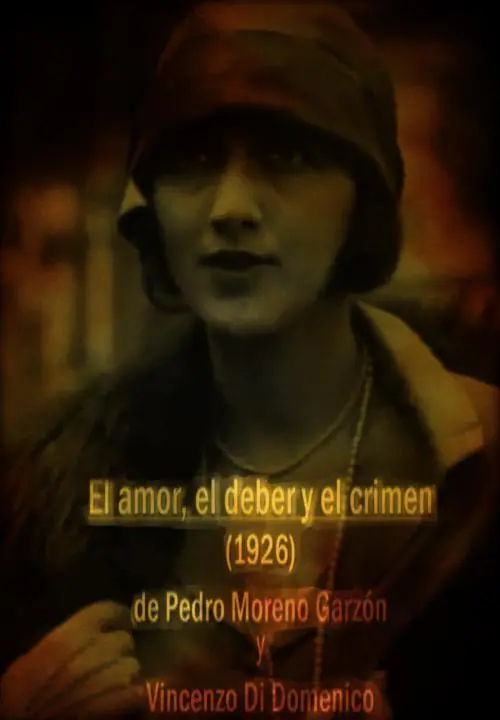
A definitive 5.8/10 rating for a film that redefined the boundaries of cult cinema. El amor, el deber y el crimen remains a cornerstone of transgressive art.
Is El amor, el deber y el crimen worth watching today? Short answer: absolutely, but with significant caveats. This film is an invaluable historical document, offering a rare window into early Colombian cinema and societal life, making it essential viewing for cinephiles, historians, and those fascinated by the origins of film, yet it will likely frustrate viewers accustomed to modern narrative coherence and pacing.
It is unequivocally for those with a deep appreciation for silent-era cinema, archival preservation, and the cultural anthropology embedded within early moving pictures. Conversely, it is decidedly not for audiences seeking a fully realized, emotionally resonant story with clear character arcs and a conventional plot resolution.
To truly appreciate El amor, el deber y el crimen, one must approach it not as a conventional narrative film, but as an archaeological find. It’s less a complete story and more a series of fascinating fragments, a cinematic fossil providing clues about a bygone era of filmmaking and societal norms. Its value is immense, precisely because of its incompleteness.
This film works because... it provides an unparalleled, if fragmented, historical record of early Colombian filmmaking and Bogotá's vibrant 1920s culture, particularly through its captivating documentary sequences.
This film fails because... its surviving narrative is severely incomplete, making it challenging to engage with as a coherent story and limiting its emotional impact for a contemporary audience.
You should watch it if... you are a film historian, an enthusiast of silent cinema, or someone deeply interested in Colombian cultural heritage and the evolution of global filmmaking; otherwise, its fragmented nature might prove too demanding.
Pedro Moreno Garzón's El amor, el deber y el crimen, even in its truncated form, stands as a monumental artifact. Produced in the 1920s, it represents one of Colombia's earliest ventures into narrative filmmaking, particularly notable for its inclusion of 'violent crime' – a bold thematic choice for its time. This wasn't merely entertainment; it was a nascent industry finding its voice, grappling with how to reflect, challenge, or even sensationalize the realities of its society.
The very act of its survival, however partial, tells a story of its own. So many films from this era, both internationally and within burgeoning national cinemas like Colombia's, have been lost to the ravages of time, neglect, or the inherent fragility of nitrate film. To have any portion of this work is a small miracle, akin to discovering a missing chapter from a foundational text. It’s a testament to the dedicated work of archivists who painstakingly preserve these precious cinematic remnants, giving us a window into a past that would otherwise be entirely opaque. Consider the similar challenges faced in preserving early works like The Exiles or Ultus, the Man from the Dead, where historical significance often outweighs narrative perfection.
The central dramatic thread, what we can piece together, involves a young bride-to-be caught in a triangle of affection. She is engaged, yet clearly captivated by an athletic artist, played by Rafael Burgos, who is painting her portrait. This setup is classic melodrama, ripe with potential for societal transgression and personal anguish. Mara Meva, as the conflicted bride, navigates these unspoken tensions with the subtle gestures and expressions characteristic of silent film acting.
The title itself – Love, Duty, and Crime – suggests a trajectory of forbidden passion leading to dire consequences. We are left to imagine the full arc: the blossoming of an illicit affair, the societal pressures of duty, and the inevitable descent into 'violent crime.' Was it a crime of passion? A desperate act to escape convention? Or perhaps a tragic misunderstanding? The film's fragments tantalize, hinting at a narrative depth that is now forever out of reach, forcing the viewer to become a co-creator of the story, filling in the blanks with their own interpretations.
This deliberate ambiguity, born of necessity rather than artistic choice, is where the film finds an unexpected modern resonance. It forces an active engagement, transforming passive viewing into a speculative journey. One could argue that its incompleteness makes it more compelling, not less. It invites endless conjecture, turning the audience into detectives of cinematic history, piecing together a potential masterpiece from its ruins.
Perhaps the most striking and historically significant aspect of El amor, el deber y el crimen is its extensive detour into documentary-style coverage of a 1920s Bogotá student street carnival. This is not merely a brief interlude; it's a substantial segment that pauses the narrative entirely. For a modern viewer, this might seem jarring, an inexplicable break in the storytelling. For the historian, it’s a goldmine.
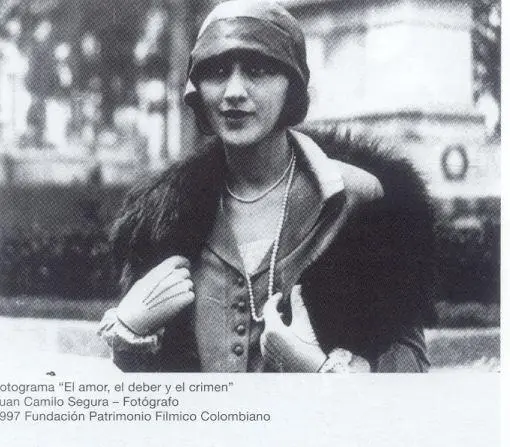
This carnival footage is a vibrant, unfiltered snapshot of life in Bogotá almost a century ago. We see the faces, the fashions, the energy of a city in a specific moment. The costumes, the parades, the interactions – it’s a living, breathing archive. It serves as an invaluable ethnographic record, far surpassing its function within the supposed plot. In fact, one could strongly contend that the carnival footage is the film's true heart, not the melodrama. It captures the spirit of a city, something far more tangible and enduring than the lost fictional narrative.
The contrast between the intimate, simmering melodrama and the boisterous public spectacle is stark. It’s an unconventional blend, perhaps born out of practical considerations – an opportunity to capture a significant public event – but it results in a unique, almost accidental, genre-bending experiment. While some early films used actualities or travelogues as pre-show fillers, integrating such extensive documentary material directly into a fictional feature was bold, even if unintended by the original artistic vision.
Given the fragments, evaluating the performances of Rafael Burgos and Mara Meva requires a degree of imaginative reconstruction. What survives suggests a commitment to the melodramatic conventions of the silent era. Mara Meva, as the central figure, conveys a sense of inner turmoil through her expressions and body language, hinting at the societal pressures weighing on her character. Her nuanced portrayal, even in limited scenes, suggests a talented performer capable of eliciting empathy without dialogue.
Rafael Burgos, as the artist, projects an air of athletic charm and artistic intensity. His presence is strong, providing the necessary counterpoint to the established fiancé, creating a believable romantic tension. While we can’t fully assess the depth of their characterizations or the arc of their performances, the existing footage hints at a compelling chemistry and a clear understanding of their roles within the dramatic framework. Their silent exchanges speak volumes, even across the vast expanse of time.
Pedro Moreno Garzón's direction, too, must be inferred. The staging appears conventional for the period, focusing on clear blocking and expressive acting. The abrupt shift to documentary footage, while jarring for modern sensibilities, reveals a director willing to experiment, or at least capable of incorporating disparate elements into his work. This willingness to blend narrative with raw, unedited reality is an unconventional observation that adds another layer of intrigue to the film’s legacy.
Analyzing the cinematography of El amor, el deber y el crimen is like examining a shattered mosaic. We can discern patterns, appreciate individual tile colors, but the complete picture is gone. What we see, however, speaks to the technical capabilities of early Colombian filmmaking. The camera work, while static by today's standards, is functional and clear, effectively framing the actors and capturing the vitality of the carnival scenes. Lighting, likely natural or augmented by basic artificial sources, creates a stark, sometimes high-contrast, visual style typical of the period.
The pacing is a critical point of discussion. The transition from the intimate, slow-burn melodrama to the chaotic, rapid-fire cuts of the carnival footage is a dramatic shift in rhythm and tone. It’s a bold choice, whether intentional or accidental, that defies conventional narrative flow. This jarring juxtaposition inadvertently creates a unique aesthetic, a tension between the personal and the public, the fictional and the real, that few films of its time would dare to attempt. This makes it an interesting companion piece for understanding other early, experimental works, even those from vastly different contexts like The Payment or A Son of Erin which also pushed boundaries in their own ways.
The surviving prints, despite their inevitable wear and tear, still convey a sense of the film’s original texture and visual ambition. Every scratch, every flicker, every frame is a testament to its journey through time. It’s a film that demands empathy from its viewer, an understanding that its current state is a consequence of history, not a defect of its original creation.
The primary goal of any film review is to assess a complete work. But what do you do with a film that is fundamentally incomplete? You reassess the very definition of 'worth.' El amor, el deber y el crimen challenges this notion head-on. Its fragmented nature is not a weakness to be lamented, but a characteristic to be studied. It forces us to confront the fragility of our cultural heritage and the immense effort required to preserve it.
This film, more than many complete works, serves as a powerful reminder of cinema’s ephemeral early years. It works. But it’s flawed. Its true value lies not in its ability to entertain as a coherent story, but in its ability to educate and provoke thought about a forgotten era. It provides a tangible link to the past, a cinematic echo that resonates with the struggles and aspirations of a young nation finding its artistic voice. It’s a vital piece of the global cinematic puzzle, enriching our understanding of how film evolved outside the dominant Western industries. This makes it a fascinating parallel to other early, regionally significant films like Grevarna på Svansta or Le lys du Mont Saint-Michel, each telling a story not just of a plot, but of a nation’s cinematic infancy.
“El amor, el deber y el crimen is a ghost of cinema past, a whisper of a story that demands our imagination to complete it.”
Ultimately, El amor, el deber y el crimen is more than just a film; it is a precious historical artifact. Its narrative incompleteness, while a challenge for casual viewing, is precisely what imbues it with a profound sense of melancholic wonder. It’s a ghost of cinema past, a whisper of a story that demands our imagination to complete it. For anyone with a serious interest in film history, particularly the development of national cinemas outside Hollywood, this is an absolutely essential, if demanding, watch. It’s a journey not just into a story, but into the very essence of film preservation and the enduring power of moving images to capture moments in time, even when the full picture is forever lost.
Its value is not in its entertainment factor as a coherent narrative, but in its unparalleled ability to transport us to a specific time and place, to witness the nascent stirrings of a film industry, and to grapple with the beautiful tragedy of what remains. Don't expect a polished product; expect a profound experience in cinematic archaeology.
IMDb 6.8
1936
Community
Log in to comment.