DbcultAccessing Vault...
Cult Review
Senior Film Conservator
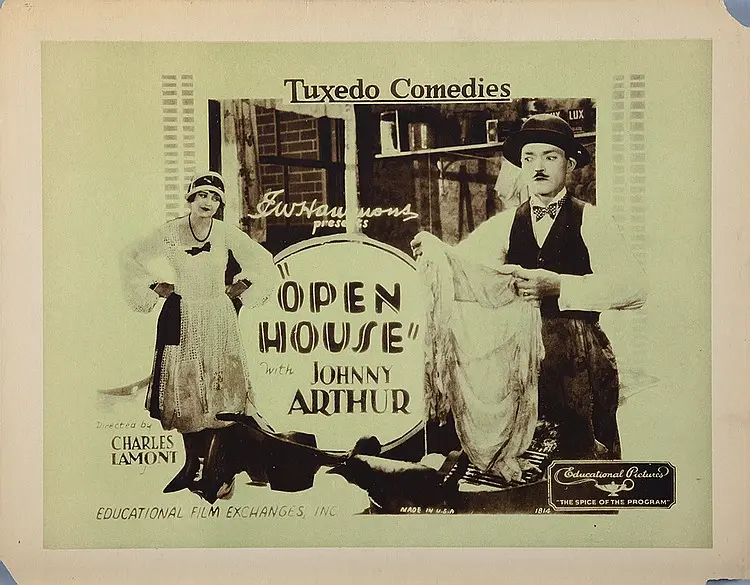
Is Open House a film that warrants a modern viewing? Short answer: Yes, but only if you have an appetite for the frantic, escalating absurdity that defined the Jack White era of silent comedy.
This film is for collectors of silent-era slapstick and those interested in the evolution of domestic sitcom tropes; it is NOT for viewers who require narrative logic or subtle character development. It is a loud, visual scream from 1926 that still resonates through its sheer audacity.
To understand why this short remains a fascinating artifact, one must look at the specific way it weaponizes the domestic space. In under twenty minutes, it transforms a middle-class home into a battlefield where social norms are discarded for the sake of a gag.
Yes, Open House is worth watching for anyone interested in the technical mastery of 1920s animal handling in film. The logistics of bringing a goat, a variety of poultry, and a full-grown elephant into a confined set during the silent era is a feat that modern CGI-dependent audiences often overlook. It provides a raw, tactile sense of comedy that feels dangerous in a way modern films rarely do.
The premise of Open House is rooted in a sharp, albeit cynical, critique of 1920s social trends. Mrs. Brown’s sudden pivot to charity isn't portrayed as a genuine moral awakening. Instead, it is a hobby—a fashion statement. This is a recurring theme in films of the era, such as The Foolish Virgin, where social status and moral posturing often collide with disastrous results.
The way Lucille Hutton plays Mrs. Brown is fascinating. She treats the vagrants not as people, but as props in her own drama of righteousness. When she brings a line of 'knights-of-the-road' into her dining room, the camera captures the sheer discomfort of Mr. Brown (Henry Murdock) with a claustrophobic framing that makes the viewer feel his rising blood pressure. It is a masterclass in silent reaction acting.
Murdock’s performance is the anchor here. While many silent actors leaned into over-the-top gesticulation, Murdock excels at the 'slow burn.' His frustration doesn't explode immediately. It simmers. You see it in the way he handles a fork or adjusts his collar. It is a performance that feels surprisingly modern, echoing the suburban frustration seen decades later in sitcoms.
The second half of the film is where the 'Jack White' style of production truly shines. Known for high-octane shorts like Jazz Monkey and Happy Go Luckies, White’s influence is felt in the mechanical precision of the animal gags. When Mr. Brown decides to counter his wife’s charity with his own 'Be-Kind-to-Animals' program, the film shifts from a social satire into a surrealist nightmare.
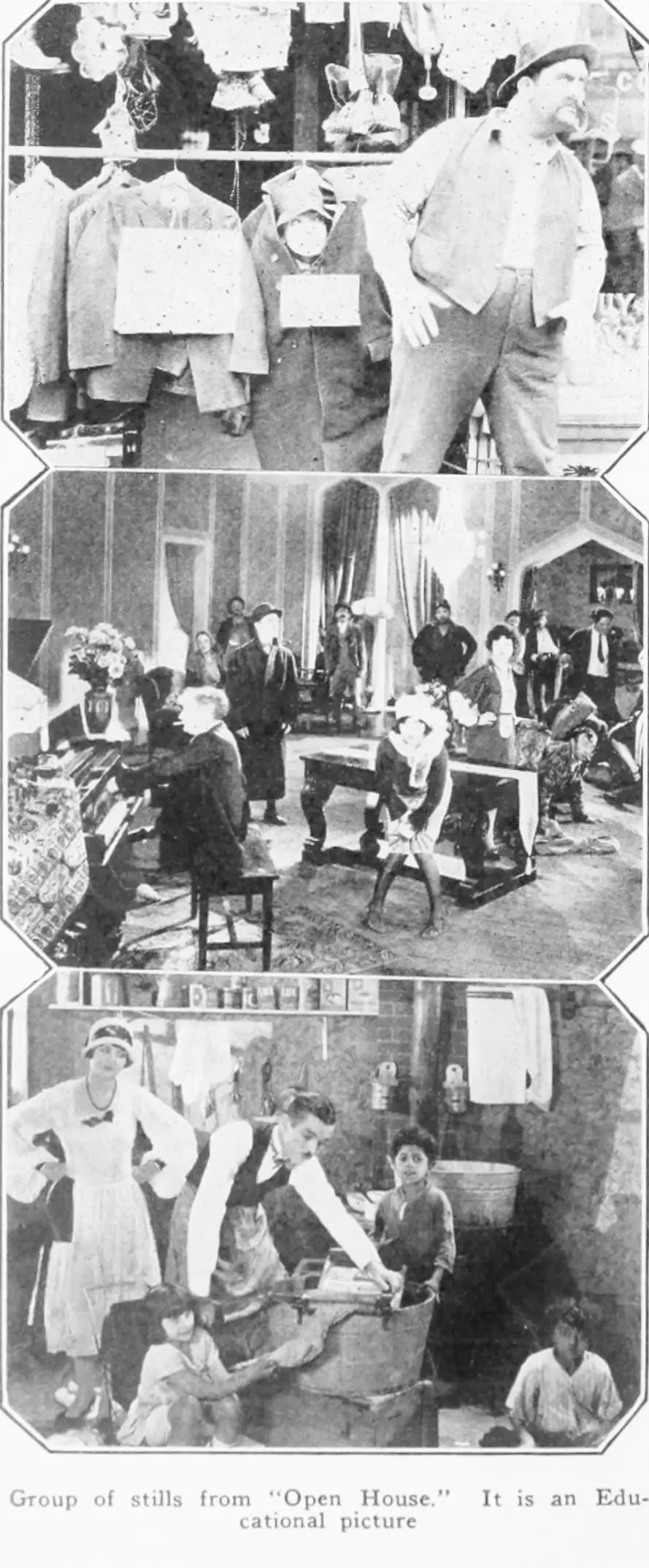
The introduction of the goat is a pivotal moment. The animal isn't just standing there; it is an agent of chaos. It destroys the domestic order that Mrs. Brown is trying to maintain for her guests. There is a specific shot where the goat enters the parlor, and the framing highlights the contrast between the high-society aspirations of the room and the literal barnyard reality now occupying it. It works. But it’s flawed in its repetition.
The escalation continues with ducks and other livestock, but the piece de resistance is the elephant. In 1926, the sight of an elephant in a suburban living room was a genuine spectacle. This isn't just a gag; it’s a logistical nightmare turned into art. The way the actors interact with the massive creature shows a lack of fear that is genuinely startling to modern eyes. It reminds me of the chaotic energy found in A Looney Honeymoon, where the environment itself becomes the antagonist.
From a technical standpoint, Open House is a product of its time, yet it exhibits a sophisticated understanding of pacing. The film starts slowly, establishing the domestic bliss of the Browns before systematically dismantling it. The cinematography is functional, focusing on wide shots to capture the full scope of the household chaos, but it occasionally dips into tight close-ups to emphasize the 'uninvited guest' aspect of the tramps.
The editing is sharp. Silent comedy relies entirely on timing, and the cuts between Mr. Brown’s growing annoyance and Mrs. Brown’s oblivious joy are timed to a rhythmic perfection. It lacks the experimental flair of something like Trapped by the Camera, but it makes up for it with sheer, unadulterated energy. The film knows exactly when to stop a joke before it becomes tedious, a skill many modern comedies have lost.
The elephant isn't just a prop; it's a middle finger to social etiquette and a physical manifestation of marital spite.
One debatable opinion I hold: Mr. Brown is the true villain here. While the film frames his 'animal program' as a justified response to his wife’s intrusive charity, the sheer scale of his retaliation is sociopathic. He doesn't just want his house back; he wants to psychologically break his wife. This dark undercurrent makes the film more interesting than a standard slapstick short. It’s not just about funny animals; it’s about the lengths people will go to win an argument.
When compared to other films of the era like Artie, the Millionaire Kid, Open House feels much more grounded in a specific social reality, even as it descends into madness. While Artie focuses on the whims of the wealthy, Open House looks at the friction caused when the 'outside world' is forced into the private sphere. It shares a certain DNA with The Living Image in its fascination with identity and social roles, though through a much more comedic lens.
The film also stands in contrast to the more dramatic works of the period, such as The Branded Woman or The Miracle. Where those films use the domestic space for heavy moralizing, Open House uses it as a playground for destruction. There is something refreshing about its lack of pretension. It doesn't want to save your soul; it wants to see a goat eat a hat.
Cons:
Open House is a fascinating, chaotic explosion of 1920s domestic anxiety. It captures a moment in time when the boundaries of the home were being tested by new social ideas, and it responds to those ideas with a literal elephant. While the gender roles are firmly rooted in the past, the core comedy of escalation is timeless. If you want to see where the modern sitcom's obsession with domestic warfare began, this is a primary text. It is messy, it is loud, and it is undeniably effective. It works. But it’s flawed. And that’s exactly why it’s worth your time.
IMDb 6.2
1915
Community
Log in to comment.