DbcultAccessing Vault...
6/10
Senior Film Conservator
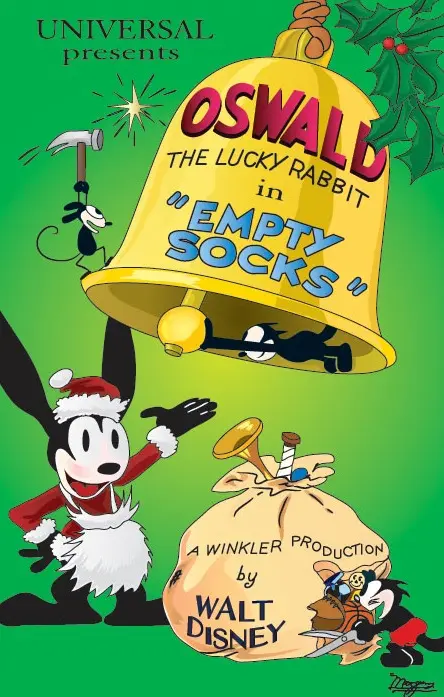
A definitive 6/10 rating for a film that redefined the boundaries of cult cinema. Empty Socks remains a cornerstone of transgressive art.
Is Empty Socks worth watching today? Short answer: yes, but with significant caveats. This early Walt Disney and Ub Iwerks creation is a fascinating historical artifact that will undoubtedly captivate animation historians, Disney completists, and those with a deep appreciation for the foundational elements of cartooning. However, it is decidedly not for viewers seeking a sophisticated narrative, polished animation, or the kind of emotional depth we've come to expect from modern cinema.
This film works because it offers an invaluable window into the very origins of character animation, showcasing the raw talent of its creators and the embryonic stages of storytelling that would eventually define an empire. It fails because its narrative is simplistic, its pacing inconsistent by modern standards, and its technical execution, while pioneering, feels primitive to contemporary eyes. You should watch it if you are genuinely curious about the roots of animation and the evolution of the medium, or if you simply want to experience a piece of cinematic history that predates even Mickey Mouse.
To discuss Empty Socks without acknowledging its place in history is to miss its entire point. This isn't merely a cartoon; it's a relic, a vital piece of the puzzle that is Walt Disney’s early career and the birth of character animation as we know it. Released in 1927, this short features Oswald the Lucky Rabbit, a character that, for a brief period, was Disney's main star before a contractual dispute led to his infamous loss and the subsequent creation of Mickey Mouse.
Watching Empty Socks today is an exercise in historical appreciation. It's like examining the blueprints of a magnificent cathedral, understanding that while the initial sketches may lack the grandeur of the finished structure, they contain the essential vision. The film's plot, a simple Christmas celebration gone awry, serves primarily as a vehicle for visual gags and Oswald's boundless energy.
The animation, primarily attributed to Ub Iwerks, is remarkably fluid for its time. Iwerks' distinctive style, characterized by rubbery limbs and exaggerated movements, is on full display. Oswald himself is a marvel of early character design: expressive, agile, and mischievous, a clear predecessor to the more famous mouse that would follow.
Walt Disney and Ub Iwerks’ collaboration here is a masterclass in early animation principles. The direction, while not adhering to complex narrative arcs, is focused on maximizing comedic impact through movement. Every scene is an opportunity for Oswald to bounce, stretch, or contort, often to humorous effect.
Consider the sequence where Oswald attempts to hang stockings, only for the rambunctious orphans to turn it into a chaotic tug-of-war. The sheer elasticity of the characters, their ability to squash and stretch in ways that defy physics, is the film's true star. It’s a testament to Iwerks' genius that he could imbue such simple drawings with so much personality and kinetic energy.
The pacing is brisk, moving from one gag to the next without lingering too long. This rapid-fire approach keeps the audience engaged, even if the gags themselves are often straightforward. The tone is lighthearted and playful, perfectly suited for the holiday theme, even when things descend into delightful pandemonium. There’s a palpable sense of joy emanating from the screen, a genuine enthusiasm for the possibilities of this new art form.
However, it's also clear that the animators were still experimenting. The backgrounds are minimal, often serving as little more than a suggestion of environment. Character consistency, particularly among the many rabbit orphans, is not a priority. This isn't a flaw, per se, but rather a reflection of the era's production realities and artistic priorities.
While we don't speak of 'acting' in the traditional sense for early animation, the performances here are entirely visual. Oswald, voiced by Walt Disney himself in his earliest form, communicates entirely through his actions and expressions. His wide eyes, expressive ears, and elastic body language convey a range of emotions from determined optimism to exasperated frustration.
The character design of Oswald is particularly strong. He’s instantly recognizable and inherently appealing, a blend of cartoonish exaggeration and relatable charm. His long ears, which often act as appendages or tools, are a brilliant design choice that allows for endless comedic possibilities. One notable moment sees him using his ears to lasso a toy, a simple yet effective visual gag that highlights his ingenuity.
The supporting cast of rabbit orphans, while largely undifferentiated, serve their purpose well as catalysts for chaos. Their collective energy creates a dynamic counterpoint to Oswald's attempts at order. It's a charming ensemble, even if their individual personalities are underdeveloped. This was a common approach in early cartoons, where the lead character was the primary focus, and the supporting cast existed to facilitate their antics.
As a silent film, Empty Socks relies entirely on its visual storytelling. The 'cinematography' is rudimentary but effective, employing static shots that frame the action clearly. There are no elaborate camera movements or complex angles, but this simplicity allows the animation itself to shine. The focus is always on the characters and their movements, ensuring that the visual gags land with maximum impact.
The lack of synchronized sound, a hallmark of its era, means the film’s rhythm is dictated by the animation’s flow and the viewer’s imagination. One can only imagine the live musical accompaniment that would have enhanced the experience for audiences in 1927. The absence of a pre-recorded soundtrack by today's standards might feel jarring to some, but it forces a different kind of engagement, demanding that the viewer pay closer attention to the visual cues.
This silence is, in a way, its own form of sound design. It allows the exaggeration of the visuals to speak volumes, emphasizing every stretch, every impact, every frantic scramble. It’s a raw, unadulterated form of visual comedy, proving that a compelling narrative doesn't always need dialogue or elaborate soundscapes to be effective.
Absolutely, for the right audience. As a foundational piece of animation history, Empty Socks offers invaluable insight into the creative processes of Walt Disney and Ub Iwerks. It predates the sound revolution that would transform cinema and provides a raw, unfiltered look at the birth of a major studio's signature style. For anyone interested in the evolution of cartoons, this is essential viewing.
However, for a casual viewer expecting the polish of later Disney works, it might feel slow or dated. The humor is visual and often quite broad, lacking the sophisticated wit that would develop in subsequent decades. It’s a film that demands context and a willingness to appreciate its historical significance over its entertainment value by modern metrics.
It’s easy to dismiss Empty Socks as merely an old cartoon. That would be a profound mistake. It’s more than that; it’s a living document of artistic evolution. This film, alongside others from the Oswald era, provides a direct lineage to the animation titans that would follow. Without Oswald, there is no Mickey. Without these early experiments in character and movement, the entire landscape of animation would be different.
One could argue that the simplicity of the plot is actually a strength, forcing the animators to rely solely on visual storytelling. There’s a purity to it, an unadulterated joy in the craft. Unlike some of the more elaborate live-action features of the silent era, such as From the Manger to the Cross or even a dramatic piece like The Iron Woman, animated shorts like Empty Socks were often about pushing the boundaries of what was visually possible, rather than intricate narratives.
The film’s tone is consistently light. Even when Oswald faces minor setbacks, the overall mood remains buoyant. This unwavering optimism, a hallmark of early Disney productions, is infectious. It works. But it’s flawed. The animation itself, particularly the way Oswald interacts with objects and other characters, is surprisingly advanced. His elasticity, a core principle of cartoon physics, is already well-established here. He literally stretches the boundaries of his animated world.
An unconventional observation: the sheer physical abuse Oswald endures throughout the short, only to bounce back unfazed, is a testament to the emerging cartoon logic that would define the genre. He is flattened, stretched, and spun, yet always recovers, ready for the next gag. This resilience is a surprisingly profound characteristic for such an early creation, hinting at the invincibility of future cartoon stars.
Comparing it to other silent films of the era, such as the adventure of Captain Alvarez or the melodrama of Young Mrs. Winthrop, Empty Socks stands apart in its dedication to pure, unadulterated visual comedy. It doesn't aim for dramatic tension or grand spectacle; its ambition is simply to make you smile through inventive animation.
Empty Socks is not a film for everyone, nor should it be approached with modern expectations. It is a historical document, a foundational text in the gospel of animation. Its charm lies in its rawness, its energy, and the palpable excitement of its creators experimenting with a burgeoning art form. While its narrative is simple and its technical presentation dated, its importance to cinematic history is undeniable.
For those who appreciate the origins of popular culture and the sheer ingenuity of early animators like Walt Disney and Ub Iwerks, Empty Socks offers a delightful and enlightening experience. It’s a short, sweet journey back to a time when imagination was the only limit, and a rabbit named Oswald was just beginning to make his mark on the world. Give it a watch, not for a profound story, but for a profound understanding of where it all began.
IMDb —
1932
Community
Log in to comment.