DbcultAccessing Vault...
Cult Review
Senior Film Conservator
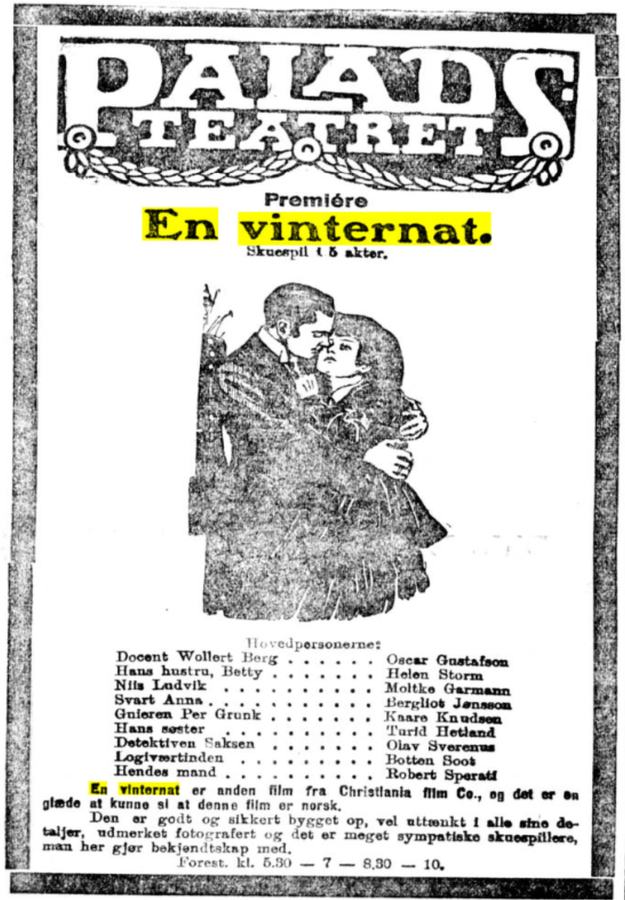
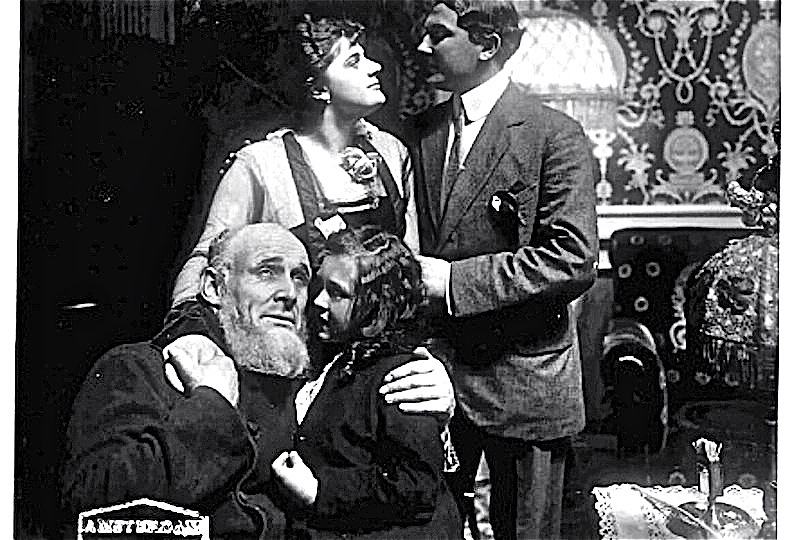
The silent era, often romanticized yet frequently overlooked in its vast diversity, produced a myriad of cinematic gems across the globe. Among these, the Norwegian contribution, particularly films like Peter Lykke-Seest's En vinternat (A Winter Night), stands as a testament to the universal power of visual storytelling. This 1917 drama, a poignant exploration of injustice and the tenacious pursuit of truth, invites us to peel back the layers of a compelling narrative, revealing the societal anxieties and moral quandaries prevalent in its time. It is a film that, despite its age, resonates with a certain timeless gravitas, reminding us that the struggle against wrongful accusation is a perennial human experience.
At its core, En vinternat plunges us into the quiet, contemplative world of Wollert Berg, portrayed with suitable gravitas by Olav Sverenius. Berg, a writer seeking inspiration, retreats to his secluded hunting lodge, a sanctuary designed for creative solitude. This idyllic isolation, however, is shattered by the arrival of a destitute, wandering couple, a pair of vagrants seeking shelter from the harsh embrace of the winter night. Berg, embodying a commendable, albeit ultimately ill-fated, act of charity, extends his hospitality. This seemingly innocuous decision, born of compassion, quickly unravels into a complex web of deceit and misjudgment. The vagrants, succumbing to desperation, commit a theft at a neighboring property. The immediate consequence is a tragic misdirection of justice: Berg, the benevolent host, is inexplicably implicated, then swiftly tried and convicted for a crime he did not commit. This narrative pivot, from serene contemplation to a harrowing ordeal of wrongful imprisonment, forms the dramatic backbone of the film, setting the stage for a compelling fight against an erroneous verdict.
The true heart of En vinternat beats through the unwavering determination of its central figures, particularly Fru Berg, brought to life with profound emotional depth by Botten Soot. Her portrayal transcends the typical silent film heroine; she is not merely a damsel in distress but a formidable force of nature, driven by an unshakeable belief in her husband's innocence. Her resolve, a beacon in the encroaching darkness of his unjust conviction, propels much of the film's investigative momentum. Opposite her, we have Detective Saksen, a character personified by Robert Sperati. Saksen, initially perhaps just a cog in the machinery of justice, transforms into a relentless seeker of truth, unwilling to accept a convenient, yet false, conclusion. His methodical approach, a stark contrast to the initial hasty judgment, provides the narrative with its much-needed intellectual rigor. The synergy between Fru Berg's emotional conviction and Saksen's logical pursuit creates a dynamic duo, echoing similar investigative partnerships seen in later cinematic works, yet here, imbued with the raw, expressive power of silent film acting.
Lykke-Seest's direction, while perhaps not as widely celebrated as some of his European contemporaries, demonstrates a clear understanding of the silent medium's unique capabilities. The cinematography, though limited by the technology of its era, effectively conveys the stark beauty and isolating harshness of the Norwegian winter landscape, which serves as a powerful backdrop to the human drama. The desolate snowscapes not only establish a palpable sense of atmosphere but also visually mirror Berg's internal desolation and the cold indifference of a justice system gone awry. The performances, particularly those of Sverenius, Soot, and Sperati, rely heavily on exaggerated facial expressions and gestural language, a hallmark of silent cinema, yet manage to convey a surprising range of nuanced emotion. Soot, in particular, masters the art of communicating despair, defiance, and unwavering hope through her eyes and posture, drawing the audience into her struggle. The supporting cast, including Bergliot Jønsson, Kaare Knudsen, Turid Hetland, Adolf Aanesen, Moltke Garmann, Oscar Gustafson, and Helen Storm, contribute to the tapestry of the small community, each playing their part in the unfolding tragedy and eventual redemption.
Beyond its intricate plot, En vinternat delves into profound thematic territory. The central theme of wrongful accusation and the arduous journey towards vindication is one that has resonated across cultures and centuries. It forces the audience to confront uncomfortable questions about the fallibility of legal systems, the pervasive nature of prejudice, and the often-unseen struggles of those on the margins of society. The film implicitly critiques the ease with which appearances can condemn, and the immense effort required to uncover the unvarnished truth. In a world where sensationalism often eclipses fact, Berg's plight serves as a stark reminder of the importance of due process and thorough investigation. This thematic depth elevates En vinternat beyond a simple crime drama, positioning it as a thoughtful commentary on human nature and societal structures. The eventual triumph of justice, hard-won and painstakingly achieved, offers a cathartic release, affirming the enduring belief in truth's ultimate victory.
The context of Norwegian silent cinema is crucial to appreciating En vinternat. While not as prolific as the industries in France, Germany, or the United States, Norway produced a distinctive body of work, often characterized by strong dramatic narratives, scenic outdoor locations, and a focus on moral dilemmas. Peter Lykke-Seest, the film's writer, was a significant figure in early Norwegian cinema, known for his ability to craft engaging stories that resonated with local audiences. His work, including this film, helped lay the groundwork for a national cinematic identity. When considering its place within the broader silent film landscape, En vinternat shares common ground with other contemporary works exploring themes of crime, suspicion, and societal judgment. One might draw parallels to the psychological intensity found in films like The Intrigue, where deception and revelation drive the plot, or the moral complexities explored in Fear Not, which similarly grapples with ethical quandaries and their far-reaching consequences. The stark portrayal of an individual against a powerful, flawed system can also evoke comparisons to films like The Last Man, where a singular character's struggle against overwhelming odds forms the narrative core. While En vinternat might lack the grand scale or experimental flair of some international productions, its intimate focus on human drama and its clear narrative arc make it a compelling watch.
Peter Lykke-Seest's screenplay for En vinternat is a masterclass in building tension and carefully orchestrating a compelling mystery. He understands the silent film's reliance on clear visual storytelling, ensuring that each plot point is communicated effectively through action, intertitles, and the actors' expressions. The initial act of charity, the subsequent theft, the wrongful accusation, and the painstaking investigation are all meticulously plotted, ensuring a logical, albeit dramatically fraught, progression. The character arcs, particularly that of Fru Berg and Detective Saksen, are well-defined, allowing the audience to invest emotionally in their quest for justice. Lykke-Seest avoids simplistic resolutions, instead crafting a narrative that emphasizes the perseverance required to right a wrong. This commitment to a detailed, believable plot, even within the confines of silent film conventions, speaks volumes about his skill as a writer and his understanding of audience engagement. His work here could be seen as a precursor to later, more complex crime dramas, laying foundational elements for the genre's development.
For many, silent films exist as historical artifacts, glimpses into a bygone era of cinema. However, films like En vinternat serve as powerful reminders of the enduring appeal and artistic merit of this foundational period. Its ability to evoke strong emotions and tell a complex story without spoken dialogue is a testament to the universal language of cinema. While it may not possess the widespread recognition of a Camille or the thematic grandeur of a The Gates of Eden, its quiet strength lies in its grounded, human-centric drama. Rediscovering such films is not merely an academic exercise; it's an opportunity to connect with the roots of cinematic expression, to appreciate the ingenuity of early filmmakers, and to find timeless narratives echoing across the decades. The film's message about the importance of truth and the fight against injustice remains as pertinent today as it was over a century ago. Its exploration of moral ambiguities and the societal pressures that can lead to erroneous judgments offers a contemplative experience, prompting viewers to reflect on their own understanding of justice and compassion. The very act of watching a restored print, if available, is a journey back in time, allowing us to witness the birth of cinematic language in its purest form, unadulterated by sound or color, relying solely on the power of light, shadow, and human expression to weave its spell.
In conclusion, En vinternat stands as a compelling example of early Norwegian cinema's capacity for sophisticated storytelling. It is a film that, through its engaging plot, memorable performances, and resonant themes, transcends its historical context to deliver a message that remains relevant. The collective efforts of Olav Sverenius, Botten Soot, Robert Sperati, and the entire cast, under the careful guidance of Peter Lykke-Seest, culminate in a cinematic experience that is both intellectually stimulating and emotionally profound. It serves as a vital piece in the mosaic of global silent film history, deserving of recognition and study. Its narrative complexity, coupled with the raw, expressive power of the silent medium, ensures its place as a significant, albeit perhaps lesser-known, contribution to the art form. The film reminds us that the pursuit of truth, even in the bleakest of winters, is a endeavor worthy of the greatest human effort, and that the light of justice, however faint, can ultimately pierce through the darkest shadows of deceit. This enduring message, delivered through the evocative silent narrative, solidifies En vinternat as more than just a historical curiosity; it is a cinematic argument for vigilance, resilience, and the unyielding belief in what is right.
IMDb 5.7
1934
Community
Log in to comment.