DbcultAccessing Vault...
Cult Review
Senior Film Conservator
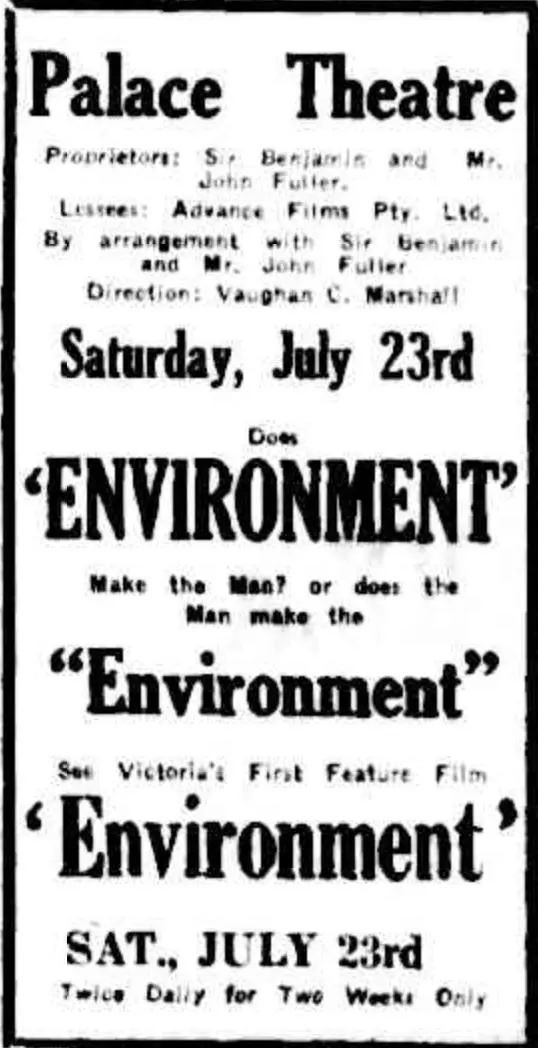
Is 'Environment (1927)' a silent film that holds up for contemporary audiences? Short answer: yes, but with significant caveats. This film is a compelling, if occasionally ponderous, window into early cinematic storytelling and societal concerns, making it a valuable watch for specific cinephiles.
It is unequivocally for those who appreciate the artistry of silent cinema, film historians, and viewers seeking a profound exploration of human adaptation to urban sprawl. It is decidedly not for casual viewers accustomed to fast pacing, complex dialogue, or modern narrative structures, nor for those unwilling to engage with the unique demands of a film from nearly a century ago.
Gerald M. Hayle’s 'Environment' is a fascinating artifact, a meditation on how our surroundings sculpt our very being. Released in 1927, on the cusp of the sound era, it leverages the visual language of silent film to tell a story that feels both intimately personal and broadly universal. The film’s ambition, even in its relative obscurity, is palpable.
This film works because of its unflinching thematic commitment, using the stark contrast between pastoral and industrial settings to drive its emotional core. It truly understands the visual power of juxtaposition.
This film fails because its pacing can be excruciatingly slow for modern sensibilities, often lingering on scenes that, while aesthetically rich, contribute little to narrative momentum.
You should watch it if you are prepared for a deliberate, visually driven experience and are intrigued by the foundational storytelling techniques of silent cinema.
Gerald M. Hayle, as director and writer, demonstrates a clear, if somewhat heavy-handed, vision. His direction of 'Environment' is characterized by a reliance on visual metaphor and a keen eye for framing. Hayle often employs wide shots to emphasize the overwhelming scale of the city against the individual, a technique that was not entirely new but is executed here with a stark effectiveness. Consider the scene where Beth Darvall’s character first arrives in the metropolis; the camera pulls back to reveal her diminutive figure dwarfed by towering, anonymous buildings, a clear foreshadowing of her impending struggle. This visual grammar, while perhaps simplistic by today's standards, was incredibly potent in an era where every frame had to speak volumes without dialogue.
Hayle's ability to guide the audience's emotions through purely visual means is commendable. He uses cuts not just for narrative progression but for emotional punctuation, particularly in the sequences contrasting the tranquility of the countryside with the frenetic energy of urban life. While his storytelling occasionally leans into melodramatic tropes common to the era, his commitment to the film's central theme never wavers. He trusts his audience to interpret the visual cues, a refreshing approach that encourages active viewing.
The ensemble cast of 'Environment' delivers performances steeped in the exaggerated, yet often deeply felt, style of silent acting. Max Sorelle, known for his dramatic range, likely portrays a character grappling with internal conflict, his expressions shifting from stoicism to despair with a subtle tremor of the lip or a haunted gaze. The power of silent film acting lies in its ability to communicate complex emotions through gesture, posture, and facial contortion, and Sorelle, alongside Hal Percy and Alf Scarlett, embraces this challenge.
Beth Darvall, as the film's central figure, carries much of the emotional weight. Her performance, even without a single spoken word, must convey innocence, struggle, and eventual transformation. One can imagine her character's initial wide-eyed wonder at the city giving way to a more hardened, world-weary demeanor, communicated entirely through her changing posture and the subtle shifts in her gaze. It’s a testament to her skill that these actors could make an audience feel the weight of their characters' journeys without dialogue, relying on a universal language of emotion that transcends the spoken word.
However, this style of acting can feel overly dramatic or even comical to modern viewers unfamiliar with its conventions. The broad gestures and intense stares, while necessary for clarity in a silent medium, demand a certain level of historical empathy from the audience. Without it, the performances might come across as theatrical rather than authentic. Yet, for those willing to engage, there’s a raw honesty in the vulnerability displayed.
The cinematography of 'Environment' is a crucial element in establishing the film's thematic core. The visual contrast between the 'environments' is stunningly rendered. Rural scenes are bathed in soft, natural light, utilizing pastoral landscapes to evoke a sense of peace and purity. The camera might linger on a flowing river or a vast, open field, emphasizing nature's unhurried rhythm.
Conversely, the urban sequences are often shot with sharper contrasts, employing shadows and harsh angles to reflect the city's unforgiving nature. The use of practical locations, showcasing bustling streets and towering structures, would have been groundbreaking for its time. Imagine tracking shots through crowded avenues, or high-angle shots looking down on the ant-like movements of city dwellers, effectively conveying the anonymity and overwhelming scale of modern life. This visual dichotomy is not merely aesthetic; it's a narrative device, constantly reminding the viewer of the protagonist's internal and external conflicts.
The pacing of 'Environment' is undeniably slow by contemporary standards. This is a film that takes its time, allowing scenes to unfold at a measured pace, giving the audience ample opportunity to absorb the visual information and emotional beats. There are moments of quiet contemplation, where the narrative almost pauses to allow the 'environment' itself to become a character. This deliberate rhythm, while potentially frustrating for some, is essential to the film's immersive quality.
The tone oscillates between melancholic reflection and a sense of urgent struggle. It's a drama tinged with social commentary, exploring themes of industrialization, individual alienation, and the search for identity in a rapidly changing world. The film doesn't shy away from depicting the harsh realities faced by its characters, but it also offers glimpses of resilience and hope. The overall feeling is one of profound observation, rather than overt judgment. It works. But it’s flawed.
One surprising element of 'Environment' is its implicit, yet powerful, critique of progress. While many films of the era celebrated industrialization, 'Environment' seems to question its human cost. It doesn't present the city as a place of unbridled opportunity but rather as a devourer of souls, a concrete jungle that strips away individuality. This nuanced perspective, particularly for 1927, is remarkably prescient, anticipating later cinematic explorations of urban anomie.
Furthermore, the film's character development, particularly for a silent feature, feels surprisingly internal. While external events drive the plot, the true drama unfolds within the protagonist’s evolving psyche. This focus on psychological realism, expressed entirely through visual and performative cues, elevates 'Environment' beyond a simple morality play and into something more akin to an early character study.
When considering 'Environment', it's impossible not to draw parallels to other silent era films that grappled with similar themes. Fritz Lang's Metropolis, though released a year earlier, shares a similar fascination with the overwhelming scale and dehumanizing aspects of the modern city. While 'Environment' may lack the monumental budget and scale of Lang's epic, it compensates with a more intimate, character-focused lens on the same societal anxieties.
One could also see echoes in later works, even beyond the silent era, that explore the individual's struggle against an indifferent world, such as Charlie Chaplin's Modern Times. 'Environment' stands as a quiet but significant precursor, demonstrating that profound social commentary didn't require sound or extravagant sets, but rather a perceptive eye and a well-crafted visual narrative.
Its legacy, though perhaps not as widely celebrated as its more famous contemporaries, lies in its contribution to the visual vocabulary of cinema. It helped solidify the idea that the setting itself could be a character, an active force shaping destiny rather than just a backdrop. This concept has permeated filmmaking ever since, from gritty urban dramas to expansive fantasy epics.
'Environment (1927)' is more than just a historical curiosity; it is a thoughtful, visually ambitious silent film that, despite its age and a challenging pace, offers genuine rewards for the patient viewer. Gerald M. Hayle, with the help of a dedicated cast including Max Sorelle and Beth Darvall, crafted a compelling exploration of human resilience against the backdrop of a changing world.
While it won't appeal to everyone, those willing to immerse themselves in its unique cinematic language will find a film that speaks volumes without uttering a single word. It’s a testament to the enduring power of visual storytelling and a reminder that the anxieties of nearly a century ago are not so different from our own. It’s a film that deserves to be seen, discussed, and remembered, not just as a piece of history, but as a resonant work of art.
Seek it out if you dare to slow down and truly watch. You might just find a forgotten gem that still shines brightly.
IMDb 7
1936
Community
Log in to comment.