DbcultAccessing Vault...
5.9/10
Senior Film Conservator
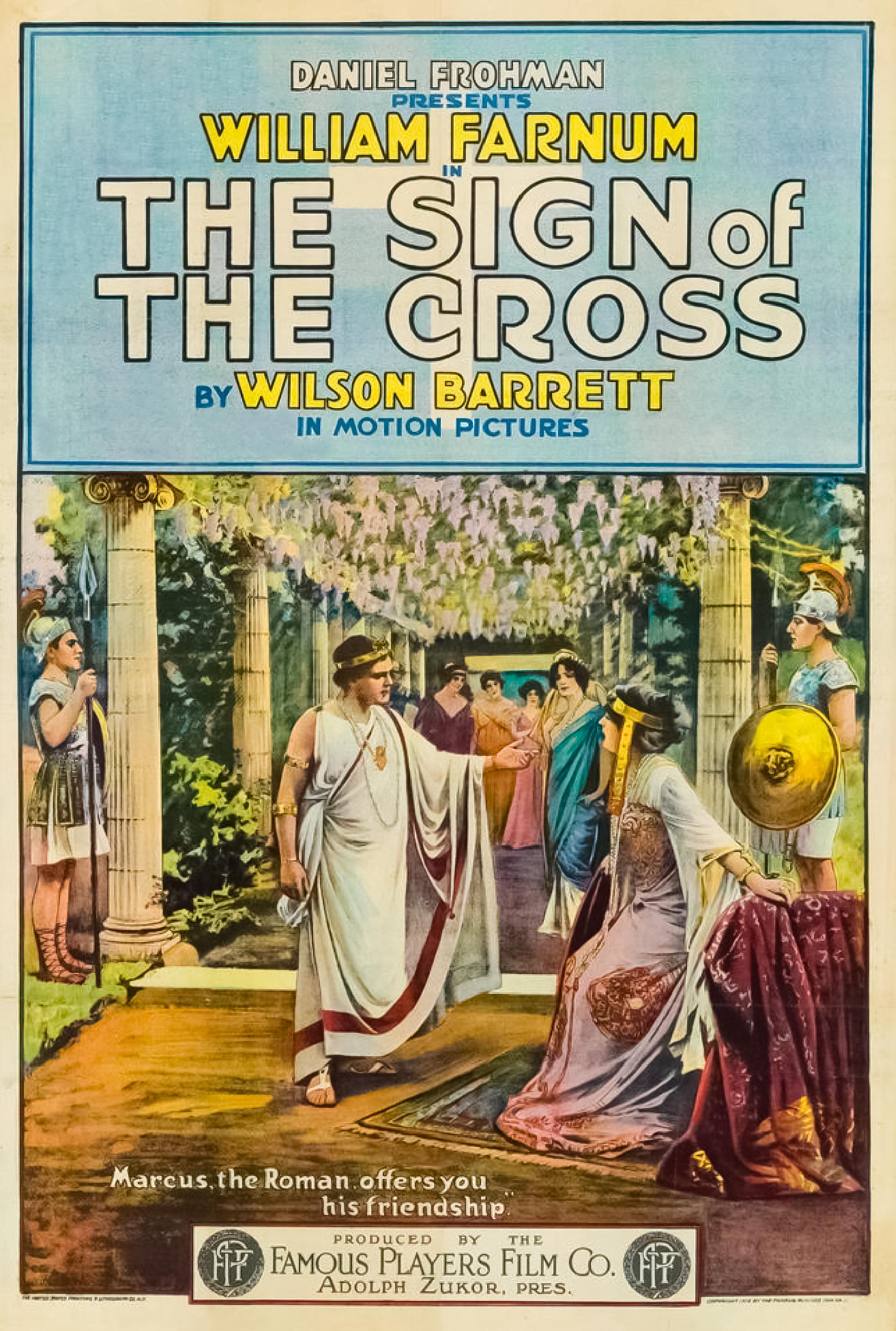
A definitive 5.9/10 rating for a film that redefined the boundaries of cult cinema. The Sign of the Cross remains a cornerstone of transgressive art.
When the reels of The Sign of the Cross flicker to life, the viewer is thrust into a world where marble columns loom like silent judges, and the flickering torchlight of Rome’s night seems to whisper ancient sins. Directed by the visionary Wilson Barrett, the film is a rare surviving artifact of early 20th‑century attempts to dramatise the persecution of early Christians under Nero, a subject that would later be revisited with greater technical sophistication in From the Manger to the Cross and the grandiose Life and Passion of Christ. Yet, where those later productions rely on lavish color palettes and expansive sets, Barrett’s silent opus leans on stark chiaroscuro and a theatricality that feels both intimate and grand.
The film’s narrative hinges on a triangular power dynamic: the seductive Empress Poppaea (Madge Evans), the ruthless prefect Tigellinus (William Farnum), and the capricious emperor Nero (Charles E. Vernon). Poppaea’s machinations are rendered with a subtlety that belies the silent medium; her glances, the curl of a silk handkerchief, and the languid sway of her gowns convey a manipulative intelligence that would make a modern political thriller blush. Tigellinus, portrayed with a cold, steely resolve, serves as the conduit for Nero’s volatile whims. His persuasive monologue—delivered through intertitles that crackle with rhetorical urgency—convincingly paints Mercia (Rosina Henley) as a subversive threat, prompting Nero’s infamous decree to arrest the Christian mercenary.
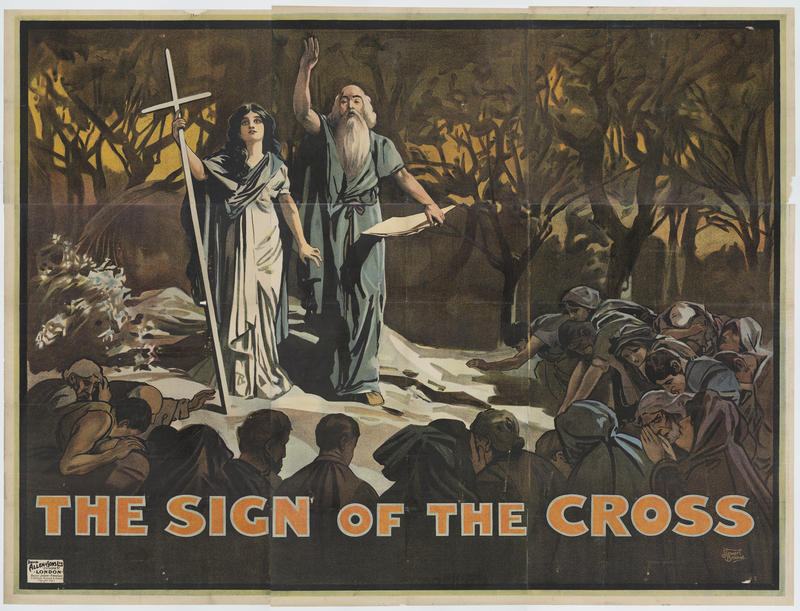
Barrett’s script, adapted from Wilson Barrett’s own stage play, is a study in moral juxtaposition. The opulence of the Roman court is contrasted with the stark, austere humility of the Christian community. This dichotomy is visually reinforced by the film’s use of colour tints: scenes of imperial decadence are washed in a deep, blood‑red hue, while the clandestine gatherings of believers are bathed in a muted, sepia tone that evokes both antiquity and sanctity.
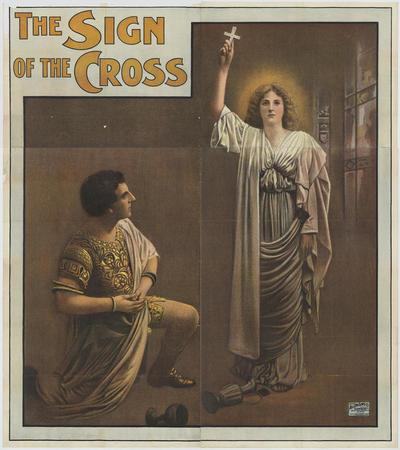
Rosina Henley’s Mercia is the emotional fulcrum of the story. Her eyes, wide and luminous, convey an inner fire that the intertitles merely hint at. Henley’s ability to oscillate between fierce defiance and tender vulnerability anchors the film’s moral core. Madge Evans, as Poppaea, delivers a performance that is at once regal and predatory; her poise is a study in controlled menace, reminding the audience that power can be wielded as deftly with a smile as with a sword.
William Farnum’s Tigellinus is a study in stoic menace. His physicality—rigid posture, deliberate gestures—creates an imposing presence that eclipses many of his contemporaries. The supporting cast, including Ethel Grey Terry as a pious matron and Sheridan Block as a conflicted legionary, provide textured layers that enrich the film’s social tapestry.
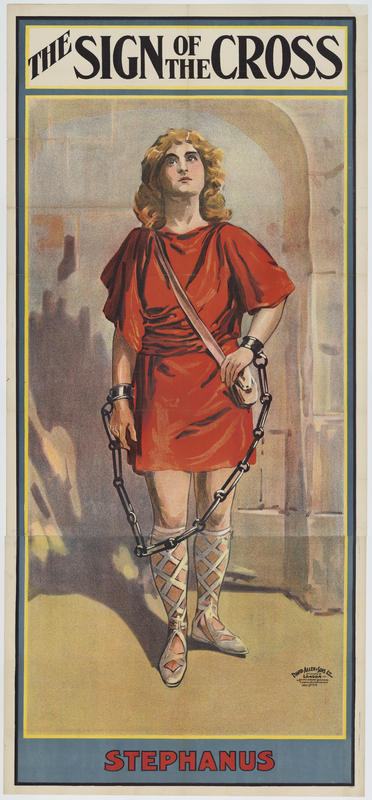
Cinematographer unspecified (records are incomplete) employs a series of static wide shots that echo the tableau tradition of early theatre, allowing the audience to absorb the grandeur of Rome’s architecture. The use of deep focus, rare for the era, enables foreground actors to convey nuanced emotion while the background teems with bustling market stalls and imperial banners.
Set designers recreated the Forum with painstaking detail: marble statues, towering columns, and a looming triumphal arch that dominates the horizon. The attention to historical verisimilitude is comparable to the production values of The Last Days of Pompeii, yet Barrett’s film retains a theatrical intimacy that feels more akin to a stage performance than a cinematic spectacle.

Although silent, the film was originally accompanied by a live orchestral score that blended martial drums with plaintive strings, underscoring the clash between imperial authority and Christian piety. Modern restorations often pair the visual with a newly commissioned score that respects the original motifs while integrating contemporary orchestration, enhancing the emotional resonance for today’s audiences.
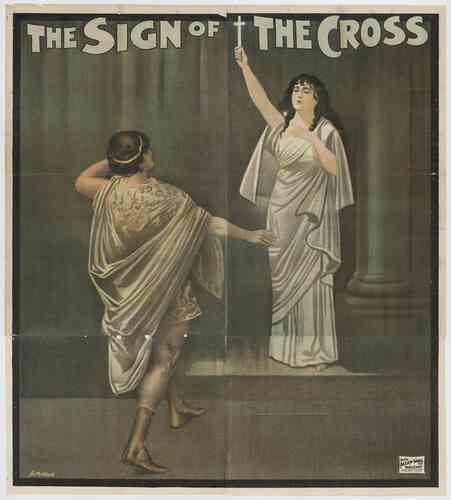
When placed alongside contemporaneous religious epics such as The Life and Passion of Christ (1912) and the historical drama Les amours de la reine Élisabeth (1912), The Sign of the Cross stands out for its willingness to foreground political intrigue over purely devotional narrative. Its portrayal of Poppaea as an active agent of persecution predates the more nuanced female antagonists seen in later silent classics such as Les Misérables (1917).
While not as commercially successful as D.W. Griffith’s later biblical epics, The Sign of the Cross contributed to the early 20th‑century fascination with martyrdom and the early church. Its influence can be traced to the thematic preoccupations of later Hollywood productions that dramatise religious persecution, such as the 1935 classic Quo Vadis?. Moreover, the film’s visual language—particularly its use of colour tinting to signify moral polarity—became a staple in silent-era storytelling.
From a contemporary standpoint, the film’s static camera work and reliance on exaggerated mime can feel archaic. The intertitles, while poetically crafted, occasionally interrupt narrative flow, a common critique of early cinema. Additionally, the absence of a definitive director’s credit for cinematography leaves a gap in fully appreciating the film’s visual achievements.
The Sign of the Cross endures as a compelling artifact of silent-era ambition, melding historical drama with religious fervour. Its strengths lie in powerful performances, meticulous set design, and a narrative that interrogates the corrupting influence of power. Though technically dated, the film rewards patient viewers with a rich tapestry of visual symbolism and an early example of cinema’s capacity to grapple with profound moral questions.
Keywords: The Sign of the Cross review, silent film analysis, Nero, early Christian martyrdom, Wilson Barrett, Rosina Henley, Madge Evans, William Farnum, silent era religious epics.
IMDb —
1918
Community
Log in to comment.