DbcultAccessing Vault...
5.2/10
Senior Film Conservator
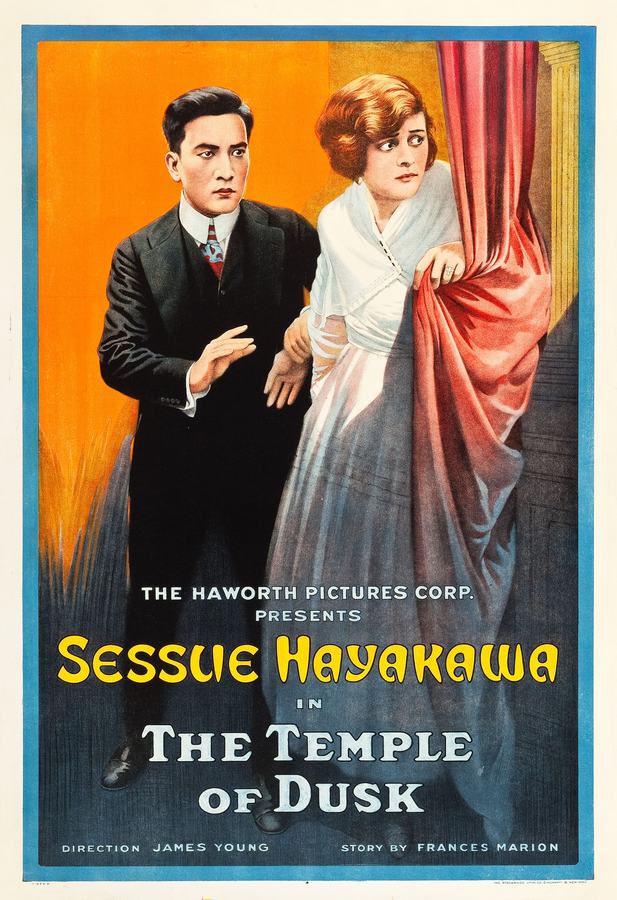
A definitive 5.2/10 rating for a film that redefined the boundaries of cult cinema. The Temple of Dusk remains a cornerstone of transgressive art.
There are films that merely tell a story, and then there are those that etch themselves onto the very fabric of one’s cinematic memory, leaving an indelible imprint. 'The Temple of Dusk', a silent era gem, unequivocally falls into the latter category. This isn't just a historical artifact; it's a vibrant, aching testament to the power of unrequited devotion and the profound tragedy that can ripple through lives when hearts are misaligned. Directed with a keen eye for human drama and penned by the formidable Frances Marion, the film presents a narrative so rich in emotional complexity that it transcends its silent medium, speaking directly to the soul with an eloquence rarely matched.
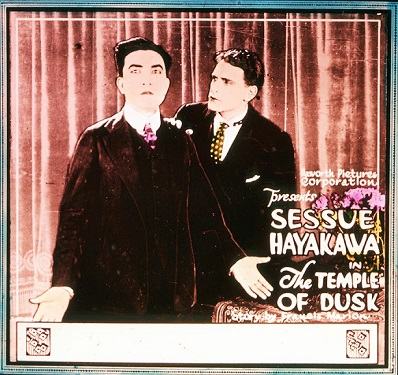
At its core, 'The Temple of Dusk' is a mesmerizing character study, primarily focused on the captivating persona of Akira, brought to life with breathtaking intensity by the legendary Sessue Hayakawa. Hayakawa, a superstar of his era, possessed an unparalleled ability to convey oceans of emotion with the subtlest glance or the slightest shift in posture. Here, he embodies Akira, a Japanese poet whose very existence seems intertwined with the fate of Ruth Vale, an American woman orphaned and placed under his father's care in Tokyo. Their initial connection is portrayed with a delicate tenderness, a nascent affection that promises a future of shared serenity. Ruth, played by Sylvia Breamer, initially mirrors Akira's profound feelings, creating a fleeting vision of happiness that feels almost too perfect to last.
The serenity, predictably, shatters with the arrival of Edward, portrayed by Louis Willoughby. Edward is the quintessential cinematic cad – charming on the surface, utterly devoid of substance beneath. His allure, however superficial, proves irresistible to Ruth, drawing her away from Akira's steadfast, genuine affection. This pivotal shift sets the stage for the film’s agonizing trajectory. We witness the slow, painful dissolution of Ruth’s happiness as Edward’s true nature as an unfaithful and neglectful husband is revealed. The contrast between Akira’s unwavering devotion and Edward’s casual cruelty is stark, a testament to Marion’s masterful character delineation and the actors' profound interpretations.
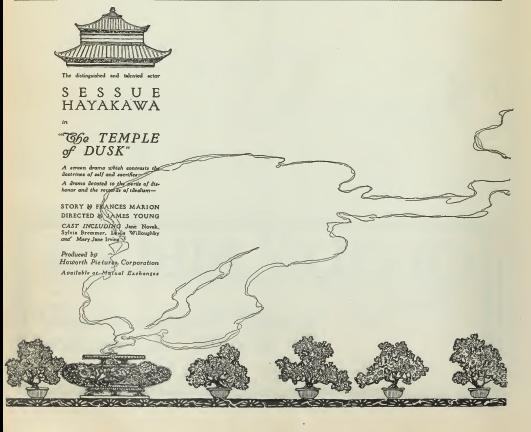
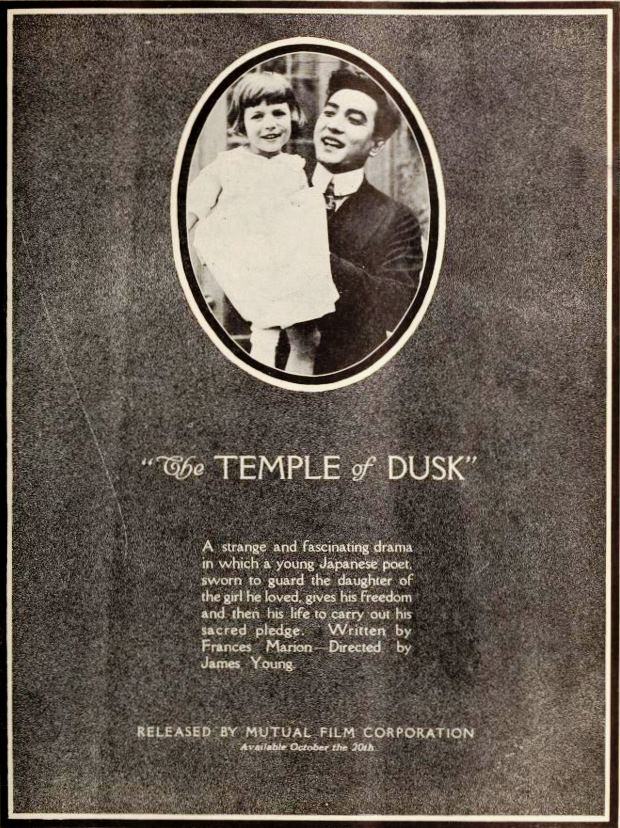
Years later, the narrative plunges into an even deeper abyss of despair. Ruth is gravely ill, abandoned by an Edward who finds solace and amusement in the arms of his new lover, Adrienne Chester. It is here, in Ruth’s final moments, that Akira’s character achieves a truly transcendent quality. His presence is a beacon of comfort, a silent promise of protection for Ruth’s innocent daughter, Blossom, played with touching vulnerability by Mary Jane Irving. This pledge to safeguard Blossom becomes the driving force of the latter half of the film, transforming Akira’s unrequited love for Ruth into a powerful, almost spiritual, paternal devotion. It’s a thematic pivot that elevates the story beyond a mere romantic tragedy into an exploration of selfless love and the enduring bonds of chosen family.
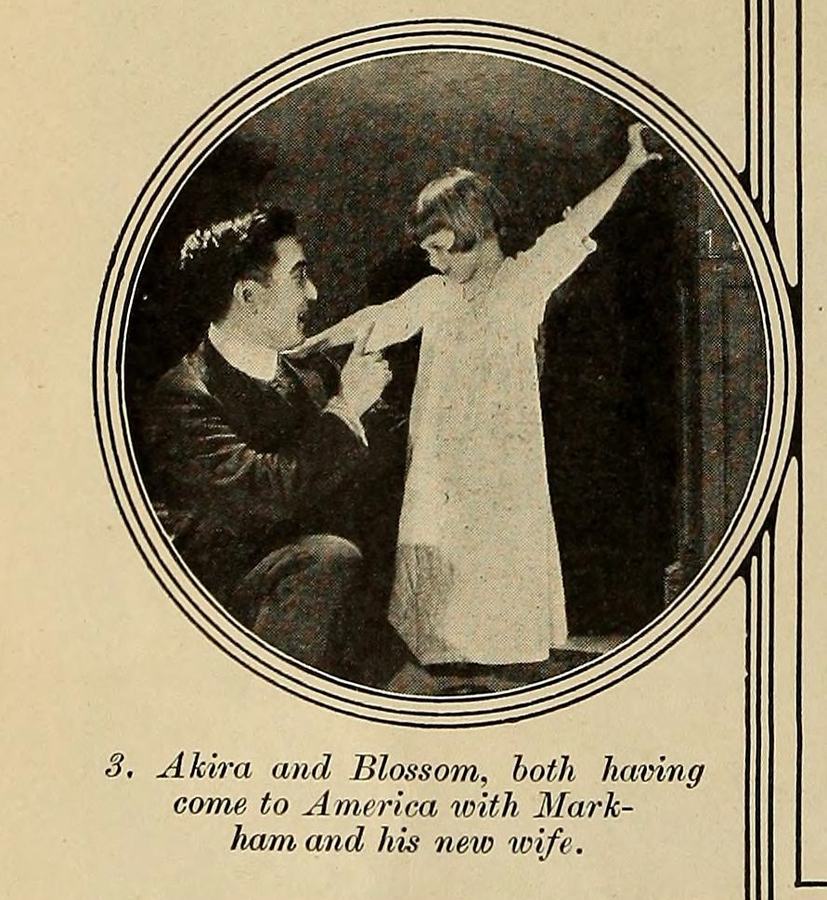
The ensuing events propel Akira and Blossom into a new life in America, after Edward marries Adrienne. The irony is palpable: Edward, the architect of so much misery, largely fades from the foreground, while Akira, the silent sufferer, takes on the mantle of protector and surrogate parent. This journey across continents subtly underscores the cultural clash and the universal nature of human emotions. Adrienne, meanwhile, proves to be as morally bankrupt as her new husband, rekindling an old affair. This infidelity culminates in a violent confrontation, with Edward discovering his wife with her lover and committing murder. In a truly heroic, yet heartbreaking, act of sacrifice, Akira steps forward, accepting the blame for the crime. His motivation is pure: to shield Blossom, the child he has sworn to protect, from the humiliation and scandal that would inevitably follow her father’s conviction.
It is impossible to discuss 'The Temple of Dusk' without dedicating significant attention to Sessue Hayakawa's performance. His portrayal of Akira is nothing short of magnificent. In an era often characterized by exaggerated gestures and broad strokes, Hayakawa stood apart, his acting a study in powerful restraint. He conveyed Akira’s profound internal world – his quiet dignity, his agonizing longing, his unwavering moral compass, and ultimately, his boundless capacity for sacrifice – through nuanced facial expressions and an almost ethereal screen presence. He didn't just play Akira; he embodied the very spirit of selflessness. His eyes, often downcast in sorrow or burning with quiet determination, spoke volumes, rendering intertitles almost superfluous.
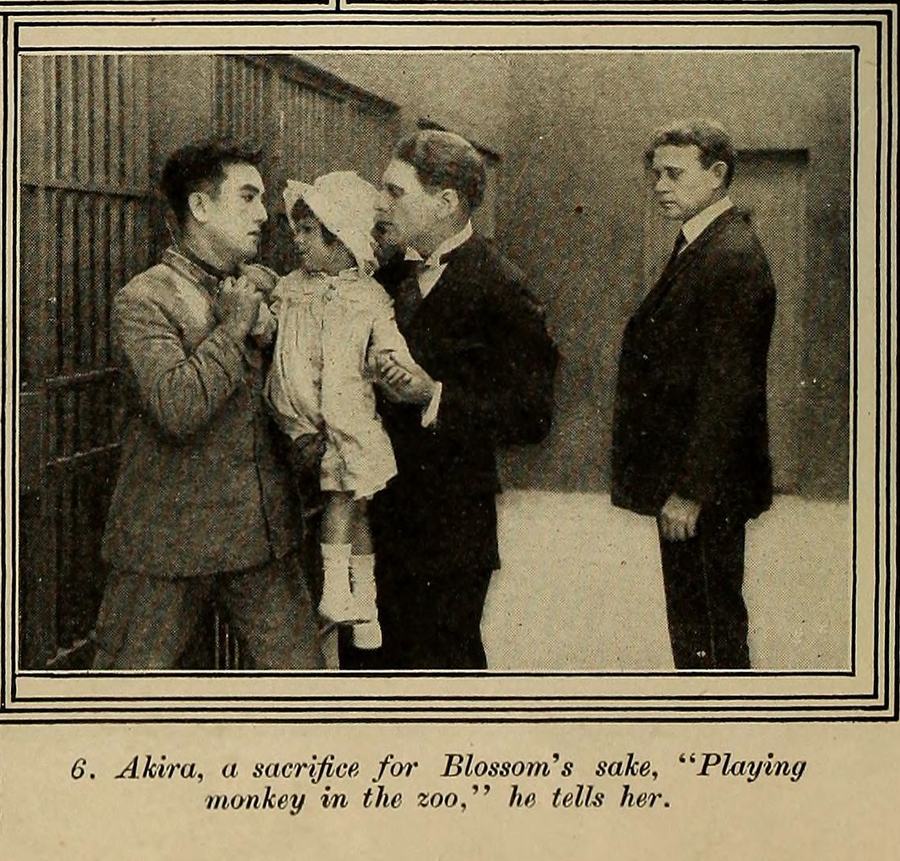
Hayakawa’s impact on audiences, both Japanese and Western, was immense. He broke barriers, becoming one of Hollywood’s first non-white sex symbols and leading men. In 'The Temple of Dusk,' he transcends any cultural stereotypes, presenting a character of universal appeal and profound humanity. His Akira is a man of honor, a stark contrast to the morally ambiguous Western characters surrounding him. This portrayal likely resonated deeply with audiences, offering a complex and sympathetic view of a character that might otherwise have been reduced to a caricature in lesser hands or with a less sensitive performer. His final scene, a poignant and heart-wrenching climax, is a masterclass in silent film acting, solidifying Akira's place as one of the most memorable tragic heroes of the screen.
The narrative strength of 'The Temple of Dusk' is largely attributable to the genius of Frances Marion. As one of the most prolific and respected screenwriters of the silent and early sound eras, Marion had an unparalleled knack for crafting compelling stories driven by deep emotional currents. Her script for this film is a meticulously constructed edifice of human drama. She skillfully builds tension, develops complex characters, and ensures that every plot turn serves to deepen the audience’s understanding of the protagonists’ inner lives. The progression from tender romance to devastating betrayal, and then to ultimate sacrifice, feels organic and inevitable, rather than forced or melodramatic. This is a testament to Marion's ability to imbue even the most heightened dramatic situations with a profound sense of realism and psychological depth.
Marion’s writing often explored themes of moral complexity, societal expectations, and the resilience of the human spirit. In 'The Temple of Dusk,' she deftly navigates issues of cross-cultural relationships, the sanctity of promises, and the ultimate price of love. Her ability to craft such a nuanced and emotionally resonant story for the silent screen, relying heavily on visual storytelling cues and carefully worded intertitles, underscores her immense talent. This film, like many of her masterpieces, showcases her belief in the power of cinema to convey profound human truths, making her a pivotal figure in the evolution of storytelling in film.
The film’s climax is a masterstroke of tragic storytelling. Akira, now imprisoned for a crime he didn't commit, engineers a daring escape. His sole objective is to see Blossom, the child he views as his own, one last time. Despite being shot by a guard during his desperate flight, he manages to reach her. This final, heart-wrenching sequence, where Akira carries Blossom in from the rain and plays with her until his strength finally deserts him, is profoundly moving. It is a moment of pure, unadulterated love, untainted by the surrounding darkness and despair. His death, a quiet surrender after fulfilling his final promise, solidifies his legacy as a tragic hero, a martyr to his boundless affection for Ruth and, by extension, for Blossom.
The themes explored in 'The Temple of Dusk' resonate with a timeless quality. The nature of true love – whether it’s the passionate, fleeting kind or the enduring, self-sacrificing kind – is central. The film asks profound questions about duty, honor, and the lengths to which one will go for the sake of another’s innocence and well-being. It also subtly critiques the superficiality and moral decay that can fester beneath a veneer of societal respectability, particularly through the characters of Edward and Adrienne. This moral contrast between the virtuous outsider and the corrupt insiders is a recurring motif in cinematic history, but rarely is it depicted with such heartbreaking clarity as it is here.
When considering 'The Temple of Dusk' within the broader landscape of silent cinema, its unique blend of cross-cultural drama and profound sacrifice sets it apart, yet it also shares common ground with other compelling narratives of the era. The intense emotional commitment and tragic arc of Akira, for instance, might remind one of the doomed passions explored in films like Saffo, where societal constraints and personal choices lead to an inescapable fate. Both films delve into the destructive power of certain relationships and the profound impact they have on the protagonists' lives, albeit through different cultural and social lenses.
The theme of a character accepting blame or making a profound personal sacrifice for the sake of another's reputation or future is a powerful one, echoed in the moral dilemmas presented in films such as For the Defense. While the setting and specific circumstances differ, the core idea of a protagonist willingly taking on a burden to shield a loved one from public humiliation or legal repercussions resonates strongly. This thematic commonality underscores a universal human desire for protection and the lengths to which individuals will go out of love or duty.
Furthermore, the melodramatic intensity and focus on a wronged woman, like Ruth, and the subsequent fallout of betrayal, can be seen in other dramatic works of the period. Consider The Heart of Nora Flynn or Armstrong's Wife, which often explored the complexities of marital strife, infidelity, and the societal pressures placed upon women. While 'The Temple of Dusk' adds the unique layer of Akira's cross-cultural devotion, the underlying pain of betrayal and its devastating consequences are themes handled with equal gravity across these narratives.
The presence of a vulnerable child, Blossom, as a central emotional anchor, also finds echoes in other silent films that leveraged the innocence of youth to heighten dramatic stakes. The bond between Akira and Blossom becomes the film's most potent symbol of hope and purity amidst a world of deceit. This kind of protective instinct, often against overwhelming odds, is a timeless narrative device that connects 'The Temple of Dusk' to a broader tradition of cinematic storytelling focused on safeguarding innocence.
In its masterful blend of cultural introspection, profound character study, and heart-wrenching melodrama, 'The Temple of Dusk' stands as a testament to the artistic heights achieved during the silent era. It’s a film that demands to be seen not just for its historical significance, but for its enduring emotional power, its unforgettable performances, and its timeless exploration of the human heart’s capacity for both cruelty and transcendent love. It reminds us that even in silence, stories can speak volumes, and some sacrifices echo across generations, leaving an indelible mark on the soul.
The intricate dance of fate, choice, and consequence depicted in 'The Temple of Dusk' further aligns it with the grand narratives of destiny and moral struggle prevalent in films like Sonad skuld (Atoning Guilt) or even the more adventurous spirit of The Hunting of the Hawk, which, despite its different genre, shares a propulsion driven by characters making impactful, life-altering decisions. While the specific dramatic engines vary, the sense of an unavoidable trajectory towards a profound resolution, often tragic, is a shared characteristic. Akira's journey, from hopeful lover to selfless protector, feels predestined by the purity of his character, a common thread in many silent era dramas where virtue is often tested to its limits.
The film also exemplifies the silent era's ability to create powerful emotional resonance through visual storytelling, a craft perfected by many. Compared to more lighthearted fare like The Haunted Pajamas, which leaned into comedy, 'The Temple of Dusk' showcases the profound dramatic capabilities of the medium. The careful staging, the evocative use of light and shadow, and the expressive physicality of the actors – particularly Sessue Hayakawa – all contribute to a deeply immersive and affecting experience. It's a reminder that silent films were far from primitive; they were a sophisticated art form capable of conveying the deepest human emotions without a single spoken word.
Ultimately, 'The Temple of Dusk' is more than just a historical curiosity; it is a cinematic triumph that continues to speak to audiences today. Its themes of love, betrayal, sacrifice, and the enduring power of devotion are universal and timeless. The film’s emotional depth, coupled with the extraordinary performance of Sessue Hayakawa, ensures its place as a significant work in the annals of film history. It serves as a poignant reminder of the incredible artistry that flourished during the silent era, proving that sometimes, the most profound stories are told not with words, but with the silent language of the heart. It’s a film that lingers long after the final frame, a haunting melody of sorrow and selfless love that resonates deeply within the soul.
The rich characterizations, particularly that of Akira, continue to offer insight into the complexities of human nature, making this film a compelling subject for study and appreciation. The cultural nuances and the portrayal of an 'othered' protagonist who embodies the highest virtues challenge simplistic views and enrich the narrative tapestry. It's a powerful statement on the universality of virtue and vice, transcending geographical and cultural boundaries. This profound moral landscape, so meticulously crafted by Frances Marion, ensures that the film remains not just a relic, but a living, breathing piece of art, perpetually inviting contemplation and admiration.
IMDb 3.6
1928
Community
Log in to comment.