DbcultAccessing Vault...
Cult Review
Senior Film Conservator
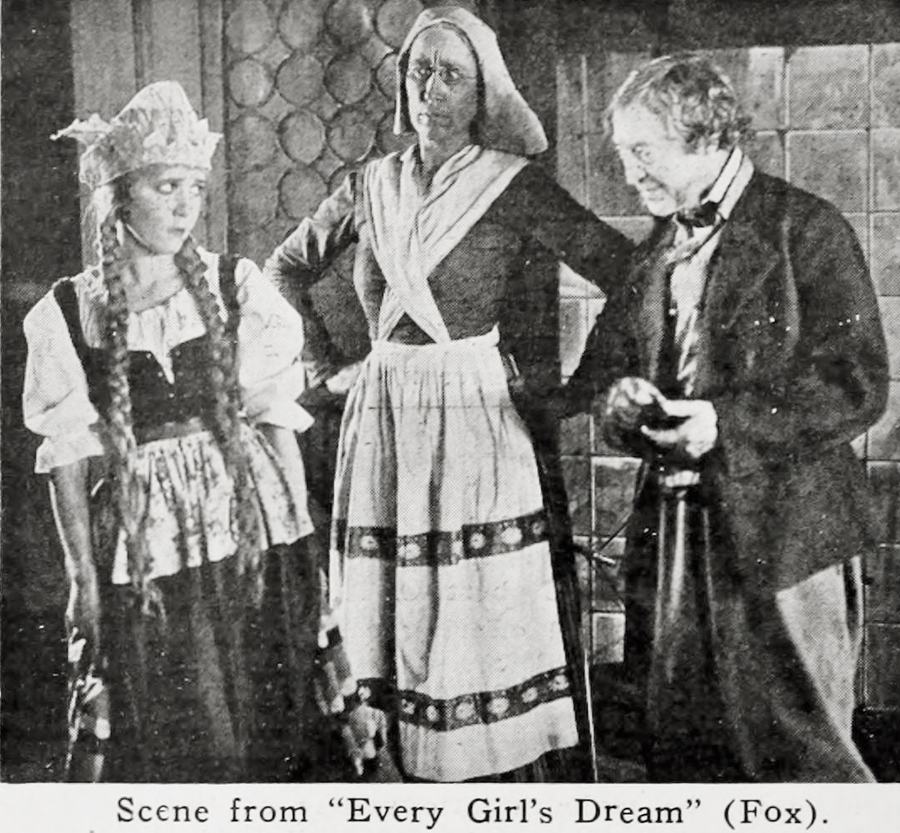
Olenburg’s bell-tower tolls like a slow hemorrhage of time, each clang bruising the fog that clings to the village. Into this pewter dusk, the camera introduces Gretchen—boots patched, skirt frayed, eyes the cloudy amber of jenever held to candlelight. Marcia Harris plays her with a tremor so restrained it feels like the flicker of a moth against glass.
The film, released stateside in December 1914, arrived just as Europe was beginning its mechanized self-immolation; its Dutch setting is never named aloud—intertitles are sparse, almost embarrassed—yet the landscape seeps through every frame like damp. Cinematographer Max Schneider (uncredited in most archives) shoots the lowlands as if they were a cradle that never quite rocked: horizons tilt, skies weigh heavy, and the canals become black mirrors reflecting a world that has already decided some children are surplus.
Frau Van Lom, essayed by a venomously brilliant Margaret Fielding, enters each scene trailing the odor of stove smoke and unpaid rent. Notice how her shawl is always slipping from one shoulder—an accidental vulnerability that never humanizes her, only sharpens the serpent inside. The woman’s ledger of grievances is endless, but the film refuses to grant her the ghoulish pleasure of a close-up until midway through; when it comes, the iris-in feels like a guillotine. Suddenly we see pores, broken capillaries, the twitch of a muscle that hints she herself was once collateral in some older bargain. Fielding, a veteran of Her Double Life, knows how to weaponize stillness better than any weapon the prop department could supply.
Gretchen’s counterforce is Carl—Harry Hilliard gives him a lanky, long-boned kindness, every gesture seeming to apologize for the space he occupies. Their first shared shot, a two-minute scrape of orchard larceny (they steal windfall apples while the camera hovers at leaf-height), plays like a sacrament. Hilliard lets his gaze linger on June Caprice’s Gretchen a half-second too long, not with desire but with the stunned recognition of someone who has found the only other speaker of an endangered language. It is the film’s most urgent romance, though lips never meet; the embrace happens in the mind, a place the censor’s scissors cannot reach.
Clifford Howard’s scenario, adapted from a now-lost Dutch novella, follows the melodramatic playbook of the era—missing heirs, forged evidence, last-minute pardons—yet director Adrian Johnson stages each cliché so that it lands as ethnography rather than contrivance. When Gretchen is framed for the theft of a cameo brooch, the mise-en-scène crowds her with kitchen implements: copper pots, a dangling sausage, a cradle she was never rocked in. The objects become jurors. Even the act of being dragged to the lock-up is shot from the threshold, the camera left behind inside the house as if domestic space itself has ejected her. Rare for 1914: the cut that follows is not to the exterior of the jail but to an insert of melting ice on the canal, a visual sigh that stretches twenty-two frames—an eternity in nickelodeon pacing.
Meanwhile Carl’s exile to the royal palace allows the film to pirouette into a pastel world of ancien-régime decadence. Notice the color tinting: Olenburg sequences are soaked in cobalt blues and slate grays, but the court scenes pulse with rose and citrine, achieved by hand-dipping each print in dye baths that must have reeked of vinegar and hope. In one ballroom shot, the camera glides past a row of footmen whose powdered wigs are powdered again with pearlescent glitter; when Carl walks through them, the glitter adheres to his homespun coat like stardust on a ploughboy. The image is both magical and cruel—beauty sticking to the one person who never asked for it.
Here the narrative forks into two race-against-time threads. Gretchen, aided by a consumptive seamstress (a heartbreaking cameo from Kittens Reichert, all cheekbones and conviction), tunnels her way out of prison using a spoon stolen from the warden’s wedding China. Parallel: Carl uncovers that the king’s minister has been skimming famine-relief funds; he bargains the evidence for a pardon for Gretchen, but the parchment must reach Olenburg before the burgess can seal his “marriage” contract. Cross-cutting between spoon and scroll, Johnson anticipates Griffith’s Birth of a Nation by months, yet without the latter’s moral bombast; the montage is lean, almost documentary, as if to insist: this is how bureaucracies and hope both travel—incrementally.
The climax occurs on the village’s frozen mill-pond during the Feast of St. Nicolas. A choral society sings a psalm whose minor-key cadence seems to slow the ice itself. Gretchen, wrapped in the seamstress’s shawl, skates toward the horizon—literally toward the camera—while Carl, astride a commandeered mail-coach, thunders along the adjacent road. For a breathless minute, the two vectors align: her skates and his wheels parallel in frame, separated by a hedge. Johnson refuses to cheat with a close-up; we read urgency only in posture—Gretchen’s scarf unraveling like smoke, Carl’s coat snapping like a sail. When the coach finally overtakes her, he does not sweep her into his arms but collapses to his knees on the ice, parchment held overhead. The camera pulls back: villagers surround them in a ragged circle, breath fogging. No kiss, no swell of violins—only the sound of ice creaking beneath shifting weight, a reminder that every thaw is also a verdict.
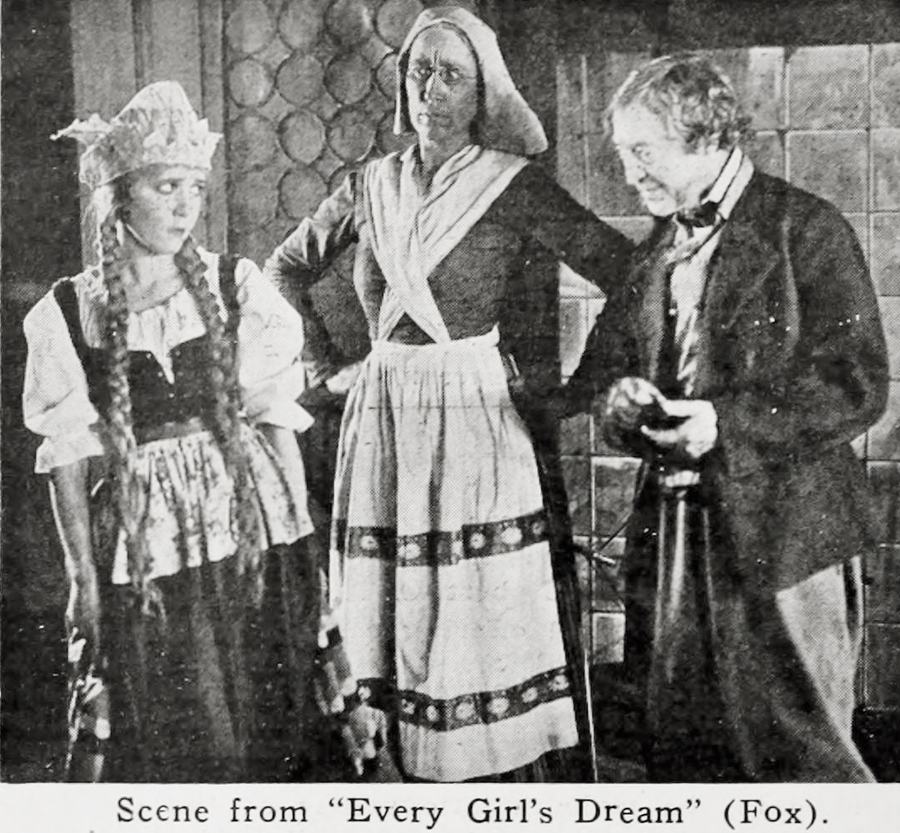
Viewers weaned on the redemptive uplift of What the Gods Decree may find the epilogue startlingly austere. Frau Van Lom keeps the mortgage papers; the burgess is merely embarrassed, not ruined. Carl and Gretchen depart Olenburg by barge at dawn, their faces unreadable in long-shot. The final intertitle reads: “Sometimes the world says yes, but the echo arrives too late for childhood.” It is a line that lodges under the ribs. One exits the film sensing that justice, like those windfall apples, is always already spoiling.
Technically, the print preserved by EYE Filmmuseum is incomplete—roughly twelve minutes are lost, including (maddeningly) the rumored sequence where Gretchen hallucinates her dead mother while feverish in jail. Yet what survives is stitched together with such elegant lacework that the gaps feel intentional, like the negative space in a Japanese ink drawing. The tinting has been digitally stabilized but not restored to Kodak brightness; blues remain bruised, yellows retain the nicotine patina of age. The resulting palette—ember orange, gas-lamp yellow, North-Sea indigo—haunts the retina long after the credits.
Performances are calibrated to the register of silence: eyebrows raised a millimeter speak volumes, a blink held one frame too long betrays guilt. Watch Margaret Fielding in the penultimate scene, backgrounded by her confiscated furniture being auctioned. The auctioneer brandishes her late husband’s pipe; Fielding’s left eye flickers—a spasm so minute it feels geological. In that twitch, we read the whole ledger of her life: loveless marriage, barren womb, the cascading need to weaponize the only power left—property. It is a masterclass in micro-acting, worthy of comparison to Lon Chaney’s later contortions.
Comparative context: if Saint, Devil and Woman externalizes morality through lurid allegory, Every Girl’s Dream internalizes it in the marrow. Where The Rattlesnake thrills with chase rhythms straight out of a pulp dime, this film lingers in the dailiness of despair—girls mending socks, men signing ledgers, the way candle gutters twice before going out. Its closest spiritual sibling might be The Heart of the Hills, yet even that Appalachian tale grants its mountaineers a mythic spaciousness; Olenburg offers only the claustrophobia of Calvinist fog.
Gender politics, 1914 vintage: the title itself drips irony. “Every girl’s dream” turns out to be the right to refuse ownership, to skate away from the futures scripted by creditors and cousins. The film was marketed in Moving Picture World as a “dainty winter idyll,” a tagline so cynically off-base it reads like satire. One wonders how many matinee girls saw their own indenture refracted in Gretchen’s flight, how many recognized the bargain between marriage and mortgage still humming beneath 2020s suburbia.
Sound historians will note the absence of any original score cue sheets; most contemporary exhibitors improvised with Dutch folk airs and, incongruously, Sousa marches. Modern festivals often commission new accompaniments—my first encounter featured a Dutch jazz trio using glass harmonica and brushed snare, turning the ice-skate sequence into something akin to a tone poem. Your mileage may vary, but seek the Bohren & der Club of Gore–scored restoration if possible; their glacial tempos marry the images like frost to twig.
Availability: unfortunately, no HD scan circulates publicly. A 2K DCP was struck in 2016 for the Pordenone Silent Film Festival, but rights are tangled in the Van Lom estate (yes, descendants of the original author still claim control). A 35 mm dupe can be viewed on-site at EYE, by appointment, or at the Library of Congress Packard Campus. For the streaming generation, a 720p bootleg with Russian intertitles drifts around the darker coves of the internet—watchable if you can stomach Cyrillic replacing the Dutch proverbs. I confess I keep it bookmarked for the scene where Gretchen whispers Carl’s name; even through pixel decay, June Caprice’s face retains the luminosity of a Vermeer rescued from flood.
In the end, the film survives not because it revolutionized grammar—no reverse-angle cutting, no proto-Cahiers auteurism—but because it trusts the audience to feel the chill of a world that prices girls by the kilo of their dowry and the acreage of their obedience. It offers no catharsis, only the fragile covenant that somewhere on an ice-slick canal, two runaways might stay upright long enough to vanish into the credit roll of history. That, perhaps, is every girl’s real dream: not the prince, not the palace, but the open horizon that stays open, the ice that holds, the barge that never lists. Watch it wearing mittens; you’ll swear the frost reaches through the screen.

IMDb 2.4
1918
Community
Log in to comment.