DbcultAccessing Vault...
Cult Review
Senior Film Conservator

Okay, so Ex-Flame, from way back in 1930. Is it something you gotta drop everything for? Probably not, unless you're really into digging through early talkies or just curious how movies tackled big emotions back then. If you're looking for a smooth, modern drama, you'll probably get bored pretty quick. 🍿
This one's definitely for the film history buffs, the folks who appreciate seeing how things started. Everyone else? You might find it a bit of a slog, honestly. It’s less about refined storytelling and more about seeing the raw beginnings of sound cinema.
The whole thing hinges on Marian Nixon’s character, Shirley, and her absolutely raging jealousy. Her husband, played by Norman Kerry, has this old flame, Anne (Judith Barrie), who keeps popping up. And Shirley just cannot handle it. 😬

It’s almost like the movie wants to show you how quickly someone can spiral. Shirley’s reactions are pretty over-the-top, even for the era. She goes from suspicious glares to full-blown accusations in about zero seconds flat.
One scene, early on, she catches Anne just looking at her husband from a distance, and Shirley's face just twists. You can almost feel her brain cooking up the worst possible scenario right there. It’s a little much, but also kind of captivating in a train-wreck way.
And hey, Louis Armstrong is in this! 🎺 Not for long, though. He's just there for a quick musical bit, playing in what looks like a nightclub scene. It's a blink-and-you-miss-it kind of thing, but super cool to catch him in such an early film. Definitely a little unexpected.
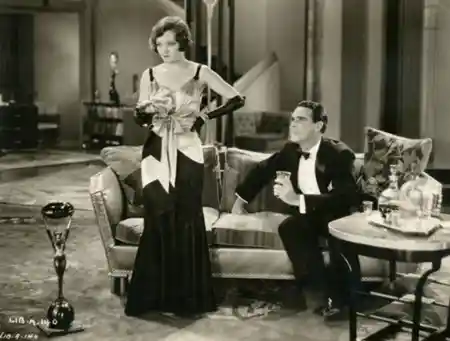
The sound quality, as you'd expect for 1930, is a bit rough around the edges. Sometimes the dialogue feels a little distant, like they were shouting into a tin can. But you get used to it after a while.
Shirley's husband, Robert, tries to be patient, bless his heart. But there’s only so much a guy can take. Norman Kerry’s performance is mostly a lot of exasperated looks and trying to reason with a brick wall. You do feel a little bad for him.
The movie really leans into the idea that jealousy is a monster. It chews up everything good. Shirley’s descent is quick, losing her home, then her son. It’s a stark warning, delivered with the subtlety of a sledgehammer. 🔨
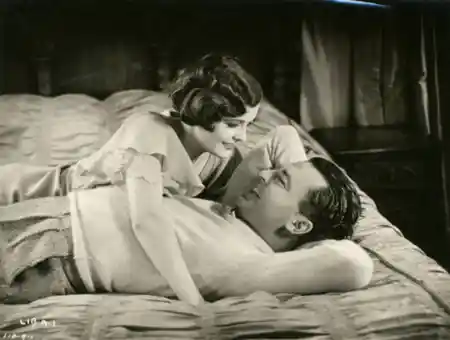
There's a moment when her son is taken away that feels particularly heartbreaking, mostly because Shirley seems genuinely shocked. Like she didn't quite grasp the consequences of her actions until that very second. It's a powerful beat, even if the lead-up felt a bit rushed.
The ending feels a little abrupt, like they ran out of film or something. It doesn't really give you a clean sense of closure. You just sort of... leave Shirley there, in her mess.
Ex-Flame isn't a masterpiece, not by a long shot. But it’s a pretty good window into a specific kind of early Hollywood melodrama. It shows us how big emotions were played for the camera when sound was still a novelty. And you get to see Louis Armstrong for a few seconds!
IMDb 5.2
1927
Community
Log in to comment.