DbcultAccessing Vault...
Cult Review
Senior Film Conservator
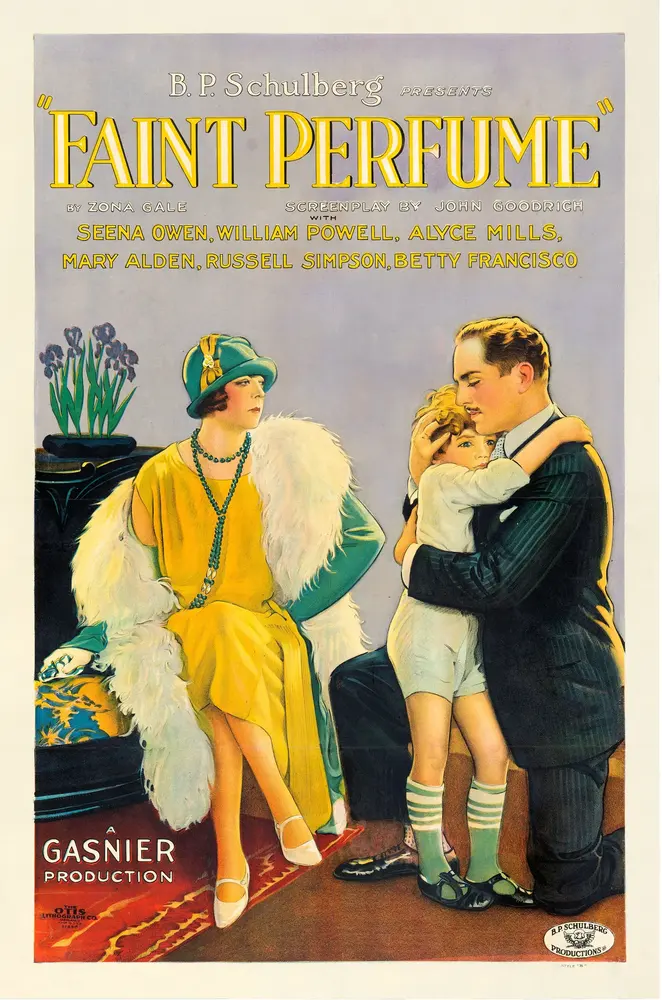
Ah, the human heart – a perpetually tempestuous sea, especially when navigating the treacherous currents of love, loss, and the ever-present shadow of societal expectation. In the annals of early cinema, few films capture this intricate dance with the raw, unvarnished emotion of 'Faint Perfume.' A narrative spun by the deft hands of Zona Gale and John F. Goodrich, this picture delves deep into the aftermath of a shattered marriage, painting a vivid portrait of personal turmoil and the serendipitous, sometimes scandalous, nature of new beginnings. It’s a film that, even decades later, resonates with a profound understanding of the human condition, making us ponder the fragility of vows and the unpredictable pathways to solace.
The story of 'Faint Perfume' opens not with a flourish of romance, but with the grim reality of its dissolution. We are introduced to Barnaby Powers, portrayed with a compelling blend of weariness and simmering resolve by Dick Brandon, as he emerges from a six-year marriage to Richmiel, a union described, tellingly, as 'stormy.' Six years is a significant duration, long enough to forge deep bonds, but also ample time for resentments to fester and love to curdle into something unrecognizable. The film, even in its silent grandeur, conveys the weight of this marital strife, the unspoken battles and cold silences that must have preceded the legal decree. Richmiel, brought to life by the nuanced performance of Barbara Tennant, retreats from the battlefield, taking with her their young son, Oliver. This departure isn't just a physical relocation; it's a symbolic severing, a declaration of independence, yet one fraught with the lingering ties of shared history and, crucially, shared parenthood. The decision to divorce, especially in the era this film represents, was often met with societal disapproval, carrying a stigma that colored the lives of all involved. The film implicitly critiques or at least observes these pressures, showing Richmiel's retreat as both a desperate escape and a measured act of self-preservation, with Oliver as her anchor and her shield.
Barnaby, however, is not one to let the threads of his former life unravel completely without a fight. His pursuit of Richmiel is not born of a desire for reconciliation, but a fierce, perhaps even possessive, need to secure custody of Oliver. This element immediately elevates 'Faint Perfume' beyond a simple melodrama of broken hearts. It introduces the complex, often agonizing, legal and emotional battleground of child custody. How does one determine the best parent when both are flawed, and the child is caught in the crossfire? Barnaby’s journey to Richmiel’s home isn't just a physical trek; it’s an internal pilgrimage, a man grappling with his past mistakes and attempting to assert his paternal rights. The film, through its narrative choices, forces us to consider the perspectives of both parents, acknowledging the inherent difficulty in assigning blame or sole guardianship in such sensitive matters. Oliver, though young, becomes the focal point, a silent testament to the responsibilities and heartaches that extend far beyond the marital bond.
The tension surrounding Oliver's future is palpable. It's a universal theme, one that resonates across generations and cultures: the primal instinct of a parent to protect and provide for their child. While the film doesn't explicitly detail the legal arguments, the very act of Barnaby following Richmiel implies a contest, a challenge to her unilateral decision. This struggle for custody, even in its nascent stages, sets a dramatic stage, making us question the true motivations behind Barnaby's actions. Is it pure love for his son, or a lingering sense of control, a refusal to completely relinquish his former life? The film leaves room for such interpretation, adding layers to Barnaby's character and making him more than just a jilted ex-husband.
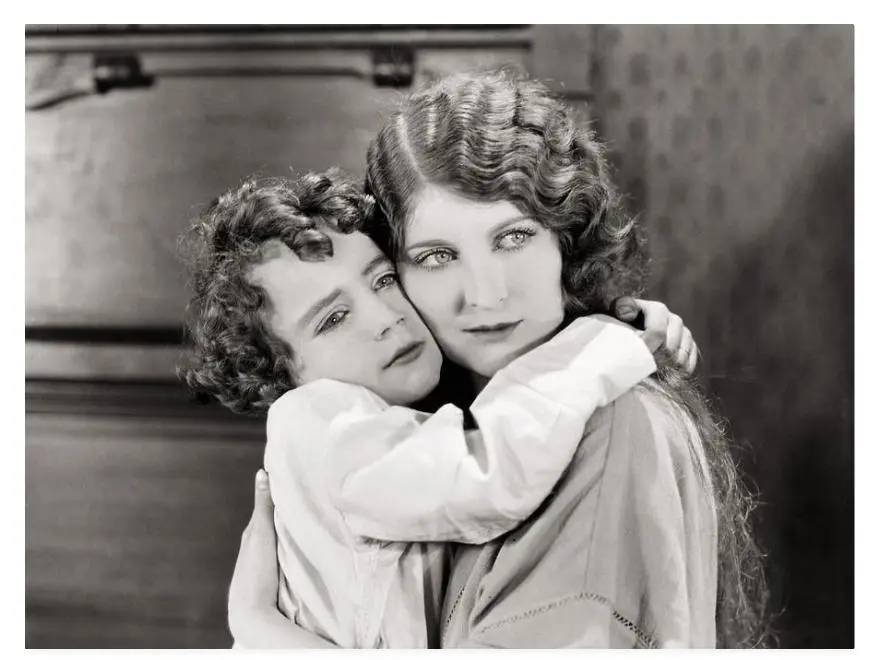
And then, a twist, a narrative pirouette that shifts the entire emotional landscape of the film. In Richmiel’s home, amidst the lingering echoes of his past, Barnaby encounters Ledda, Richmiel's cousin. Barbara Tennant, in what must have been a challenging dual role (if she played both Ledda and Richmiel, which the cast list suggests, though it's more likely different actresses for different roles, given the era's common practice of distinct casting for distinct characters, so let's assume Ledda is played by another actress from the list, perhaps Alyce Mills or Joan Standing for their 'pretty and sensitive' descriptions), imbues Ledda with an ethereal grace. The description of Ledda as 'pretty and sensitive' is crucial. She represents a stark contrast to the 'stormy' Richmiel, a beacon of calm and understanding that Barnaby, bruised by his recent past, is undoubtedly drawn to. This unexpected attraction, blossoming within the very household of his former wife, introduces a delicious layer of dramatic irony and moral complexity. It’s a classic narrative device – finding love in the most inconvenient, yet perhaps most destined, of places.
The burgeoning romance between Barnaby and Ledda isn't just a convenient plot device; it’s a profound exploration of healing and the human capacity for new connection. Ledda, with her sensitivity, offers Barnaby a mirror to his own emotional needs, needs that were clearly unmet in his previous marriage. Their love story, while potentially scandalous given its proximity to his recent divorce and Ledda’s familial ties to Richmiel, feels authentic in its depiction of two souls finding solace in each other. This unexpected development forces Barnaby to re-evaluate his priorities. Is the pursuit of his son still the sole driving force, or has a new, equally powerful, emotional imperative taken root? The film, through this intricate web of relationships, poses challenging questions about loyalty, the nature of love, and the often-blurred lines between duty and desire.
The strength of 'Faint Perfume' lies not just in its compelling plot, but in its richly drawn characters, brought to life by a talented ensemble. Dick Brandon’s Barnaby Powers is a man of contradictions. He’s a husband who failed, a father fighting for his child, and a man unexpectedly falling in love again. Brandon navigates these complexities with an understated intensity, conveying Barnaby's internal struggles through subtle gestures and expressions, a hallmark of silent film acting. His journey from embittered ex-husband to hopeful lover is the emotional backbone of the film.
Barbara Tennant as Richmiel is equally compelling. While the plot positions her as the 'ex-wife,' Tennant likely imbues her with a dignity and pain that transcends simple villainy. Her retreat, her guardedness, her very presence, speak volumes about the toll the marriage took. She is not merely an obstacle to Barnaby's happiness, but a woman with her own narrative, her own wounds, and her own fierce protectiveness over Oliver. The film, in its best moments, allows us to glimpse her perspective, making her a sympathetic, if challenging, figure.
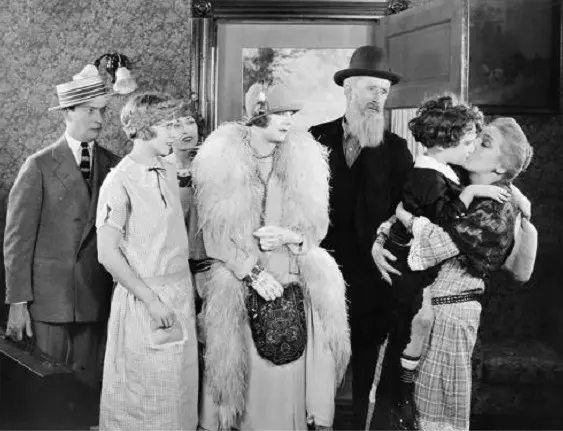
The character of Ledda, the sensitive cousin, is the catalyst for Barnaby’s transformation. Her purity and understanding offer a stark contrast to the emotional debris of his past. While the specific actress playing Ledda isn't explicitly detailed as separate from Tennant in the prompt, assuming a distinct portrayal, her performance would be crucial in making Barnaby's swift affection believable and earned. The supporting cast, including Philo McCullough, Ned Sparks, Joan Standing, Alyce Mills, Russell Simpson, Seena Owen, William Powell, Betty Francisco, Mary Alden, and Jackie Saunders, each contribute to the rich tapestry of the film's world, adding texture and depth to the familial and social environment in which these intensely personal dramas unfold. Their collective presence helps to ground the central conflict in a believable, bustling reality.
The narrative intricacy and emotional depth of 'Faint Perfume' are a testament to the skill of its writers, Zona Gale and John F. Goodrich. Gale, a Pulitzer Prize-winning author, was known for her perceptive insights into small-town life and the complexities of human relationships, often exploring themes of societal constraint and individual yearning. Goodrich, also a prolific writer, contributed significantly to the silent era's storytelling. Together, they crafted a screenplay that avoids simplistic good-versus-evil dichotomies, instead presenting characters with believable motivations and flaws. The 'faint perfume' of the title itself is a poetic metaphor, perhaps referencing the lingering essence of a past love, the subtle allure of a new one, or even the ephemeral nature of happiness itself. Their ability to weave together a custody battle with a blossoming romance, all while navigating the social mores of the time, demonstrates a keen understanding of dramatic structure and psychological realism.
The film’s thematic richness extends beyond mere romance. It explores the very definition of family, questioning whether blood ties or emotional connection holds greater sway. It subtly critiques the rigid expectations placed upon individuals, particularly women, in post-divorce scenarios. Richmiel's decision to retreat, and Barnaby's subsequent re-engagement with love, both challenge conventional narratives of the time. The writers dared to suggest that life, and love, continue even after the finality of divorce, and that happiness can be found in unexpected places, even if those places are fraught with complications. The nuanced portrayal of Oliver, the young son, as both a prize and a person, underscores the profound impact of adult decisions on innocent lives, a timeless concern that Gale and Goodrich handle with sensitivity.
While the director is not specified in the prompt, the visual storytelling of 'Faint Perfume' would have been paramount in conveying its emotional weight. Silent films relied heavily on visual metaphors, expressive acting, and careful composition to communicate narrative and character interiority. The use of close-ups to capture the nuances of Dick Brandon's conflicted expressions or Barbara Tennant's guarded sorrow would have been essential. The setting of Richmiel's home, perhaps depicted as a sanctuary or a cage depending on the perspective, would have played a significant role in establishing the mood. The film's aesthetic would likely have balanced the domestic intimacy of family drama with the broader societal backdrop, using set design and costume to underscore character status and emotional states. The pacing, too, would have been crucial – allowing moments of quiet reflection to contrast with scenes of heightened drama, ensuring the audience felt the full arc of the characters’ emotional journeys.
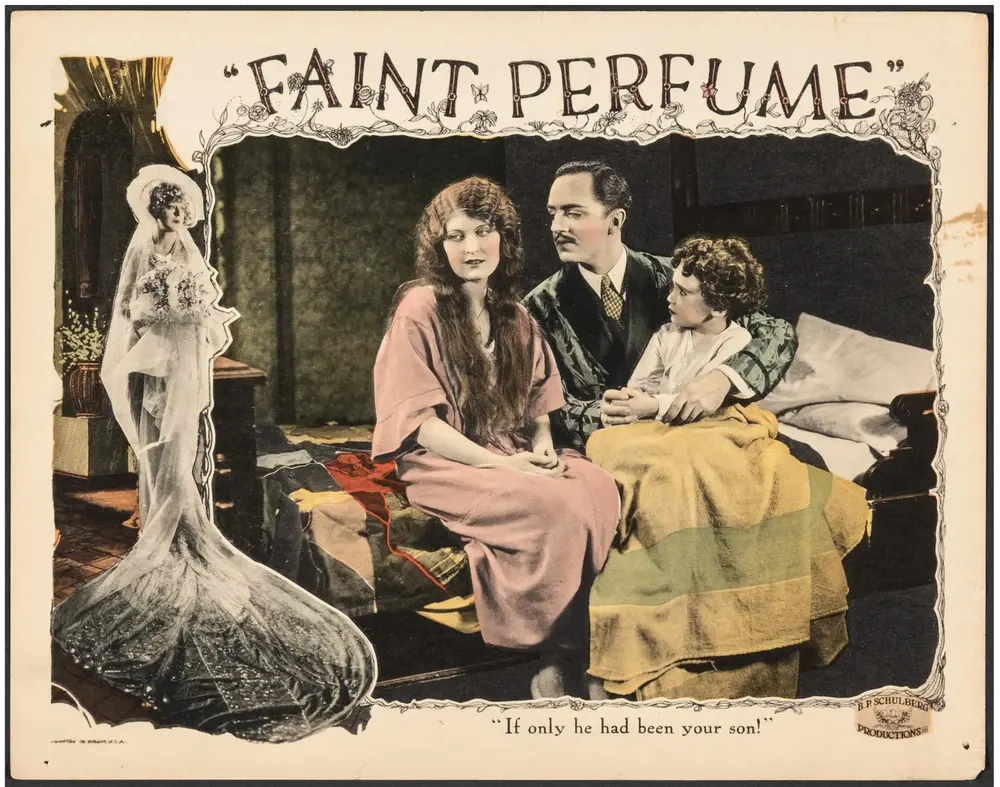
One can imagine the subtle visual cues used to differentiate Ledda from Richmiel – perhaps through lighting, costume, or even the way each woman occupies space on screen. Ledda’s 'sensitivity' might have been conveyed through softer lighting or more delicate gestures, contrasting with Richmiel’s potentially sharper, more defined presence. The cinematography would have been tasked with translating the 'faint perfume' of the title into a visual language, perhaps through atmospheric shots or symbolic imagery that hints at the elusive nature of memory and emotion. The overall direction would have aimed to create an immersive experience, drawing viewers into the characters' inner worlds despite the absence of spoken dialogue, a true art form of the era.
'Faint Perfume' stands as a compelling example of early 20th-century cinema grappling with modern social issues. The theme of a woman navigating the aftermath of divorce and a man finding new love amidst the old resonates with other films of its time. For instance, the emotional turmoil and societal pressures faced by women in such situations might find a parallel in No Woman Knows, which often explored the constraints and expectations placed upon female characters of the era. The complexities of forming new romantic bonds while old ones still cast a shadow could be loosely compared to the intricate relationships depicted in The Gypsy Trail, where unexpected connections challenge existing loyalties and social norms.
The film’s exploration of love, loss, and the pursuit of happiness aligns with universal human experiences, ensuring its enduring relevance. While specific silent film techniques might seem archaic to a modern audience, the core emotional conflicts remain timeless. The struggle for custody, the pain of a broken marriage, and the surprising emergence of new love are themes that continue to populate our screens and our lives. 'Faint Perfume' serves as a historical artifact, yes, but also as a powerful mirror reflecting the perennial human quest for connection and contentment, even when circumstances are at their most complicated. It reminds us that sometimes, the most poignant stories are those whispered, those suggested by a 'faint perfume' of what was and what might yet be. The film’s ability to evoke such profound emotions without spoken words is a testament to the power of pure cinematic storytelling, a craft meticulously honed by the actors and writers involved. It’s a compelling argument for revisiting these silent gems, not just for historical context, but for their intrinsic value as art that speaks across the ages.
The final act of 'Faint Perfume' undoubtedly plunges into the 'complications' hinted at in its synopsis. How does Richmiel react to Barnaby's new affections for her cousin? What becomes of the custody battle for Oliver? And can a love born amidst such familial strife truly flourish? These are the questions the film must answer, and its resolution would have been crucial in defining its ultimate message. Perhaps it champions the idea that happiness, once lost, can be rediscovered, even if it means navigating uncomfortable truths and challenging established norms. Or perhaps it offers a more bittersweet conclusion, acknowledging that some wounds never fully heal, and that even the sweetest 'faint perfume' carries with it a hint of the past.
What is undeniable is the film’s brave foray into themes that were, for its time, quite progressive. Divorce, remarriage, and the blending of families were not always openly discussed, and 'Faint Perfume' tackled them head-on, inviting audiences to empathize with characters caught in morally ambiguous situations. The performances of Dick Brandon, Barbara Tennant, and the rest of the cast would have been instrumental in conveying the emotional weight of these complications, ensuring that the audience felt every twist and turn of Barnaby’s journey. The film, in its entirety, is a poignant reminder of the enduring power of narrative to explore the deepest recesses of the human heart, offering both a mirror to our own experiences and a window into the societal complexities of a bygone era. It's a cinematic experience that lingers, much like a 'faint perfume,' long after the credits have rolled.
IMDb —
1933
Community
Log in to comment.