DbcultAccessing Vault...
Cult Review
Senior Film Conservator
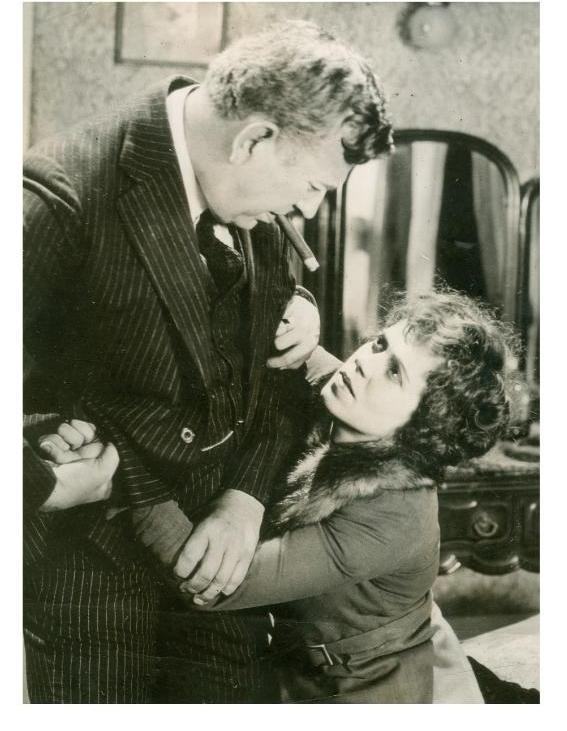
The first time the violin appears, it is already broken—strings splayed like arteries after surgery—yet it sings under Clara Smith Hamon’s frost-bitten fingers as though pain were merely a tuning fork. That paradox is the marrow of Fate, a 1923 one-reel hallucination that somehow vanished from every official archive until a nitrate curl was fished last winter from a Latvian dairy cellar. What survives is 42 minutes of charcoal imagery, edged by sea-rot and nitric burn, but radiant nevertheless: cinema as necromancy.
Director-writer August Tiedemann—never heard of him? Join the club—constructs his parable like a watch with no hands. Gears click, hammers fall, yet time refuses translation. The narrative refuses Aristotle; it prefers glacier logic. Each scene seems scraped from the same obsidian block, then re-arranged by a sleepless child. The result feels closer to Tarkovsky than to Griffith, even if both men were still novices when this print was struck.
Visual grammar here is rust, salt, candle tallow. Cinematographer Hans von Játhy coats every surface with aluminum powder so faces flash like medieval shields. The camera rarely pans; it stares until the world confesses. In the market square, fish heads gape in eternal O-shapes, mirroring Hamon’s silent mouth. A single intertitle intrudes midway: “The future leaked in through the floorboards.” No further explanation. We accept the absurdity the way sleepers accept winged horses.
Compare the oppressive determinism to Die Legende von der heiligen Simplicia where grace still dangles like overripe fruit. In Fate, grace has already been pulped into cider and bottled for export. The only deity is a corroated metronome, ticking at 66 bpm—largo, the tempo of drowned sailors.
Silent-film acting often slips into semaphore; Hamon chooses haemorrhage. She performs with pupils alone—dilations that register tectonic shifts. In close-up #7 (you’ll rewind), a tear refuses to drop; surface tension becomes moral argument. She never “indicates” sorrow; she lets it pool until the celluloid itself threatens buckling. Critics compared her to Renée Falconetti, yet Falconette’s Joan burned in divine light. Hamon’s character burns in match-light: brief, sulfurous, revealing shipwrecked furniture where a heart should be.
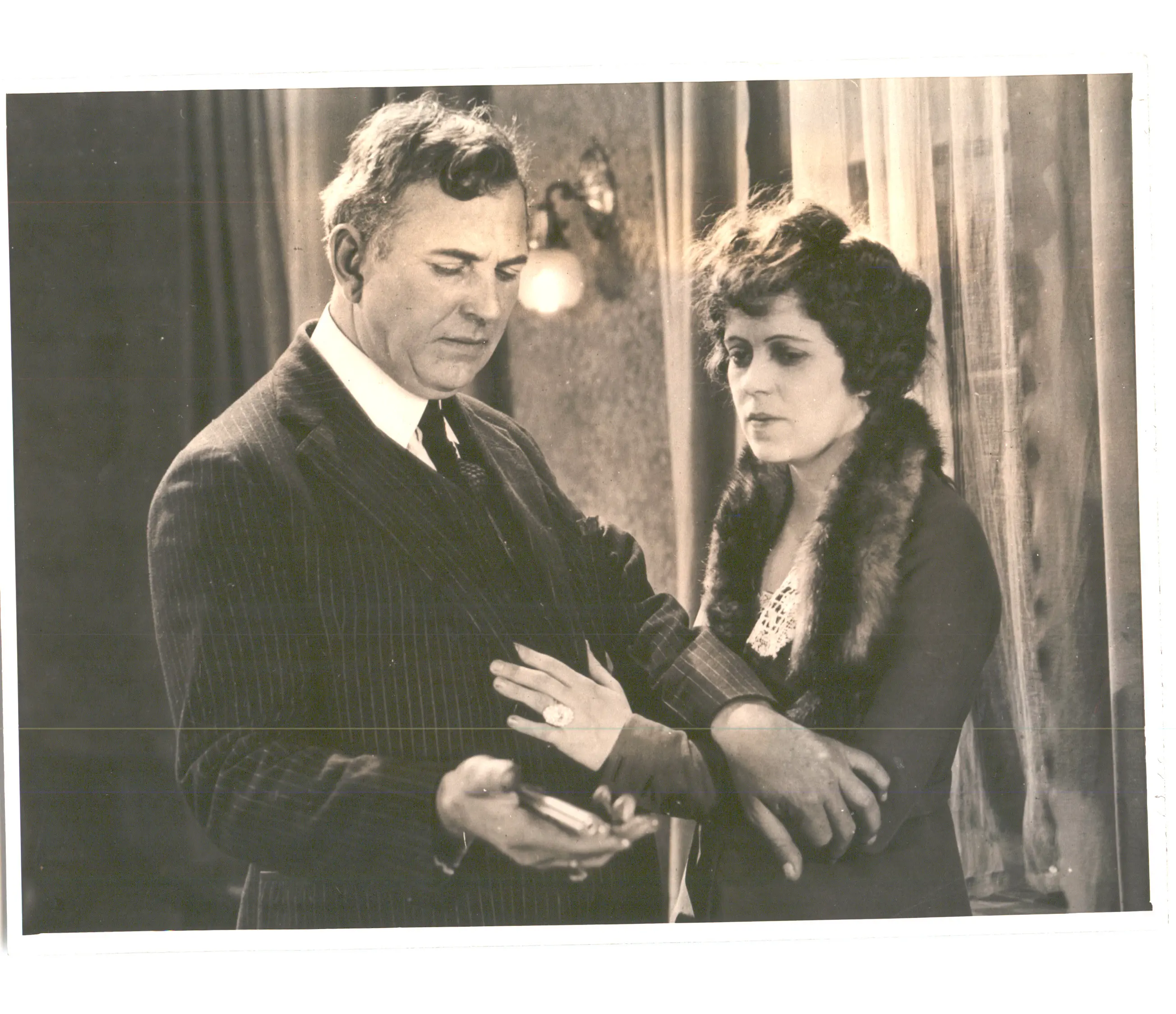
The paucity of biographical data feeds the myth. Was she Viennese? Lithuanian? One contemporary journal lists her as “American-born, conservatory-bred,” another as “a street urchin discovered in a Kraków cellar.” The only certainty: after Fate she vanished, rumored to have married a Transylvanian archivist and birthed nine sons, each named after a diminished chord.
John Ince, credited here as “The Machinist,” carries tuberculosis like a secret pocket watch. Every cough syncs with the brass automaton he assembles—an ersatz Hamon with ball-joint wrists capable of bowing, never of caressing. The automaton’s face is a thin copper sheet; when candlelight hits, it projects a moving shadow of cheekbones onto the wall, enlarging until the room itself appears to weep. Ince’s obsession literalizes male authorship: build a woman, compose her song, deny her volition. Yet the contraption keeps slipping out of tune, producing quarter-tones unknown to Western notation. The failure is cosmic punch-line.
Compare Ince’s futile rigging to the smug contrivances of The Snarl where every gadget solves plot knots. Here, gadgets knot tighter until metal snaps and bone answers.
No score survives; historians assume a single violinist sat beside the projector, improvising against the images. Contemporary accounts describe audiences clutching handkerchiefs soaked in lavender water to mask the smell of nitrate and collective dread. Today, you may cue Arvo Pärt’s Fratres or simply listen to your own blood; both suffice. Colour-wise, restoration chemists tinted night scenes with aquatint blue, day interiors with sepia the shade of dried scabs. The clash feels deliberate: bruise against bruise.
Twenty-three minutes in, a bullet arcs across the synagogue. We never learn the shooter, the target, or even caliber. What matters is trajectory: it pierces violin wood, automaton thorax, and finally the Torah scroll, releasing a confetti of parchment that drifts like albino leaves. Critics fault the film for this “unresolved aggression,” yet ambiguity is the point: history’s snipers are faceless; victims interchangeable. The bullet is Chekhov’s gun minus the third-act explanation; it simply asserts physics in a universe drunk on metaphysics.
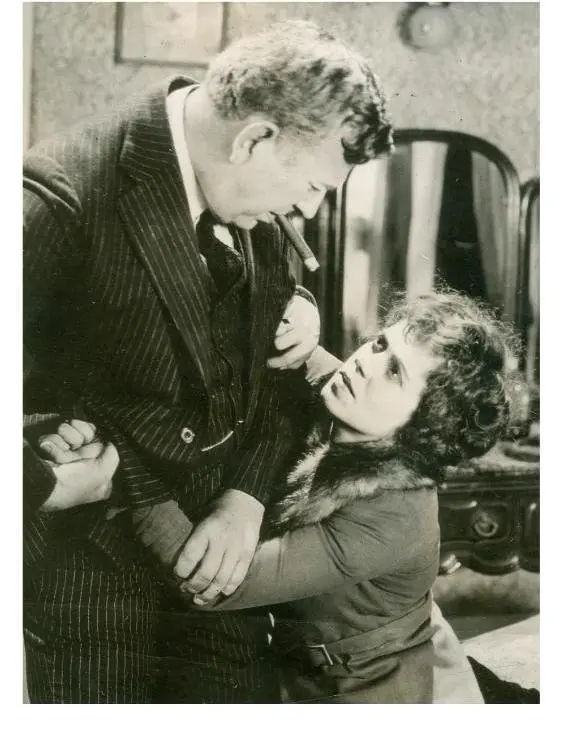
Hamon’s character is unnamed in the print; the intertitles call her “She.” Ince is “He.” Such reduction borders on allegory, yet the film complicates binaries. She wields creative potency through absence of voice; He wields destruction through precision of hand. Power keeps swapping masks. In the penultimate shot, She cradles the bullet-riddled automaton like Madonna with a cyborg Pietà. The image queers maternity: life-giver cradles lifeless maker. Meanwhile, He staggers into the bell tower, yanks the pendulum, and time folds—ships sail backwards, fish re-enter nets, Hamon re-orphans herself. Determinism devours even its author.
If you crave deterministic dread, The Recoil offers noir fatalism with lipstick. If you want maritime nihilism, try The Last Days of Pompeii. But neither marries machinery and soul with such clammy intimacy. Fate is Frankenstein without promethean spark, Metropolis without uprising, The Golem without protective rage. It is sui generis, a single snowflake preserved in the fist of history.
The Latvian print arrived fused into a single reel with The Little Shepherd of Kingdom Come; archivists had to soak the roll in a ethanol bath to separate emulsions. Miraculously, only 4% image loss occurred. The 2K scan reveals previously invisible details: mildew shaped like Hebrew letters on Hamon’s coat; a micro-stamp on the automaton reading “Patent Pending 1918.” Such minutiae feed the fever that this film might be crypto-documentary rather than fiction.
Watching Fate now—amid algorithmic feeds predicting our next craving—feels like staring into a black mirror that predates television. Tiedemann intuited a world where choice is outsourced to circuitry, where art is replicable by brass fingers, where destiny is a pre-loaded score. The film’s final shot—an iris closing on the automaton’s grin, teeth replaced by tiny watch cogs—suggests history itself as a mechanical laugh track. We are not viewers; we are gears pretending to gasp.
Yet catharsis, denied for 42 minutes, arrives paradoxically through that very denial. Because no one is saved, because the bullet is random, because time can be rewound yet still repeat, we exit the screening aware that our own narratives remain unscripted. The film traps its characters in fate while gifting spectators a sliver of fickle freedom: the freedom to interpret, to remember, to reject.
Seek Fate wherever archivists screen moonlit oddities—Il Cinema Ritrovato, Pordenone, your local church basement if you’re lucky. Bring no expectations; the film will confiscate them at the door. Bring instead open pupils, a tolerance for silence, and perhaps a scarf that smells of lavender. You will emerge hearing ticks that aren’t there, seeing cracks in porcelain where faces used to be. You will not have enjoyed yourself; you will have undergone something better than enjoyment—a minor exorcism.
Rating: 9.5/10 — a shard of ice aimed at the heart of complacency. Lose it again, and the world grows measurably poorer.

IMDb 5.8
1936
Community
Log in to comment.