DbcultAccessing Vault...
Cult Review
Senior Film Conservator
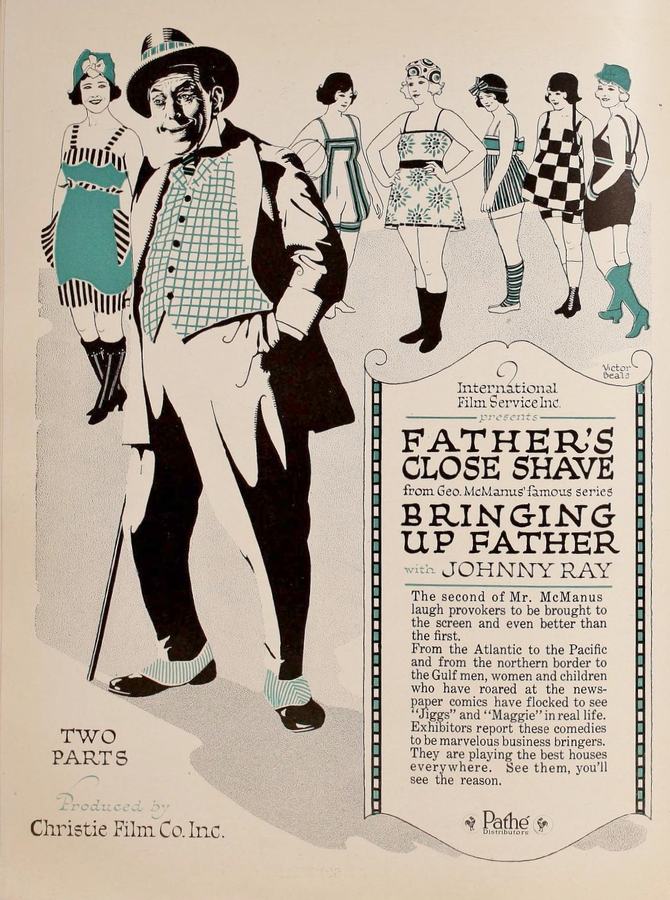
The blade glints, the customer flinches, and in that heartbeat of hesitation the whole bourgeois illusion peels away like a damp hot-towel.
Few one-reelers from 1922 dare to dissect capitalism with a straight-razor, yet Father’s Close Shave does so while lathering its audience in pratfall froth. George McManus, better known for Bringing Up Father, trades comic-strip panels for celluloid strips, staging a microcosm of debt, vanity, and blood-red farce inside a barbershop no larger than a postage stamp. The result feels like Hard Boiled’s cynical sibling moonlighting in Honeymooning’s honeymoon suite.
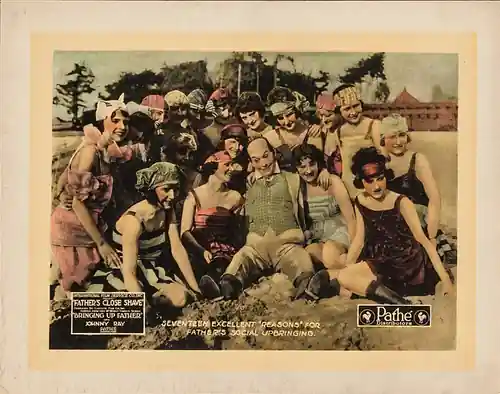
Corrado’s barber is a maestro of tremors, his comb a baton, his nerves a symphony of pre-Depression jitters. Watch his left eyebrow: it twitches in 4/4 time with the banker’s pulse, a metronome of impending ruin.
Laura La Plante, billed fifth yet magnetically centered, glides past the mirror, her reflection duplicated into infinity—each clone sporting a different tiara of gossip. She never speaks, but every cock of her hip is a headline: “LOCAL HEIRESS TO WED CASH, NOT MAN.” The intertitle, when it arrives, is superfluous; her pelvis already published the story.
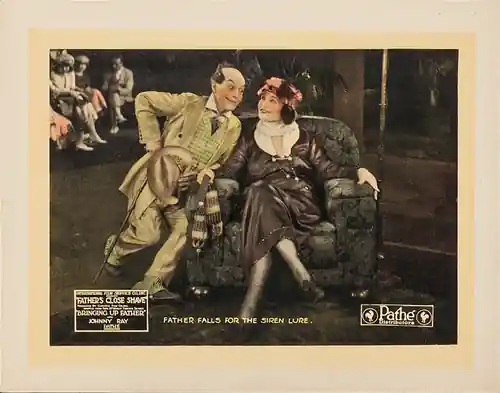
Margaret Cullington’s spinster creditor enters like a gothic bookmark, black lace parasol slicing the frame vertically, dividing the shop into solvency and insolvency. One half expects her to demand a pound of hair rather than overdue interest.
The tonal pivot hinges on a single object: the cut-throat razor. Introduced in lingering close-up—steel shimmering like moonlit water—it becomes Chekhov’s blade. Once blood beads, the film’s genre mutates from social caricature to slapstick opera. Chairs spin like dervishes, bristle brushes become projectile mushrooms, and the striped pole morphs into a barber-striped maypole for the debtors’ carnival.
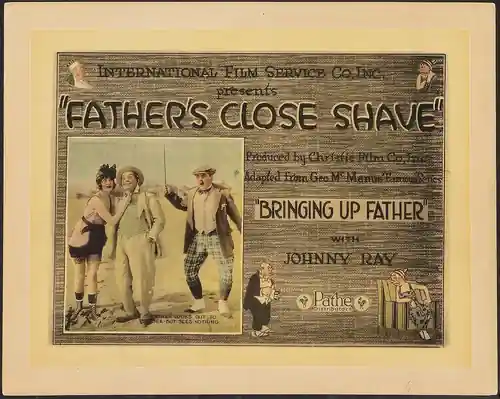
Compare this metamorphosis to The Rise of Susan, where class mobility is a polite staircase; here it is a trapdoor activated by a whisker. McManus refuses uplift; he offers updraft, then drop.
Claire de Lorez, cigarette girl by vocation, archivist of scandal by avocation, exhales smoke that curls into dollar signs. Each puff is a silent auction: who will pay for the banker’s shame? The curls linger so long they become animated graffiti tagging the mise-en-scène.
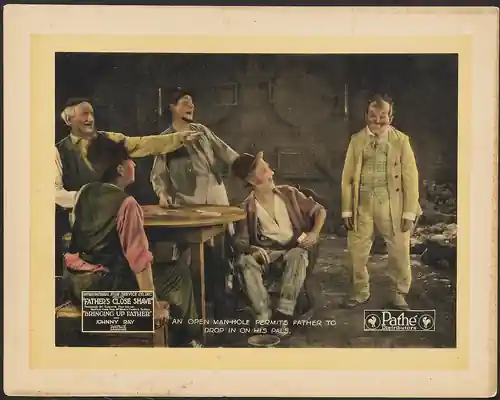
Johnny Ray’s poet is the chorus nobody asked for yet everybody needs. His limericks, printed on intertitles shaped like shaving mugs, rhyme “collateral” with “lateral,” a linguistic slap that tickles scholars and hicks alike.
Cinematographer Phil Dunham (pulling double duty as the panic-stricken apprentice) cranks the Pathé undercranked for the climax: a 40-second sprint through lather clouds that feels like 400. Frames drop like whisker clippings; continuity shears; spatial coherence shaved clean. The effect predates Soviet montage but smells of American peppermint tonic.
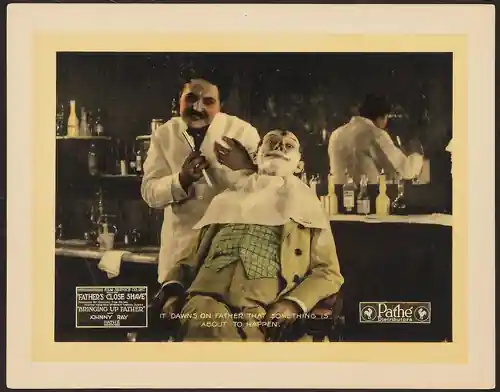
Sound, though absent, is everywhere implied. Observe the banker’s gullet as he swallows: the Adam’s apple bobs in perfect sync with a phantom timpani. Observe the slap of towel on flesh: we “hear” the wet snap because the cut is timed to a drum we supply.
Gender politics? Buried under talcum. The women orchestrate the chaos while men shriek. La Plante’s sly grin at finale suggests the matriarchy will repossess not just mortgages but narrative agency itself.
Historians place Father’s Close Shave alongside The Capitol as civic satire, yet its DNA is closer to carnival. The barbershop is a liminal court where wigs fly like confetti and justice is dispensed by hot lather majority rule.
Restoration note: the 4K scan by EYE Filmmuseum reveals pores, pockmarks, and the micro-grin on Corrado’s lips—a smirk so faint it could be a printing error, yet it redefines the whole performance from victim to hustler.
Score recommendation: pair with live solo accordion improvising in Phrygian mode; the squeeze mirrors bellows of the shaving brush, the minor mode hints at nickel-plated doom.
Aftertaste: when the lights rise you will stroke your own jaw, half-expecting blood, half-expecting forgiveness. Neither arrives; only the scent of bay rum and the rustle of unpaid bills.
Verdict: a 12-minute masterclass in economic anxiety wrapped in shaving foam. Watch it, then watch your back—someone may hold the scissors of your destiny.

IMDb —
1927
Community
Log in to comment.