DbcultAccessing Vault...
Cult Review
Senior Film Conservator
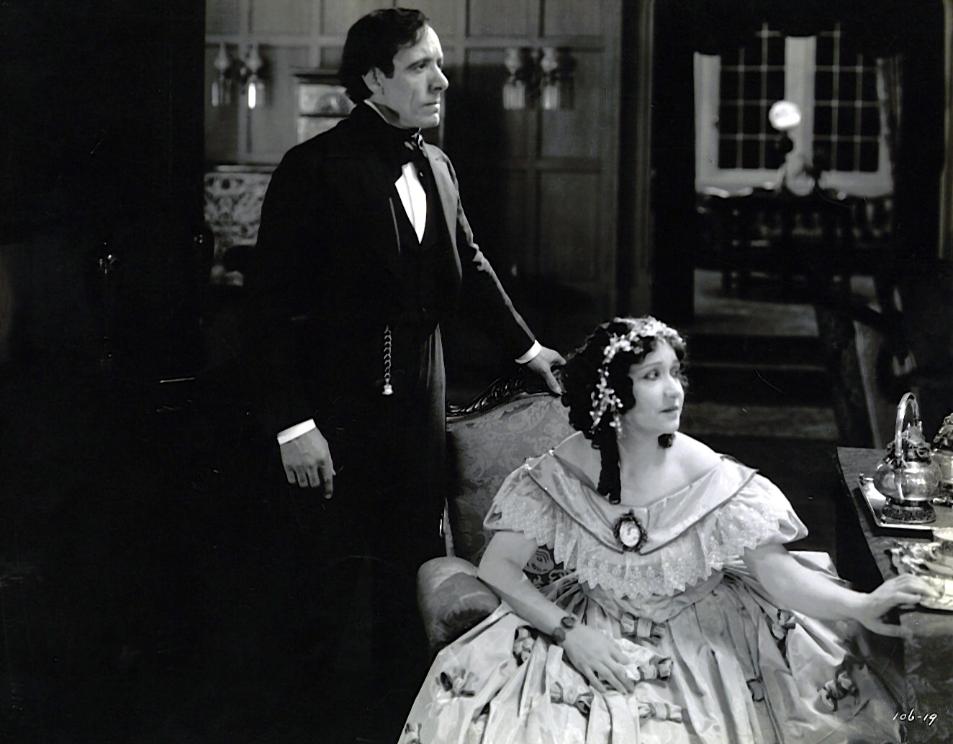
Picture the celluloid unfurling like a soot-laden sail: Milestones, that unjustly neglected 1920 masterwork, charts three generations of lovers who thrash against the tidal bore of technological determinism. Boyd Irwin’s granite-jawed Richard Sibley anchors the first act, a man whose sinewy hands smell of pine tar yet whose mind calcifies into an obelisk of refusal. Directors Edward Knoblock and Arnold Bennett (the latter already famed for trenchant social novels) splice maritime iconography with domestic barricades; each frame creaks with the torque of epochs colliding.
From its inaugural tableau—the launching of an iron freighter, ribbons of sparks pirouetting into night fog—cinematographer Hal Young (uncredited yet visionary) contrasts warm tungsten interiors of shipwright lodges with the cold magnesium glare of foundries. Note the tactile obsession: wood-shavings swirl like amber snow across the lens, only to be supplanted, decades later, by soot that freckles Muriel’s bridal veil. That visual motif—organic debris morphing into industrial fallout—renders history as something you can choke on.
Carroll Fleming’s Rose peers at blueprints as if they were occult runes, her pupils dilating with the erotic charge of possibility. Lewis Stone’s John Rhead, pre-1920 matinée idol in the making, responds with the fervour of a man translating Shakespeare into slide-rules. Their clandestine embrace inside the half-fuselaged hull of a steamship stages one of silent cinema’s most poetic unions: two silhouettes framed by rivet-holes that prick moonlight into constellations of hope.
Cut to 1885: parlours now drip with gas-jets and elephant-ear ferns, while John—wealth incarnate—clutches a silver cigar cutter like a secular relic. The film’s irony scalds; our former insurgent has ossified into the very patriarch he once bolted from. Gertrude (a flinty, scene-devouring performance by Alice Hollister) haunts these gilded chambers like a Fury in bombazine. She utters no dialogue cards yet her spine, ramrod straight with contempt, articulates volumes about spinsterhood as armed resistance.
Mary Alden’s Emily, porcelain yet quietly volcanic, endures a wedding gown sequence worthy of a Sargent portrait—layers of Brussels lace weighing heavier than anchor-chain. Notice how intertitles shrink, as though language itself were stifled by ceremonial hypocrisy. The camera, once restless, now glides with funereal deliberation, tracking Emily’s veil as it drifts across polished parquet like a shroud of relinquished autonomy.
Whereas many silents collapse chronology with a blunt title card, Milestones innovates via superimposed dissolves: shipyard cranes dissolve into telegraph wires, then into the girders of Brooklyn bridges. The edit becomes historiography, suggesting that progress is not sequential but sedimentary—each stratum crushing the last. Knoblock’s montage predates both Eisenstein and Ruttmann, yet remains intimate, tethered to bloodlines rather than dialectics.
Correan Kirkham’s Muriel, flapper before the term existed, careers across the final act in a Stutz Bearcat, scarf whipping like a battle standard. Her courtship with Richard Jr. (Jack Donovan, equal parts engineer and poet) crackles with egalitarian banter conveyed via lightning-quick gesture: a shared wrench, a swapped book of Blake verses, a race along breakwater steps. Their elopement—shot in low-angle against scudding clouds—feels less romantic than apotheotic: the combustion engine as Cupid.
Because the film is silent, the clang of metal, the sough of surf, the rustle of crinoline must exist in your cranial Foley studio. The absence of diegetic noise paradoxically amplifies emotional volume; you hear Gertrude’s umbrella rap on parquet as if it were a war-drum, hear Monkhurst’s death-rattle though no phonograph provides it. Milestones thus weaponises silence, turning viewers into co-authors of an imagined soundtrack.
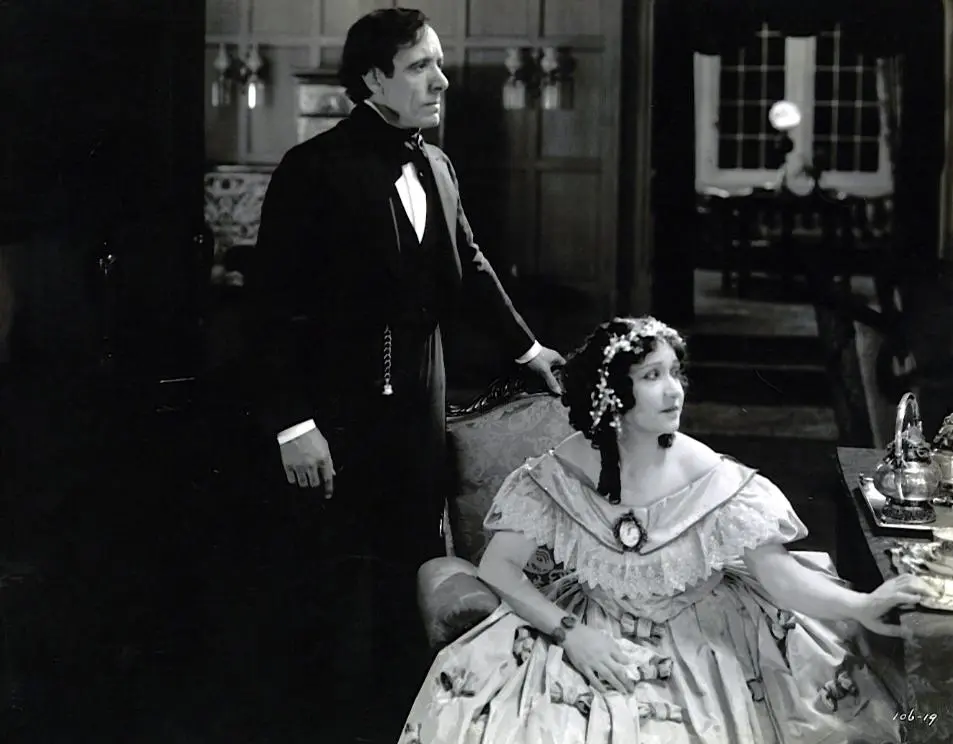
Restoration prints occasionally tint scenes: candle-lit parlours ooze amber, night exteriors glimmer cerulean. These chromatic interventions, far from gimmicky, externalise thematic temperature. Note the sulphurous yellow that stains the frame when John signs Emily’s dowry contract—jaundice of conscience made visible. Conversely, Muriel’s final kiss blooms under a robin-egg horizon, signalling not closure but cyclical renewal.
Unlike the serial derring-do of The Flaming Disc or the occult seductions of The Witch Woman, this film concerns the slow magma of social change. Its structural triptych echoes Bennett’s own 1912 play, yet the celluloid iteration injects maritime fatalism reminiscent of The Firm of Girdlestone. Meanwhile, the feminist through-line—Gertrude’s lifelong recalcitrance, Emily’s quiet martyrdom, Muriel’s blaze of autonomy—anticipates the gendered revolts in A Wife’s Sacrifice and The Married Virgin.
Boyd Irwin’s gait undergoes a chilling metamorphosis: in 1860 he strides like a man driving wooden trunnels into live oak; by 1885 his footsteps hesitate, as though the carpet conceals abysses. Lewis Stone, later famed for dignified patriarchs in talkies, here essays a fall from radical grace, letting his eyes petrify by gradations. Yet the revelation is Alice Hollister: her Gertrude ages not via wrinkled crepe but via micro-gestures—fingers drumming a waltz only she hears, the way her mouth pinches as if every breath smells of funeral lilies. She is the film’s moral tuning fork.
Edward Knoblock supplies theatrical spine; Arnold Bennett injects sardonic humanism; Louis Sherwin polishes intertitles to haiku-like brevity. The synthesis yields lines such as: “Iron lasts—wood rots—so too the heart that will not bend.” One might accuse the maxim of overt symbolism, yet within the film’s mythic register it reverberates like a death knell.
Released months after women gained suffrage in the U.S., the picture weaponises historical parallelism: Muriel’s triumph refracts contemporary exhilaration while hinting that legal enfranchisement is but prologue to intimate emancipation. Today, amid debates on AI displacing artisans, the film’s Luddite dilemma resurfaces; we are all Sibleys clutching splintered code while neural networks loom like ironclads on the horizon.
A 4K restoration premiered at Pordenone 2019, reconstructed from a Czech nitrate print and a paper-roll at Cinémathèque Française. Unfortunately, no domestic Blu-ray exists stateside; streamers shuffle low-grade transfers that bleach the amber night scenes into whey. Cinephiles must therefore haunt repertory houses or university archives for a glimpse of the film’s true colour palette.
Absolutely. Its triptych structure, proto-feminist spine, and tactile visual rhetoric elevate it beyond Edwardian melodrama into the pantheon of civilisation-spanning sagas. If you revere the generational sweep of Indian Life, the class critique of The Bondage of Fear, or the romantic fatalism of Pohorony Very Kholodnoi, this film will detonate your marrow. Seek it, storm the archives, petition Criterion—because cinema history, like John Rhead’s beloved steam, refuses to wait for anyone still clinging to wooden certainties.
And when you finally witness Muriel’s roadster veer toward an ember-streaked horizon, you might sense the frame wobble—not from print decay, but from the seismic shift of a century finally catching up with itself.

IMDb 5.8
1920
Community
Log in to comment.