DbcultAccessing Vault...
Cult Review
Senior Film Conservator
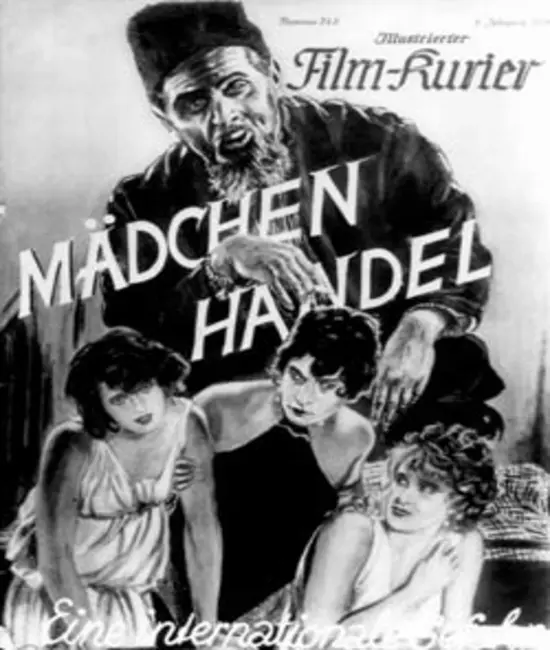
Can a century-old silent film still resonate with the raw urgency of a modern thriller? ‘Fighting the White Slave Traffic’ proves, unequivocally, that it can, offering a chilling, unvarnished look at a timeless horror that remains deeply unsettling. This film is an absolute must-see for cinephiles interested in early social dramas, the power of silent cinema to tackle grim subjects, and those seeking historical context on human rights issues. However, it is decidedly not for viewers seeking light entertainment, a neatly resolved narrative, or those sensitive to depictions of exploitation and despair.
This film works because of its unflinching gaze, the raw, almost documentary-like performances, and its bold commitment to portraying a heinous crime without sensationalism for entertainment, but rather for stark social commentary. It operates with a clear, almost didactic purpose.
This film fails because its narrative structure can feel somewhat episodic and occasionally loses focus on individual character arcs in favor of broader thematic strokes, which might frustrate modern audiences accustomed to more personal journeys. The emotional core, while present, is often subservient to the message.
You should watch it if you appreciate cinema as a tool for social awareness, are fascinated by the early 20th-century European film landscape, and are prepared for a challenging, emotionally demanding viewing experience. It demands your attention, not your comfort.
At its core, ‘Fighting the White Slave Traffic’ is a narrative of profound disillusionment. We are introduced to a young woman, fresh from Berlin, whose aspirations for a better life are cruelly co-opted. The initial allure of a job in a Budapest nightclub, painted with the false promise of glamour and opportunity, quickly dissolves into a nightmare of abduction. This isn't a story of accidental misfortune; it’s a meticulously orchestrated descent into hell, orchestrated by a network of traffickers.
The film doesn’t linger on the ‘how’ with excessive detail, but rather on the ‘what happens next’. Her journey, from the vibrant, if morally ambiguous, nightlife of Budapest to the stark, inescapable confines of an Athenian brothel, is depicted with a chilling directness. There’s no romanticization of her plight, no dramatic flourishes designed to soften the blow. Instead, the camera acts as an unblinking witness to her commodification.
What makes this plot particularly impactful is its refusal to offer easy answers or a triumphant escape. The protagonist's struggle is less about individual heroism and more about the crushing weight of systemic exploitation. The narrative functions as a stark exposé, pulling back the curtain on an ugly truth that, even a century later, feels disturbingly relevant. It’s a tragedy not of a single individual, but of a society that allows such networks to thrive.
The film's strength lies in its ability to translate a complex social issue into a visceral, if sometimes broad, cinematic experience. It aims to shock, to inform, and ultimately, to warn. The shift in locale, from the relative familiarity of Berlin to the exoticized, yet dangerous, Budapest and then the ultimate, suffocating destination of Athens, emphasizes the global reach of such criminal enterprises. It’s a geographical and psychological descent.
In a silent film, the burden of conveying emotion and character falls squarely on the actors’ physicality and facial expressions. ‘Fighting the White Slave Traffic’ features a cast that, for the most part, rises to this challenge, imbuing their roles with a stark realism that transcends the era’s often theatrical acting styles.
Mary Kid, as the unsuspecting victim, delivers a performance that is heartbreaking in its gradual erosion of hope. Her initial wide-eyed optimism in Berlin, even in the face of economic hardship, slowly gives way to confusion, then terror, and finally, a profound, weary despair. There's a particularly poignant sequence where her character, newly arrived in Budapest, attempts to navigate the unfamiliar city, her gestures conveying a vulnerability that makes her subsequent abduction all the more horrifying. It’s a masterclass in silent suffering.
Rudolf Klein-Rogge, a familiar face from German Expressionist cinema (most notably as Rotwang in Metropolis), brings a chilling, understated menace to his role as one of the traffickers. He avoids overt villainy, instead portraying a calculating, almost bureaucratic evil. His quiet intensity, often conveyed through a slight narrowing of the eyes or a subtle smirk, suggests a mind devoid of empathy, making him far more terrifying than any moustache-twirling caricature. He embodies the banality of evil.
Wera Engels and Erich Kaiser-Titz also contribute, though their roles are less central. Engels, portraying another victim or perhaps a complicit figure, adds to the ensemble of despair, her weary expressions reflecting the crushing reality of their situation. The ensemble cast, while not always given extensive individual development, collectively paints a grim picture of a society preyed upon by unseen forces. Their performances, though silent, speak volumes.
The directorial choices made by E. Sulke and Lothar Knud Frederik are crucial in establishing the film’s relentlessly somber tone. They forgo grand cinematic spectacle in favor of a more grounded, almost functional aesthetic that serves the film’s expository purpose. The cinematography, while not groundbreaking, is effective in conveying the mood and setting.
Early scenes in Berlin and Budapest utilize a relatively open, if slightly bustling, visual style. However, as the protagonist’s predicament deepens, the camera work becomes increasingly claustrophobic. We see tight framing, often trapping characters within the frame, mirroring their physical and emotional imprisonment. The transition to the Athenian brothel is marked by particularly stark, almost oppressive visuals – dimly lit interiors, heavy shadows, and a pervasive sense of confinement. This visual shift is crucial.
There's a notable sequence depicting the journey across borders, where the sense of displacement and helplessness is amplified by the anonymous settings and the protagonist's increasingly bewildered expressions. The directors effectively use cross-cutting to show the parallel lives of the traffickers and their victims, highlighting the systemic nature of the crime. The film doesn't rely on elaborate sets or special effects; its power comes from the stark reality it attempts to portray.
One particularly effective visual choice is the repeated motif of doors and gates – sometimes locked, sometimes open but leading to further entrapment. This simple visual cue reinforces the theme of freedom lost and the labyrinthine nature of the trafficking network. The film's visual language is direct, functional, and powerfully unsettling.
The pacing of ‘Fighting the White Slave Traffic’ is deliberate, almost methodical, mirroring the slow, inevitable descent of its protagonist into exploitation. There are no sudden, jarring cuts designed for cheap thrills; instead, the film builds its tension through a gradual accumulation of dread. This measured pace allows the audience to fully absorb the horror of each new stage of the young woman's ordeal.
From the initial, seemingly innocuous job offer in Berlin, through the deceptive journey to Budapest, and finally to the brutal reality of Athens, the film maintains a consistent, somber tone. It never veers into melodrama, nor does it attempt to lighten the mood with comedic relief. This unyielding seriousness is a significant strength, preventing the film from trivializing its grim subject matter. It's a heavy watch, by design.
The film’s tone is less about emotional manipulation and more about stark, almost documentary-like exposition. It feels less like a fictional drama and more like a public service announcement, albeit one delivered with cinematic artistry. The relentless nature of the narrative, where each glimmer of hope is quickly extinguished, ensures that the audience feels the crushing weight of the protagonist's situation. This unflinching approach, while challenging, is what gives the film its enduring power. It doesn't flinch, and neither should we.
The lack of a conventional hero or a clear path to justice further reinforces this tone. The film doesn't offer easy resolutions, opting instead for a portrayal of a harsh reality. This decision, while potentially frustrating for some viewers, solidifies the film’s message about the pervasive and often invisible nature of human trafficking. It’s a film that demands reflection, not just passive consumption.
Yes, ‘Fighting the White Slave Traffic’ is absolutely worth watching today. It serves as a powerful historical document, showcasing how early cinema grappled with complex social issues. Its themes of vulnerability and exploitation remain tragically relevant. The film's directness and lack of sentimentality are surprisingly modern. It is a difficult film. But it is an an important one.
One of the most compelling aspects of ‘Fighting the White Slave Traffic’ is its audacious commitment to social commentary, especially for its time. This isn't just a story; it's an urgent warning. I would argue that its bluntness, often criticized in other early social dramas, is precisely what makes this film so effective. It doesn't sugarcoat, it doesn't embellish, and it refuses to offer the audience any comfortable distance from the grim reality it portrays. This directness, which some might find simplistic, is its most potent weapon against complacency.
Furthermore, it’s a debatable point whether the film, in its efforts to expose, inadvertently sensationalizes the topic. My stance is that it largely avoids sensationalism. While the subject matter is inherently shocking, the film's measured pacing and almost clinical detachment in certain scenes prevent it from descending into exploitation itself. It’s a fine line, but one I believe the filmmakers navigated with surprising integrity. The focus remains on the systemic nature of the crime, not just individual suffering for shock value.
An unconventional observation about this film is how it portrays the traffickers not as cartoonish villains, but as almost mundane figures operating within a chillingly organized, bureaucratic system. This makes the threat feel far more insidious and real. The true horror isn't just the physical abduction, but the cold, calculated efficiency with which human lives are treated as mere commodities. It’s a stark reminder that evil often wears a business suit, not a monster's mask.
The film's enduring message is its tragic timeliness. Despite being a century old, the underlying mechanisms of human trafficking – the preying on vulnerability, the false promises, the cross-border logistics – have evolved but not disappeared. Watching this film today is a stark reminder of how little some fundamental human rights issues have changed. It forces contemporary audiences to confront uncomfortable truths about global inequalities and the dark corners of humanity.
In a world often seduced by escapism, ‘Fighting the White Slave Traffic’ stands as a stark, unyielding testament to cinema’s power as a mirror to society’s darkest corners. It is not an easy watch, nor is it designed to be. This film is a crucial piece of cinematic history, demonstrating that even in the nascent years of the medium, filmmakers were willing to tackle the most uncomfortable truths with an admirable, almost brutal honesty. Its impact resonates far beyond its silent frames, serving as a chilling reminder of the enduring fight against human exploitation. See it, not for pleasure, but for perspective.

IMDb 6.3
1931
Community
Log in to comment.