DbcultAccessing Vault...
Cult Review
Senior Film Conservator
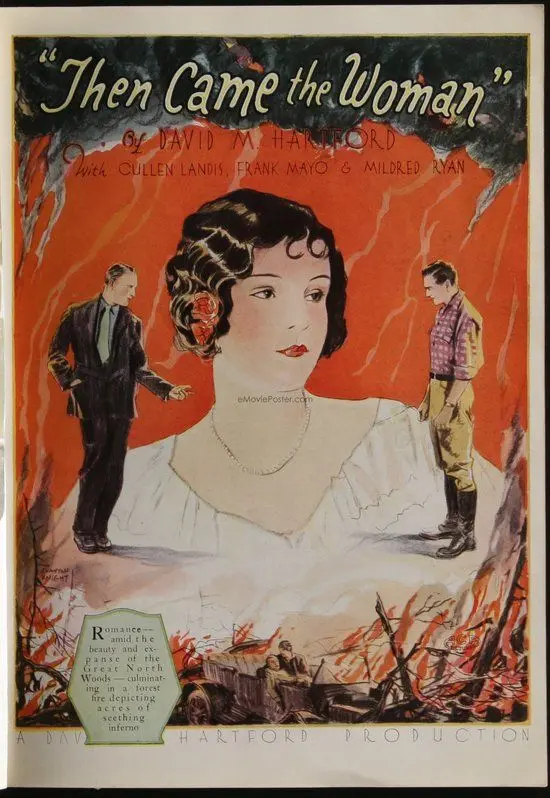
Is Then Came the Woman worth watching today? Short answer: Yes, but only if you appreciate the raw, unvarnished texture of 1920s outdoor melodrama over modern polish. This film is specifically for those who enjoy the 'man-building' narratives of the silent era and the rugged aesthetics of the High Sierra; it is definitely not for viewers who require fast-paced action or complex, three-dimensional female protagonists.
This film works because the chemistry between Cullen Landis and Frank Mayo creates a genuine emotional stakes that makes the eventual betrayal feel heavy rather than merely convenient. This film fails because the character of Mary is treated more like a trophy or a catalyst for male growth rather than a person with her own agency. You should watch it if you want to see a fascinating transition point in silent cinema where the 'rugged outdoorsman' trope was being perfected.
The opening act of the film establishes Bob Morris (Cullen Landis) as a classic archetype of 1920s anxiety: the soft son of a hard man. The scenes in the father's plant are shot with a certain rigidity that emphasizes Bob's claustrophobia. When his father hands him the check, it isn't just a gift; it's a dismissal of Bob's worth as a modern man. This setup is crucial because it mirrors the themes found in The Pinch Hitter, where the protagonist must leave the comforts of his known world to find his spine.
Landis plays Bob with a subtle desperation early on. He isn't a hero yet; he's a man who has flunked out of the life he was supposed to lead. This makes his arrival in the High Sierra feel less like an adventure and more like a desperate last stand. The contrast between his tailored suits and the jagged rocks of the Sierra is a visual shorthand for his initial inadequacy.
Director David Hartford, working from a script by Frances Nordstrom, utilizes the High Sierra not just as a pretty background, but as a character that judges the men within it. When Bob is framed by the 'tramps' and thrown into jail, the film takes a turn toward social commentary. The drifters are depicted as the antithesis of the 'honest' laborer—they are the shadows that lurk in the wilderness, preying on the weak. This framing sequence is shot with a grit that feels surprisingly modern, utilizing shadows and tight framing to emphasize Bob's isolation.
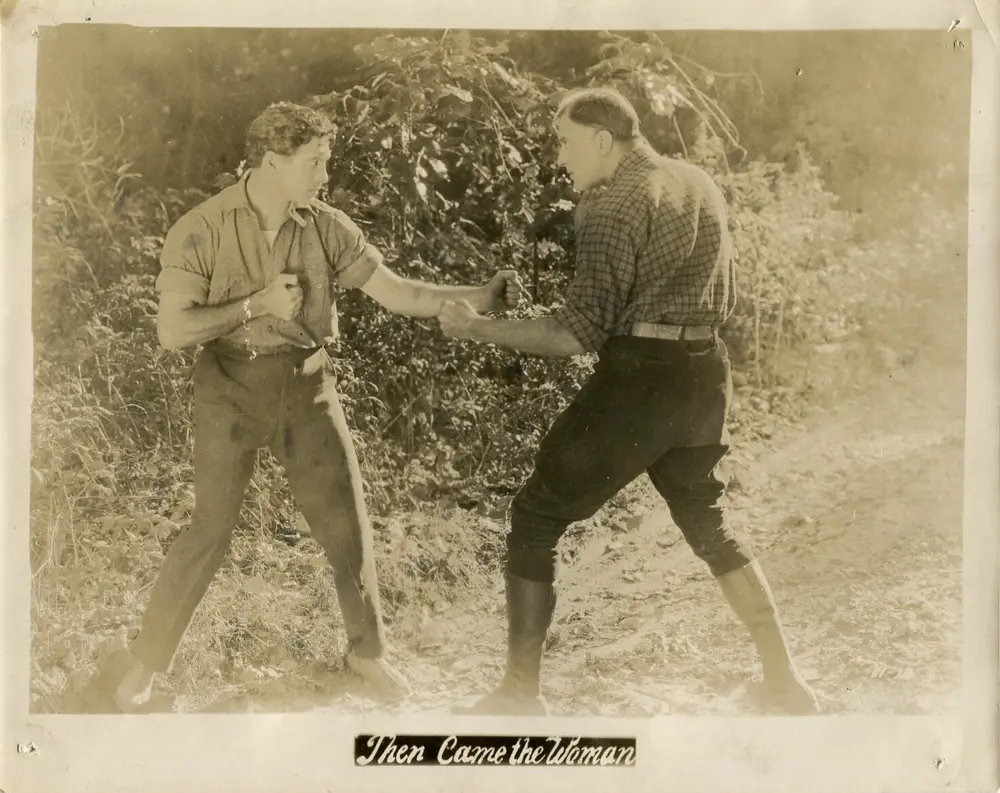
The intervention of John Hobart (Frank Mayo) introduces the film's most compelling relationship. Mayo brings a gravity to the role of the lumber camp owner. When he gets Bob out of jail, it’s not an act of charity; it’s an investment in another man’s soul. The scenes of Bob working in the lumber camp are the highlight of the film’s second act. We see the physical toll of the work—the sweat, the dirt, the genuine exertion. It’s a far cry from the stylized performances in Camille; here, the physicality is the point.
For the modern cinephile, Then Came the Woman offers a unique glimpse into the 'redemption through labor' subgenre that was popular before the Great Depression changed the American psyche. It is worth watching for the location photography alone, which captures the Sierras before they were fully tamed by tourism. The film asks a simple, direct question: What is more important—the man who saved your life or the woman who makes it worth living? While the answer might seem predictable, the journey there is filled with authentic tension.
The title itself, Then Came the Woman, suggests that the female presence is an intrusion into a functional male utopia. When Mary (Mildred Ryan) enters the frame, the visual language of the film shifts. The harsh, angular shots of the lumber camp are softened. Ryan plays Mary with a lightness that contrasts sharply with the heavy-set Mayo and the hardening Landis. However, the film falls into the trap of making Mary the prize in a contest of loyalty.
The central conflict—John's love for Mary versus Mary's preference for Bob—is handled with a surprising amount of restraint. There are no mustache-twirling villains here. Instead, we have two good men caught in an impossible situation. This reminds me of the emotional complexity found in The Lone Wolf, though the stakes here feel more grounded in the dirt and timber of real life. The moment John realizes that Mary prefers Bob is a masterclass in silent acting; Mayo’s face doesn't contort in rage, but in a slow, agonizing realization of his own age and obsolescence.
One unconventional observation about this film is how it handles class. Bob starts as an upper-class failure and only becomes a 'real man' when he joins the working class. However, the film never suggests he should stay there. There is an unspoken assumption that his time in the Sierras is a temporary purgatory meant to fix his character so he can eventually return to his rightful place. This tension between the dignity of labor and the desire for status is a recurring theme in films like The Bachelor Daddy, but here it is stripped of comedy and presented as a life-or-death struggle.
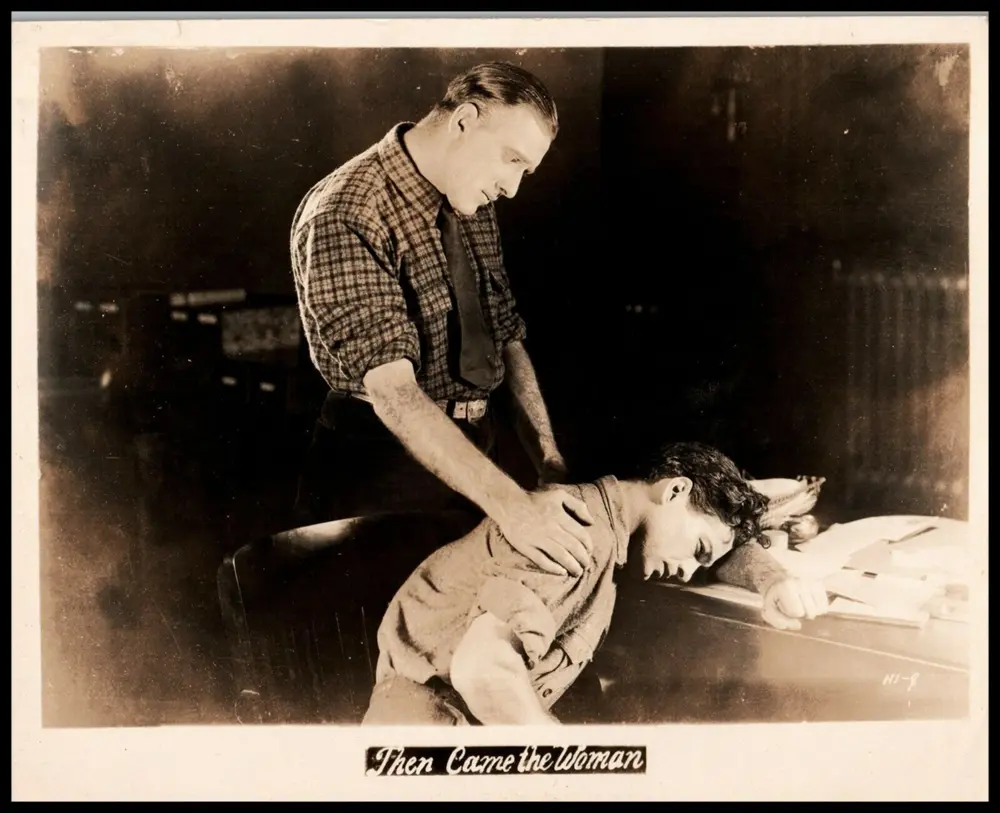
David Hartford’s direction is utilitarian but effective. He understands how to use the scale of the trees to make the human drama feel both small and significant. The pacing in the first half is excellent, though it stumbles slightly in the third act as the romantic tension takes over. The cinematography by the uncredited cameraman manages to capture the textures of the forest—the bark, the needles, the mist—in a way that feels tactile. It lacks the experimental flair of something like Der lebende Leichnam, but it gains power through its simplicity.
The editing during the 'framing' sequence is particularly noteworthy. The quick cuts between the tramps' conspiratorial whispers and Bob's oblivious wandering create a genuine sense of dread. It’s a sequence that wouldn't look out of place in a modern thriller. However, the film’s reliance on intertitles to explain emotional shifts sometimes undercuts the actors' work. We don't need a card to tell us Bob is conflicted; Landis’s eyes are doing that work for us.
Pros:
Cons:
Then Came the Woman is a sturdy, well-constructed piece of silent cinema that manages to transcend its melodramatic roots through the strength of its lead performances and its impressive location work. It works. But it’s flawed. The central conflict between Bob and John is far more interesting than the romance that triggers it. While Mary is the catalyst, the true heart of the film is the reclamation of a man's dignity through hard work and the painful realization that even the strongest friendships have a breaking point.
If you are coming from more comedic silents like The Show-Off or Molly Make-Believe, the somber tone here might be a shock. However, for those who want to see the silent screen tackle the complexities of male honor in a world that is rapidly modernizing, this is a vital watch. It captures a specific American mythos—the idea that the wilderness can fix what the city broke—and it does so with a sincerity that is hard to find in contemporary film.
IMDb 5.6
1928
Community
Log in to comment.