DbcultAccessing Vault...
Cult Review
Senior Film Conservator
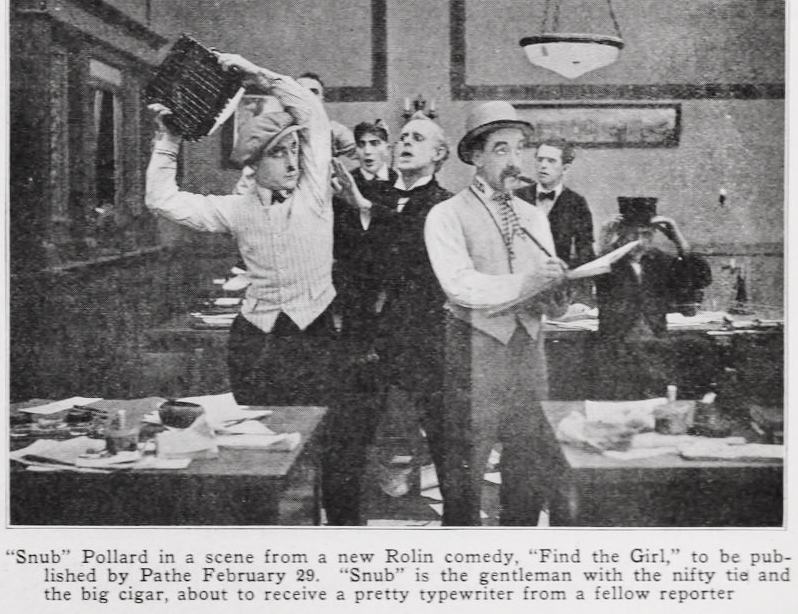
Front-page fever ignites the frame
From the first iris-in, Find the Girl detonates a kaleidoscope of newsroom hysteria—typewriter keys dance like castanets while rotogravure cylinders spin with the ominous throb of a war drum. Directors William Beaudine and Tom Buckingham understand that silence is not absence but amplification; every clack of the telegraph becomes a gunshot, every white flash of a photographer’s powder a lightning strike over 1922’s skyline. The film’s visual lexicon borrows the angular shadows of German Expressionism yet marinates them in American urban velocity, yielding chase sequences that prefigure the neurotic comedies of the ’30s while still luxuriating in the athletic slapstick DNA of Keystone.
Chiaroscuro newsprint noir
Cinematographer Fred Jackman traps smoke-hazed newsrooms in pools of tungsten gold, then flings his camera onto a fire truck racing through back-lot streets cobbled together like cubist alleyways. The tonal whiplash—ink-black satire to sun-splashed rooftop—feels less like inconsistency than the polyphonic pulse of a metropolis that never sleeps. Compare this chromatic daring to the pastoral romanticism of Under Southern Skies or the candlelit piety of The Man Without a Country; here modernity is both thrill and threat, and the camera swoons toward it like a moth to carbon-arc bulbs.
Snub Pollard: elastic Everyman
In the eye of this cyclone stands Snub Pollard, his walrus mustache twitching like a semaphore of panic. Where Harold Lloyd’s bespectacled go-getter scales buildings to assert the American will, and Buster Keaton’s stone-face confronts machinery with stoic grace, Pollard weaponizes awkwardness: knees bend backward, derby spins like a helicopter blade, limbs rebel against Cartesian logic. His rescue of Marie Mosquini’s kidnapped heiress is less heroic ingress than accidental pinball ricochet—he trips over a broom, catapults through a skylight, and lands seated beside the trussed debutante as if etiquette demanded it. The gag crystallizes the film’s thesis: institutions (press, police, high society) bungle spectacularly, but anarchic klutziness stumbles onto justice.
Mosquini’s luminous captivity
Mosquini, often relegated to decorative cameos in Hal Roach shorts, here commands the iris’ center. Bound to a papier-mâché pillar in a villain’s loft, she transforms peril into tableau vivant: eyes wide as saucers yet glinting with sardonic awareness that the narrative requires her passivity. When she finally stomps her kidnapper’s foot in high-combat heels, the gesture lands like a manifesto—damsel detonates her own distress. It’s a fleeting but electric inversion that foreshadows the proto-feminist spunk of Strictly Confidential and In the Balance.
Ensemble ink-stained eccentrics
The newsroom ensemble—Eddie Boland’s whiskey-baritone editor, Gaylord Lloyd’s cub reporter jittering on caffeine and ambition, Ernest Morrison’s copy-boy who navigates corridors via sliding on wastepaper like a skate—operates like a jazz orchestra: solos erupt, brass sections (read: gags) blare, but syncopation never collapses into cacophony. Their collective mission to "get the girl" parodies the emerging cult of sensationalist headlines, yet the film’s affection for these hacks is palpable; after all, they are the myth-makers minting celluloid legends.
Stunt alchemy sans CGI
Action escalates from newsroom to rooftop to dockside warehouse, climaxing with Pollard dangling off a fire-truck ladder that swings like a metronome above traffic. Note the practical stakes: no rear projection, no compositing—just sky, gravity, and a mattress below barely out of frame. The tension rivals the railroad thrills of The Adventures of Lieutenant Petrosino yet is played for laughs, a high-wire act where death is the straight man.
Gender & class under the laugh track
Beneath slapstick frosting lies a layer of social sponge cake. The kidnapped heiress embodies leisure-class fragility; her rescuers are working-class wordsmiths reliant on wit and speed. The film flirts with class revenge—editors outwitting tycoons, newsboys outmaneuvering goons—but resolves in centrist harmony: the paper sells, the girl returns to privilege, the status quo reset button glows. Still, the temporary inversion tastes sweet, akin to the marital comeuppance in My Husband's Other Wife or the communal solidarity of The Commuters.
Comparative canon placement
Set it beside Riders of Vengeance and you grasp the era’s tonal range: revenge western vs. urban farce, both trafficking in abduction tropes yet spinning them into disparate moral galaxies. Or weigh it against The Cook of Canyon Camp—both celebrate communal effort, though one stirs beans, the other headlines.
Pacing: sprint, not marathon
At a brisk 18-minute reel length, the film is an espresso shot—no subplot bloat, no sentimental aria—just a locomotive of gags. Contemporary comedies could learn: brevity amplifies velocity; explanation erodes magic. Even the intertitles, scrawled in jittery font, act like panel gutters in a comic strip, propelling rather than pausing momentum.
Modern screenings often slap on jaunty organ cues, but the ideal score should mirror city noise: clattering presses, police whistles, distant jazz. Silence itself becomes percussion; the audience supplies the soundtrack in coughing, gasping, thigh-slapping stereo.
Legacy: DNA of chase cinema
You can trace a crooked line from this newsroom rodeo to His Girl Friday’s rapid-fire newsroom banter, to The Front Page remakes, even to Zucker-Abraham-Zucker airport spoofs. The gag-logic—escalate, escalate, topple—courses through Planes, Trains and Automobiles and the Marvel quip-verse. Yet few descendants retain Find the Girl’s artisanal stunt sincerity; CGI erases the goosebumps of real jeopardy.
Restoration & availability
Surviving prints reside in UCLA’s vault, duped from a 9.5mm Pathéscope, scratches intact like wrinkles on a grinning face. Streams occasionally surface on silent-comedy specialty channels, though bootleg YouTube rips crop the edges, severing visual puns. Seek instead 2K scans from European festivals; the grayscale gradations reveal jokes hidden in mid-tones—headlines pasted upside-down, caricatures of studio execs scrawled on cubicle walls.
Find the Girl is not a museum curiosity; it is a caffeine tablet of pure cinema, a reminder that spectacle need neither bankrupt budgets nor rely on pixels. In its jittery frames lies the anarchic heartbeat of a century-old metropolis, still thumping, still chasing the next headline, still teaching us that salvation often arrives wearing a crooked bowler and stumbling over its own shoelaces.
IMDb 6.9
1924
Community
Log in to comment.